
- Release Year: 2013
- Platforms: Windows
- Publisher: Legacy Games
- Genre: Compilation
- Game Mode: Single-player
- Gameplay: Hidden object
Description
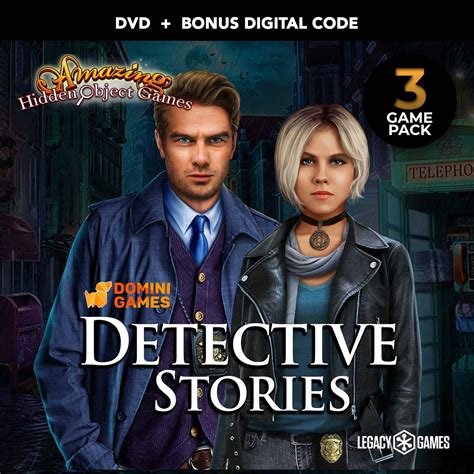
Amazing Hidden Object Games: Psychic Detectives is a compilation of five hidden object games centered around supernatural and detective themes. The collection includes Paranormal State: Poison Spring, The Dream Voyagers, Dream Sleuth, Cate West: The Velvet Keys, and The Tarot’s Misfortune (as a bonus game), each offering unique mysteries to solve through hidden object gameplay. Published by Legacy Games in 2013, this bundle is part of the Amazing Hidden Object Games series and is designed for players who enjoy puzzle-solving and paranormal investigations.
Amazing Hidden Object Games: Psychic Detectives Reviews & Reception
reddit.com : A triumphant return to form for the series.
gamesradar.com : The best hidden object games are always here to sharpen our sense of perception and exercise our brains when needed.
Amazing Hidden Object Games: Psychic Detectives – A Comprehensive Retrospective
Introduction: The Allure of the Hidden Object Compilation
Hidden object games (HOGs) have long been a staple of casual gaming, offering players a blend of visual scrutiny, narrative intrigue, and light puzzle-solving. Amazing Hidden Object Games: Psychic Detectives, released in 2013 by Legacy Games, is a compilation that encapsulates the genre’s golden age—a time when developers experimented with thematic cohesion, atmospheric storytelling, and mechanical refinement. This anthology bundles five distinct titles under a unifying banner of paranormal investigation, each game contributing to a broader tapestry of supernatural mystery. But does this collection stand as a mere curation of existing works, or does it transcend its parts to offer something greater? This review dissects Psychic Detectives across its development, narrative depth, gameplay mechanics, and lasting influence, arguing that while it may not redefine the genre, it serves as a fascinating time capsule of early 2010s HOG design.
Development History & Context: Legacy Games and the Rise of the Compilation
The Studio and Its Vision
Legacy Games, founded in 2002, carved a niche in the casual gaming market by specializing in hidden object and puzzle adventures. By the early 2010s, the studio had established itself as a publisher of both original titles and compilations, leveraging the growing demand for bundled experiences. Amazing Hidden Object Games: Psychic Detectives emerged during a period when the HOG market was saturated with standalone releases, many of which shared similar themes (e.g., detective work, the occult, and historical mysteries). Legacy’s approach was to curate these titles into themed collections, offering players a “value pack” of experiences under a single purchase.
The Psychic Detectives compilation is part of the broader Amazing Hidden Object Games series, which spans over 40 entries, each focusing on a specific subgenre (e.g., Moonlight Mysteries, Unsolved Mysteries). The 2013 release was strategically timed to capitalize on the popularity of paranormal-themed media, from television shows like Supernatural to films like The Conjuring. The compilation’s subtitle, Psychic Detectives, signals its alignment with the era’s fascination with extrasensory investigation, a trend that had already been explored in games like Adam Wolfe (also published by Legacy).
Technological Constraints and Design Philosophy
Developed for Windows PCs, Psychic Detectives reflects the technical limitations and design philosophies of its time:
– Resolution and Art Style: The games within the compilation predominantly feature 2D pre-rendered scenes, a hallmark of early-to-mid 2000s HOGs. While not visually groundbreaking, the art direction leans into moody, detailed environments—cluttered antique shops, eerie mansions, and mist-laden forests—that enhance immersion.
– Gameplay Engine: The hidden object mechanics rely on static scenes with interactive hotspots, a far cry from the dynamic, 3D environments seen in later titles like The Room series. The UI is functional but unremarkable, with inventory systems and hint mechanics that were standard for the genre.
– Narrative Integration: Unlike later HOGs that blended storytelling seamlessly into gameplay (e.g., Dark Parables), the games in Psychic Detectives often treat narrative as a framing device. Cutscenes and dialogue are sparse, with most exposition delivered via text logs or brief voiceovers.
The Gaming Landscape in 2013
By 2013, the hidden object genre was at a crossroads. Mobile gaming was ascendant, with titles like Criminal Case demonstrating the viability of HOGs on touchscreens. Meanwhile, PC developers faced pressure to innovate, leading to hybrids like Mystery Case Files: Dire Grove, which incorporated adventure-game elements. Psychic Detectives arrived in this transitional period, offering a traditionalist experience that appealed to core fans but did little to push boundaries. Its strength lay in its curation—providing a diverse yet thematically consistent selection of games that showcased the genre’s breadth.
Narrative & Thematic Deep Dive: Paranormal Intrigue and Detective Archetypes
The Compilation’s Structure
Psychic Detectives comprises five games, each with its own narrative and setting:
1. Paranormal State: Poison Spring
2. The Dream Voyagers
3. Dream Sleuth
4. Cate West: The Velvet Keys
5. The Tarot’s Misfortune (Bonus Game)
While these titles are not directly connected, they share a thematic throughline: the intersection of the supernatural and investigative work. The protagonists—whether professional detectives, amateur sleuths, or reluctant psychics—navigate worlds where the rational and the arcane collide.
Character Archetypes and Tropes
- The Reluctant Psychic: A staple of paranormal HOGs, this archetype appears in Paranormal State: Poison Spring, where the protagonist grapples with newly awakened abilities while solving a small-town mystery. The trope allows for internal conflict, as characters question their sanity or destiny.
- The Hardboiled Detective with a Twist: Cate West: The Velvet Keys features a more traditional detective protagonist, but the inclusion of psychic visions (a series staple) adds a supernatural layer to the procedurals. Cate West’s character design—stylish yet pragmatic—reflects the genre’s blend of noir aesthetics and occult themes.
- The Dreamwalker: Both The Dream Voyagers and Dream Sleuth explore oneiric landscapes, where protagonists traverse dreamscapes to uncover hidden truths. These games lean into surrealism, with shifting environments and symbolic puzzles that differentiate them from more grounded entries.
Themes: Fate, Memory, and the Unseen
The compilation’s overarching themes revolve around:
– The Unreliable Nature of Perception: Many of the games question reality, with protagonists (and players) unsure whether they’re experiencing genuine supernatural events or hallucinations. Dream Sleuth, in particular, plays with this ambiguity, blurring the line between dreams and waking life.
– The Burden of Knowledge: Psychic abilities in these narratives are rarely gifts; they’re curses that isolate protagonists or drag them into dangerous conspiracies. Paranormal State’s protagonist, for instance, must confront the dark history of Poison Spring, a town built on buried secrets.
– The Power of Symbols: Tarot cards, keys, and other occult symbols recur across the games, serving as both gameplay mechanics (e.g., puzzle solutions) and narrative devices. The Tarot’s Misfortune exemplifies this, using tarot imagery to structure its mysteries.
Dialogue and Writing
The writing in Psychic Detectives is functional but rarely transcendent. Dialogue tends toward exposition, with characters explaining their motivations or the rules of the supernatural rather than engaging in organic conversation. That said, the games occasionally shine in their atmospheric descriptions—The Dream Voyagers, for instance, excels in its dream-log entries, which read like fragments of a surrealist poem.
Gameplay Mechanics & Systems: The Hidden Object Formula, Refined and Repeated
Core Gameplay Loop
The hidden object genre’s appeal lies in its simplicity, and Psychic Detectives adheres closely to the established formula:
1. Scene Investigation: Players examine cluttered environments (e.g., a haunted library, a Victorian parlor) to locate items from a provided list.
2. Inventory Puzzles: Collected objects are often used to solve simple puzzles (e.g., combining a key with a lock) or progress the narrative.
3. Mini-Games: Between hidden object scenes, players encounter standalone puzzles—jigsaws, pattern-matching games, or logic challenges—that break up the monotony.
4. Hint Systems: A rechargeable hint button (typically a magnifying glass or crystal ball) highlights hidden items, ensuring players never get permanently stuck.
Innovations and Flaws
While Psychic Detectives doesn’t revolutionize the genre, it refines several mechanics:
– Contextual Hidden Objects: Some games in the compilation (notably Cate West) tie hidden objects to the narrative. For example, finding a psychic’s missing tarot deck might unlock a vision, blending gameplay and story.
– Interactive Environments: A few scenes allow players to manipulate objects (e.g., opening drawers, moving curtains) to reveal hidden items, adding a layer of interactivity beyond static clicking.
– Replayability: The inclusion of bonus content (e.g., The Tarot’s Misfortune) and collectibles (e.g., morphing objects) encourages multiple playthroughs, a feature that was becoming standard in 2013.
However, the compilation also suffers from the genre’s inherent limitations:
– Repetition: The core loop—click, find, repeat—can grow tedious, especially in longer sessions. The lack of meaningful consequences for failure (e.g., no penalty for misclicks) further reduces tension.
– Pixel Hunting: Some scenes suffer from poor contrast or overly small items, forcing players to resort to the hint system or brute-force clicking.
– Disjointed Difficulty: The mini-games vary wildly in challenge, with some (e.g., sliding puzzles) feeling arbitrarily difficult compared to the hidden object segments.
UI and Accessibility
The user interface across the compilation is consistent but uninspired. Inventory management is straightforward, though some games bury critical items in submenus. The hint system is generous, perhaps to the detriment of challenge, but it ensures the games remain accessible to casual players. Notably, the compilation lacks modern QOL features like adjustable difficulty settings or customizable controls, reflecting its era.
World-Building, Art & Sound: Crafting the Paranormal Ambiance
Visual Design: From Gothic to Dreamlike
The art direction in Psychic Detectives is its strongest asset, with each game offering a distinct visual identity:
– Paranormal State: Poison Spring: Embraces a gothic American aesthetic, with dilapidated farmhouses, fog-choked forests, and eerie small-town iconography (e.g., a diner with a neon “Open” sign flickering ominously).
– The Dream Voyagers/Dream Sleuth: Opt for a softer, more ethereal palette, with surreal landscapes that evoke Salvador Dalí or Alice in Wonderland. The dream sequences use warped perspectives and floating objects to disorient the player.
– Cate West: The Velvet Keys: Strikes a balance between noir and the occult, with shadowy cityscapes and art deco interiors. The use of deep reds and golds reinforces the series’ psychic detective theme.
The pre-rendered backgrounds, while not interactive in a 3D sense, are richly detailed, rewarding players who take the time to absorb the environments. That said, the character models (when present) are often stiff and poorly animated, a common limitation of the era.
Sound Design and Music
The audio design in Psychic Detectives enhances the atmospheric storytelling:
– Ambient Soundscapes: Creaking floorboards, distant whispers, and howling wind in Paranormal State create a sense of unease. The Dream Voyagers employs more abstract sounds—echoing chimes, reversed audio—to underscore its surreal setting.
– Music: The soundtracks are moody and looped, with piano-driven melodies for introspective moments and orchestral swells during climactic reveals. While not memorable as standalone compositions, the music effectively complements the visuals.
– Voice Acting: Sparse but generally competent. Cate West’s protagonist, for instance, is voiced with a noir-appropriate gravitas, though some secondary characters veer into melodrama.
Atmosphere and Immersion
The compilation’s greatest success is its ability to immerse players in its paranormal worlds. The combination of detailed art, ambient sound, and thematic consistency ensures that each game feels like a self-contained mystery novel. However, the lack of dynamic lighting or interactive environments (e.g., no day/night cycles) limits the depth of immersion compared to later titles like The Vanishing of Ethan Carter.
Reception & Legacy: A Niche Classic in a Crowded Genre
Critical and Commercial Reception
Amazing Hidden Object Games: Psychic Detectives received little critical fanfare upon release, a fate shared by many compilations in the genre. MobyGames lists no critic reviews, and player reception remains undocumented, suggesting it was overshadowed by more prominent 2013 releases like The Raven: Legacy of a Master Thief or Gone Home. Commercially, it likely found its audience among dedicated HOG fans, particularly those drawn to paranormal themes.
Evolution of the Genre
The compilation’s legacy is tied to the broader trajectory of hidden object games:
– The Rise of Hybrid Genres: By the mid-2010s, pure HOGs were increasingly rare, with developers blending them with adventure games (Life is Strange), escape rooms (The Room), or even RPGs (Disco Elysium). Psychic Detectives represents a late-stage example of the “classic” HOG before this evolution.
– Mobile Dominance: The success of Criminal Case and June’s Journey on mobile platforms shifted the genre’s center of gravity away from PC compilations. Legacy Games adapted by releasing mobile-friendly titles, but Psychic Detectives remains a PC relic.
– Narrative Depth: Later HOGs like The Council or Unavowed prioritized branching narratives and player agency, areas where Psychic Detectives’ linear storytelling feels dated.
Influence on Subsequent Titles
While Psychic Detectives didn’t spawn direct sequels, its themes and mechanics resonate in later Legacy Games releases:
– The Adam Wolfe Series: The compilation’s psychic detective premise is echoed in Adam Wolfe, a series that expands on the paranormal investigator archetype with more cinematic presentation.
– Moonlight Mysteries and Supernatural Stories: These later compilations refine the supernatural HOG formula, incorporating more interactive environments and streamlined puzzles.
– The Shift to Collector’s Editions: The inclusion of The Tarot’s Misfortune as a “bonus game” foreshadows the industry’s move toward Collector’s Editions, which bundle base games with extra content (e.g., wallpapers, soundtracks, additional chapters).
Conclusion: A Time Capsule of a Genre in Transition
Amazing Hidden Object Games: Psychic Detectives is not a revolutionary title, nor is it the pinnacle of hidden object design. Instead, it is a meticulously curated snapshot of a genre at a crossroads—one foot in the traditionalist past of static scenes and simple puzzles, the other tentatively stepping toward the narrative depth and interactivity that would define later entries. Its strength lies in its thematic cohesion, atmospheric artistry, and the sheer variety of experiences it offers under one umbrella.
For modern players, Psychic Detectives may feel quaint, even repetitive. Yet for historians of casual gaming, it serves as a vital artifact, illustrating how hidden object games evolved from mere “spot the difference” exercises into the narrative-driven adventures we see today. It is a testament to Legacy Games’ understanding of its audience—a love letter to those who find joy in the quiet thrill of discovery, the slow unraveling of a mystery, and the eerie allure of the unseen.
Final Verdict: 7.5/10 – A Nostalgic, Well-Crafted Compilation That Captures the Essence of Early 2010s HOGs
Amazing Hidden Object Games: Psychic Detectives is best enjoyed as a historical curiosity or a cozy marathon for genre enthusiasts. It won’t convert skeptics of hidden object games, but for those who revel in their rhythms, it remains a delightful—if slightly dusty—gem.