
- Release Year: 2023
- Platforms: Nintendo Switch, PlayStation 4, PlayStation 5, Windows, Xbox One, Xbox Series
- Publisher: Raw Fury AB
- Developer: Out of the Blue Games S.L.
- Genre: Action
- Perspective: 1st-person, 3rd-person, Side view
- Game Mode: Single-player
- Gameplay: Platform, Puzzle elements
- Setting: Fantasy
- Average Score: 81/100
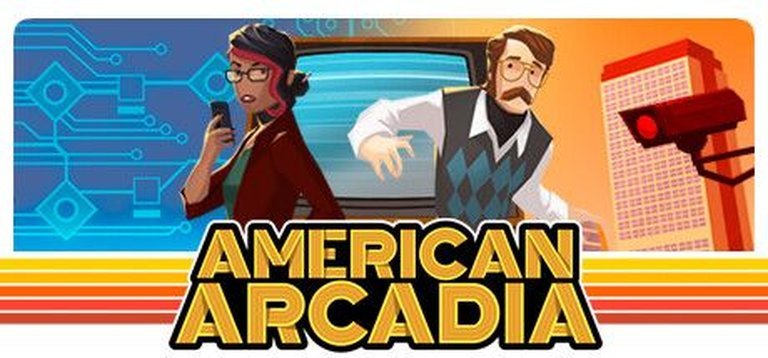
Description
American Arcadia is a narrative-driven action-platformer set in a dystopian, Truman Show-esque world where the protagonist, trapped in a seemingly idyllic 1970s-themed reality TV show, must escape while uncovering dark secrets. The game blends 3D and 2D perspectives, puzzle-solving, and combat as players navigate a surreal, oppressive environment filled with corporate control and hidden dangers.
Gameplay Videos
Where to Buy American Arcadia
PC
American Arcadia Free Download
American Arcadia Guides & Walkthroughs
American Arcadia Reviews & Reception
opencritic.com (85/100): A triumphant return to form for the series.
metacritic.com (77/100): American Arcadia features a refreshing tale that shows how to ‘subvert expectations,’ making the plot a standout hit when compared to more mainstream narratives.
verticalslicegames.com (83/100): American Arcadia is a sharp, snappy production that could make for an entertaining film if it wasn’t peppered with ingenious puzzles and platforming challenges.
American Arcadia: A Masterclass in Dystopian Storytelling and Innovative Gameplay
Introduction
American Arcadia is a game that defies easy categorization—a puzzle-platformer, a dystopian thriller, and a biting satire of modern media culture, all wrapped in a retro-futuristic aesthetic. Developed by Out of the Blue Games and published by Raw Fury, it follows Trevor Hills, an unassuming office worker in the seemingly idyllic city of Arcadia, as he discovers the horrifying truth: his entire life is a scripted reality show, and his lack of popularity has marked him for elimination. With the help of Angela Solano, a disillusioned stage technician, Trevor must escape the domed city before he’s “released to elsewhere”—a euphemism for execution. The game’s premise is a modern twist on The Truman Show, but it evolves into something far more complex, blending sharp social commentary with inventive gameplay mechanics.
At its core, American Arcadia is a game about the illusion of freedom and the commodification of human lives. It’s a story that resonates deeply in an era of reality TV, social media influencers, and algorithm-driven entertainment, where popularity often dictates survival. The game’s brilliance lies in how it uses its dual-perspective gameplay—Trevor’s 2.5D platforming and Angela’s first-person hacking—to reinforce its themes. Players aren’t just escaping a city; they’re unraveling a system designed to keep its inhabitants docile and entertained, all while being watched by an unseen audience.
This review will dissect American Arcadia in exhaustive detail, exploring its development, narrative depth, gameplay innovations, artistic vision, and cultural impact. By the end, it will be clear why this game is not just a standout indie title but a landmark in interactive storytelling.
Development History & Context
The Studio Behind the Curtain
Out of the Blue Games, the Madrid-based studio behind American Arcadia, is no stranger to crafting immersive, narrative-driven experiences. Their debut title, Call of the Sea (2020), was a critically acclaimed first-person puzzle adventure that earned a BAFTA nomination for its lush visuals and emotional storytelling. With American Arcadia, the studio sought to push their creative boundaries further, blending multiple genres and perspectives into a single cohesive experience.
The game’s development began in earnest after Call of the Sea’s success, with the team drawing inspiration from classic dystopian fiction, retro-futurism, and the ever-growing influence of reality television. Creative Director Tatiana Delgado and Writer Alfredo González-Barros crafted a story that would serve as both a thrilling escape narrative and a scathing critique of modern media consumption. The team’s ambition was evident from the outset: American Arcadia would not just be a game but a commentary on the very nature of entertainment and surveillance.
Technological and Artistic Constraints
Developing a game that seamlessly switches between 2.5D platforming and first-person puzzle-solving presented significant technical challenges. The team had to ensure that both perspectives felt distinct yet complementary, with Trevor’s sections emphasizing fluid movement and Angela’s focusing on methodical problem-solving. The game’s engine had to handle dynamic camera shifts, real-time hacking mechanics, and a sprawling cityscape filled with interactive elements.
Artistically, the studio embraced a bold retro-futurist aesthetic, blending 1970s kitsch with sci-fi grandeur. The city of Arcadia is a feast for the eyes, with its pastel-colored skyscrapers, neon-lit streets, and modular architecture evoking a utopian vision frozen in time. The team’s background in Call of the Sea’s tropical paradise served them well, as they crafted a world that feels both inviting and unsettling—a perfect reflection of the game’s themes.
The Gaming Landscape at Launch
American Arcadia released on November 15, 2023, into a gaming landscape dominated by open-world epics and live-service titles. Yet, it carved out a niche for itself as a tightly crafted, narrative-driven experience that prioritized storytelling and innovation over sheer scale. The game’s release coincided with a growing appetite for indie titles that offered fresh perspectives, and its Truman Show-esque premise immediately drew comparisons to other media-savvy dystopian works like Black Mirror and Severance.
Critics and players alike were quick to recognize American Arcadia as a standout title, praising its unique blend of genres and its willingness to tackle complex themes. The game’s reception was overwhelmingly positive, with an 82% critic score on MobyGames and a “generally favorable” rating on Metacritic. It was hailed as a breath of fresh air in an industry often criticized for playing it safe.
Narrative & Thematic Deep Dive
The Plot: A Reality Show Gone Wrong
American Arcadia opens with Trevor Hills, a 28-year-old office worker, living a mundane but comfortable life in the city of Arcadia. The game’s framing device—a documentary-style interview with Trevor—immediately sets the tone, hinting at the dark revelations to come. Trevor’s world is turned upside down when he discovers that Arcadia is not a real city but a massive, domed set for American Arcadia, a 24/7 reality show broadcast to the world. The citizens of Arcadia are unwitting actors, their lives scripted for entertainment, and those who fail to maintain high viewership ratings are “released to elsewhere”—a euphemism for execution.
The inciting incident occurs when Trevor’s friend, Gus, wins the “Edge Travel Grant,” a supposed vacation package that Trevor later learns is a death sentence. Warned by a mysterious figure named Kovacs (later revealed to be Angela Solano), Trevor flees his home and begins a desperate journey to escape Arcadia. Along the way, he uncovers the city’s dark secrets, including the “Jingle,” a subliminal audio signal that conditions citizens to fear the outside world, and the “Arcadia Six Breakout,” a group of escapees who exposed the show’s true nature years earlier.
Characters: The Unlikely Heroes
-
Trevor Hills (voiced by Yuri Lowenthal): The game’s protagonist, Trevor is an everyman thrust into extraordinary circumstances. His journey from a passive office worker to a determined escapee is the emotional core of the story. Lowenthal’s performance captures Trevor’s initial naivety, growing desperation, and eventual defiance, making him a relatable and compelling hero.
-
Angela Solano (voiced by Krizia Bajos): A stage technician for American Arcadia, Angela is the game’s moral compass. Disillusioned by the show’s cruelty, she risks everything to help Trevor escape. Her first-person sections provide a counterpoint to Trevor’s platforming, offering a glimpse into the world outside Arcadia and the resistance movement known as Breakout.
-
Vivian Walton (voiced by Cissy Jones): The enigmatic host of American Arcadia, Vivian is revealed to be Emily Garland, one of the original Arcadia Six escapees. Her character embodies the game’s central irony: she once fought for freedom but now perpetuates the system she once sought to destroy. Jones’ performance is chilling, blending charm with cold calculation.
-
Marcus Javert (voiced by Regi Davis): The chief of security for American Arcadia, Marcus is later revealed to be Terry Robinson, an actor playing a role. His character serves as a reminder that even the enforcers of Arcadia’s oppressive system are part of the illusion.
Themes: Freedom, Surveillance, and the Illusion of Choice
American Arcadia is a game steeped in themes that feel eerily relevant in today’s world. At its heart, it’s a story about the commodification of human lives and the illusion of freedom in a surveillance state. The city of Arcadia is a gilded cage, a place where citizens are kept docile through behavioral conditioning and the promise of comfort. The game’s critique of reality TV and social media is unmistakable, with Trevor’s struggle for autonomy mirroring the modern anxiety of living under constant scrutiny.
The game also explores the ethics of entertainment, asking whether it’s morally justifiable to exploit people’s lives for profit. The reveal that American Arcadia is not just a show but a system designed to keep its citizens trapped—even as it pretends to offer them a chance at freedom—is a devastating indictment of capitalism’s ability to co-opt resistance. The final twist, in which Trevor’s escape is revealed to be a staged pilot for a new show, Escape from Arcadia, underscores the game’s central message: even rebellion can be commodified.
The Ending: A Bitter Victory
The game’s ending is a masterstroke of narrative subversion. After a climactic chase to the top of the Arcadia Spire, Trevor presses the failsafe button, expecting to bring down the dome and free the city. Instead, he learns that his entire escape was orchestrated by Vivian Walton as a pilot for Escape from Arcadia, a new show where unpopular citizens are given a chance to “escape” in a scripted, dramatic fashion. Trevor’s defiance—his refusal to play along and his iconic “Leave me the fuck alone!” outburst—becomes a rallying cry for authenticity in a world of manufactured drama.
The ending is bittersweet: Trevor and Angela escape, but the system remains intact, more popular than ever. The game’s final moments suggest that true freedom is not just about escaping physical confinement but about resisting the psychological conditioning that keeps people complacent. It’s a powerful conclusion that lingers long after the credits roll.
Gameplay Mechanics & Systems
Dual-Perspective Gameplay: A Seamless Blend
American Arcadia’s most innovative feature is its dual-perspective gameplay, which allows players to switch between Trevor’s 2.5D platforming and Angela’s first-person hacking. This mechanic is not just a gimmick but a core part of the game’s design, reinforcing its themes of surveillance and control.
-
Trevor’s Sections: Played from a side-scrolling perspective, Trevor’s segments are fast-paced and action-oriented. Players must navigate treacherous environments, evade security forces, and solve environmental puzzles. The platforming is tight and responsive, with a focus on momentum and precision. Later sections introduce psychedelic, dream-like sequences that reflect Trevor’s growing desperation and the surreal nature of his reality.
-
Angela’s Sections: Played in first-person, Angela’s segments are slower and more methodical. Players must hack into security systems, manipulate cameras, and solve puzzles to clear Trevor’s path. These sections provide a welcome change of pace and offer a different kind of challenge, requiring players to think critically and observe their surroundings.
The game’s genius lies in how it weaves these two perspectives together. During chase sequences, players might need to quickly switch between Trevor and Angela, guiding Trevor through a gauntlet of obstacles while hacking security systems to open doors or disable traps. This real-time coordination keeps the tension high and ensures that neither perspective feels tacked on.
Puzzle Design: Clever but Not Overwhelming
The puzzles in American Arcadia are designed to be challenging but not frustrating. Most revolve around environmental manipulation, such as rerouting power, hacking security systems, or using objects in the environment to create paths. The game’s first-person sections often require players to observe their surroundings carefully, looking for clues or patterns that will help them progress.
One standout puzzle involves Angela hacking into a security system to manipulate a series of lasers, requiring players to memorize the laser patterns and time their movements precisely. Another involves Trevor using a series of moving platforms to navigate a factory, with Angela remotely controlling the platforms’ movements. These puzzles are satisfying to solve and feel organic to the game’s world.
Combat and Stealth: A Delicate Balance
While American Arcadia is not a combat-heavy game, it does feature stealth and evasion mechanics. Trevor must often sneak past security forces, using cover and distractions to avoid detection. The game’s stealth sections are tense but fair, with clear visual cues indicating when Trevor is in danger of being spotted.
The game also features a few chase sequences, where Trevor must flee from security forces while navigating obstacles. These sections are exhilarating, with a strong sense of urgency and momentum. The game’s checkpoint system is generally forgiving, though some sections can feel repetitive if players die frequently.
UI and Accessibility
The game’s UI is clean and intuitive, with clear indicators for objectives, health, and puzzle hints. The game also features a robust accessibility menu, with options for subtitles, colorblind modes, and difficulty adjustments. The game’s controls are responsive, with both keyboard/mouse and gamepad support.
World-Building, Art & Sound
The City of Arcadia: A Retro-Futurist Dream
The city of Arcadia is one of American Arcadia’s greatest achievements. A sprawling, domed metropolis frozen in 1970s retro-futurism, Arcadia is a visual feast, blending pastel colors, modular architecture, and neon-lit streets. The city’s design is a deliberate contrast to the grim reality of its existence, with its cheerful aesthetic masking the oppressive system that governs it.
The game’s art direction is heavily influenced by 1970s sci-fi and utopian architecture, with buildings that resemble giant LEGO blocks and streets lined with futuristic monorails. The city’s design is both inviting and unsettling, reflecting the game’s themes of illusion and control. The game’s use of color is particularly striking, with bright pastels and bold primary colors creating a sense of artificiality that underscores the city’s manufactured nature.
Sound Design: A Symphony of Surveillance
The game’s sound design is equally impressive, with a dynamic soundtrack that shifts between upbeat synth-pop and tense, atmospheric scores. The game’s use of diegetic sound—such as the ever-present hum of security cameras and the distant chatter of TV broadcasts—creates a sense of constant surveillance, reinforcing the game’s themes.
The voice acting is top-notch, with Yuri Lowenthal, Krizia Bajos, and Cissy Jones delivering standout performances. Lowenthal’s portrayal of Trevor is particularly noteworthy, capturing the character’s journey from naivety to defiance with nuance and depth. The game’s dialogue is sharp and witty, with a strong sense of character and humor that keeps the story engaging.
Atmosphere: A World of Illusion
The game’s atmosphere is one of its strongest assets. From the moment players step into Arcadia, they are immersed in a world that feels both familiar and alien. The city’s retro-futurist aesthetic is a deliberate contrast to the grim reality of its existence, creating a sense of cognitive dissonance that keeps players on edge.
The game’s use of lighting and environmental details—such as the flickering neon signs and the ever-present security cameras—creates a sense of unease, reinforcing the idea that Trevor is always being watched. The game’s dream sequences, which feature surreal, distorted versions of Arcadia, are particularly effective, offering a glimpse into Trevor’s psyche as he grapples with the truth of his existence.
Reception & Legacy
Critical Reception: A Modern Classic
American Arcadia was met with widespread critical acclaim upon its release. Critics praised the game’s innovative gameplay, sharp writing, and stunning visuals, with many hailing it as one of the best indie games of 2023. The game’s Metacritic score of 77 and MobyGames score of 82 reflect its strong reception, with reviewers highlighting its unique blend of genres and its willingness to tackle complex themes.
-
Adventure Gamers (100%): “American Arcadia features a refreshing tale that shows how to ‘subvert expectations,’ making the plot a standout hit when compared to more mainstream narratives.”
-
GamesCreed (94%): “Overall, American Arcadia is a fantastically story-rich puzzle game that will keep you on the edge of your seat and make you want to play it again, even after finishing it.”
-
Edge (80%): “It has all the hooks you’d associate with a streaming service binge-watch, in other words. But American Arcadia has something to say, too—a bittersweet ending offers more than simple catharsis.”
The game’s reception was not without its detractors, however. Some critics found the game’s puzzles to be too simple or its platforming sections too repetitive. Others felt that the game’s ending was too ambiguous or its themes too heavy-handed. Despite these criticisms, American Arcadia was widely regarded as a triumph of interactive storytelling.
Commercial Success and Cultural Impact
While American Arcadia was not a blockbuster hit, it found a dedicated audience among fans of narrative-driven games and dystopian fiction. The game’s unique premise and strong word-of-mouth helped it stand out in a crowded market, and its release on multiple platforms—including PC, PlayStation, Xbox, and Nintendo Switch—ensured that it reached a wide audience.
The game’s cultural impact is perhaps best measured by its influence on subsequent titles. American Arcadia’s dual-perspective gameplay and its blend of platforming and puzzle-solving have inspired other indie developers to experiment with similar mechanics. Its themes of surveillance and media saturation have also resonated with players, making it a touchstone for discussions about the ethics of entertainment.
Awards and Accolades
American Arcadia received several nominations and awards following its release, including:
- BAFTA Games Awards (Nominated): Best Narrative, Best Debut Game
- Game Developers Choice Awards (Nominated): Best Debut, Innovation Award
- Independent Games Festival (Nominated): Excellence in Narrative, Nuovo Award
While it did not win all of its nominations, the game’s recognition by these prestigious organizations underscores its significance in the gaming landscape.
Conclusion: A Landmark in Interactive Storytelling
American Arcadia is a game that defies easy categorization—a puzzle-platformer, a dystopian thriller, and a biting satire of modern media culture. Its innovative dual-perspective gameplay, sharp writing, and stunning visuals make it a standout title in the indie gaming scene. The game’s themes of freedom, surveillance, and the commodification of human lives are as relevant as ever, and its bittersweet ending lingers long after the credits roll.
While the game is not without its flaws—some repetitive sections, occasional pacing issues, and a few technical bugs—its strengths far outweigh its weaknesses. American Arcadia is a game that challenges players to think critically about the world around them, all while delivering a thrilling, emotionally resonant experience.
In the pantheon of great narrative-driven games, American Arcadia deserves a place alongside titles like Portal, Bioshock, and The Stanley Parable. It’s a game that pushes the boundaries of interactive storytelling, blending genres and perspectives in ways that feel fresh and exciting. For fans of dystopian fiction, puzzle-platformers, or simply great storytelling, American Arcadia is an essential experience.
Final Verdict: 9/10 – A Masterpiece of Modern Gaming
American Arcadia is a game that will be remembered not just for its innovative gameplay but for its willingness to tackle complex themes with intelligence and nuance. It’s a testament to the power of indie gaming and a reminder that the best stories are often the ones that challenge us to see the world differently. If you’re looking for a game that will make you think, feel, and question the nature of reality itself, American Arcadia is the perfect escape.