
- Release Year: 2008
- Platforms: Windows
- Publisher: GameTap LLC
- Developer: Spicy Horse International Ltd.
- Genre: Action
- Perspective: Behind view
- Game Mode: Single-player
- Gameplay: Platforming, Puzzles
- Setting: Fantasy
- Average Score: 60/100
Description
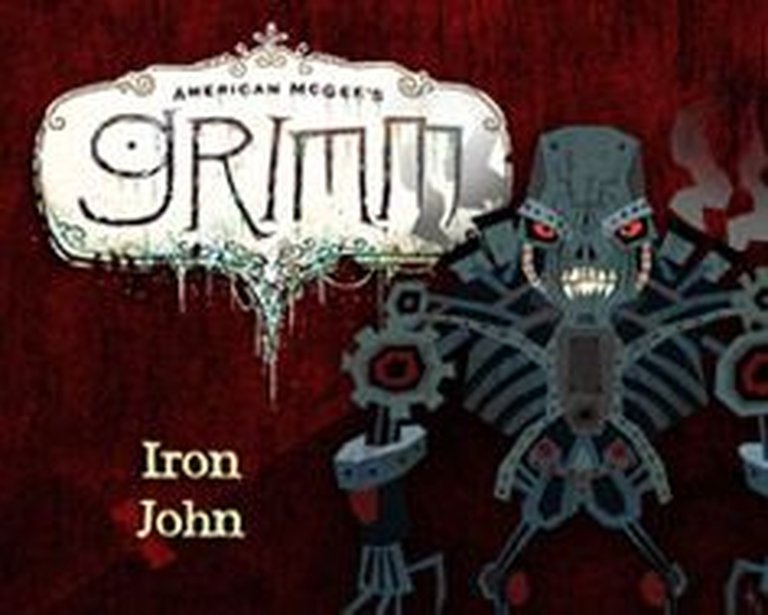
American McGee’s Grimm: Iron John is an episodic action-platformer in the Grimm series, where players control Grimm to darken the fairy tale of Iron John—a man with iron skin captured by hunters, befriended by a prince, and later aiding him in discovering a golden well and winning a war duel. Through levels, Grimm corrupts the whimsical fantasy world into a dark sci-fi dystopia, transforming Iron John into a Terminator-like robot, trees into laser turrets, and cottages into factories, while butt-stomping citizens who clean up the darkness, solving puzzles, and filling a dark meter to reveal the twisted ending.
Gameplay Videos
American McGee’s Grimm: Iron John Reviews & Reception
retro-replay.com : Delivers a unique blend of platforming, light puzzle-solving, and action-oriented darkening mechanics.
American McGee’s Grimm: Iron John: Review
Introduction
Imagine a fairy tale where the noble prince’s act of kindness unleashes not a loyal guardian, but a sadistic iron-skinned monster hell-bent on domination—now reimagined as a hulking Terminator robot amid laser-shooting trees and factory-spawned nightmares. American McGee’s Grimm: Iron John, the fourteenth episode in American McGee’s audacious 23-part episodic series, distills this grim inversion into a compact 30-minute dose of platforming corruption. Released on December 4, 2008, as part of Season 2 via GameTap’s pioneering digital distribution, it exemplifies McGee’s crusade to reclaim the Brothers Grimm’s macabre essence from sanitized Disneyfication. Yet, while its transformative mechanics and thematic bite shine, frustrating platforming and ephemeral length temper its impact. This review argues that Iron John is a microcosm of the series’ promise and pitfalls: a visually inventive, narratively subversive curiosity that punches above its weight in creativity but falters under technical and structural constraints, cementing McGee’s niche as gaming’s dark fairy-tale provocateur.
Development History & Context
Spicy Horse, founded by American McGee in Shanghai after his departure from id Software and Rogue Entertainment, birthed American McGee’s Grimm as a bold episodic experiment announced in PC Gamer’s June 2007 issue. Iron John, developed using Unreal Engine 3 with PhysX physics integration, arrived amid the late-2000s digital distribution boom. GameTap LLC, an early streaming service, published the series with a TV-like model: free 24-hour premieres followed by paid access for subscribers, fostering weekly anticipation across three seasons (July 2008–April 2009).
McGee, fresh off Alice‘s gothic success, envisioned Grimm as “highly accessible” bite-sized adventures akin to Katamari Damacy, each ~30 minutes long to suit casual playstyles like “complete conversion” (maximizing darkness) or speedruns. Writer R.J. Berg, who penned Alice, infused the script, while Unreal Engine 3 enabled seamless light-to-dark transitions—fairy-tale whimsy morphing into sci-fi dystopia. Technological constraints of 2008 PC gaming (e.g., 2.4GHz CPU, 512MB RAM minimum) prioritized stylized cartoon visuals over photorealism, suiting the episodic format.
The gaming landscape was ripe: episodic pioneers like Sam & Max and Sin Episodes had faltered commercially, but GameTap’s model targeted niche audiences craving McGee’s twisted lore. Iron John, as Season 2’s sixth entry (aka “Grimm 14”), built on predecessors like The Golden Goose, emphasizing McGee’s irony—Grimm “restores” dark origins but parodies them into oblivion. Developed in China, it reflected Spicy Horse’s global ambition, though budget limits yielded no retail release despite McGee’s Xbox Live musings. This context positions Iron John as a artifact of ephemeral digital gaming, predating Steam’s episodic dominance.
Narrative & Thematic Deep Dive
At its core, Iron John subverts the Brothers Grimm’s “Iron John” (ATU 510A), a tale of mentorship, greed, and redemption. In the sanitized “light” version, hunters capture Iron John (a wild man with iron skin) and cage him in the king’s dungeon. Prince Connor, lured by a lost ball, frees him despite warnings. John mentors the boy, revealing a golden well (echoing Midas myths), but the prince’s carelessness strains their bond. Years later, adult Connor aids a neighboring kingdom in war; John supplies mechanical armor and horse, wins a tournament via golden apples, and secures Connor’s marriage. John’s curse lifts at the wedding, gifting treasures and revealing his kingly past.
Grimm, the series’ dwarven anti-hero disgusted by “saccharine” tales, intervenes to “darken” this moral fable. Six levels chronicle the corruption:
- Scene 1 (Village/Forest): Hunters battle the “fiend” amid murders; Grimm escalates to laser firefights.
- Scene 2 (Courtyard/Castle): Connor frees John; the king feeds criminals to the now-“harmless” beast.
- Scene 3 (Pond/Well): Squirrels become holograms tearing trees; the well turns Midas-gold dystopian.
- Scene 4 (Warzone): Idyllic war becomes robot carnage; John “terminates” foes.
- Scene 5 (Tournament): Archery, jousts, and robot combats devolve into volatile slaughter.
- Scene 6 (Wedding): Platforming through airships/gears culminates in John’s curse-lift, but he claims Connor as heir, disposing rival kings.
The “dark” epilogue reveals John’s grander scheme: Connor unwittingly enables a mechanized takeover. Themes probe reckless disobedience (Connor’s toy-lust endangers lives), toxic mentorship (John as manipulator), and greed’s corruption (gold well parodies Midas, linking to prior episodes). McGee ironizes Grimm’s role—he obliterates originals’ cautionary depth, mirroring modern dilutions. Dialogue is sparse but biting: Grimm’s narration mocks “happily ever after,” characters like Huntsman cower comically. Subtle ties to series (e.g., Midas pool) reward lore fans, but standalone brevity limits emotional arcs, prioritizing visceral subversion over profundity.
Gameplay Mechanics & Systems
Iron John refines the series’ core loop: control Grimm in third-person behind-view, spreading darkness via proximity aura to fill the Dark-O-Meter for progression. Upgrading the meter (three tiers) boosts radius, speed, jump height, and butt-stomp range—unlocking crowd control against “cleaners” (villagers scrubbing light).
Core Loop Deconstruction:
– Darkening: Run/jump over objects (cottages, trees, squirrels); proximity corrupts them dynamically.
– Combat/Interference: Butt-stomp cleaners to stun; higher tiers one-shot groups. No health bar—pure evasion.
– Puzzles: Light manipulation (e.g., switches for shadow paths); simple but contextual (e.g., holograms topple barriers).
– Platforming: Jumps, timed gears, airship navigation—frustrating per Game Vortex review, with imprecise controls and checkpoint scarcity.
UI is minimalist: persistent Dark-O-Meter HUD, subtle level-progress indicators. No progression across episodes; each resets for replayability (100% conversion unlocks bonuses). Strengths: tactile feedback (environments crackle/morph), momentum-building upgrades. Flaws: Platform sections feel tacked-on, tedious in a 30-60 minute runtime; Unreal Engine’s physics occasionally glitch jumps. Innovative “transformation watching” rewards patient darkening, akin to Katamari‘s accrual joy, but brevity curtails depth—no branching paths or secrets beyond guides (e.g., Neoseeker).
World-Building, Art & Sound
Six vignette-levels craft a dual-world tapestry: light fairy-tale idyll (pastel villages, lush forests, opulent castles) vs. dark cyberpunk hellscape (laser turrets from trees, factories from cottages, Terminator-John rampaging). Art direction—stylized, child-friendly cartoons per Wikipedia—enables seamless Unreal Engine swaps, heightening horror (e.g., golden well floods as gilded wasteland). Fantasy setting warps progressively: warzone to robot apocalypse, wedding to industrial clockwork maze.
Atmosphere thrives on contrast: light’s whimsy lulls, dark’s menace unnerves via dynamic audio-visual cues. Sound design amplifies—cheerful lute/folk scores sour to industrial drones, laser zaps, robotic whirs; butt-stomps thud satisfyingly, cleaners’ brooms scrape urgently. No voice acting beyond sparse narration, but effects (e.g., John’s mechanical roars) immerse. These elements synergize: visuals transform experientially, sound punctuates corruption, forging a cohesive “Grimmification” that elevates brevity into potent mood swings.
Reception & Legacy
Launch reception mirrored the series’ middling praise: MobyGames cites Game Vortex’s 60/100—”promise, but no substance; frustrating platforming in an hour-long game”—with players at 2.7/5 (no reviews). Broader Grimm averaged 6.1/10 (IGN Season 1), 6.7/10 (GameTap Season 2), lauded for accessibility but critiqued for repetition/shallow puzzles. Commercially niche via GameTap, it lacked retail traction.
Legacy endures as episodic trailblazer: predated The Walking Dead, influenced McGee’s Alice: Madness Returns (2011) and Ty the Tasmanian Tiger series. Iron John‘s sci-fi pivot inspired fairy-tale hybrids (The Wolf Among Us), while its Dark-O-Meter mechanic echoes corruption systems in Prototype or Infamous. Cult status grows via compilations (2013 bundle, Archive.org preservation); McGee’s vision—dark parodies over restoration—shaped indie twisted tales (Little Nightmares). Flaws (platforming, length) highlight episodic risks, but it endures as a preserved MobyGames “Most Wanted” curiosity.
Conclusion
American McGee’s Grimm: Iron John distills McGee’s oeuvre into a flawed gem: inventive darkening mechanics and transformative art deliver thematic subversion par excellence, warping a redemptive fable into Terminator-fueled apocalypse across six evocative levels. Yet, egregious platforming, UI opacity, and featherweight runtime hobble replayability, echoing series critiques of “promise without substance.” In video game history, it claims a pivotal niche—episodic fairy-tale deconstructionist, Unreal Engine innovator, digital distribution pioneer—worthy of rediscovery for McGee faithful. Verdict: 6.5/10—a dark delight for short bursts, but no timeless throne in gaming’s Grimm anthology. Happily ever after? Not here.