
- Release Year: 2013
- Platforms: Android, iPad, iPhone, Nintendo Switch, PS Vita, Windows
- Publisher: Gloczus, Inc., Idea Factory Co., Ltd., Idea Factory International, Inc., Reef Entertainment Ltd.
- Developer: Design Factory Co., Ltd., Otomate
- Genre: Adventure, Romance, Visual novel
- Perspective: 1st-person
- Game Mode: Single-player
- Gameplay: Branching Narrative, Choice-based, Multiple endings
- Setting: Modern, Supernatural
- Average Score: 79/100
Description
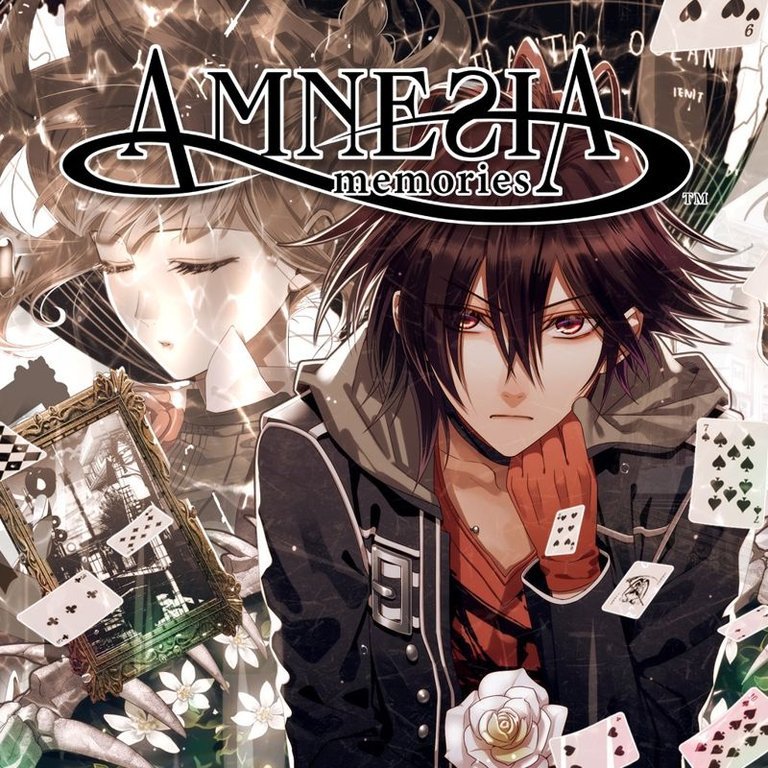
Amnesia: Memories is a visual novel where you play as a young college girl who wakes up on August 1st with no memories and must uncover the truth about her identity before August 25th. The game features multiple parallel worlds, each with different romantic interests—Shin, Toma, Ikki, Kent, and the hidden Ukyo route—where your choices shape the story and lead to one of 26 possible endings. With 2D anime-style art and a mix of romance and mystery, players must navigate relationships while hiding their amnesia from those around them.
Where to Buy Amnesia: Memories
Amnesia: Memories Patches & Updates
Amnesia: Memories Guides & Walkthroughs
Amnesia: Memories Reviews & Reception
opencritic.com (74/100): Weaving a complex tale of deception and love, Amnesia: Memories is an engaging visual novel which will guarantee multiple playthroughs to squeeze all the content that it has to offer.
metacritic.com (72/100): A pleasure to play, the game gives heartfelt emotion as well as frivolity throughout, earning its status as one of the best visual novels that the Vita has to offer.
reddit.com : I LOVED THIS OTOME TO BITS. SO, SO GOOD.
gamesreviews2010.com : Amnesia: Memories is a well-written and engaging otome game with a complex and suspenseful story.
steambase.io (92/100): Amnesia: Memories has earned a Player Score of 92 / 100.
Amnesia: Memories: A Masterclass in Otome Storytelling and Interactive Romance
Introduction: The Allure of the Unknown
Amnesia: Memories is not just a visual novel—it is a psychological odyssey, a romance simulator, and a mystery wrapped in the delicate veneer of anime aesthetics. Released in 2013 by Idea Factory and Otomate, this game redefined the otome genre by blending supernatural intrigue with deeply personal character arcs. At its core, Amnesia: Memories is a story about identity, love, and the fragility of memory, all told through the eyes of a nameless heroine who awakens with no recollection of her past. The game’s premise is deceptively simple: recover your memories before time runs out. Yet, its execution is anything but. With five distinct romantic routes, 26 possible endings, and a narrative that shifts dramatically based on player choices, Amnesia: Memories is a testament to the power of interactive storytelling.
This review will dissect the game’s development, narrative depth, gameplay mechanics, artistic direction, and lasting legacy. We will explore why it remains a cornerstone of the otome genre and how its innovative approach to branching narratives and character development has influenced subsequent titles.
Development History & Context: The Birth of a Modern Otome Classic
The Studio and the Vision
Amnesia: Memories was developed by Otomate, a subsidiary of Idea Factory specializing in otome games (romance visual novels targeted at a female audience). The studio’s portfolio includes other notable titles like Hakuoki and Code: Realize, but Amnesia: Memories stands out as one of its most ambitious projects. The game was initially released in Japan in 2011 for the PlayStation Portable (PSP) under the title Amnesia. However, it was the 2013 PS Vita re-release, Amnesia: V.Edition, that introduced English subtitles and expanded content, making it accessible to a global audience.
The game’s development was spearheaded by Reiko Shima, who served as the planning producer and supervisor. Shima’s vision was to create a visual novel that transcended the typical “dating sim” formula by incorporating supernatural elements, psychological depth, and a non-linear narrative structure. The result was a game that felt fresh and engaging, even to players familiar with the otome genre.
Technological Constraints and Innovations
The PS Vita, with its vibrant OLED screen and touch controls, was the perfect platform for Amnesia: Memories. The game’s 2D anime-style art and voice acting were optimized for the Vita’s hardware, creating an immersive experience. However, the development team faced challenges in balancing the game’s multiple endings and branching paths without overwhelming players. The solution was a streamlined UI that made navigation intuitive, even as the narrative grew increasingly complex.
One of the most innovative aspects of Amnesia: Memories was its parallel world system. Unlike traditional visual novels where choices merely alter dialogue or endings, Amnesia presented each romantic route as a separate parallel universe. This meant that the heroine’s relationships, memories, and even her personality could vary dramatically depending on the route. For example, in Shin’s route, she is his childhood friend and girlfriend, while in Ikki’s route, she is a woman caught in a web of obsession and danger. This approach added replayability and depth, as players were encouraged to explore each route to uncover the full story.
The Gaming Landscape at Release
In 2013, the visual novel genre was experiencing a renaissance, particularly in the West. Games like Steins;Gate and Clannad had already proven that visual novels could resonate with international audiences. However, otome games were still a niche market outside of Japan. Amnesia: Memories arrived at a pivotal moment, capitalizing on the growing interest in interactive storytelling and romance-driven narratives. Its success on the PS Vita helped pave the way for future otome localizations, including Amnesia: Later × Crowd and Code: Realize.
Narrative & Thematic Deep Dive: A Labyrinth of Love and Memory
The Premise: A Heroine Without a Past
The game begins on August 1st, with the heroine awakening in a café with no memory of who she is. She is guided by Orion, a mischievous spirit who explains that her amnesia is his fault. To regain her memories, she must interact with the people around her—particularly the five potential love interests—before August 25th, when her fate will be sealed.
The heroine’s amnesia is more than a narrative device; it is a metaphor for self-discovery. As players progress through each route, they piece together fragments of her past, revealing that her relationships with the love interests are not just romantic entanglements but key components of her identity. The game’s central question—Who am I?—is answered differently in each route, making the heroine’s journey deeply personal and variable.
The Five Routes: A Study in Contrasts
Amnesia: Memories features five main romantic routes, each representing a different “world” tied to a playing card suit (Heart, Spade, Clover, Diamond, and Joker). The love interests are:
- Shin (Heart) – A childhood friend with a dark past and a prickly demeanor. His route explores themes of guilt, redemption, and unconditional love.
- Ikki (Spade) – A playboy with a supernatural charm that makes women fall for him instantly. His route delves into obsession, jealousy, and the cost of fame.
- Kent (Clover) – A pragmatic mathematician who struggles with emotional expression. His route is a slow-burn romance focused on intellectual connection.
- Toma (Diamond) – A protective “older brother” figure with a yandere (obsessive) streak. His route is the most controversial, blending love and possession.
- Ukyo (Joker) – A mysterious photographer with a split personality. His route is the true ending, revealing the game’s overarching mystery.
Each route is a self-contained story, yet they are all interconnected. For example, the heroine’s relationship with Sawa, her best friend, changes depending on the route. In Shin’s world, Sawa is a rival for his affections, while in Ikki’s world, she is a member of his fan club. These subtle shifts create a rich, layered narrative that rewards multiple playthroughs.
Themes: Memory, Identity, and Fate
Amnesia: Memories is a game about memory as both a burden and a gift. The heroine’s amnesia allows her to reinvent herself, but it also leaves her vulnerable to manipulation. The love interests, too, are shaped by their pasts:
– Shin is haunted by his father’s crimes.
– Ikki is cursed by his supernatural charm.
– Toma is consumed by his obsession.
– Ukyo is trapped in a cycle of death and rebirth.
The game’s supernatural elements—Orion’s interference, Ukyo’s split personality, and the parallel worlds—add a layer of existential dread. The heroine is not just trying to remember; she is trying to survive. The August 25th deadline looms over every route, creating a sense of urgency that drives the narrative forward.
Dialogue and Character Writing
The writing in Amnesia: Memories is sharp, emotional, and often darkly humorous. The heroine’s inner monologue (voiced by Orion) provides commentary on the absurdity of her situation, while the love interests’ dialogue ranges from romantic to downright disturbing. Toma’s route, in particular, is a masterclass in psychological tension, as his affection curdles into possessiveness.
One of the game’s strengths is its avoidance of clichés. While some routes lean into otome tropes (e.g., the tsundere childhood friend, the playboy with a heart of gold), others subvert expectations. Ikki’s route, for instance, deconstructs the “perfect boyfriend” archetype by revealing the toxicity of his fan club’s obsession. Similarly, Kent’s route challenges the idea of the “emotionally stunted genius” by giving him genuine emotional growth.
Gameplay Mechanics & Systems: Choice, Consequence, and Replayability
Core Gameplay Loop
Amnesia: Memories is a visual novel with branching paths. Players make choices that affect the heroine’s relationships, leading to different endings. The game’s UI is minimalist, with most interactions limited to dialogue choices and occasional mini-games (e.g., selecting a gift for a love interest).
The affection system is central to the gameplay. Each choice increases or decreases the heroine’s affinity with a particular love interest, unlocking new scenes and endings. However, the system is not always transparent, leading to moments where players may accidentally lock themselves out of a “good ending.”
Innovations and Flaws
One of the game’s most innovative features is its parallel world system. Unlike traditional visual novels where choices merely alter the ending, Amnesia: Memories presents each route as a completely different reality. This means that the heroine’s backstory, relationships, and even her personality can vary dramatically. For example:
– In Shin’s route, she is his girlfriend.
– In Ikki’s route, she is a woman he barely knows.
– In Toma’s route, she is his “little sister.”
This approach adds depth and replayability, as players are encouraged to explore each route to uncover the full story. However, it also means that some routes feel disjointed from the others. The Ukyo route, in particular, is so different from the others that it can feel like a separate game entirely.
Another flaw is the lack of a “route select” feature in the initial release. Players were forced to replay the entire prologue to access a new route, which could be tedious. Later releases (including the Nintendo Switch version) addressed this issue by allowing players to skip directly to a chosen route.
Combat and Progression
Amnesia: Memories is not a combat-heavy game, but it does feature light gameplay elements, such as:
– Gift-giving mini-games where players select items to improve affinity.
– Quick-time events (e.g., pressing a button to avoid a dangerous situation).
– Hidden “touch” interactions in the mobile and Switch versions, where players can interact with CG images.
These elements are minor but effective, breaking up the text-heavy gameplay and adding a layer of interactivity.
World-Building, Art & Sound: Crafting an Immersive Experience
Setting and Atmosphere
Amnesia: Memories takes place in a modern Japanese city, with locations ranging from a maid café to a university campus. The game’s parallel world system means that the setting shifts subtly depending on the route. For example:
– In Shin’s route, the city feels nostalgic and familiar.
– In Ikki’s route, it is glamorous and dangerous.
– In Ukyo’s route, it is surreal and dreamlike.
The game’s atmosphere is enhanced by its art style, which blends soft, pastel colors with darker, more dramatic tones. The character designs are striking, with each love interest having a distinct visual identity (e.g., Shin’s sharp features, Ikki’s smoldering gaze, Ukyo’s androgynous beauty).
Visual Direction
The game’s 2D anime-style art is gorgeous, with detailed character sprites and expressive animations. The CG scenes (fully illustrated key moments) are particularly impressive, featuring dynamic compositions and emotional depth. For example:
– The rooftop scene in Shin’s route, where the heroine confronts his past.
– The forest chase in Ikki’s route, where she is hunted by his fan club.
– The cage scene in Toma’s route, where his obsession reaches its peak.
The chibi (super-deformed) character illustrations add a playful contrast to the game’s darker themes, providing moments of comic relief.
Sound Design and Music
The game’s soundtrack is a mix of romantic ballads and eerie, atmospheric tracks. The opening theme, “Zoetrope” by Nagi Yanagi, sets the tone with its haunting melody, while the ending themes vary depending on the route.
The voice acting is top-tier, with renowned Japanese seiyuu (voice actors) bringing the characters to life:
– Tetsuya Kakihara (Shin) delivers a nuanced performance, balancing anger and vulnerability.
– Kishou Taniyama (Ikki) oozes charm and menace.
– Satoshi Hino (Toma) is chillingly convincing in his descent into obsession.
The sound design enhances the game’s immersive quality, with ambient noises (e.g., rain, footsteps) adding to the atmosphere.
Reception & Legacy: A Game That Defined a Genre
Critical Reception
Amnesia: Memories was widely praised by critics, with particular acclaim for its storytelling, character depth, and art direction. On Metacritic, the PS Vita version holds a 72/100, while the Nintendo Switch version scored 71/100. Critics highlighted the game’s emotional impact and replayability, though some noted its occasional pacing issues and frustrating affinity system.
Positive Reviews:
– Anime News Network (91/100): “A very satisfying experience… intriguing and well-balanced.”
– Digitally Downloaded (90/100): “A well-written visual novel that epitomizes the qualities of a classical otome game.”
– Push Square (80/100): “One of the best visual novels that the Vita has to offer.”
Mixed Reviews:
– GamingTrend (65/100): “Encourages players to not question the mistreatment they experience.”
– RPG Site (60/100): “Extremely difficult to get the good endings… immensely frustrating.”
Commercial Success and Fanbase
The game was a commercial success, particularly in Japan, where it spawned sequels (Amnesia: Later × Crowd) and an anime adaptation. The English localization helped it gain a dedicated Western fanbase, with players praising its emotional depth and unique take on the otome genre.
Influence on the Industry
Amnesia: Memories redefined the otome genre by:
1. Introducing parallel world narratives, which later influenced games like Collar × Malice and Psychedelica of the Black Butterfly.
2. Blending romance with psychological horror, paving the way for darker otome titles like Diabolik Lovers.
3. Proving that otome games could appeal to a broader audience, not just female players.
Its success also led to increased localization efforts for otome games, with publishers like Aksys Games and Idea Factory International bringing more titles to the West.
Conclusion: A Timeless Masterpiece of Interactive Storytelling
Amnesia: Memories is more than just a visual novel—it is a landmark title in the otome genre. Its innovative narrative structure, deep character arcs, and emotional resonance set it apart from its peers. While it is not without flaws (e.g., frustrating affinity mechanics, occasional pacing issues), its strengths far outweigh its weaknesses.
Final Verdict: 9/10 – A Must-Play for Fans of Visual Novels and Romance
Amnesia: Memories deserves its place in video game history as a pioneer of interactive romance storytelling. Whether you are a longtime otome fan or a newcomer to the genre, this game offers an unforgettable experience—one that lingers in the mind long after the credits roll.
For those who dare to lose themselves in its world, Amnesia: Memories is a journey worth taking.