
- Release Year: 2019
- Platforms: Nintendo Switch, Windows
- Publisher: Aurita Games S.L.
- Developer: PlayMedusa
- Genre: Action
- Perspective: Side view
- Game Mode: Single-player
- Gameplay: Arcade, Fighting
- Setting: Fantasy, North America
- Average Score: 60/100
Description
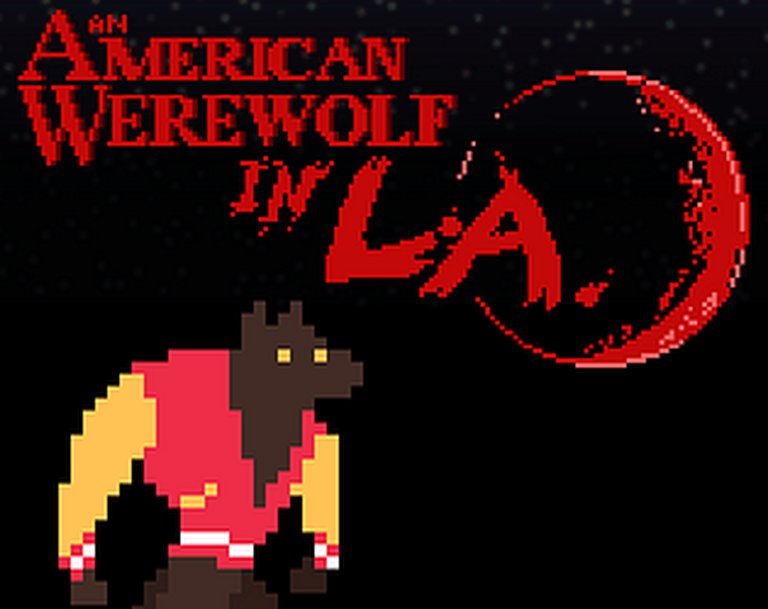
An American Werewolf in L.A. is a frenetic 2D side-scrolling beat ’em up set in 1984 North America, where players control young werewolf David Landis as he fights to escape his hometown of Hell’s Creek with high school girlfriend Clementine Naschy, pursued by her relentless Sheriff father and hordes of monstrous enemies. Inspired by classics like An American Werewolf in London, it features arcade action across five levels, over 10 enemy types, gratuitous violence, and local co-op multiplayer.
Gameplay Videos
Where to Buy An American Werewolf in L.A.
PC
An American Werewolf in L.A. Reviews & Reception
steambase.io (60/100): Mixed (60/100 from 10 reviews)
An American Werewolf in L.A.: Review
Introduction
Imagine the neon glow of an arcade cabinet humming beside a popcorn machine at a midnight screening of John Landis’s An American Werewolf in London, where festival-goers queue up for quarters to punch pixelated cops as a lupine anti-hero flees to surfdom in L.A. This is the electric origin of An American Werewolf in L.A., a 2019 indie beat ’em up that started as a bespoke arcade tie-in for Spain’s Canary Islands Fantastic Film Festival before clawing its way onto PC, Nintendo Switch, and Steam. Developed by the tiny team at PlayMedusa and published by Aurita Games, it proudly wears its retro heart on its furry sleeve—a spiritual sequel to Landis’s horror-comedy classic, packed with nods to werewolf cinema icons like Paul Naschy and Rick Baker. My thesis: While its unyielding arcade brutality and control quirks make it a punishing relic in today’s polished indie landscape, An American Werewolf in L.A. shines as a gleeful, reference-laden tribute to 1980s beat ’em ups and horror flicks, delivering bite-sized thrills best savored in local co-op or nostalgic solitude.
Development History & Context
PlayMedusa, a small Spanish indie studio known for passion projects over blockbuster ambitions, birthed An American Werewolf in L.A. in a whirlwind of festival fervor. Commissioned for the 2019 edition of the Canary Islands Fantastic Film Festival (Isla Calavera Film Festival) in La Laguna—centered on werewolves with guests like effects legend Rick Baker and An American Werewolf in London star David Naughton—the game was designed from the ground up for three custom arcade cabinets provided by Canary Arcades. With a tight five-month development cycle and minimal budget, the team channeled the raw, unforgiving ethos of 1980s coin-ops like Kung Fu Master, Vigilante, and Green Beret. These inspirations weren’t accidental: developers marveled at Kung Fu Master‘s mere six-minute runtime and quarter-munching difficulty, aiming to replicate that “one more try” compulsion.
Built in Unity for rapid prototyping, the game launched on itch.io in November 2019 as a Windows download ($5 minimum), capturing the arcade version’s simplicity: analog joystick for movement/jump, two buttons for attack and block/dash. Technological constraints of the era—Unity’s experimental new input system in preview—led to persistent headaches, like finicky controller detection (e.g., touchscreens or styluses misread as gamepads) and no remapping, issues PlayMedusa patched iteratively via devlogs and player feedback. The 2022 Nintendo Switch port and 2024 Steam release (with Remote Play Together) expanded reach amid the retro beat ’em up revival (Streets of Rage 4, TMNT: Shredder’s Revenge), but the 2019 gaming landscape was dominated by sprawling open-world epics and live-service grinders. In this context, Werewolf‘s arcade purity felt like a defiant middle finger—a festival novelty preserved as indie shareware, evoking the pre-crash era when games were ephemeral, brutal distractions.
Narrative & Thematic Deep Dive
An American Werewolf in L.A. weaves a lean, pulpy yarn that’s equal parts homage and parody, distilling werewolf lore into a road-trip beat ’em up. Protagonist David Landis—blatant wink to director John Landis—is a “tormented young man” and full moon-fueled lycanthrope itching to ditch Hell’s Creek (a foggy nod to the moors of London) for pro surfing glory in Los Angeles. As he revs his convertible, high-school sweetheart Clementine Naschy (daughter of Spanish horror icon Paul Naschy, whose werewolf films like Werewolf vs. the Yeti loom large) hops aboard, only for her shotgun-toting father, Sheriff Naschy, to unleash hell: “Monsters never leave Hell’s Creek.” What follows is a five-level gauntlet across “iconic American cities,” battling the sheriff’s recruited goons—cops, thugs, and worse—in a chase to L.A.
Thematically, it’s a cocktail of 1980s excess: teenage rebellion and the American Dream twisted through lycanthropy, where David’s beastly rage symbolizes repressed fury against small-town tyranny. Dialogue is sparse but flavorful, delivered in retro cutscenes with pixelated flair—Sheriff Naschy’s gravelly threats evoke B-movie sheriffs, while Clementine’s pleas add emotional stakes (though she’s more damsel than co-star). Undertones critique monstrous authority: the “monsters worse than you” are human enforcers (taser cops, biker gangs), flipping the horror script to make the werewolf sympathetic. References abound—Landis’s name, Naschy’s lineage, Baker’s gore legacy (gratuitous violence promised)—cementing it as cinephile fanfic. No deep character arcs or branches; it’s linear arcade storytelling, prioritizing momentum over nuance, yet the meta-layer elevates it: a “sequel in spirit” where David swaps London penthouses for Cali waves, blending horror nostalgia with surf-punk escapism.
Gameplay Mechanics & Systems
At its core, An American Werewolf in L.A. is a side-scrolling beat ’em up distilling the genre to primal loops: progress rightward, pummel foes, survive to the boss. Controls mimic arcade austerity—WASD/arrows (or analog) for move/jump, Z/X/N/M variants for attack/block (hold block while moving to dash)—with standing still to heal adding tactical depth (evade, regenerate, strike). Five levels escalate frenzy: Hell’s Creek streets to urban sprawls, featuring >10 enemy types (punks, tasers, heavies) that swarm in waves. Combat rewards aggression: combos chain punches/claws, dashes close gaps, jumps evade; bosses demand patterns (e.g., final showdown tweaks noted in patches).
Innovative systems include local 2-player co-op (gamepad required for second player), fostering chaotic synergy amid tight screens. No deep progression—lives via continues, no upgrades—but high difficulty enforces mastery (30-60 minutes for experts). Flaws abound: stunlocking by taser mobs feels “realistic” per devs but frustrating; no tutorial/remapping alienates modern players (QWERTY bias, controller quirks like analog-only movement irk D-pad purists); UI is barebones (no pause quit pre-patches, fullscreen via Alt-Enter). Steam/Switch updates fixed inputs, added translations, and skip buttons, but core loop remains punishingly fair(ish). It’s not Streets of Rage depth, but that authenticity—frenetic, quarter-hungry—nails the 80s vibe, rewarding muscle memory over menus.
World-Building, Art & Sound
Hell’s Creek to L.A. unfolds in pixel art splendor: retro 2D scrolling vistas evoke NES-era grit, with each level’s distinct flavor—misty backroads, neon-lit alleys, sun-baked highways—building a cartoonish Americana horror-scape. Visual direction prioritizes readability: chunky sprites for David’s hulking wolf form (mid-transformation flair), enemy variety (cops with batons, grotesque mutants), and environmental hazards (barrels, cars). Atmosphere thrives on contrast—full-moon glows against gritty palettes—immersing via “gratuitous violence” (gory takedowns sans splatter overkill).
Sound design amplifies the tribute: Ozzed’s synthwave intro sets 80s thriller mood, Wyver9’s chiptune score pulses with arcade urgency (urgent beats for chases, ominous riffs for bosses). SFX pop—meaty punches, howls, taser zaps—crisp despite Unity origins. No voice acting keeps it authentic, letting music carry tension. Collectively, these craft a cohesive nostalgia bomb: worlds feel lived-in yet disposable, like a festival one-shot, heightening the “just one more level” pull.
Reception & Legacy
Launch reception was niche but electric: festival crowds devoured the cabinets, with devs cherishing pics of Naughton and Baker playing. Commercial ports yielded modest traction—MobyGames lists no score (0 critic/player reviews), Steam’s 8-10 reviews hover at “Mixed” (60/100, praising art/controls, slamming inputs/lack of replay like scores). Itch.io feedback mirrors: 3.5/5 stars (25 ratings), lauding nuance (“standing still to heal adds depth”) and co-op fun, but docking for stuns, no rebinds, input bugs (fixed piecemeal). Switch/Metacritic: unrated, absent major coverage (IGN/Kotaku list it sans reviews).
Legacy endures as indie underdog: minimal industry influence (no Shredder’s Revenge clones), but it preserves arcade DNA in retro revival era, inspiring via devlogs (e.g., Steam Deck compatibility). As festival artifact-turned-$5 digital curio, it influences micro-niche: werewolf-themed indies (The Child of Werewolf) or event-tied games. Evolving rep? Cult curiosity for horror fans, boosted by bundles (e.g., Abortion Funds), proving small teams sustain passion projects amid AAA dominance.
Conclusion
An American Werewolf in L.A. is a scrappy love letter to arcade brutality and 80s werewolf mania—flawed by input gremlins and austerity, yet exhilarating in its purity. PlayMedusa captured festival magic in pixels, delivering a sub-hour adrenaline hit that’s co-op gold or solo masochism. In video game history, it claims a footnote as bespoke arcade revivalist: not revolutionary, but a howling testament to why we still chase high scores. Verdict: 7.5/10—essential for retro beat ’em up diehards, skippable for casuals craving polish. Fire it up with a friend, alt-Enter to fullscreen, and let the sheriff’s horde chase you to pixelated paradise.