
- Release Year: 2023
- Platforms: Windows
- Publisher: Plug In Digital SAS
- Developer: Alkemi SARL
- Genre: Action
- Perspective: Diagonal-down
- Game Mode: Single-player
- Gameplay: Hack and Slash, Roguelike
- Setting: Fantasy, Medieval
- Average Score: 74/100
Description
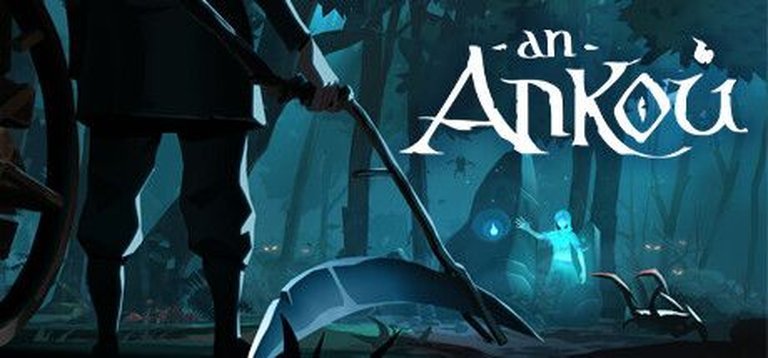
An Ankou is an action roguelike game set in a medieval fantasy world, featuring hack-and-slash combat and a strong emphasis on crafting mechanics. Players explore a narrative-driven survival experience inspired by French mythology, where they battle through procedurally generated levels as the Ankou, a figure from Breton folklore. Developed by Alkemi SARL and published by Plug In Digital SAS, the game was released on August 17, 2023, for Windows via Steam.
Gameplay Videos
Where to Buy An Ankou
PC
An Ankou Mods
An Ankou Guides & Walkthroughs
An Ankou Reviews & Reception
cubiccreativity.wordpress.com (80/100): a game that actually managed to adapt the formula and created something stunning
An Ankou: Review
Introduction
In the ever-expanding pantheon of roguelike action games, few manage to carve a distinct identity by blending mechanics in truly novel ways. An Ankou, developed by the Corsican studio Alkemi SARL and published by PID Games, stands as a haunting exception. Released into Early Access on August 17, 2023, this action-roguelike draws its chilling inspiration from Breton folklore, casting players as the mythical Ankou—a spectral servant of Death tasked with guiding lost souls while battling demonic hordes in an alternate 19th-century Brittany. While the genre has been saturated with “bullet heaven” clones since Vampire Survivors‘ meteoric rise, An Ankou distinguishes itself through its profound integration of resource management, deep crafting systems, and a relentless emphasis on strategic adaptation over reflexive carnage. This review argues that despite its development challenges and incomplete state, An Ankou emerges as a singular, atmospheric masterpiece—a game that transforms the familiar loops of survival into a meticulous dance between exploration, crafting, and desperate combat, leaving an indelible mark on the roguelike landscape.
Development History & Context
Alkemi SARL is a small, Corsican-founded studio with a decade-long history of crafting “medium-sized, polished, sometimes weird games,” including the narrative-driven card-brawler Foretales. Founded by CEO Thomas Bidaux and a core team of 35 credited members (including composers like Louis Godart and sound designers like Alexis Laugier), Alkemi operates with a boutique philosophy, aiming to create experiences players “have probably never played before.” An Ankou was developed over an intense 8-month sprint from concept to Early Access launch, leveraging the Unity engine to deliver its top-down, diagonal-down perspective gameplay. The team’s vision was explicitly anti-infinite-loop, seeking to create a “malleable” roguelike where “tons of ideas to lead the genre into new territories” could be tested against player feedback. This ambition manifested in a planned roadmap of bi-weekly updates during Early Access, promising new classes (Nun, Hunter, Cook), maps, bosses, and a “Demon Hunter” mode. Technically, the game was constrained by its need for accessibility across low-end hardware (minimum specs: Intel i3, GeForce 10 series) while maintaining its signature zoom-out camera.
Released into a crowded August 2023 gaming landscape dominated by AAA titles like Starfield and indie darlings like Baldur’s Gate 3, An Ankou arrived as a niche offering. It was positioned alongside other “bullet heaven” titles but differentiated itself through its French mythology roots and crafting depth. Tragically, Alkemi’s ambitious live-service model was derailed by financial difficulties shortly after release. As one player noted, the developer “has apparently fallen on hard times,” halting updates and leaving the game in a state of “finished” but unfulfilled potential. The title screen’s lingering “Fisherman” class announcement remains a poignant ghost of unrealized content.
Narrative & Thematic Deep Dive
The Ankou serves as the game’s narrative anchor, rooted in Breton legend where the last person to die each year is resurrected as Death’s cart driver, tasked with ferrying souls to the afterlife. An Ankou reimagines this figure as an active agent in a world overrun by demons. The narrative unfolds through environmental storytelling—a decaying chapel, a mist-shrouded forest—rather than explicit dialogue. Each playthrough begins with a new Ankou, defined by their profession in life: the Soldier, Apothecary, or Nun. This “servant of Death” premise introduces powerful themes of cyclical existence, duty, and the burden of mortality. The stark realization that “death is not the end, but a new job” permeates the game’s atmosphere, contrasting the Ankou’s grim purpose against the vibrant, cursed Brittany they inhabit.
Characterization is expressed through gameplay asymmetry. The Soldier embodies martial resilience, unlocking military-grade gear like grenade-launching spirits and reinforced plate armor. The Apothecary channels alchemical ingenuity, crafting debilitating poisons and healing salves. The Nun wields faith-based abilities, summoning supportive spirits and wielding a holy candelabra that inflicts burn damage. These professions aren’t mere stat modifiers; they dictate resource priorities, combat philosophies, and survival strategies. The overarching narrative is one of existential pressure: as waves of demons swell, the Ankou must balance their sacred duty (guiding souls) with their earthly mandate (crafting weapons to survive), creating a thematic tension between service and self-preservation.
Gameplay Mechanics & Systems
Core Loop & Resource Scavenging
At its heart, An Ankou redefines the “survival” roguelike loop. Unlike games where power grows exponentially, progress here hinges on acute resource intelligence. Maps (Ker Koad, Brekilien, Noz-ha-Deiz) are dotted with materials—wood, fiber, iron, salpeter, souls—each tied to specific recipes. The player’s scythe harvests these, but efficiency demands brutal triage: Should you grab iron for armor or salpeter for a debilitated weapon? The Orientation stat, which expands the camera’s view, becomes a critical survival tool, revealing distant resources or threats. This creates a constant risk-reward calculus: do you press deeper into the map for rare materials or retreat to safety?
Crafting & Progression
Crafting is the game’s defining innovation. Unlike Vampire Survivors’ passive builds, An Ankou forces active, in-session fabrication. Each weapon and armor set requires specific resources, and choices have cascading consequences. For example, the Nun’s candelabra demands iron and salpeter—resources also needed for her light armor. Over-investing in one path can cripple another, demanding adaptability. Weapon upgrades are transformative: the Soldier’s crossbow fires larger projectile cones at higher levels, turning it into a close-range shotgun, while the Nun’s prayer book creates stationary holy zones that control space. With only one weapon slot per run, crafting becomes a high-stakes gamble where failure is imminent and success feels earned.
Combat & Enemy Design
Combat transitions from methodical exploration to chaotic crescendos. Early waves are manageable with basic gear, but the Threat counter (a timer or player-activated mechanic) introduces brutal escalation. In Brekilien, players must “survive threat level 10,” pushing into demon-infested borders for resources while multiplying danger. Bosses and elite demons introduce complex patterns—the giant corrupted beasts require kiting, while spectral spirits demand debilitation. The Soldier excels in crowd control, the Apothecary in debilitation, and the Nun in area denial, encouraging class mastery.
UI & Control Schemes
The UI prioritizes clarity amid chaos. A clean radial menu displays resources and recipes, while the camera zoom (via Orientation) mitigates clutter. Control schemes are inclusive: dual-stick for console players, single-stick with auto-aim, and mouse/keyboard for precision. No tutorial exists, however, leading to a punishing learning curve where understanding resource priorities is paramount—a flaw for newcomers but a merit for veterans seeking depth.
World-Building, Art & Sound
Setting & Atmosphere
An Ankou’s Brittany is a character unto itself. Haunted forests (Ker Koad), open moors (Brekilien), and twilight villages (Noz-ha-Deiz) evoke Celtic folklore’s melancholic grandeur. The day-night cycle in Noz-ha-Deiz heightens tension, as shadows lengthen and demon activity peaks. Environmental storytelling—abandoned altars, spectral carvings—hints at a world where the veil between life and death has frayed. The atmosphere is relentlessly oppressive; even moments of peace feel fragile, underscored by the constant threat of the next wave.
Visual Direction
The Unity engine delivers a stylized, low-poly aesthetic optimized for zoomed-out views. Character designs blend folklore with grotesquerie: Ankou wear tattered versions of their mortal professions, while demons range from skeletal wraiths to hulking abominations. The muted color palette—greys, browns, and sickly greens—enhances the gothic tone, with splashes of crimson for demonic energy. Zoom limitations necessitate minimalist detail, yet the art succeeds in conveying scale and dread.
Sound Design & Music
Louis Godart’s score is a masterpiece of atmospheric tension. Ombeline Chardes’ violin and viola weave haunting melodies that accelerate with rising Threat levels, mirroring gameplay’s frantic pace. Sound design is equally meticulous: the scythe’s thud as it harvests wood, the hiss of a burning demon, the distant wail of a lost soul—all create immersive dread. Audio cues for resource drops and enemy spawns are critical, turning sound into a tactical tool.
Reception & Legacy
Launch & Commercial Performance
An Ankou launched to a mixed reception on Steam, with 68% of 587 reviews being “Positive” at release. Critics praised its unique crafting and mythology but noted its punishing early game and incomplete state. Priced at $4.99 (discounted to $3.49), it attracted a dedicated niche, with 51-hour completionists lauding its replayability. The 35-person development team’s commitment to updates was initially lauded, but the abrupt halt due to financial struggles left players disappointed. The Steam community remains divided, with some hailing it a “steal” and others decrying its unfinished potential.
Critical Acclaim & Player Sentiment
Early impressions highlighted An Ankou’s innovation. GodisaGeek called it a “fresh idea of a Survivors game,” while Cubic Creativity awarded it an 8/10, praising its “stunning” adaptation of the Vampire Survivors formula. Players celebrated the strategic depth: “it stays challenging and forces you to do smart picks,” noted one reviewer. However, the learning curve drew criticism, with newcomers finding the “first hour a hard sell.” The lack of post-launch updates soured long-term sentiment, cementing its status as a “what could have been” title.
Legacy & Influence
Though underserved by its publisher, An Ankou has influenced the roguelike genre by proving that deep systems can coexist with accessibility. Its hybrid of bullet-haven mechanics and survival-crafting inspired games like An Outcry (2022) and An Aisling (2024), which explore similar themes of folklore and resource-driven combat. Alkemi’s legacy endures in its commitment to mythology-driven design, offering a blueprint for developers to blend cultural heritage with innovative gameplay. Despite its truncated life, An Ankou remains a cult classic, celebrated for its unyielding atmosphere and intellectual rigor.
Conclusion
An Ankou is a flawed, fleeting masterpiece—a roguelike that burns with the intensity of a dying candle. Its greatest triumph lies in how it transforms survival into a cerebral dance: every resource harvested, every weapon crafted, every wave survived is a testament to strategic foresight in a world of overwhelming chaos. While its steep learning curve and abrupt development halt prevent it from reaching the heights of Hades or V Rising, its Breton soul remains unshaken. The Ankou’s journey—a spectral cart driver in a hellish Brittany—becomes a metaphor for the game itself: a brief, haunting interplay of light and shadow, duty and despair. For players willing to embrace its punishing elegance, An Ankou offers not just a game, but a meditation on mortality. In the annals of roguelike history, it stands as a defiant footnote—a reminder that even unfinished art can leave an indelible mark.