
- Release Year: 2019
- Platforms: Nintendo Switch, PlayStation 4, Windows, Xbox One, Xbox Series
- Publisher: Alawar Entertainment, Inc., ChiliDog Interactive LLC, S.A.D. Software Vertriebs- und Produktions GmbH
- Developer: Panda Games Studio
- Genre: Strategy, Tactics
- Perspective: 1st-person
- Game Mode: Single-player
- Gameplay: Point and select, Tile matching puzzle
- Setting: Egypt (Ancient), Egypt (Medieval, Modern)
- Average Score: 55/100
Description
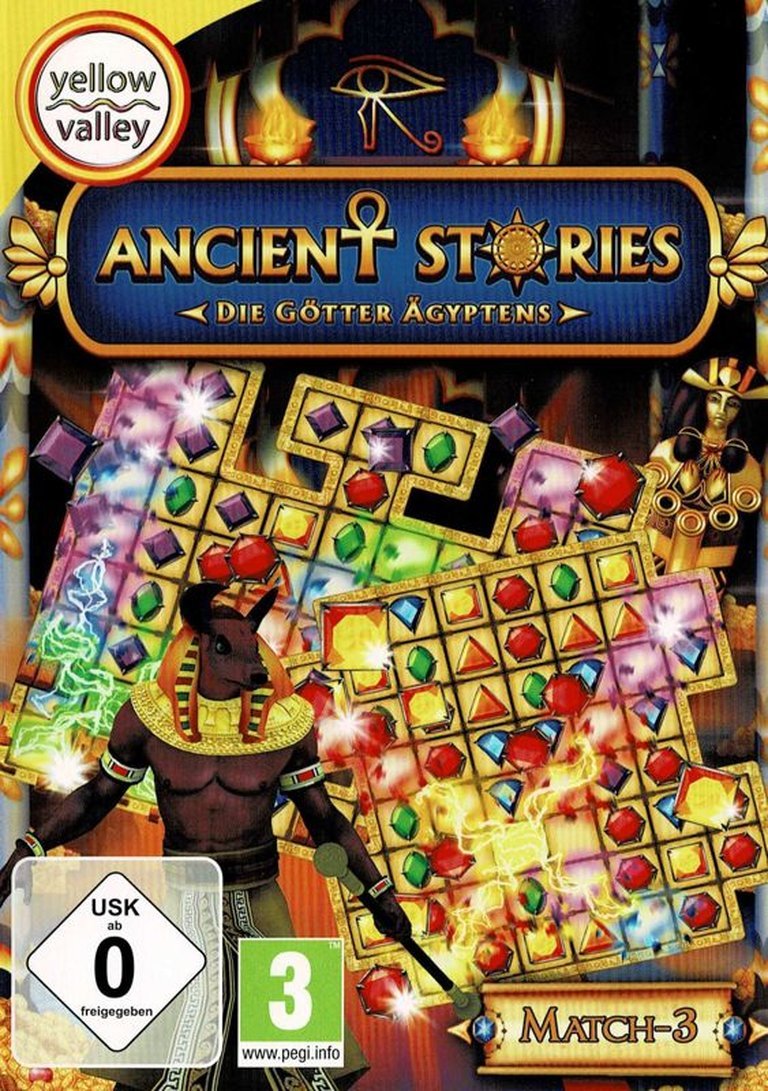
Ancient Stories: Gods of Egypt is a match-three puzzle game set in ancient Egypt, where players must thwart the sinister plans of an evil pharaoh to save their city from destruction. With multiple gameplay modes—Standard, Advanced, and Untimed—the game offers a mix of strategic tile-matching challenges and immersive storytelling, blending Egyptian mythology with engaging puzzle mechanics.
Gameplay Videos
Where to Buy Ancient Stories: Gods of Egypt
PC
Ancient Stories: Gods of Egypt Guides & Walkthroughs
Ancient Stories: Gods of Egypt Reviews & Reception
ageratingjuju.com : The main problem of this game is that it has been compared to others of this kind and lack of originality is visible in this game, and it feels too far too familiar.
metacritic.com (50/100): The levels are still enjoyable for short pick up and play sessions of course, but don’t expect to find anything groundbreaking in Ancient Stories: Gods of Egypt.
thexboxhub.com (50/100): It is a tricky one really, because Ancient Stories: Gods of Egypt as an isolated case ticks a lot of boxes for a match-3 fan. The main problem is that compared to others of this ilk it lacks original ideas and feels far too familiar.
steambase.io (67/100): Ancient Stories: Gods of Egypt has earned a Player Score of 67 / 100.
Ancient Stories: Gods of Egypt Cheats & Codes
Ancient Stories: Gods of Egypt
Enter the cheat code while in a level, not at the title screen. It must be entered on every single level to remain active.
| Code | Effect |
|---|---|
| initially | Provides several options to finish a level |
Ancient Stories: Gods of Egypt: A Comprehensive Retrospective
Introduction: The Match-3 Genre’s Egyptian Odyssey
Ancient Stories: Gods of Egypt (2019) is a match-3 puzzle game that attempts to carve its niche in a genre dominated by titans like Candy Crush and Bejeweled. Developed by Panda Games Studio and published by Alawar Entertainment and ChiliDog Interactive, the game blends Egyptian mythology with tile-matching mechanics, offering a narrative-driven twist on a familiar formula. While it doesn’t reinvent the wheel, its thematic ambition and accessibility make it a noteworthy, if flawed, entry in the casual gaming landscape.
This review will dissect the game’s development, narrative, gameplay, aesthetics, reception, and legacy, ultimately determining whether it stands as a forgotten gem or a missed opportunity.
Development History & Context: A Studio’s Casual Ambition
The Creators: Panda Games Studio & Alawar’s Casual Empire
Panda Games Studio, a developer with a portfolio heavily skewed toward casual and hidden-object games (Rescue Team 8, Viking Sisters), partnered with Alawar Entertainment—a publisher renowned for its Alawar Casual franchise—to craft Ancient Stories: Gods of Egypt. The collaboration reflects a broader industry trend: leveraging established casual gaming mechanics with a fresh thematic coat of paint.
The game’s development was likely constrained by:
– Budget and Scope: As a $6.99 digital title, it lacked the resources of AAA match-3 games.
– Engine Choice: Built in Unity, a common tool for indie and casual developers, ensuring cross-platform compatibility (Windows, PS4, Xbox One, Switch).
– Market Saturation: Released in 2019, it entered a genre already crowded with free-to-play mobile giants and premium alternatives like Gems of War.
The Gaming Landscape in 2019
By 2019, the match-3 genre had evolved beyond its Bejeweled roots:
– Mobile Dominance: Games like Candy Crush Saga and Puzzle & Dragons had perfected monetization through microtransactions.
– Narrative Integration: Titles like Puzzle Quest (2007) had proven that RPGs and puzzles could coalesce, though Ancient Stories opted for a lighter story-driven approach.
– Indie Innovation: Games like Grindstone (2019) and Baba Is You (2019) pushed puzzle mechanics in bold directions, leaving Ancient Stories’ traditional design feeling safe by comparison.
Narrative & Thematic Deep Dive: A Mythological Match-3
Plot Summary: Tutmos’ Plague and the Hero’s Quest
The game’s premise is straightforward:
– Villain: The evil pharaoh Tutmos seeks immortality by unleashing a deadly plague via an incantation.
– Objective: Players must destroy unholy altars sustaining his spell by completing match-3 levels.
– Progression: Each level cleared weakens Tutmos’ grip, culminating in boss battles against his minions.
Themes: Power, Divinity, and Humanity’s Struggle
While the narrative is thin, it taps into timeless themes:
1. Divine Intervention: Players “call upon the gods” (e.g., Horus, Tot) for abilities, reinforcing the game’s mythological framework.
2. Corruption of Power: Tutmos’ hubris mirrors classic Egyptian tales of pharaohs defying Ma’at (cosmic order).
3. Heroism: The protagonist’s role as a savior aligns with archetypal “chosen one” tropes.
Storytelling Execution: Comic-Book Stylings and Missed Potential
- Presentation: The story unfolds through comic-book-style storyboards, a choice that feels dated and underwhelming. The art style lacks the polish of games like The Banner Saga or Hades, which blend narrative and gameplay seamlessly.
- Character Depth: Tutmos and the gods are one-dimensional, serving as mere set dressing. Even the “bosses” are visually indistinguishable beyond color palettes.
- Pacing: The narrative is sporadic, with long stretches of gameplay interrupted by abrupt story beats. This disjointedness undermines immersion.
Verdict: The Egyptian setting is the game’s strongest thematic asset, but its execution feels perfunctory—a missed opportunity to weave mythology into mechanics more deeply.
Gameplay Mechanics & Systems: Match-3 with a Divine Twist
Core Gameplay Loop
- Tile Matching: Players swap adjacent tiles to create chains of three or more identical elements (e.g., colored gems, hieroglyphs).
- Level Objectives: Goals vary from clearing a set number of tiles to defeating bosses by depleting their health bars.
- Obstacles: Blocks, portals, and “frogs” (which hop between tiles) add complexity.
Innovations & Flaws
| Feature | Analysis |
|---|---|
| God Abilities | Players invoke deities (e.g., Horus destroys tiles) by matching their favored colors. A clever tie-in to the theme, but only a few abilities feel impactful. |
| Special Tokens | Matching 4+ tiles creates power-ups (e.g., row/column clears, pharaoh masks). Standard for the genre but executed competently. |
| Boss Battles | Underwhelming—reduced to matching tiles to deplete a health bar. Lacks the strategic depth of Puzzle Quest’s combat. |
| Difficulty Modes | Casual (no time/move limits), Relax, Expert (timed/move-restricted). A welcome accessibility feature, though the lack of mid-game adjustments is frustrating. |
| Progression System | Earn in-game currency to upgrade god abilities. A shallow but functional meta-layer. |
Technical Issues
- Bugs: Reports of boards freezing or abilities failing to trigger (Steam Community).
- Visual Clarity: Some obstacles blend into the background due to poor color contrast.
- Repetition: The 100+ levels recycle mechanics without meaningful evolution.
Verdict: The gameplay is competent but unremarkable, offering a serviceable match-3 experience without innovation. The god abilities are the standout feature, albeit underutilized.
World-Building, Art & Sound: Aesthetic Ambiance
Visual Design: Hieroglyphs and Hues
- Art Style: Bright, cartoonish, and heavily inspired by Egyptian iconography (e.g., pyramids, ankh symbols). The tiles and backgrounds are vibrant but lack detail.
- Animation: Minimal—tiles pop and fade without flair. Bosses are static sprites with basic attack animations.
- UI: Clean and functional, though the comic-book storyboards clash with the in-game aesthetic.
Sound Design: Ambient but Unmemorable
- Music: A loop of generic “Egyptian-themed” tracks—sitar-like instruments and percussion. Inoffensive but forgettable.
- SFX: Tile matches produce satisfying clinks, but god abilities lack auditory punch.
Verdict: The art and sound design fulfill their roles without exceeding expectations. The game’s atmosphere is adequate for a casual title but fails to transport players to ancient Egypt meaningfully.
Reception & Legacy: A Mixed Bag
Critical Reception
- Metacritic: No score (insufficient reviews).
- TheXboxHub (2.5/5): Praised the difficulty options but criticized the lack of originality and bugs.
- Steam Reviews (67/100): Players appreciated the theme and accessibility but noted repetitiveness.
Commercial Performance
- Sales: Likely modest, given its niche appeal and lack of marketing.
- Platform Expansion: Released on Switch, PS4, and Xbox One in 2021, suggesting moderate success on PC.
Legacy & Influence
- Genre Impact: None—Ancient Stories didn’t innovate enough to leave a mark.
- Cultural Footprint: A footnote in the match-3 genre, overshadowed by more ambitious titles like Gems of War or Puzzle Quest.
- Lessons Learned: Demonstrates the challenges of balancing narrative and gameplay in casual puzzlers.
Conclusion: A Serviceable but Forgotten Puzzle
Ancient Stories: Gods of Egypt is a competent, if uninspired, match-3 game that leverages its Egyptian theme as its primary selling point. Its strengths—accessible difficulty modes, a functional progression system, and a novel (if shallow) god-ability mechanic—are undercut by repetitive gameplay, technical hiccups, and a narrative that feels like an afterthought.
Final Verdict:
– For Casual Fans: A decent time-waster with a unique theme, best played in short bursts.
– For Genre Enthusiasts: Skip it—better alternatives (Gems of War, Puzzle Quest) offer deeper mechanics.
– Historical Significance: A minor entry in the match-3 canon, notable only for its mythological skin.
Score: 6/10 – “Adequate, but not essential.”
Ancient Stories: Gods of Egypt proves that even the most venerable settings—like the land of the pharaohs—can’t elevate a game without strong mechanics or narrative cohesion. It’s a reminder that in the puzzle genre, innovation and polish matter more than theme alone.