
- Release Year: 2018
- Platforms: Macintosh, Windows
- Publisher: Coffee-Powered Games
- Developer: Coffee-Powered Games
- Genre: Strategy, Tactics
- Perspective: 1st-person
- Game Mode: Single-player
- Gameplay: Collectible card, Trading, Turn-based combat
- Setting: Classical antiquity
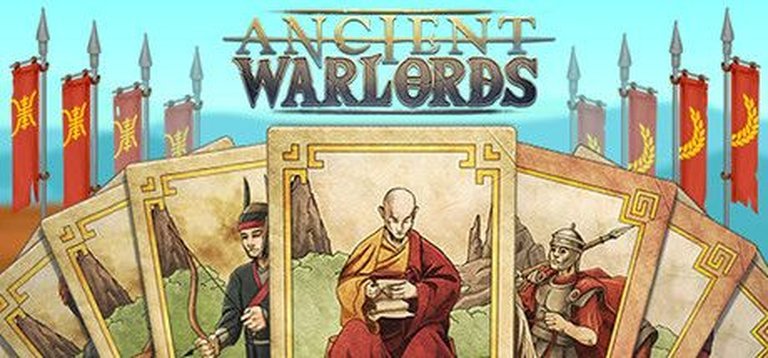
Description
Ancient Warlords is a turn-based trading card game set in the late antiquity, spanning from middle Europe to the shores of China. Players command a mercenary company, starting in a specified city with initial troops. The game features four factions—Chinese, Indian, Persian, and Roman—each with unique cards that can be combined in decks. Players earn money through battles, which occur in cities and involve strategic placement of melee, ranged, and special cards across two battle lines.
Ancient Warlords: A Mercenary’s Journey Through the Sands of Time
Introduction
In the crowded landscape of digital card games, Ancient Warlords (2018) stakes its claim with a bold premise: a turn-based tactical experience steeped in the geopolitics of late antiquity. Developed by the enigmatic Coffee-Powered Games, this indie title blends trading-card mechanics with historical flavor, inviting players to command mercenary forces across a sprawling theater from Rome to China. But does it transcend its niche, or fade into the annals of forgotten strategy games? This review dissects its ambitions, systems, and legacy.
Development History & Context
A Small Studio’s Vision
Coffee-Powered Games, a developer with no prior notable titles, positioned Ancient Warlords as a love letter to antiquity-era warfare. Built using the Unity engine, the game reflects the accessibility of modern indie development tools, though its scope is modest—focusing on card-based battles rather than grand campaigns. Released in 2018, it entered a market dominated by titans like Hearthstone and Magic: The Gathering Arena, offering a historical twist on the genre.
Technological Constraints
The choice of Unity allowed for cross-platform compatibility (Windows and macOS), but the game’s visuals and systems suggest a tight budget. Card artwork leans on functional, albeit generic, depictions of units like Roman legionaries and Persian archers, avoiding the lavish animations of its contemporaries. The decision to forgo multiplayer—a staple of the genre—hints at limited resources, focusing instead on solo skirmishes and mercenary management.
The 2018 Landscape
At launch, the strategy genre was bifurcating between AAA epics (Total War: Three Kingdoms) and indie experiments (Into the Breach). Ancient Warlords straddled neither, instead carving a niche as a digital board game for history enthusiasts. Its turn-based pacing and faction diversity echoed tabletop classics like Commands & Colors: Ancients, but its digital execution struggled to stand out.
Narrative & Thematic Deep Dive
A World of Blades and Coin
Ancient Warlords lacks a predefined narrative, instead offering a sandbox of emergent storytelling. As a mercenary captain, players navigate a fractured late-antiquity world, hiring troops from four factions: the disciplined Romans, the archery-focused Persians, the elephant-riding Indians, and the versatile Chinese. The absence of canonical campaigns is a missed opportunity, though tavern dialogues and city descriptions hint at a world teetering between trade and conquest.
Themes of Cultural Syncretism
The game’s most compelling theme is its celebration of cross-cultural military tactics. By allowing players to mix faction cards—deploying Roman triarii alongside Indian war elephants—it subtly critiques historical boundaries, imagining a world where mercenary pragmatism trumps nationalism. Yet, this potential is undercut by shallow lore; the factions lack distinct personalities beyond their unit rosters.
Dialogue and Worldbuilding
Text snippets in taverns and battle summaries provide minimal flavor, relying on archetypes like “grizzled veterans” and “ambitious warlords.” The writing is functional but fails to evoke the rich tapestries of Total War or Age of Empires. Historical authenticity is uneven—while Roman gladii and Persian immortals are recognizable, the Indian and Chinese factions feel underdeveloped, reduced to exotic tropes.
Gameplay Mechanics & Systems
Core Loop: Greed and Glory
The gameplay revolves around three pillars:
1. Deck Building: Acquire faction-specific cards (units, abilities) via in-game currency earned from victories.
2. City Management: Choose starting cities (each granting unique starter decks) and visit taverns to buy/sell cards.
3. Tactical Combat: Deploy units across two rows (melee/ranged) and resolve three-round battles via combined strength values.
Innovations and Flaws
- Hybrid Armies: Mixing factions encourages creative strategies, such as pairing Roman defensive units with Chinese fire archers.
- Battle Simplicity: Combat is deterministic—higher strength wins—which reduces complexity but risks monotony. Special cards (e.g., “Flanking Maneuver”) add minor tactical depth.
- Progression Limitation: Without a campaign or persistent upgrades, replayability hinges on self-imposed challenges.
UI and Accessibility
The point-and-click interface is serviceable, though cluttered in card management screens. Tooltips are sparse, leaving players to intuit unit synergies. The absence of a true tutorial (beyond brief tooltips) alienates newcomers, a critical flaw in a genre reliant on gradual mastery.
World-Building, Art & Sound
Visual Design
Ancient Warlords adopts a minimalist aesthetic, with card art resembling stylized historical illustrations rather than dynamic renders. Cities are represented by static icons, and battlefields lack environmental detail. While functional, the art fails to immerse players in antiquity’s grandeur—contrasting sharply with the vivid worlds of Civilization VI or Thrones of Britannia.
Soundscape
The soundtrack leans on generic orchestral motifs, evoking the era without memorability. Battle effects—clashing steel, war cries—are repetitive but serviceable. A missed opportunity lies in faction-specific audio; Roman units, for instance, lack the Latin battle shouts that could deepen immersion.
Atmosphere
The game’s atmosphere is its weakest element. Without narrative stakes or environmental storytelling, the world feels like a spreadsheet of stats. Unlike The Witcher 3’s gritty authenticity or Assassin’s Creed Origins’ living history, Ancient Warlords remains a mechanical exercise.
Reception & Legacy
Critical Silence
Upon release, Ancient Warlords garnered negligible attention from critics and players. No Metacritic or MobyGames reviews exist, and its Steam page languishes with minimal activity. The lack of marketing and multiplayer features likely contributed to its obscurity.
Industry Influence
While not groundbreaking, the game’s faction-blending mechanic resonates in indie circles. Later titles like Kards: The WWII Card Game (2019) adopted similar historical-card hybrids but with greater polish.
Cult Potential
A small niche of history buffs may appreciate its educational value—the card descriptions briefly explain unit origins—but as a game, it fails to leave a lasting imprint.
Conclusion
Ancient Warlords is a curious artifact—a card game that gestures toward historical depth but lacks the substance to rival its peers. Its premise—mercenary command in a fragmented antiquity—is fertile ground, yet Coffee-Powered Games’ execution feels half-formed. The card-mixing system and faction diversity hint at unfulfilled potential, but clunky UI, shallow progression, and absent narrative anchor it in mediocrity.
For hardcore strategy enthusiasts, it offers a fleeting diversion, a proof-of-concept for a richer game that might have been. For the broader audience, it remains a footnote—a reminder that even in the age of indie innovation, ambition must marry execution. In the pantheon of historical games, Ancient Warlords is less a conqueror and more a mercenary fading into the dusk.
Final Verdict: A diamond in the rough—but too rough to shine.