
- Release Year: 2009
- Platforms: Windows, Xbox 360
- Publisher: 3000AD, Inc.
- Developer: 3000AD, Inc.
- Genre: Action
- Perspective: 1st-person
- Gameplay: Space flight
- Setting: Futuristic, Sci-fi
Description
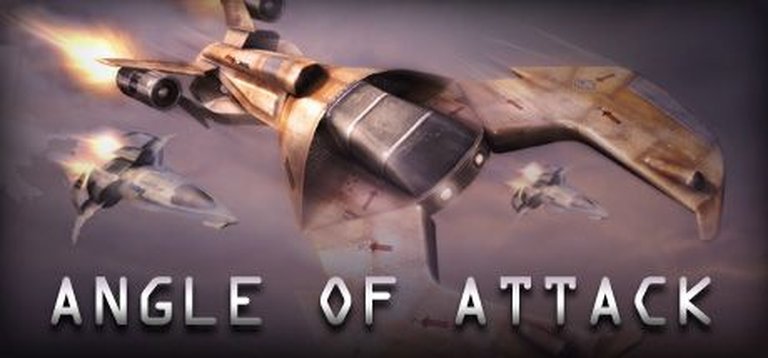
Angle of Attack is a sci-fi action game developed by 3000AD, Inc., featuring first-person space flight combat in a futuristic setting. Players pilot high-performance fighters in high-octane aerial battles against air, land, and sea threats across vast planetary regions, serving as the aerial combat companion to All Aspect Warfare.
Where to Buy Angle of Attack
PC
Angle of Attack Patches & Updates
Angle of Attack Guides & Walkthroughs
Angle of Attack Cheats & Codes
PC (Steam)
These can be added to the Steam client properties window for the game.
| Code | Effect |
|---|---|
| /opt_kill | invincibility cheat |
| /opt_intro | disable the startup company logo animation |
| /w | run in a window |
| /opt_cheats_on | enables cheats. See GAME_CHEATS.PDF for more info |
Angle of Attack: Review
Introduction
In the vast cosmos of sci-fi flight simulators, where dogfights rage amid planetary atmospheres and desperate campaigns hinge on a pilot’s split-second decisions, Angle of Attack emerges as a forgotten gem—or perhaps a cautionary artifact—from the late 2000s indie scene. Released in 2009 by the enigmatic 3000AD, Inc., this aerial combat title promised unadulterated immersion for “air combat jocks,” eschewing console gimmicks for raw skill-based survival in a sprawling sci-fi warzone. As the companion to All Aspect Warfare, it captures the final, frantic air assaults on the Gammulan-held planet LV-115, tying into developer Derek Smart’s long-running Galactic Command and Battlecruiser universe. My thesis: Angle of Attack stands as a technically audacious testament to one man’s vision, delivering ambitious planetary-scale combat and replayable mission design, yet undermined by its obscurity, control quirks, and the era’s unforgiving indie landscape, cementing it as a cult curiosity rather than a genre-defining triumph.
Development History & Context
3000AD, Inc., helmed by polymath Derek K. Smart (Ph.D.), was no stranger to ambitious space sims when Angle of Attack launched on August 17, 2009, for Windows (with an Xbox 360 port following in 2010). Smart, credited across nearly every role—designer, producer, lead programmer, AI architect, CTO, and more—embodied the solitary genius archetype of indie development. Supported by a skeletal team including lead artist Joerg Ecker (“Fritz”), programmers Sergio Gil, Martin Piper (ReplicaNet), and Nick Vining, plus contractors for art assets (e.g., Ronnie Olsthoorn of Skyraider3D) and audio (Somatone, Inc. for sound/VFX, Daniel Sadowski for scores, and voice actors Adam Harrington and Carina Harman), the project was a labor of love amid tight constraints.
The 2009 gaming landscape was dominated by juggernauts like Modern Warfare 2 and Dragon Age: Origins, with flight sims clinging to niches via IL-2 Sturmovik sequels and Ace Combat entries. Smart’s vision harkened back to his 1990s roots in Battlecruiser 3000AD, emphasizing seamless multi-aspect warfare (air, ground, space) without loading screens—a rarity in an era shifting toward accessible arcade shooters. Technological limits of DirectX 9/SM 3.0 engines pushed Smart to innovate with geo-morphing terrain and HDR lighting, targeting widescreen resolutions up to 1680×1050. Yet, as a self-published Steam title at $9.99, it faced Steam’s nascent indie flood and competition from polished sims like Falcon 4.0: Allied Force. Recent Steam updates (e.g., 2017 docs fixes, 2018 streams) show Smart’s enduring commitment, even as Windows 10 compatibility issues surfaced in community gripes.
Narrative & Thematic Deep Dive
Angle of Attack unfolds in the twilight of a galactic war between humanity’s Galactic Command (GALCOM) Terrans and the alien Gammulans, a conflict echoing Smart’s broader lore from Universal Combat and Galactic Command: Echo Squad. The plot zeros in on LV-115, a Gammulan military hub and staging ground, during the “final days of the air campaign.” GALCOM, battered in a “lopsided” aerial slog, resorts to desperation: loading the apocalyptic “planet killer” R.A.N.D.O.M. weapon onto the carrier GCV-Excalibur for a doomed suicide run. Players embody elite pilots executing 16 tactical strikes—air-to-air dogfights, ground assaults, sea interdictions—amid this doomed offensive.
Thematically, it’s a meditation on escalation and futility in interstellar total war. No bombastic heroes here; dialogue (voiced by Harrington and Harman) underscores grim professionalism, with wingmen issuing terse orders amid radio chatter. Characters are archetypes: the stoic squadron leader, expendable grunts, faceless Gammulan foes. Subtle motifs emerge—weather-ravaged skies mirroring morale collapse, night missions evoking hopelessness, the R.A.N.D.O.M. as a Pyrrhic superweapon critiquing mutually assured destruction. Storyboards and scripting by Smart weave a seamless campaign, where individual missions build to Excalibur’s fall, rewarding sequence play with escalating stakes. Yet, lacking deep character arcs or branching narratives, it prioritizes tactical vignettes over epic saga, aligning with sim purism but alienating casual players.
Gameplay Mechanics & Systems
At its core, Angle of Attack loops around high-fidelity aerial combat emphasizing Situational Awareness (SA): scan radars, manage avionics, deliver ordnance in fluid battles. Sixteen missions span air superiority, CAS (close air support), SEAD (suppression of enemy air defenses), across day/night cycles and weather (storms, fog), playable standalone or as a campaign. Four fighters offer asymmetry:
- F-104 Starblade: Agile interceptor for dogfights, light armor, rapid-fire lasers.
- A-18 Hornet-II: Balanced strike fighter, versatile missiles/unguideds.
- Su-37 Terminator: Heavy brawler, plasma cannons, tanky shields.
- RA-7 Thunderbolt: Ground-attack beast, cluster bombs, napalm.
| Fighter | Strengths | Weaknesses | Ideal Missions |
|---|---|---|---|
| F-104 Starblade | Speed, maneuverability | Fragile | Air-to-air patrols |
| A-18 Hornet-II | Payload variety | Mediocre agility | Mixed strikes |
| Su-37 Terminator | Firepower, durability | Slow climb | Bomber intercepts |
| RA-7 Thunderbolt | Anti-ground ordnance | Poor vs. fighters | Tactical bombing |
Wing command shines via an intuitive interface: issue formations, attack runs, or defensive postures to your AI flight, fostering leadership sim. Combat demands throttle management, afterburner bursts, lock-ons, and countermeasures—no hand-holding, pure skill.
Progression is mission-based, with unlocks via campaign completion for replay value. Multiplayer innovates: 16-player PvP/team deathmatch, 4-player co-op, all via single-instance hosting—impressive for 2009 netcode. UI integrates a document viewer for controls/manuals/tutorials, though Steam users in 2024 lament opaque docs and mouse/keyboard quirks (e.g., no clear joystick mapping). Flaws include dated flight models (less nuanced than Falcon 4.0) and AI pathing hiccups, but innovations like seamless 400 sq km worlds elevate it.
World-Building, Art & Sound
LV-115 is a masterclass in seamless planetary immersion: 400+ sq km of geo-morphed terrain (2m/pixel fidelity from orbit to ground), high-def DEMs rendering canyons, bases, oceans at any altitude. SM 3.0 shaders deliver HDR day/night transitions, volumetric clouds, rain-slicked runways—stunning for 2009, evoking Crysis atmospheres without the bloat. Full 3D cockpits brim with MFDs (multi-function displays), HUD overlays, and flickering warnings, amplifying tension.
Art direction, led by Ecker and contractors like Tuten Graphics, favors functional sci-fi: angular fighters, blocky Gammulan installations, dynamic explosions. No photorealism, but coherent futurism ties to Smart’s universe.
Sound design elevates: Somatone’s FX roar with jet whooshes, missile locks, AA fire; Sadowski’s scores pulse with orchestral synths for urgency; VO adds gravitas (Harrington’s gravelly commands). Engine whine, wind shear, and radio static forge palpable SA, though dated compression shows in isolation.
Collectively, they craft a hostile, lived-in battlefield, where visual/audio cues (e.g., storm-obscured SAMs) demand mastery.
Reception & Legacy
Launch reception? Nonexistent. MobyGames lists no scores or reviews; Metacritic has zero; Steam reviews are barren. Collected by just 4 MobyGames users, Steam discussions reveal sparse activity—queries on TrackIR/controls (2014-2019), Smart’s updates (2017-2018), a 2024 player baffled by fighters. Commercially, it languished as a $9.99 Steam obscurity, bundled in All Aspect Warpack.
Reputation evolved minimally: Smart’s cult following (from Battlecruiser drama) appreciates its ambition, but obscurity stems from poor marketing, Derek Smart’s controversial persona (e.g., public feuds), and control/DX9 issues on modern OS. Influence? Niche—pioneered single-instance MP and geo-morphing for indies, echoing in procedural sims like Avorion. Ties to Universal Combat presage multi-aspect sandboxes, but no direct successors. In 2025 hindsight, it’s a relic of pre-Star Citizen crowdsim dreams.
Conclusion
Angle of Attack is Derek Smart’s purest aerial love letter: technically prescient planetary combat, asymmetric fighters, and immersive sim elements that reward jocks with endless replay. Yet, narrative austerity, control opacity, and zero buzz relegate it to obscurity. In video game history, it claims a footnote as 3000AD’s high-water mark—innovative but unpolished, a testament to indie grit amid 2009’s giants. Verdict: 7/10—Essential for sim historians, skippable for casuals, but fire it up for that raw, gimmick-free thrill. Seek the Steam Warpack for value.