
- Release Year: 2012
- Platforms: Windows
- Publisher: Dreampainters Software, Kalypso Media Digital Ltd.
- Developer: Dreampainters Software
- Genre: Adventure
- Perspective: 1st-person
- Game Mode: Single-player
- Gameplay: Puzzle elements
- Setting: Abandoned house, Italy, Val D’Ayas
Description
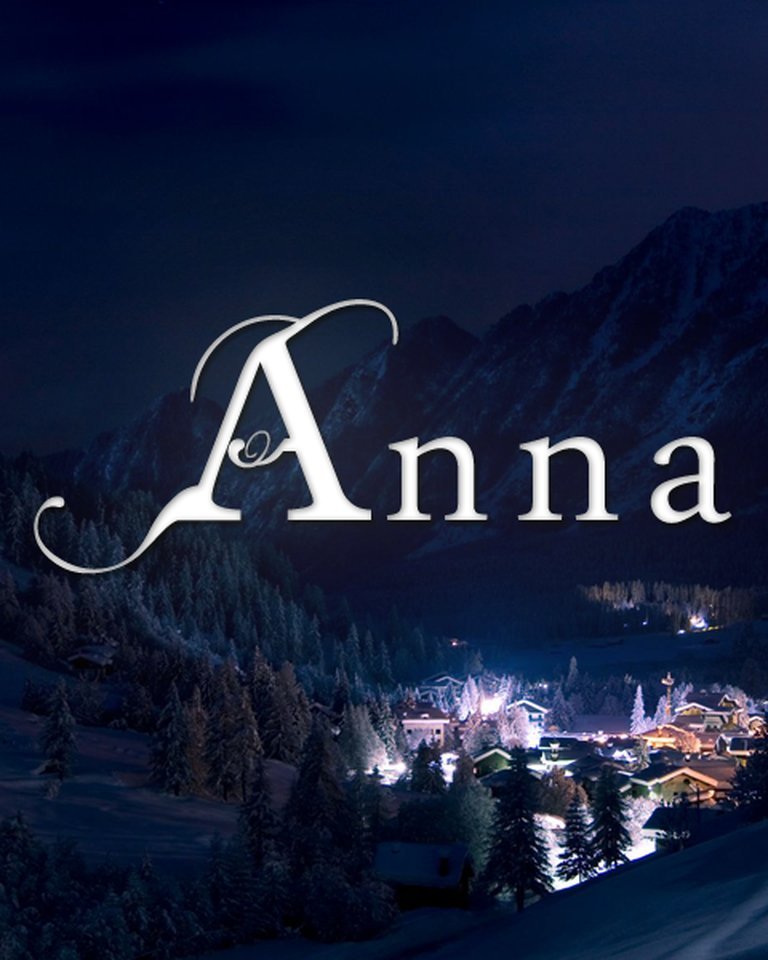
Anna is a first-person horror adventure set in an abandoned house, where players explore a haunting environment inspired by ancient Italian legends to uncover dark secrets about a mysterious character named Anna and the protagonist’s traumatic past. The game blends atmospheric horror with puzzle-solving mechanics, featuring interactive objects highlighted in red, a flexible inventory system for combining items, and a unique three-tiered ending structure that progressively reveals additional content as players delve deeper into the madness.
Gameplay Videos
Where to Buy Anna
Anna Patches & Updates
Anna Guides & Walkthroughs
Anna Reviews & Reception
ign.com : Verdict
Anna manages to create a few blood-chilling moments throughout its story, but most of the fear factor is neutered after you realize no
Anna: Review
Introduction
In the pantheon of indie horror, few titles possess the singular, suffocating atmosphere of Anna. Released in 2012 by Italian studio Dreampainters Software, this psychological adventure game immerses players in an abandoned sawmill nestled in the mist-shrouded Val D’Ayas valley of the Italian Alps. Anna is not merely a game to be played; it is an experience to be endured—a labyrinthine descent into madness where every creaking floorboard and whispered voice unravels a tapestry of guilt, obsession, and ancient myth. While its legacy is marred by technical flaws and opaque design, Anna endures as a cult classic, revered for its unrelenting dread, rich environmental storytelling, and a narrative that refuses to surrender its secrets easily. This review deconstructs Anna as a testament to the power of atmospheric horror and the ambition of small developers, arguing that its imperfections are inseparable from its unsettling genius.
Development History & Context
Dreampainters Software, a fledgling Italian studio founded in 2012 by journalist/designer Simone Tagliaferri and programmer Alessandro Monopoli, emerged as a dark horse in the crowded indie horror landscape. Anna was their debut project, born from a potent blend of personal experience and regional folklore. The developers drew inspiration from local legends of Val D’Ayas, particularly one involving a lumberjack who murdered his family in a sawmill—a tragedy they wove into the game’s layered narrative. This grounding in authentic folklore lent Anna a palpable, haunting authenticity, elevating it beyond generic jump-scare tropes.
Technologically, Anna leveraged the Unity engine, a choice that enabled detailed 3D environments but also constrained its visual scope. The game’s development was rapid, reflecting the studio’s ambition to deliver a self-contained, narrative-driven experience. Their vision explicitly rejected conventional adventure game conventions: any object in the world could be picked up, a design philosophy born from the developers’ disdain for games where “important objects were made more obvious to the viewer.” This approach emphasized player curiosity but often led to frustrating pixel-hunting.
Released digitally on July 11, 2012, Anna arrived during a golden era for indie horror. Titles like Amnesia: The Dark Descent and Slender: The Eight Pages had proven that psychological tension could trump AAA spectacle. Anna positioned itself as a cerebral alternative, focusing on environmental storytelling and player interpretation. However, its initial launch was hampered by technical roughness: a clunky interface, poor English translation (handled by indies4indies.com), and puzzles that felt more like arbitrary obstacles than logical challenges. In response, Dreampainters released the Extended Edition on April 13, 2013, adding new environments, puzzles, a refined UI, dynamic AI-driven elements (like the “Wife Doll”), and eight endings instead of three. This patch addressed many criticisms but also highlighted the original’s ambition outpacing its execution.
Narrative & Thematic Deep Dive
Anna’s narrative is a masterclass in ambiguity, a psychological puzzle box wrapped in Italian myth. The game follows an unnamed archaeology professor haunted by recurring dreams of a decaying sawmill. After collapsing during a lecture and discovering an envelope containing photographs of Val D’Ayas—a place he has no memory of visiting—he becomes obsessed with uncovering its connection to a spectral figure named Anna. The plot unfolds nonlinearly through environmental clues, scattered documents, and cryptic voice-overs, demanding players assemble the truth like detectives of their own unraveling sanity.
The core revelation is a tragedy of obsession: the protagonist, during a family vacation at the sawmill, encountered Anna—an ancient goddess of nature (akin to Diana). This encounter triggered a fanaticism mirroring that of past men drawn to her, including a sabot maker who summoned her centuries ago, only to be trapped as a wooden mannequin. The protagonist’s obsession led him to steal Anna’s marble statue from a local church, prompting his wife to smash its face in a jealous rage. Enraged, he murdered his wife and children with an axe. Anna, appalled by his descent into violence, expelled him and erased his memory.
Thematic depth permeates every corner of Anna. At its core lies the duality of Anna herself: she is both a nurturing fertility goddess and a vengeful spirit, embodying nature’s capacity for creation and destruction. The game explores how obsession corrupts—men who adore Anna (the sculptor, the sabot maker, the protagonist) meet ruin, driven to self-destruction or violence. This is underscored by Zoroastrian influences, particularly the post-credits revelation of a fresco depicting Anna beside Angra Mainyu, the spirit of destruction. This suggests Anna is not purely benevolent but a force of duality, mirroring the protagonist’s fractured psyche.
Madness is another central theme. The protagonist’s sanity deteriorates as he explores, manifesting as hallucinations, environmental distortions, and a descent into guilt. The game’s multiple endings reflect this descent:
– Optimistic Ending: The protagonist leaves, believing Anna was merely a witch burned long ago.
– Obsessive Ending: He joins the ranks of mannequins, choosing eternal torment with Anna’s statue.
– Tragic Ending: He finds the statue with dolls of his children in a collapsing chamber, accepting damnation for “being with Anna.”
Extended Edition endings further explore permutations of this cycle, where the protagonist either endures the sabot maker’s fate or is consumed by Anna’s wrath. The narrative’s strength lies in its refusal to provide easy answers, forcing players to confront uncomfortable truths about complicity and the fragility of sanity.
Gameplay Mechanics & Systems
Anna’s gameplay is a double-edged sword: a pioneering approach to environmental interaction that often buckles under its own complexity. As a first-person point-and-click adventure, it immerses players in a real-time 3D world where interactive objects glow red, guiding exploration without explicit markers. Players can crouch, examine items, and combine them in an inventory—a system designed to reward thoroughness but often devolves into trial-and-error frustration.
Puzzle design is the game’s most divisive element. Many solutions defy logic, requiring players to combine items in counterintuitive ways (e.g., using a saw blade to cut roots that release a key). Environmental puzzles, like redirecting light with mirrors or aligning symbols, are clever but marred by poor signposting. The Extended Edition added a hint system, but base-game puzzles often feel like “pin the tail on the donkey” (as GameZebo noted), rewarding persistence over insight. This opacity is exacerbated by the sanity mechanic, which theoretically shifts environments based on the player’s actions but operates more as a narrative device than a dynamic system.
UI and controls are consistently problematic. Inventory management is clunky, requiring players to close menus mid-action to combine items. Drag-and-door mechanics feel imprecise, and the lack of a map or fast-travel heightens tension but also tedium. Extended Edition streamlined the UI, yet core frustrations linger.
Innovations, however, are notable. The ability to interact with every object—even useless ones—was a bold statement against adventure game conventions. The game’s reactive elements, like flying cans or ghostly apparitions, create fleeting scares that depend on player curiosity. Without combat or resource management, Anna builds dread through environmental pressure, amplified by the knowledge that failure is impossible—a choice that neutiles tension for some but deepens psychological unease for others.
World-Building, Art & Sound
Anna’s world-building is its crowning achievement. The sawmill is a character in itself—a decaying, multi-layered space that expands as players progress. Its architecture blends Alpine rusticity with occult secrets: hidden temples beneath the floorboards, fertility idols, and frescoes depicting Anna alongside Zoroastrian symbols. The Val D’Ayas setting, inspired by real Italian folklore, infuses the game with a grounded yet otherworldly authenticity. Fog-lit exteriors and claustrophobic interiors create a sense of entrapment, while shifting rooms (triggered by puzzle-solving) mirror the protagonist’s fractured mind.
Art direction leans into decay and symbolism. Textures are weathered, lighting is oppressive, and mannequins populate rooms like silent witnesses. The Extended Edition enhanced graphics, adding dynamic elements like the “Wife Doll,” an AI-driven figure that tracks the player, heightening paranoia. Religious iconography—crucifixes, pagan symbols, and the marble statue—blurs lines between faith and fanaticism, reinforcing themes of corruption.
Sound design, composed by Alessandro Monopoli and goth band Chantry, is masterful. Melancholic piano melodies clash with dissonant strings, while ambient sounds—creaking wood, distant howls, and whispers—immerse players in isolation. Voice acting (localized by indies4indies.com) is uneven, but the fragmented dialogue (“She is calling to me…”) amplifies ambiguity. Sound cues trigger scares: a sudden crash when examining an object, or a child’s laughter in an empty room. Together, art and sound forge an atmosphere of dread so palpable it lingers long after gameplay ends.
Reception & Legacy
Anna’s reception was mixed to average, with a Metacritic score of 55/100 for the original and 75/100 for the Extended Edition. Critics praised its atmosphere and narrative depth but lamented its flaws. IGN called it “far more frustrating than frightening,” citing neutered tension due to the lack of death. Destructoid criticized “extensive translation issues,” while GameZebo deemed it a “diamond in the rough” with “nonsensical puzzles.” Yet, European outlets like Spazio Games (80%) lauded its “passion” and “original ideas,” and Everyeye.it deemed it a “valuable work of art.”
Commercially, Anna achieved modest success, propelled by a cult following on YouTube. Playthroughs by Markiplier introduced it to wider audiences, and its legacy grew among indie horror enthusiasts who appreciated its ambition over polish.
Its influence endures in the indie horror genre. Dreampainters’ emphasis on environmental storytelling and player-driven ambiguity paved the way for titles like Layers of Fear and The Medium. The studio’s planned trilogy—Anna’s Songs—with Nascence (2025) and White Heaven (in development) expands the universe, though Anna remains the series’ psychological anchor.
Conclusion
Anna is a testament to the adage that imperfection can breed fascination. As a debut, it overreaches—its puzzles are often obtuse, its UI unintuitive, and its narrative deliberately opaque. Yet, these flaws are inextricable from its identity: a game that demands patience, rewards curiosity, and burrows into the psyche. Its strengths—the haunting atmosphere, the Dianic mythology, the courage to eschew conventional scares—make it a unique artifact in horror gaming.
For players willing to endure its frustrations, Anna offers an unparalleled journey into the depths of guilt and obsession. It is not a game to be “beaten” but to be experienced, a dark mirror reflecting the fragility of sanity. In the end, Anna’s legacy is not one of technical mastery but of atmospheric courage—a flawed masterpiece that lingers, like a half-remembered nightmare, in the mind long after the credits roll.
Verdict: An essential, if challenging, entry in indie horror, Anna is a flawed gem that rewards the intrepid explorer. Its place in gaming history is secured not as a paragon of design, but as a bold, unsettling experiment in psychological terror.