
- Release Year: 2019
- Platforms: Nintendo Switch, PlayStation 4, Windows, Xbox One
- Publisher: Konami Digital Entertainment Co., Ltd.
- Developer: Konami Digital Entertainment Co., Ltd., Konami Industry Co. Ltd.
- Genre: Compilation
- Game Mode: Single-player
- Gameplay: Arcade
- Average Score: 61/100
Description
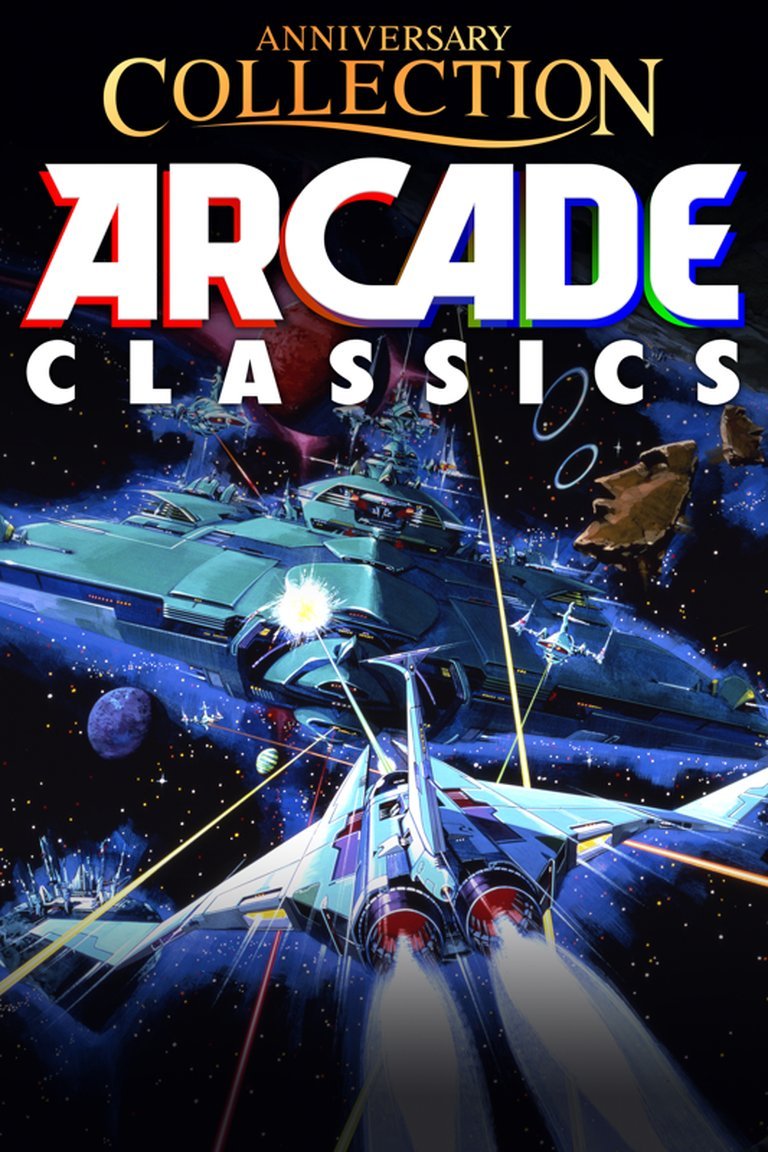
Anniversary Collection: Arcade Classics is a compilation game by Konami that brings together iconic arcade shooters from the 1980s and early 1990s, including titles like Gradius, Thunder Cross, Haunted Castle, and TwinBee. The package faithfully recreates these timeless shoot ’em up experiences for modern platforms such as Windows, PlayStation 4, Xbox One, and Nintendo Switch, offering players a nostalgic journey through Konami’s golden age of arcade gaming.
Gameplay Videos
Anniversary Collection: Arcade Classics Cracks & Fixes
Anniversary Collection: Arcade Classics Guides & Walkthroughs
Anniversary Collection: Arcade Classics Reviews & Reception
nintendolife.com (60/100): You’ll still have a decent time playing through them all, even though the lack of online leaderboards, lack of high score saving and general lack of options certainly make its budget price feel justified.
opencritic.com (62/100): It’s hard to say how thorough and genuinely in-depth Konami went when it came to representing the best of the best here, but it’s clear that the Arcade Classics Anniversary Collection is not the flying start fans would’ve hoped for.
metacritic.com (61/100): A compilation of Konami arcade games that will force you to play again and again to complete each level due to its high difficulty. Recommended only if you are very fan of arcade games.
waytoomany.games : Sadly, if there’s one area in which Arcade Classics Anniversary Collection fails miserably is in its extra content.
Anniversary Collection: Arcade Classics Cheats & Codes
PC
| Code | Effect |
|---|---|
| Up, Up, Down, Down, Left, Right, Left, Right, B, A, Start | Acquire Speed Up, Missile, two Options, and Barrier |
| Up, up, down, down, left, right, left, right, II, I | Get full options, missile and shield |
| hold down Up on the d-pad and press II three times | Start with 30 lives |
| POKE 32979,181 SYS 32768 | Cheat mode |
| POKE 5868,255 : SYS 5768 | 255 lives |
| Up, Right, Down, Left, Up, Right, Down, Left, B, A, B, A | Destroy everything on the screen |
| Up, Up, Down, Down, Left, Right, Left, Right, B, A and Start | Full options |
| Up, Select, Down, Select, Left, Select, Right, Select, Select, Select, Select. | No Power Ups |
| A, Left, Left, Left, Left, Left, Start | Power Down |
| B, B, B, B, B, A, A, A, A, A | Speed and Shields |
| Down, Up, B, A, B, A, B, A, B, A | Continue |
| HYPER | Full Power Up |
| DOUBLE | Get Double Power Up |
| SHIELD | Get Shield |
| LASER | Second Laser Power Up |
| MISSILE | Second Missile Power Up |
| OPTION | Second Option Power Up |
| Press Shift Lock, then Space until a block appears in the corner of the screen | Infinite Lives |
| DOWN | Speed Down |
| AHO | Suicide 1 |
| BAKA | Suicide 2 |
| KINUYO | Full Power Up In Extra Stage 1 |
| HISAE | Full Power Up In Extra Stage 2 |
| MIYUKI | Full Power Up In Extra Stage 3 |
| YOHKO | Full Power Up In Extra Stage 4 |
| MOMOKO | Full Power Up In Stage 1 |
| CHIE | Full Power Up In Stage 2 |
| AKEMI | Full Power Up In Stage 3 |
| SYUKO | Full Power Up In Stage 4 |
| CHIAKI | Full Power Up In Stage 5 |
| NORIKO | Full Power Up In Stage 6 |
| SATOE | Full Power Up In Stage 7 |
| YASUKO | Full Power Up In Stage 8 |
PlayStation 4
| Code | Effect |
|---|---|
| Up, Up, Down, Down, Left, Right, Left, Right, B, A, Start | Acquire Speed Up, Missile, two Options, and Barrier |
| Up, up, down, down, left, right, left, right, II, I | Get full options, missile and shield |
| hold down Up on the d-pad and press II three times | Start with 30 lives |
| POKE 32979,181 SYS 32768 | Cheat mode |
| POKE 5868,255 : SYS 5768 | 255 lives |
| Up, Right, Down, Left, Up, Right, Down, Left, B, A, B, A | Destroy everything on the screen |
| Up, Up, Down, Down, Left, Right, Left, Right, B, A and Start | Full options |
| Up, Select, Down, Select, Left, Select, Right, Select, Select, Select, Select. | No Power Ups |
| A, Left, Left, Left, Left, Left, Start | Power Down |
| B, B, B, B, B, A, A, A, A, A | Speed and Shields |
| Down, Up, B, A, B, A, B, A, B, A | Continue |
| HYPER | Full Power Up |
| DOUBLE | Get Double Power Up |
| SHIELD | Get Shield |
| LASER | Second Laser Power Up |
| MISSILE | Second Missile Power Up |
| OPTION | Second Option Power Up |
| Press Shift Lock, then Space until a block appears in the corner of the screen | Infinite Lives |
| DOWN | Speed Down |
| AHO | Suicide 1 |
| BAKA | Suicide 2 |
| KINUYO | Full Power Up In Extra Stage 1 |
| HISAE | Full Power Up In Extra Stage 2 |
| MIYUKI | Full Power Up In Extra Stage 3 |
| YOHKO | Full Power Up In Extra Stage 4 |
| MOMOKO | Full Power Up In Stage 1 |
| CHIE | Full Power Up In Stage 2 |
| AKEMI | Full Power Up In Stage 3 |
| SYUKO | Full Power Up In Stage 4 |
| CHIAKI | Full Power Up In Stage 5 |
| NORIKO | Full Power Up In Stage 6 |
| SATOE | Full Power Up In Stage 7 |
| YASUKO | Full Power Up In Stage 8 |
Xbox One
| Code | Effect |
|---|---|
| Up, Up, Down, Down, Left, Right, Left, Right, B, A, Start | Acquire Speed Up, Missile, two Options, and Barrier |
| Up, up, down, down, left, right, left, right, II, I | Get full options, missile and shield |
| hold down Up on the d-pad and press II three times | Start with 30 lives |
| POKE 32979,181 SYS 32768 | Cheat mode |
| POKE 5868,255 : SYS 5768 | 255 lives |
| Up, Right, Down, Left, Up, Right, Down, Left, B, A, B, A | Destroy everything on the screen |
| Up, Up, Down, Down, Left, Right, Left, Right, B, A and Start | Full options |
| Up, Select, Down, Select, Left, Select, Right, Select, Select, Select, Select. | No Power Ups |
| A, Left, Left, Left, Left, Left, Start | Power Down |
| B, B, B, B, B, A, A, A, A, A | Speed and Shields |
| Down, Up, B, A, B, A, B, A, B, A | Continue |
| HYPER | Full Power Up |
| DOUBLE | Get Double Power Up |
| SHIELD | Get Shield |
| LASER | Second Laser Power Up |
| MISSILE | Second Missile Power Up |
| OPTION | Second Option Power Up |
| Press Shift Lock, then Space until a block appears in the corner of the screen | Infinite Lives |
| DOWN | Speed Down |
| AHO | Suicide 1 |
| BAKA | Suicide 2 |
| KINUYO | Full Power Up In Extra Stage 1 |
| HISAE | Full Power Up In Extra Stage 2 |
| MIYUKI | Full Power Up In Extra Stage 3 |
| YOHKO | Full Power Up In Extra Stage 4 |
| MOMOKO | Full Power Up In Stage 1 |
| CHIE | Full Power Up In Stage 2 |
| AKEMI | Full Power Up In Stage 3 |
| SYUKO | Full Power Up In Stage 4 |
| CHIAKI | Full Power Up In Stage 5 |
| NORIKO | Full Power Up In Stage 6 |
| SATOE | Full Power Up In Stage 7 |
| YASUKO | Full Power Up In Stage 8 |
Switch
| Code | Effect |
|---|---|
| Up, Up, Down, Down, Left, Right, Left, Right, B, A, Start | Acquire Speed Up, Missile, two Options, and Barrier |
| Up, up, down, down, left, right, left, right, II, I | Get full options, missile and shield |
| hold down Up on the d-pad and press II three times | Start with 30 lives |
| POKE 32979,181 SYS 32768 | Cheat mode |
| POKE 5868,255 : SYS 5768 | 255 lives |
| Up, Right, Down, Left, Up, Right, Down, Left, B, A, B, A | Destroy everything on the screen |
| Up, Up, Down, Down, Left, Right, Left, Right, B, A and Start | Full options |
| Up, Select, Down, Select, Left, Select, Right, Select, Select, Select, Select. | No Power Ups |
| A, Left, Left, Left, Left, Left, Start | Power Down |
| B, B, B, B, B, A, A, A, A, A | Speed and Shields |
| Down, Up, B, A, B, A, B, A, B, A | Continue |
| HYPER | Full Power Up |
| DOUBLE | Get Double Power Up |
| SHIELD | Get Shield |
| LASER | Second Laser Power Up |
| MISSILE | Second Missile Power Up |
| OPTION | Second Option Power Up |
| Press Shift Lock, then Space until a block appears in the corner of the screen | Infinite Lives |
| DOWN | Speed Down |
| AHO | Suicide 1 |
| BAKA | Suicide 2 |
| KINUYO | Full Power Up In Extra Stage 1 |
| HISAE | Full Power Up In Extra Stage 2 |
| MIYUKI | Full Power Up In Extra Stage 3 |
| YOHKO | Full Power Up In Extra Stage 4 |
| MOMOKO | Full Power Up In Stage 1 |
| CHIE | Full Power Up In Stage 2 |
| AKEMI | Full Power Up In Stage 3 |
| SYUKO | Full Power Up In Stage 4 |
| CHIAKI | Full Power Up In Stage 5 |
| NORIKO | Full Power Up In Stage 6 |
| SATOE | Full Power Up In Stage 7 |
| YASUKO | Full Power Up In Stage 8 |
Anniversary Collection: Arcade Classics: Review
1. Introduction
To evoke the golden age of arcades, Konami’s Anniversary Collection: Arcade Classics arrives as a curated time capsule, a digital museum showcasing eight pivotal titles from the company’s 1980s coin-op zenith. Released across PlayStation 4, Xbox One, Nintendo Switch, and PC (Steam) on April 18, 2019, this compilation formed the first salvo in Konami’s 50th anniversary celebrations, alongside dedicated volumes for Castlevania and Contra. Yet, while it promises a journey through the formative years of the shoot ’em up (shmup) genre, the collection reveals itself as a double-edged sword. Its core value lies in the impeccable preservation of historically significant arcade masterpieces, yet it is hampered by a baffling selection, minimalistic presentation, and a frustrating lack of features that elevate similar compilations. This review delves deep into the legacy, mechanics, art, and reception of this package, arguing that Anniversary Collection: Arcade Classics is a flawed but essential artifact for enthusiasts of arcade history and the shmup genre, offering pristine relics despite its limitations.
2. Development History & Context
Anniversary Collection: Arcade Classics emerged directly from Konami’s strategic initiative to commemorate its half-century of existence in 2019. The project was developed collaboratively by Konami Industry Co. Ltd. and Konami Digital Entertainment Co. Ltd., leveraging the expertise of a substantial team of 150 credited individuals, including directors Naofumi Kawamoto, Fumiko Kashimura, Tetsu Masuda, and Kenta Suzuki, alongside producers like Satoshi Hamada. The technological foundation relied heavily on the established Arcade Archives emulator engine, developed by Hamster Corporation, ensuring a high degree of authenticity in replicating the original arcade experiences.
The gaming landscape in early 2019 was one of significant retro resurgence. Competitors like Sega (via SEGA AGES), Capcom (via Arcade Classics), and SNK (via the SNK 40th Anniversary Collection) were actively releasing compilations, often featuring extensive bonus content, region variants, and modern conveniences. Konami’s decision to enter this space was thus both a celebration of its heritage and a commercial response to a growing market demand for curated retro experiences. However, the context also reveals a critical constraint: the compilation’s scope was intentionally limited to eight titles, likely driven by budget and development timelines. This choice directly impacted the selection, heavily favoring Konami’s prolific output in the vertical and horizontal shmup genre during the 1980s, while largely overlooking other iconic arcade franchises like Time Soldiers, Gyruss, or the seminal Frogger. The release itself was digital-first, with a subsequent physical release for Nintendo Switch and PlayStation 4 handled by Limited Run Games in 2023, indicating strong niche market demand despite the initial mixed reception.
3. Narrative & Thematic Deep Dive
While primarily devoid of complex narratives in the modern sense, each game within the collection embodies distinct thematic threads prevalent in early arcade design. The dominant theme across the seven shooters is humanity’s struggle against overwhelming extraterrestrial or technological threats. Scramble (1981) establishes this archetypally: the player pilots a lone spaceship through a treacherous alien fortress, embodying the underdog narrative fueled by limited resources and escalating peril. Nemesis (Gradius, 1985) and Vulcan Venture (Gradius II, 1988) expand this into a galactic war against the eponymous alien empire, the Gofer, presenting a classic sci-fi conflict where humanity fights for survival against a technologically superior foe. Life Force (Salamander, 1986), as a direct sequel/spin-off, reinforces this interstellar warfare theme, introducing biological horror elements alongside the mechanical threats.
Thunder Cross (1988) and Typhoon (A-Jax, 1987) introduce slight variations: Thunder Cross features a more grounded conflict against a corrupt military-industrial complex (“Thunder Cross Corps”) using advanced mechs, adding a layer of human antagonism to the alien threat. Typhoon blends this with experimental technology, notably its pseudo-3D sections, suggesting a future where humanity wields advanced tools against alien incursions. TwinBee (1985) offers a stark departure, adopting a whimsical, cartoonish aesthetic. Its narrative is minimal – pilots Mustache and Winbee defend the planet Donrussia from invading forces – but its theme shifts towards playful heroism and the inherent charm of the “cute ’em up” subgenre, contrasting sharply with the grim seriousness of the Gradius titles.
The thematic outlier is Haunted Castle (1988), the sole platformer and the direct arcade predecessor to the Castlevania series. Its theme is firmly rooted in gothic horror and the eternal battle against evil. Players control Simon Belmont on a quest to infiltracy and defeat Dracula’s fortress. It explores themes of perseverance in the face of supernatural terror, the burden of lineage (the Belmont whip), and the cyclical nature of good versus evil. However, its execution in the arcade context is brutally simplistic, focusing almost entirely on survival through relentless enemy swarms rather than atmospheric storytelling. The collection as a whole thus presents a fascinating spectrum: from the cold, impersonal space operas of Gradius and its ilk, to the heroic fantasy of Haunted Castle, underpinned by the universal arcade themes of high scores, survival, and mastery over increasingly difficult challenges.
4. Gameplay Mechanics & Systems
The collection offers a masterclass in dissecting the evolution of arcade shmup mechanics across the 1980s. The core loop is universally simple: move, shoot, survive, achieve high score. Yet, the systems implementing this loop vary significantly, showcasing Konami’s design ingenuity.
- Core Movement & Shooting: All shooters share basic 8-way directional movement and continuous firing. Crucially, the collection introduces turbo fire options, a modern QoL feature absent in the originals, alleviating finger strain and allowing for sustained fire.
- Power-Up Systems: This is where the collection truly shines in showcasing design diversity.
- Nemesis/Gradius revolutionized the genre with its Power-Up Bar system. Players collect generic power-up capsules, cycling through different weapon types (Missiles, Double, Laser, etc.) and shield upgrades via an on-screen bar. This encouraged strategic resource management over quick reflexes for power-up collection.
- Life Force/Salamander reverted to the more traditional “Pick-Up” System. Specific weapon types (Spread Shot, Laser, Fire, etc.) dropped as distinct items from destroyed enemies, forcing players to prioritize targets based on the desired power-up.
- Vulcan Venture/Gradius II refined the Power-Up Bar system further, adding Preset Configurations before starting, allowing players to choose their initial loadout (e.g., start with Laser + Missile). It also introduced the iconic Option (satellite drones) system, a core Gradius staple.
- Thunder Cross utilized a hybrid system, featuring both a Power-Up Bar for shields and weapons and specific weapon pick-ups, offering flexibility.
- Typhoon and Scramble relied on simpler, fixed weapon upgrades or single-shot weapons, emphasizing dodging and precision bombing (Scramble).
- TwinBee featured a unique “Bell” system. Shooting colored clouds released bells that could be collected to power-up the ship. Hitting enemy bells with specific shots changed their color, unlocking different power-up paths (e.g., twin shots, lasers, speed boosts) and even allowing for docking between player ships in 2-player mode.
- Combat & Hazards: The games escalate in complexity. Scramble introduced the concept of a “fuel gauge,” adding resource management alongside combat. Gradius games are infamous for their bullet-hell tendencies in later stages, requiring memorization and precise movement. Life Force incorporated screen-clearing bombs and stage-specific hazards (like acid pools). Typhoon alternated between standard scrolling and challenging pseudo-3D “rail shooter” sections. Haunted Castle breaks the mold entirely, shifting to platformer mechanics: jumping, whipping, and timing jumps over pitfalls and enemy projectiles. Its combat is brutal, emphasizing close-range whip attacks and navigating claustrophobic, enemy-dense corridors. The lack of continues (beyond the inherent infinite credit nature of the compilation) and its punishing damage make it the most mechanically difficult and frustrating experience.
- Progression & Difficulty: The default difficulty is punishingly high, reflecting arcade quarter-munching design. The collection introduces difficulty level selection and, most importantly, mid-game save states, a game-changing modern feature that allows players to progress without needing to master entire credit dumps. However, the absence of persistent high score tracking or online leaderboards (except on Xbox/PS4 via achievements) diminishes the classic arcade competitive drive. A critical flaw noted in reviews was the initial lack of region selection (patched in later). For example, the Western version of Life Force used the “Pick-Up” system, while the Japanese version (“Salamander”) used the Gradius Power-Up Bar, leading to significantly different gameplay experiences, particularly for boss fights. Haunted Castle also had varying difficulty levels between regions affecting enemy damage.
5. World-Building, Art & Sound
The visual and auditory aesthetic of Anniversary Collection: Arcade Classics is a pure distillation of early 1980s arcade artistry, defined by sprite-based graphics, limited palettes, and synthesized soundscapes, yet imbued with a distinct charm and technical flair.
- Visuals & World-Building:
- Scramble (1981) represents the dawn of the genre with its simple, blocky graphics. The world is a stark monochrome tunnel filled with geometric obstacles and rudimentary enemy sprites. It establishes the core visual language of the shmup.
- TwinBee (1985) bursts with color and personality. Its world is vibrant, cartoonish, and whimsical, featuring expressive characters, bright backgrounds, and unique enemy designs like robotic cats and flying fish. It creates an immediately recognizable and charming microcosm.
- Nemesis/Gradius (1985) elevates the sci-fi aesthetic. The “Moai” statues with their eye-beams became iconic. Worlds depicted diverse alien landscapes: volcanic planets, asteroid fields, organic alien interiors. The enemy designs, particularly the bio-mechanical “Zapper” and the massive “Big Core” boss, were complex for their time, conveying a sense of an advanced, threatening civilization. The Vulcan Venture/Gradius II sequel pushed this further with more detailed backgrounds and larger, more complex bosses.
- Life Force/Salamander (1986) leans into biological horror alongside the tech. Enemies include grotesque organic creatures alongside robotic foes. The stage design often features pulsating tissue walls and unsettling alien flora, creating a distinct, oppressive atmosphere compared to Gradius‘s mechanical focus.
- Typhoon/A-Jax (1987) is a visual standout, primarily due to its sprite scaling and rotation effects. The pseudo-3D sections were technologically impressive for their time, creating a convincing sense of depth and movement as the ship navigated through canyons and past towering structures. The standard 2D sections also featured detailed sprites and parallax scrolling.
- Thunder Cross (1988) showcases late-80s arcade sprite detail. Mechs, tanks, and aircraft are rendered with impressive complexity for the era. Backgrounds are layered and detailed, depicting urban ruins, futuristic factories, and military bases, effectively building its world of mechanized warfare.
- Haunted Castle (1988) adopts the gothic horror aesthetic of Castlevania. While detailed for an arcade game, its sprites (Simon, skeletons, bats, candles) and backgrounds (corridors, chandeliers, stained glass) are less fluid and more static than the shooters. Its world feels oppressive and claustrophobic, heavily reliant on dark palettes and flickering torches to create atmosphere. The art direction is strong, but the technical limitations of the platformer format are more apparent.
- Sound Design: The audio is a cornerstone of Konami’s arcade legacy.
- Gradius and Life Force are legendary for their soundtracks. Gradius‘s iconic “Propeller Theme,” “Boss Theme,” and “First Contact” are synthesized masterpieces, driving the action with energetic, pulsing melodies. Life Force offers a similarly memorable, often more dramatic score, including the hauntingly beautiful “Stage 3” music. Vulcan Venture‘s soundtrack is arguably the series’ peak on the PSG chip, with the legendary “Crystal Core” theme.
- Thunder Cross features a strong, driving hard rock-inspired soundtrack (“Stage 1” and “Boss Theme” are standouts), complementing its intense action.
- Typhoon‘s sound effects, particularly the distinctive whine of the ship engine and explosions, are noteworthy, though its music is less immediately iconic.
- TwinBee‘s soundtrack is upbeat, cheerful, and infectious, perfectly matching its cute aesthetic.
- Haunted Castle‘s soundtrack is its most controversial element. While it contains the very first version of the legendary “Bloody Tears” theme (later immortalized in Castlevania II: Simon’s Quest), the overall soundtrack is often described as grating, repetitive, and poorly implemented, fitting the game’s harsh but frustrating experience. Scramble‘s sound is purely functional beeps and boops, lacking distinct music.
The collection’s presentation offers display options (Original, Pixel Perfect, 16:9, 4:3 Scanlines, Pixel Perfect Scanlines, 16:9 Scanlines) and border frames, allowing players to tailor the visual experience. However, as noted in reviews, the lack of initial Tate mode (vertical screen orientation for vertical shmups) was a significant omission for those playing on Switch or using vertical monitors, though this was patched in later. The visuals, despite their age, remain crisp and clear under emulation, faithfully representing the original arcade artistry.
6. Reception & Legacy
Anniversary Collection: Arcade Classics landed to a decidedly mixed reception upon its April 2019 release. On Metacritic, the Nintendo Switch version holds a score of 61/100 (“Mixed or Average”) based on 13 critic reviews, reflecting the package’s significant flaws. The PC version sits at a similar 61/100. Aggregators like OpenCritic rank it in the 20th percentile, indicating below-average reception overall. Critic consensus, as seen in reviews from sources like Nintendo Life (6/10), Hardcore Gamer (3/5), Metro GameCentral (6/10), and Way Too Many Games (7.5/10), consistently praised the flawless emulation and the inherent quality of the core shmups, particularly Gradius, Life Force, Typhoon, and Thunder Cross. The inclusion of mid-game saves and difficulty options was widely seen as a welcome modernization. The budget price point (around $7.99-$19.99 depending on platform and sale) made it an attractive proposition per game.
However, the criticism was sharp and focused. The baffling game selection was a major point of contention. The overwhelming dominance of shmups (7 out of 8 games) led to accusations of a lack of variety, especially when Konami’s rich arcade history encompasses titles like Teenage Mutant Ninja Turtles, X-Men, Simpsons, Track & Field, or Rush’n Attack. The inclusion of Haunted Castle was particularly divisive; while interesting as a Castlevania curiosity, its universally poor quality and brutal difficulty were seen as dragging down the package, earning it the label of “stinker” or “abysmal” in multiple reviews. The minimalistic presentation and lack of features compared to Hamster’s own Arcade Archives releases were heavily criticized. The absence of Tate mode at launch, no online leaderboards (beyond basic achievements/trophies on some platforms), no persistent high score saving, and the initial lack of region selection were seen as significant missteps that undermined the value proposition for dedicated retro gamers. The bonus e-book, while offering some behind-the-scenes sketches and interviews, was often described as poorly presented (text overlaying original Japanese documents) and less comprehensive than similar features in Capcom or SNK compilations.
Commercial performance figures aren’t readily available, but the collection’s digital and subsequent Limited Run physical releases suggest it found a dedicated, if niche, audience among shmup enthusiasts and Konami completists. Its legacy is thus complex:
- As a Historical Artifact: The collection is invaluable for preserving specific versions of these arcade classics, especially after the later patch added crucial region selection. It offers a definitive, accessible way to experience the foundational Gradius games and other Konami shmups in their original arcade form.
- As a Compilation: It serves as a cautionary tale about the importance of curation and feature parity. It highlights the difference between simply bundling ROMs and creating a lovingly presented package with depth for enthusiasts. Its flaws often place it below Sega’s SEGA AGES or Hamster’s own standalone releases in the eyes of retro connoisseurs.
- Influence on Konami: It set the template, for better or worse, for the subsequent Castlevania Anniversary Collection and Contra Anniversary Collection. While those compilations generally received warmer receptions (particularly Contra), they also shared some of the feature-light presentation aspects, suggesting a consistent, if not ideal, approach to Konami’s retro output.
- Genre Preservation: For the shmup genre, it cemented the importance of the Gradius power-up system and the enduring appeal of well-crafted arcade shooters like Thunder Cross and Typhoon. It introduced a new generation to these foundational titles, even if the package itself wasn’t perfect.
7. Conclusion
Anniversary Collection: Arcade Classics is a deeply flawed yet profoundly valuable piece of video game preservation. It successfully delivers eight historically significant Konami arcade titles in emulated perfection, offering a direct line to the raw, quarter-driven energy of the 1980s arcade scene. The core gameplay of the shmups – Nemesis/Gradius, Life Force, Vulcan Venture, Thunder Cross, Typhoon, TwinBee, and even the historically important Scramble – remains incredibly compelling, demonstrating Konami’s early mastery of the genre. The inclusion of modern conveniences like save states, difficulty selection, and turbo fire is essential for contemporary players. The budget price makes it an accessible entry point for shmup fans.
However, the collection’s limitations are impossible to ignore. The bafflingly narrow focus on shmups borders on self-parody for a company with Konami’s diverse arcade legacy. The inclusion of the abysmal Haunted Castle acts as a constant drag on the overall quality. The presentation is starkly functional, lacking the rich extra content and features (like Tate mode, leaderboards, and robust region selection at launch) that elevate similar compilations from competitors and even Hamster’s own work. The bonus e-book feels perfunctory. These choices prevent it from being a definitive “best of” Konami arcade package.
Ultimately, its place in history is secured as a serviceable, if imperfect, time capsule. It is a must-play for dedicated shmup enthusiasts and students of arcade history who want to experience the roots of the genre and the evolution of Konami’s design philosophy, particularly the Gradius power-up system. For the general retro gamer or someone seeking a broader Konami retrospective, its flaws and lack of variety make it a harder recommendation. It is less a celebration of Konami’s entire arcade output and more a focused, if somewhat careless, tribute to its golden age of vertical and horizontal scrolling shoot ’em ups. For its price, the quality of the seven shooters makes it justifiable, but one cannot help but feel that Konami, with its unparalleled heritage, could and should have delivered something more comprehensive and lovingly curated. It is a relic worth preserving, warts and all.