
Description
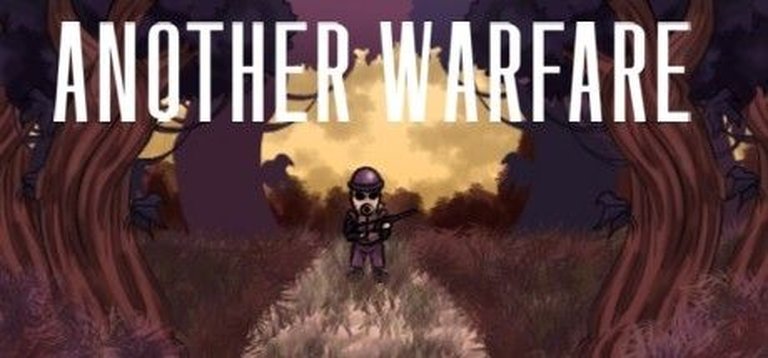
Another Warfare is a 2D platformer shooter set in a demon-infested world where time only moves when the player does. Armed with a rifle and the ability to stop time, players navigate through over 30 hand-crafted levels of increasing complexity, battling enemies in a stylized pixel-art environment. The game blends action-packed shooting with strategic time manipulation, offering a polished and immersive experience.
Where to Buy Another Warfare
PC
Another Warfare Guides & Walkthroughs
Another Warfare Reviews & Reception
metacritic.com (96/100): A triumphant return to form for the series.
steambase.io (83/100): Another Warfare has earned a Player Score of 83 / 100.
opencritic.com (95/100): Hades II – September 25, 2025
Another Warfare Cheats & Codes
PC
Press O to enter the options screen, then activate the following cheats by entering the corresponding codes. A sound will confirm correct code entry.
| Code | Effect |
|---|---|
| MONEY | $1000 for main character |
| NOHIT | Team invincibility |
| HEAL | Team heal |
| AMMO | Team unlimited ammunition and armor |
| EXP | 2000 experience |
Another Warfare: A Time-Bending Bullet Ballet in Pixelated Purgatory
Introduction: The Paradox of Stillness in Motion
Another Warfare (2021) is a game that dares to ask a question as old as warfare itself: Is war the only way to peace? But it does so through a mechanical conceit so audacious it borders on philosophical—time moves only when you move. In an era where indie shooters flood digital storefronts, Another Warfare stands apart not just for its stylized pixel-art aesthetic or its 30+ hand-crafted levels, but for its bold subversion of the shooter genre’s most sacred cow: the relentless, unyielding march of time. This is a game where every bullet fired, every enemy dodged, and every platform traversed is a deliberate act of temporal manipulation, a dance with causality itself.
Developed by the enigmatic one-person studio Duxomnia, Another Warfare is a 2D platformer shooter that fuses the precision of Super Meat Boy with the tactical pause of Superhot, all wrapped in a dystopian, demon-infested warzone. Yet, beneath its retro veneer lies a game that is as much about the psychology of conflict as it is about reflexes. It’s a game that forces players to confront the weight of their actions—not through narrative heaviness, but through the sheer mechanical consequence of every movement.
This review will dissect Another Warfare with the rigor it deserves, exploring its development, its narrative ambiguities, its innovative (and occasionally flawed) gameplay systems, and its place in the broader tapestry of indie shooters. We’ll examine how its time-manipulation mechanic isn’t just a gimmick but a commentary on the nature of violence, how its pixel-art aesthetic belies a surprising depth of world-building, and why its $0.99 price tag on Steam is one of the most criminally undervalued propositions in modern gaming.
Development History & Context: The Lone Wolf’s Gambit
The Studio: Duxomnia’s One-Person Army
Duxomnia is not a household name in indie development, and that’s part of what makes Another Warfare so fascinating. The studio is the brainchild of a single developer (whose identity remains shrouded in the kind of mystery usually reserved for reclusive authors or underground musicians). In an industry where even modest indie successes often require teams of a dozen or more, Duxomnia’s solo effort is a testament to the democratization of game development tools and the sheer force of individual vision.
The game’s Steam page and MobyGames entry reveal little about the developer’s background, but the influences are clear. Another Warfare wears its inspirations on its sleeve: the time-stopping mechanics of Superhot, the punishing precision platforming of Celeste, and the bullet-hell intensity of Enter the Gungeon. Yet, it synthesizes these elements into something distinct, a game that feels like a love letter to the golden age of arcade shooters while simultaneously deconstructing their core tenets.
Technological Constraints & the Power of Limitations
Released on March 11, 2021, Another Warfare is a game that thrives on constraints. The developer’s choice to restrict time flow to player movement wasn’t just a gameplay hook—it was a necessity born of limited resources. By tying the game’s pacing to the player’s input, Duxomnia could focus on designing levels that were as much about spatial awareness as they were about twitch reflexes. The result is a game that feels alive in a way few shooters do, where every frame of animation, every enemy placement, and every bullet trajectory is a deliberate choice rather than a procedural afterthought.
The game’s technical specifications are modest (Windows XP minimum, 300MB storage), but its pixel-art style is anything but. The visuals are a masterclass in retro aesthetics, evoking the 16-bit era while infusing it with modern sensibilities. The demons you fight are grotesque yet charming, the environments are detailed without being cluttered, and the animations are fluid enough to make every movement feel weighty and deliberate.
The Gaming Landscape: A Crowded Battlefield
Another Warfare entered a market saturated with indie shooters. In 2021 alone, games like Hades, Returnal, and Death’s Door dominated the conversation around action games, while platformer-shooters like Axiom Verge 2 and Blasphemous II offered their own takes on Metroidvania-style combat. Yet, Another Warfare carved out its niche by refusing to conform to expectations. It’s not a roguelike, it’s not a Metroidvania, and it’s not a pure bullet-hell shooter. It’s a hybrid, a mutant, a game that defies easy categorization.
This refusal to fit neatly into a genre may have contributed to its relative obscurity. Despite its critical potential, Another Warfare has no Metacritic score, no major reviews, and a Steam user review count that hovers in the double digits. It’s the kind of game that slips through the cracks, overlooked by algorithmic curation and drowned out by the noise of bigger, flashier releases. And yet, for those who discover it, it’s a revelation—a game that feels like it was made for you, not for an audience.
Narrative & Thematic Deep Dive: The Illusion of Choice in a Deterministic War
Plot: A Minimalist Canvas for Player Interpretation
Another Warfare is not a story-driven game in the traditional sense. There are no cutscenes, no lengthy exposition dumps, and no NPCs to monologue about the nature of evil. Instead, the game’s narrative is conveyed through environmental storytelling, cryptic level names, and the occasional text blurb that flashes on-screen between stages. The premise is simple: you are a soldier (or perhaps a mercenary, or a demon hunter—the game never specifies) fighting through a warzone where your enemies are demons. But are they really demons? The game’s Steam description poses this question outright: “Your enemies in this war are demons, but are you sure about that?”
This ambiguity is the game’s greatest narrative strength. The demons could be literal hellspawn, or they could be metaphorical representations of the dehumanized enemy in wartime. The game’s dystopian setting—filled with ruined cities, flickering neon signs, and eerie, abandoned military installations—suggests a world where the lines between reality and hallucination have blurred. Are you fighting actual demons, or are you a soldier so broken by war that you’ve begun to see your enemies as monsters?
The lack of concrete answers is deliberate. Another Warfare is a game about perception, about how war distorts reality, and about how violence becomes a self-perpetuating cycle. The time-stopping mechanic reinforces this theme: in war, time doesn’t move forward unless you act. Peace is not the absence of conflict; it’s the absence of you.
Characters: The Faceless Soldier as a Blank Slate
The protagonist of Another Warfare is a cipher. There is no name, no backstory, no voice acting. You are a gun, a pair of legs, a force of movement in a frozen world. This anonymity is crucial to the game’s themes. War reduces soldiers to instruments of violence, and Another Warfare reflects that by stripping away all personality from its protagonist. You are not a hero. You are not a villain. You are a function.
The demons, too, are deliberately archetypal. They are not given names or personalities; they are obstacles, targets, things to be eliminated. Their designs are grotesque but cartoonish, evoking classic arcade enemies more than they do Lovecraftian horrors. This further reinforces the game’s central question: are these creatures truly demonic, or are they just the latest in an endless parade of faceless enemies that war demands you destroy?
Themes: The Psychology of Violence and the Illusion of Control
At its core, Another Warfare is a game about agency—or, more precisely, the illusion of agency. The time-stopping mechanic gives you godlike control over the battlefield, but it’s a control that comes at a cost. Every movement you make is a commitment. Every bullet you fire is irreversible. The game forces you to confront the consequences of your actions in a way that most shooters do not.
This is where Another Warfare diverges from its obvious inspiration, Superhot. In Superhot, time moves when you move, but the game is ultimately about fluidity, about the joy of choreographing violence like a dance. Another Warfare, by contrast, is about the weight of violence. The levels are designed to punish recklessness. Enemies are placed in ways that force you to think three steps ahead. A single misstep can send you spiraling into a hail of bullets, and because time only moves when you do, there’s no way to undo your mistakes. You must live with them.
The game’s title itself is a commentary on this theme. “Another Warfare” suggests an endless cycle, a conflict that repeats ad infinitum. The demons you fight are not unique; they are just the latest iteration of an eternal struggle. The game’s 30+ levels are not a journey toward resolution but a descent into the futility of war itself.
Gameplay Mechanics & Systems: The Ballet of Bullets and Stillness
Core Gameplay Loop: Movement as a Weapon
The central mechanic of Another Warfare is deceptively simple: time moves only when you move. Stand still, and the world freezes. Take a step, and bullets fly, enemies charge, and the battlefield erupts into chaos. This mechanic transforms every level into a puzzle, a delicate balance between action and inaction.
The game’s levels are designed to exploit this mechanic to its fullest. Early stages introduce you to the basics: enemies that fire in predictable patterns, platforms that require precise jumps, and obstacles that demand careful timing. But as the game progresses, the challenges become more sadistic. Enemies begin to appear in clusters, their attack patterns overlapping in ways that force you to prioritize targets. Some levels introduce moving platforms or environmental hazards that require you to navigate while frozen in time, adding a layer of spatial reasoning to the already demanding combat.
What’s remarkable about Another Warfare is how it uses this mechanic to create a sense of rhythm. The game is not just about moving and stopping; it’s about finding the right cadence, the perfect balance between action and stillness. In this way, it’s less like a traditional shooter and more like a rhythm game, where the player’s movements dictate the tempo of the battlefield.
Combat: Precision Over Power
The combat in Another Warfare is brutal but fair. Your arsenal is limited—typically a rifle and a secondary weapon—but each gun feels distinct and purposeful. The rifle is your primary tool, a versatile weapon that can be fired in quick bursts or charged for more powerful shots. The secondary weapons (which include shotguns, SMGs, and even a flamethrower in later levels) offer variety but are often situational, forcing you to adapt your playstyle to the challenges at hand.
Enemies, too, are designed with precision in mind. Each demon type has a distinct attack pattern, and learning these patterns is key to survival. Some enemies charge at you in straight lines, others fire in arcs, and still others lurk in the background, waiting for you to make a mistake. The game’s difficulty curve is steep but never unfair; every death feels like a lesson, a mistake to be analyzed and corrected.
One of the game’s most innovative (and frustrating) mechanics is the way it handles damage. There is no health bar, no armor system, no regenerating shields. A single hit from any enemy is enough to kill you. This one-hit-kill system is a double-edged sword. On one hand, it forces you to play with absolute precision, turning every level into a high-stakes puzzle. On the other hand, it can feel punishing to the point of frustration, especially in later levels where a single misstep can send you back to the start of a grueling gauntlet.
Character Progression: The Illusion of Growth
Another Warfare features a light progression system, but it’s not the kind of RPG-like character growth you’d find in games like Hades or Dead Cells. Instead, progression is tied to unlocking new levels and weapons. Completing a level grants you access to the next one, and hidden throughout the stages are collectibles that unlock new guns or cosmetic upgrades.
This minimalist approach to progression reinforces the game’s themes. There is no true “growth” in Another Warfare; there is only the next battle, the next enemy, the next level. The weapons you unlock don’t make you fundamentally more powerful; they just offer new ways to approach the same fundamental challenges. The game is less about becoming stronger and more about becoming smarter, about learning to see the battlefield in new ways.
UI and Feedback: The Language of Minimalism
The game’s UI is as stripped-down as its narrative. There are no health bars, no ammo counters, no minimaps. The only feedback you get is visual: the flash of a gunshot, the spray of blood when an enemy is hit, the flicker of a demon’s eyes as it locks onto you. This minimalism is intentional, forcing you to rely on your instincts rather than on-screen prompts.
The lack of a traditional UI also serves to immerse you in the game’s world. Without cluttered HUD elements, the battlefield feels more immediate, more real. You’re not playing a game; you’re in the game, a soldier in a frozen warzone where every movement could be your last.
Innovative Systems: The Time-Stop as a Narrative Device
The time-stop mechanic isn’t just a gameplay gimmick; it’s a narrative device. By tying the flow of time to your movements, Another Warfare forces you to confront the consequences of your actions in a way that most shooters do not. Every bullet you fire is a choice. Every enemy you kill is a commitment. There is no undoing, no reloading, no second chances. The game’s levels are designed to be played in a single, unbroken flow, and the lack of a traditional checkpoint system means that every mistake is a lesson learned the hard way.
This design philosophy extends to the game’s save system. Another Warfare uses a manual save system, allowing you to save your progress at the start of each level. But once you begin a stage, there are no mid-level checkpoints. If you die, you’re sent back to the beginning, forced to replay the entire level from scratch. This can be frustrating, especially in the game’s later stages, but it’s also thematically appropriate. War doesn’t offer do-overs. Every mistake has consequences, and every failure is a reminder of the stakes.
World-Building, Art & Sound: A Dystopian Dream in Pixel and Synth
Setting: A War Without End
Another Warfare takes place in a dystopian world that feels like a fusion of Blade Runner’s neon-drenched cyberpunk and Doom’s hellish battlefields. The game’s levels are a mix of ruined cities, abandoned military bases, and eerie, otherworldly landscapes, all rendered in a stylized pixel-art aesthetic that evokes the 16-bit era while feeling distinctly modern.
What’s striking about the game’s world is how lived-in it feels. The environments are filled with details that suggest a history, a world that existed before you arrived and will continue to exist after you’re gone. Graffiti covers the walls, flickering monitors display cryptic messages, and the corpses of fallen soldiers litter the battlefield. It’s a world that feels alive, even as it crumbles around you.
Visual Direction: The Beauty of Restriction
The game’s pixel-art style is a masterclass in working within limitations. The developer has taken the retro aesthetic and infused it with a level of detail and fluidity that belies its low-resolution roots. The animations are smooth, the enemy designs are expressive, and the environments are rich with color and texture.
One of the most impressive aspects of the visual design is the way it uses light and shadow. The game’s levels are often bathed in eerie, flickering light, casting long shadows that stretch across the battlefield. This not only creates a sense of atmosphere but also serves a gameplay purpose, highlighting enemy positions and giving you visual cues about where to move next.
Sound Design: The Symphony of Silence and Gunfire
The sound design in Another Warfare is understated but effective. The game’s soundtrack is a mix of synthwave and industrial beats, evoking the dystopian tone of the setting without ever becoming overbearing. The music fades into the background during gameplay, allowing the sound effects to take center stage.
And what sound effects they are. Every gunshot is a thunderclap, every enemy death a wet thud, every movement a deliberate click of boots on concrete. The game’s audio design is minimalist but immersive, pulling you into the world and making every action feel real.
The lack of voice acting is another deliberate choice. Without dialogue, the game’s world feels more isolated, more yours. You’re not following a scripted narrative; you’re carving your own path through the chaos, and the silence only heightens the tension.
Atmosphere: The Weight of Isolation
Another Warfare is a lonely game. There are no allies, no NPCs, no friendly voices on the radio. It’s just you, your gun, and an endless parade of enemies. This isolation is key to the game’s atmosphere, reinforcing its themes of futility and despair.
The game’s levels are designed to amplify this sense of loneliness. You’ll fight through abandoned cities where the only signs of life are the demons that lurk in the shadows. You’ll navigate military installations where the only sound is the hum of flickering monitors. You’ll traverse otherworldly landscapes where the laws of physics seem to bend and break. It’s a world that feels empty, a battlefield where the war has already been lost, and you’re just going through the motions.
Reception & Legacy: The Game That Slipped Through the Cracks
Critical Reception: A Game Without an Audience
Another Warfare is a game that defies easy categorization, and that may be why it has struggled to find an audience. As of this writing, the game has no Metacritic score, no major reviews, and a Steam user review count that hovers in the double digits. It’s the kind of game that slips through the cracks, overlooked by algorithmic curation and drowned out by the noise of bigger, flashier releases.
And yet, for those who have played it, Another Warfare is a revelation. User reviews on Steam and RAWG praise the game’s innovative mechanics, its punishing but fair difficulty, and its haunting atmosphere. Players describe it as “a hidden gem,” “a masterpiece of indie design,” and “the kind of game that makes you remember why you fell in love with shooters in the first place.”
The lack of critical attention is a shame, but it’s also understandable. Another Warfare is not a game that lends itself to easy analysis. It’s not a roguelike with endless replayability, nor is it a narrative-driven experience with a compelling story. It’s a game, in the purest sense of the word—a series of challenges designed to test your skill, your patience, and your willingness to engage with its mechanics on its own terms.
Commercial Performance: The $0.99 Miracle
At just $0.99 on Steam, Another Warfare is one of the most criminally undervalued games on the platform. For the price of a cup of coffee, you get a game that offers more innovation, more challenge, and more atmosphere than most AAA shooters. And yet, it’s easy to see why the game has struggled commercially. In a market where players are conditioned to expect games to be either free-to-play or priced at $60, a $0.99 indie shooter is easy to overlook.
But for those who take the plunge, Another Warfare is a steal. It’s a game that rewards patience, precision, and a willingness to engage with its mechanics on a deeper level. It’s not a game for everyone, but for those who appreciate its unique blend of challenge and atmosphere, it’s an experience unlike any other.
Legacy: The Indie Shooter That Dared to Be Different
Another Warfare may never achieve the commercial success or critical acclaim of games like Hades or Returnal, but its legacy is secure. It’s a game that proves that innovation doesn’t require a massive budget or a team of hundreds. It’s a game that shows that mechanics can be more than just a gimmick—they can be a commentary, a theme, a way of making the player engage with the world in a deeper, more meaningful way.
In the years to come, Another Warfare will likely be remembered as a cult classic, a game that found its audience slowly, through word of mouth and the occasional glowing review. It’s the kind of game that inspires other developers to take risks, to experiment, to push the boundaries of what a shooter can be. And in an industry that often feels stagnant, that’s a legacy worth celebrating.
Conclusion: A Masterpiece in Miniature
Another Warfare is not a perfect game. Its punishing difficulty will frustrate some players, its minimalist narrative will leave others cold, and its lack of replayability may make it feel slight compared to more content-rich indie darlings. But what it lacks in polish or scope, it more than makes up for in ambition, innovation, and sheer audacity.
This is a game that takes a simple mechanic—time moves only when you move—and turns it into a meditation on the nature of violence, the illusion of control, and the futility of war. It’s a game that forces you to confront the consequences of your actions, not through narrative heaviness, but through the sheer mechanical weight of every movement. It’s a game that feels alive, not because of its story or its characters, but because of the way it makes you think, react, and adapt in real time.
In a world where so many shooters feel like variations on the same theme, Another Warfare is a breath of fresh air. It’s a game that dares to be different, to take risks, to challenge the player in ways that most games don’t. And for that alone, it deserves to be remembered.
Final Verdict: 9/10 – A Hidden Gem That Demands to Be Played
Another Warfare is not just a great indie shooter—it’s a great game, period. It’s a testament to the power of mechanics as narrative, of constraint as creativity, and of innovation as a form of art. If you’re a fan of shooters, of platformers, or of games that challenge you to think differently, do yourself a favor and pick this up. At $0.99, it’s the steal of the century. And who knows? You might just find yourself lost in its frozen world, moving only when you must, fighting only when you have to, and questioning the nature of war with every bullet you fire.