
- Release Year: 2019
- Platforms: PlayStation 4, Windows, Xbox One
- Publisher: Electronic Arts, Inc.
- Developer: BioWare Austin, LLC, BioWare Edmonton
- Genre: Role-playing (RPG), Shooter
- Perspective: 1st-person
- Game Mode: Co-op, Online Co-op, Single-player
- Gameplay: Action RPG, Aviation, Flight, Looter-shooter, Open World, Shooter
- Setting: Fantasy, Futuristic, Sci-fi
- Average Score: 58/100
Description
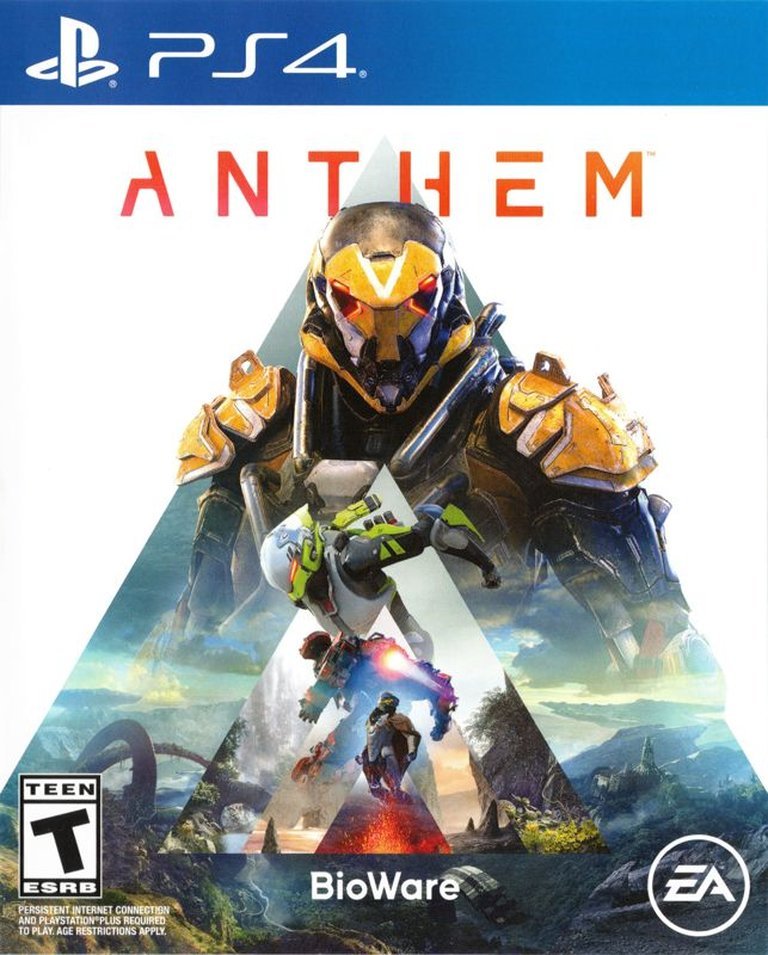
Anthem is a shared-world action RPG where players assume the role of Freelancers, pilots of powerful exosuits called Javelins, exploring the lush and perilous world of Bastion. The game blends dynamic combat, cooperative multiplayer, and open-world exploration, with missions ranging from high-stakes Strongholds to free-roaming adventures. Players customize their Javelins with unique abilities and gear, tackling challenges in a living, ever-changing environment filled with ancient ruins and dangerous foes.
Gameplay Videos
Anthem Mods
Anthem Guides & Walkthroughs
Anthem Reviews & Reception
metacritic.com (80/100): Anthem’s rich storytelling and engaging combat lays the foundation for Bioware’s newest adventure.
ign.com : Anthem’s endgame is surprisingly fun since its already excellent combat is reinvigorated by interesting loot and challenging gameplay later on.
pcgamer.com (55/100): Flying in its Iron Man-esque mech suits was by far its most-loved feature, a take on armored aviation so delightful that it underlined Anthem’s otherwise disjointed design every time your freelancer set metal foot on solid ground.
imdb.com (40/100): Every part of this game seems to have potential but then something just ruins it.
Anthem Cheats & Codes
PlayStation 4 (PS4)
Enter codes at the main menu.
| Code | Effect |
|---|---|
| Up, Up, Down, Down, Left, Right, Left, Right, Circle, X | Changes the main menu music to an 8-bit version |
Xbox One
Enter codes at the main menu.
| Code | Effect |
|---|---|
| Up, Up, Down, Down, Left, Right, Left, Right, B, A | Changes the main menu music to an 8-bit version |
PC
Enter codes at the main menu.
| Code | Effect |
|---|---|
| Up, Up, Down, Down, Left, Right, Left, Right, B, A | Changes the main menu music to an 8-bit version |
Anthem: A Study in Unfulfilled Potential
Introduction
Anthem is a game that soars in its ambitions but stumbles in its execution. Released in 2019 by BioWare, a studio renowned for its narrative-driven RPGs like Mass Effect and Dragon Age, Anthem was positioned as a bold departure—a shared-world action RPG with a focus on cooperative play, exosuit combat, and a dynamic, ever-changing world. Yet, despite its stunning visuals, exhilarating flight mechanics, and a world brimming with potential, Anthem ultimately failed to deliver on its promises. This review will dissect the game’s development history, narrative and thematic elements, gameplay mechanics, world-building, reception, and legacy to understand where it went wrong and what lessons it offers for the future of live-service games.
Development History & Context
The Birth of a Troubled Vision
Anthem’s development began in 2012, shortly after the release of Mass Effect 3. Initially codenamed “Dylan,” the project was envisioned as a new direction for BioWare, incorporating live-service elements and a focus on cooperative gameplay. The game was pitched as “the future of storytelling” by then-executive producer Casey Hudson, but the studio struggled to define what that meant in practice.
The early vision for Anthem was ambitious: a mission-driven survival game where players would team up, explore a dangerous world, and share their stories. However, the project faced numerous challenges, including technological constraints with the Frostbite engine, which was not originally designed for the type of game BioWare wanted to create. The engine’s limitations led to the scrapping of key gameplay systems, such as survival and crafting mechanics, and forced the team to pivot toward a more traditional looter-shooter model.
Leadership Changes and Shifting Priorities
Casey Hudson left BioWare in 2014, leaving the project in a state of flux. The team struggled with scaling the game’s scope, and the narrative direction shifted multiple times. David Gaider, a veteran writer from the Dragon Age series, was brought in to help with the story but left in 2016, further destabilizing the project.
The development process was plagued by indecision, with key gameplay elements changing frequently. The game’s flying mechanics, a defining feature, were added and removed multiple times. The lack of clear direction led to a disjointed final product, with many systems feeling underdeveloped or hastily implemented.
The Final Push and Launch
In 2017, Hudson returned as both the project lead and studio head, and Mark Darrah was brought in as executive producer to steer the game toward completion. The team worked under immense pressure to meet EA’s deadline, with much of the game’s development occurring in the final year before launch. This rushed development cycle resulted in a game that was visually impressive but mechanically flawed, with numerous bugs, long loading times, and a lack of meaningful endgame content.
Narrative & Thematic Deep Dive
A World of Unfinished Stories
Anthem is set on the planet Coda, a world abandoned by its godlike creators, the Shapers, who left behind the Anthem of Creation—a mysterious force capable of both creation and destruction. The game’s narrative revolves around the Freelancers, a group of mercenaries who pilot powerful exosuits called Javelins to protect humanity from the dangers of the world outside their fortified cities.
The story begins with the player character, a rookie Freelancer, surviving a disastrous mission to the Heart of Rage, a cataclysmic event caused by the Dominion’s attempt to control the Anthem of Creation. Two years later, the player is tasked with uncovering the Dominion’s plans and stopping their leader, the Monitor, from seizing control of the Anthem.
Themes of Survival and Humanity’s Struggle
Anthem’s narrative explores themes of survival, human resilience, and the consequences of unchecked ambition. The world of Coda is a Death World, where humanity is constantly threatened by hostile wildlife, rogue Shaper technology, and the Dominion’s expansionist goals. The Freelancers represent humanity’s last line of defense, embodying the spirit of perseverance in the face of overwhelming odds.
However, the game’s storytelling is fragmented and often disjointed. The main plot is linear and lacks the depth and player agency that BioWare’s previous games are known for. The characters, while visually distinct and well-voiced, often feel underdeveloped, with their motivations and relationships poorly explored.
Missed Opportunities in Character Development
One of the most significant criticisms of Anthem’s narrative is its failure to deliver meaningful character interactions. Unlike Mass Effect or Dragon Age, where player choices and relationships were central to the experience, Anthem’s characters feel like mere NPCs with little emotional depth. The game’s “loyalty conversations” are a pale imitation of BioWare’s signature dialogue systems, offering little in the way of player agency or emotional investment.
The game’s villains, particularly the Monitor, are similarly underwhelming. While the Dominion is portrayed as a formidable and expansionist empire, the Monitor’s motivations are vague, and his role in the story feels underdeveloped. The game’s ending, while bittersweet, lacks the emotional payoff that players have come to expect from BioWare’s narratives.
Gameplay Mechanics & Systems
The Joy of Flight and Combat
Anthem’s most praised feature is its flight mechanics. The ability to soar through the skies in a Javelin exosuit is exhilarating, offering a sense of freedom and verticality that few games have matched. The combat is similarly engaging, with each of the four Javelin classes—Ranger, Colossus, Interceptor, and Storm—offering unique playstyles and abilities.
The Ranger is the all-around class, balanced for both combat and mobility. The Colossus is a tank, capable of absorbing massive amounts of damage and wielding heavy weapons. The Interceptor is a fast, melee-focused class, while the Storm is a ranged, elemental damage dealer. Each class has its own strengths and weaknesses, and the game encourages players to experiment with different loadouts and playstyles.
The Grind and Lack of Depth
Despite its strong combat and flight mechanics, Anthem suffers from repetitive gameplay loops and a lack of meaningful progression. The game’s missions are often formulaic, with players tasked with completing objectives such as “kill X enemies” or “collect Y resources.” The lack of variety in mission design leads to a sense of monotony, particularly in the endgame, where players are expected to grind for better loot.
The game’s loot system is another area of frustration. The loot is often uninspiring, with little variation in weapons and gear. The game’s crafting system is similarly underwhelming, offering little in the way of meaningful customization or progression. The lack of depth in these systems makes the game feel shallow, particularly when compared to other looter-shooters like Destiny or The Division.
Technical Issues and Loading Times
Anthem’s technical issues are well-documented. The game’s loading times are notoriously long, with some players reporting wait times of up to five minutes between missions. The game’s day-one patch improved loading times, but they remained a significant issue throughout the game’s lifecycle.
The game also suffered from numerous bugs and glitches, including crashes, disconnects, and issues with the game’s UI. These technical problems, combined with the game’s repetitive gameplay, made Anthem a frustrating experience for many players.
World-Building, Art & Sound
A Visually Stunning but Empty World
Anthem’s world, Bastion, is visually stunning. The game’s art direction is a blend of science fiction and fantasy, with lush jungles, ancient ruins, and futuristic technology coexisting in a seamless and immersive environment. The game’s dynamic weather system and day-night cycle add to the sense of a living, breathing world.
However, the world often feels empty and lifeless. The game’s open-world design is underutilized, with little in the way of meaningful exploration or discovery. The game’s side activities, such as world events and puzzles, are often repetitive and lack depth.
A Soundtrack That Soars
The game’s soundtrack, composed by Sarah Schachner, is one of its standout features. The music is a blend of orchestral and electronic elements, with a sense of grandeur and scale that matches the game’s visuals. The soundtrack is particularly effective during the game’s flight sequences, where it enhances the sense of freedom and exhilaration.
Reception & Legacy
A Mixed Reception and Disappointing Sales
Anthem received mixed reviews from critics, with praise for its combat, flight mechanics, and visuals, but criticism for its repetitive gameplay, technical issues, and lack of depth. The game’s Metacritic scores ranged from 54 to 65, depending on the platform, with many reviewers noting that the game felt unfinished and lacking in content.
The game’s commercial performance was similarly disappointing. While Anthem topped retail sales charts in its first week, it failed to meet EA’s sales expectations, with the game selling only half as many copies as Mass Effect: Andromeda in its launch week. The game’s microtransactions also underperformed, further disappointing EA’s expectations.
The Failed Reinvention and Shutdown
In the months following Anthem’s launch, BioWare announced plans to reinvent the game, with a focus on improving the core gameplay loop and adding meaningful content. However, these plans were ultimately abandoned, and in February 2021, BioWare announced that it would cease development on Anthem and focus on other projects.
The game’s servers were shut down on January 12, 2026, rendering Anthem unplayable. The shutdown marked the end of a troubled project, one that had promised so much but delivered so little.
Conclusion
Anthem is a game of contradictions—a visually stunning world with little to explore, exhilarating flight mechanics paired with repetitive gameplay, and a narrative that hints at depth but fails to deliver. The game’s development was plagued by indecision, technical constraints, and a lack of clear vision, resulting in a product that felt unfinished and underwhelming.
Despite its flaws, Anthem is not without merit. The game’s flight mechanics and combat are genuinely fun, and its world is a feast for the eyes. However, these strengths are overshadowed by the game’s repetitive gameplay, technical issues, and lack of meaningful content.
In the end, Anthem serves as a cautionary tale for the gaming industry—a reminder that even the most ambitious projects can fail if they lack a clear vision and a commitment to quality. The game’s legacy is one of unfulfilled potential, a reminder of what could have been if BioWare had been given the time and resources to realize its vision.
Final Verdict: 6/10 – A flawed but ambitious experiment that ultimately fails to deliver on its promises.