
- Release Year: 2009
- Platforms: Windows
- Publisher: GSC Game World
- Developer: GSC Game World
- Genre: Compilation
- Game Mode: Single-player
- Average Score: 60/100
Description
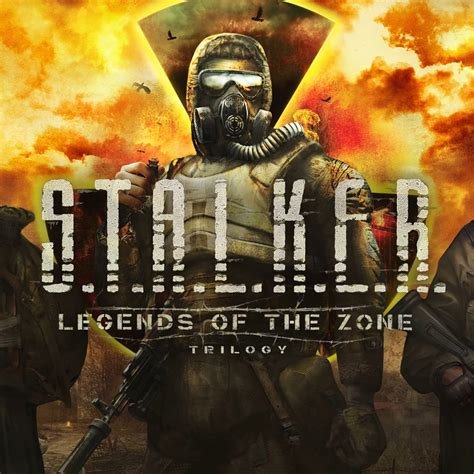
Antologiya S.T.A.L.K.E.R: Serebryannoe izdanie is a special compilation released in 2009, featuring the latest Russian and Ukrainian versions of S.T.A.L.K.E.R.: Shadow of Chernobyl and S.T.A.L.K.E.R.: Clear Sky. Set in the eerie, post-apocalyptic Chernobyl Exclusion Zone, these games blend survival horror and first-person shooter elements as players navigate a world teeming with mutants, anomalies, and rival factions. The anthology also includes a bonus disc packed with exclusive behind-the-scenes content, concept art, official soundtracks, an audiobook, and other collectibles, making it a must-have for fans of the series.
Antologiya S.T.A.L.K.E.R: Serebryannoe izdanie Reviews & Reception
mobygames.com (60/100): A compilation which includes the latest versions of S.T.A.L.K.E.R.: Shadow of Chernobyl and S.T.A.L.K.E.R.: Clear Sky.
softclub.ru : A compilation of the original S.T.A.L.K.E.R. games with additional content and bonus materials.
Antologiya S.T.A.L.K.E.R: Serebryannoe izdanie: A Definitive Retrospective
Introduction
Few game compilations carry the weight of history like Antologiya S.T.A.L.K.E.R: Serebryannoe izdanie (2009). This Russian-language anthology, released by GSC Game World, is more than a mere collection—it is a time capsule of one of the most ambitious and atmospheric first-person shooter series ever conceived. Bundling S.T.A.L.K.E.R.: Shadow of Chernobyl (2007) and S.T.A.L.K.E.R.: Clear Sky (2008) alongside a trove of previously unpublished development materials, this “Silver Edition” serves as both a celebration of the franchise’s early achievements and a testament to the turbulent development cycle that nearly doomed it.
At its core, Antologiya S.T.A.L.K.E.R. is a love letter to the cult following that emerged around the series, offering finalized Russian and Ukrainian versions of both games, complete with patches, alongside a bonus disc brimming with concept art, developer interviews, and even an audiobook adaptation of the fan-favorite story Klyk (Fang). For Western audiences, this compilation remains an obscure artifact, but within the post-Soviet gaming sphere, it stands as a monument to GSC Game World’s vision—a vision that redefined immersive simulation in first-person shooters.
This review will dissect the anthology’s historical significance, its narrative and mechanical depth, and its lasting influence on the industry. We will explore how S.T.A.L.K.E.R. transcended its technical limitations to craft an experience that was as much about survival and existential dread as it was about combat. Through this lens, Antologiya S.T.A.L.K.E.R: Serebryannoe izdanie is not just a compilation—it is a definitive statement on the power of atmospheric world-building in games.
Development History & Context
The Birth of a Legend: GSC Game World’s Vision
GSC Game World, founded in 1995 in Kyiv, Ukraine, was no stranger to ambition. Before S.T.A.L.K.E.R., the studio had dabbled in real-time strategy games like Cossacks: European Wars (2001), but it was their foray into the first-person shooter genre that would cement their legacy. Inspired by the 1972 novel Roadside Picnic by Arkady and Boris Strugatsky and Andrei Tarkovsky’s 1979 film Stalker, the team sought to create a game that captured the eerie, otherworldly allure of the Chernobyl Exclusion Zone—a place where reality itself seemed to warp.
Development began in the early 2000s under the working title Oblivion Lost, but the project was plagued by delays, engine overhauls, and near-cancellations. The original X-Ray engine, designed to handle the game’s vast open zones and dynamic AI, was a technological marvel for its time but also a source of endless frustration. By the time Shadow of Chernobyl released in 2007, it had undergone multiple iterations, with entire mechanics—such as a planned day-night cycle and more complex faction systems—being scaled back or cut entirely.
The Gaming Landscape of the Late 2000s
The late 2000s were a pivotal era for first-person shooters. Half-Life 2 (2004) had set a new standard for physics and narrative integration, while Far Cry (2004) and Crysis (2007) pushed open-world design and graphical fidelity. Yet, S.T.A.L.K.E.R. carved its own niche. Unlike the linear, scripted experiences of Call of Duty 4: Modern Warfare (2007) or the arcade-like action of Halo 3 (2007), S.T.A.L.K.E.R. embraced unpredictability. Its AI-driven factions, dynamic anomalies, and survival mechanics made it a precursor to the “survival FPS” subgenre that would later include titles like Metro 2033 (2010) and Escape from Tarkov (2017).
The Russian and Ukrainian gaming markets were also evolving. While Western blockbusters dominated globally, S.T.A.L.K.E.R. found a passionate audience in its home region, where its post-Soviet themes and Slavic folklore resonated deeply. The Serebryannoe izdanie was tailored specifically for this audience, offering localized versions of the games that Western releases lacked.
Technological Constraints and Innovations
The X-Ray engine was both S.T.A.L.K.E.R.’s greatest strength and its Achilles’ heel. It supported:
- Dynamic lighting and weather effects that drastically altered visibility and tactics.
- A-Life (Artificial Life) system, where NPCs had their own schedules, goals, and conflicts independent of the player.
- Destruction physics, allowing walls to be shattered by gunfire and explosions.
However, the engine’s demands were steep. Even on recommended hardware (an Intel Core Duo E6400 and NVIDIA GeForce 7900), the games struggled with stability issues, particularly in Clear Sky, which introduced larger, more open areas. The Serebryannoe izdanie included the latest patches (1.0006 for Shadow of Chernobyl and 1.5.08 for Clear Sky), addressing some of the most egregious bugs, but the games remained notoriously finicky.
Despite these flaws, the X-Ray engine’s ability to render the Zone as a living, breathing entity was unparalleled. The way light filtered through abandoned buildings, the distant howls of mutants, and the sudden, deadly appearance of anomalies created an atmosphere of constant tension. This was not a game about heroism—it was about survival in a world that wanted you dead.
Narrative & Thematic Deep Dive
The Zone as a Character
The Chernobyl Exclusion Zone is more than a setting in S.T.A.L.K.E.R.—it is the protagonist. The games present the Zone as a sentient, malevolent force, a place where the laws of physics and reality are bent by an unseen intelligence. This is not the post-apocalyptic wasteland of Fallout or the war-torn battlefields of Call of Duty. It is a liminal space, caught between the mundane and the supernatural.
In Shadow of Chernobyl, the player assumes the role of the “Marked One,” an amnesiac stalker drawn to the heart of the Zone by a mysterious calling. The narrative is deliberately opaque, with multiple endings that hinge on the player’s choices and alliances. The Zone’s anomalies—deadly pockets of warped physics—are not just environmental hazards; they are manifestations of its will. The “Brain Scorcher,” a psychic emission that periodically sweeps the Zone, forces stalkers into shelter, reinforcing the idea that this is a place where humanity is not welcome.
Clear Sky, a prequel, expands on this theme by introducing faction warfare. The player takes on the role of “Scar,” a mercenary caught in the power struggle between the Zone’s various groups: the militaristic “Duty,” the anarchic “Freedom,” the mercenary “Clear Sky” faction, and the enigmatic “Monolith,” who worship the Zone’s mysteries. The game’s narrative is more linear than Shadow of Chernobyl, but it deepens the lore, revealing how the Zone’s second catastrophic “Emissions” reshaped its geography and politics.
Themes of Isolation and Existential Dread
S.T.A.L.K.E.R. is a meditation on human insignificance. The Zone does not care about the player’s goals or survival. It is an indifferent god, and the stalkers who venture into it are either fools or martyrs. This is reflected in the games’ brutal difficulty, where death can come from a single misstep into an anomaly or an ambush by bandits.
The dialogue and environmental storytelling reinforce this theme. NPCs speak in hushed tones about the Zone’s mysteries, and abandoned notes hint at the fates of those who came before. The “Wish Granter,” a legendary artifact said to fulfill desires, is a recurring motif—yet those who seek it often meet gruesome ends. The Zone does not grant wishes; it corrupts them.
The Influence of Slavic Folklore and Post-Soviet Trauma
The S.T.A.L.K.E.R. series is steeped in Slavic mythology. The “Bloodsucker,” a mutant that drains its victims, is reminiscent of the upyr (a vampire-like creature from Slavic folklore). The “Controller,” a psychic mutant that manipulates minds, evokes the leshy, a forest spirit that lures travelers to their doom. Even the Zone’s anomalies bear names like “Burning Fuzz” and “Electra,” which sound like they were plucked from a dark fairy tale.
Beyond folklore, the games grapple with the legacy of Chernobyl itself. The real-life disaster of 1986 was a defining trauma for the Soviet Union, and the Zone became a symbol of governmental failure and environmental catastrophe. S.T.A.L.K.E.R. does not shy away from this history. The games’ environments are littered with Soviet-era propaganda, abandoned military equipment, and the skeletal remains of failed expeditions. The Zone is a wound that will not heal, and the stalkers are its scavengers.
Gameplay Mechanics & Systems
The Core Loop: Survival in the Zone
S.T.A.L.K.E.R.’s gameplay is a fusion of first-person shooting, survival mechanics, and open-world exploration. The core loop revolves around:
- Scavenging for Supplies: Ammunition, medical kits, and food are scarce. Players must loot corpses, trade with NPCs, or risk venturing into high-danger areas for better gear.
- Navigating Anomalies: These deadly environmental hazards require careful observation and the use of detectors to avoid instant death.
- Faction Management: Allying with one group may make another hostile, affecting quest availability and safe zones.
- Combat: Gunplay is deliberate and punishing. Headshots are often fatal, and armor degradation means that prolonged firefights are risky.
The games’ difficulty is legendary. Unlike modern shooters with regenerative health, S.T.A.L.K.E.R. forces players to manage their resources meticulously. A single misstep can lead to a quick, unceremonious death.
The A-Life System: A Living World
The A-Life system is S.T.A.L.K.E.R.’s most innovative feature. NPCs in the Zone have their own routines, goals, and conflicts. They will:
- Patrol their territories.
- Engage in firefights with rival factions.
- Hunt mutants for bounties.
- Scavenge for artifacts.
This creates a sense of a world that exists independent of the player. Walking into a firefight between Duty and Freedom forces the player to adapt on the fly—do they intervene, flee, or exploit the chaos?
However, the A-Life system is also the source of many of the games’ technical issues. NPCs can get stuck in loops, pathfinding can break, and the system’s demands on the CPU often lead to performance drops. Clear Sky attempted to refine this with its “Faction Wars” mechanic, allowing players to influence the balance of power, but the execution was uneven.
Weapon and Armor Customization
S.T.A.L.K.E.R. features a deep customization system for weapons and armor. Players can:
- Modify firearms with scopes, silencers, and extended magazines.
- Repair and upgrade armor to improve protection against bullets, anomalies, and radiation.
- Craft artifacts into protective gear.
This system encourages experimentation. A silenced pistol might be ideal for stealth, while a heavily modified assault rifle is necessary for open combat. The games’ economy is tied to this—rare artifacts can be sold for significant profits or used to enhance gear.
Multiplayer: A Missed Opportunity
Both Shadow of Chernobyl and Clear Sky included multiplayer modes, but they were overshadowed by the single-player experience. The multiplayer was a mix of deathmatch and team-based modes, but it lacked the depth of the A-Life system and felt tacked on. The Serebryannoe izdanie did not include any multiplayer updates, and the mode remains a footnote in the series’ history.
World-Building, Art & Sound
The Zone’s Aesthetic: Decay and Beauty
The visual design of S.T.A.L.K.E.R. is a masterclass in environmental storytelling. The Zone is a patchwork of:
- Abandoned Soviet Infrastructure: Crumbling apartment blocks, rusted industrial complexes, and overgrown military installations.
- Anomalous Landscapes: Areas warped by the Zone’s energy, where gravity is inverted or time seems to slow.
- Dynamic Weather: Rain, fog, and radiation storms that alter visibility and mood.
The games’ lighting is particularly noteworthy. The X-Ray engine’s use of global illumination creates a sense of depth and realism. Sunlight filtering through broken windows, the glow of anomalies in the dark, and the flickering of campfires all contribute to the Zone’s oppressive atmosphere.
Sound Design: The Language of Fear
The audio design in S.T.A.L.K.E.R. is arguably its strongest element. The games use sound to create tension in ways that few shooters have matched:
- Ambient Noise: The distant howls of mutants, the creaking of metal, and the wind whistling through empty buildings.
- Dynamic Music: The soundtrack, composed by MoozE, is sparse but effective. Tracks like “S.T.A.L.K.E.R.” and “Dirge for the Planet” use synths and choir to evoke a sense of dread.
- Radio Chatter: NPCs communicate over radios, providing hints about nearby dangers or faction movements.
The sound design is so immersive that players often rely on audio cues to detect threats. The distinctive click of a Bloodsucker’s movement or the distant pop of gunfire can mean the difference between life and death.
The Bonus Disc: A Glimpse Behind the Curtain
The Serebryannoe izdanie’s bonus disc is a treasure trove for fans. It includes:
- Developer Interviews: Insights into the games’ troubled development and the team’s vision.
- Concept Art and Sketches: Early designs for mutants, weapons, and environments.
- Official Soundtracks: The full scores for both games.
- The Klyk Audiobook: A fan-favorite story set in the S.T.A.L.K.E.R. universe, narrated in Russian.
This material underscores the passion behind the project. Despite the technical struggles, the developers’ commitment to creating a believable, terrifying world is evident in every sketch and interview.
Reception & Legacy
Critical and Commercial Reception
S.T.A.L.K.E.R.: Shadow of Chernobyl was met with mixed reviews upon its 2007 release. Critics praised its atmosphere and ambition but criticized its technical issues and punishing difficulty. Clear Sky (2008) fared slightly worse, with many feeling that it was a step backward in terms of stability and design.
In Russia and Ukraine, however, the games were celebrated. The Serebryannoe izdanie was seen as a definitive version, offering localized content and patches that improved the experience. The compilation’s bonus materials were particularly well-received, as they provided fans with a deeper understanding of the games’ development.
Influence on the Industry
S.T.A.L.K.E.R.’s influence can be seen in numerous games that followed:
- Metro Series (2010–Present): 4A Games’ Metro series adopted S.T.A.L.K.E.R.’s survival mechanics and oppressive atmosphere, albeit in a more linear format.
- Escape from Tarkov (2017): Battlestate Games’ hardcore shooter borrows heavily from S.T.A.L.K.E.R.’s inventory management, ballistics, and faction systems.
- The Surge (2017): Deck13’s sci-fi action RPG features a similar limb-targeting system and industrial aesthetic.
The series also inspired a wave of mods, including the S.T.A.L.K.E.R. Complete and S.T.A.L.K.E.R. Anomaly projects, which overhauled the games’ mechanics and expanded their content.
The Future of the Franchise
The S.T.A.L.K.E.R. series lay dormant for over a decade before the announcement of S.T.A.L.K.E.R. 2: Heart of Chornobyl (2024). The sequel promises to build on the originals’ strengths with modern technology, but it remains to be seen whether it can recapture the magic of the Zone.
For now, Antologiya S.T.A.L.K.E.R: Serebryannoe izdanie stands as a testament to GSC Game World’s vision. It is a flawed but brilliant compilation, offering a glimpse into a world where survival is not guaranteed, and the unknown is always lurking.
Conclusion: A Masterpiece of Atmosphere and Ambition
Antologiya S.T.A.L.K.E.R: Serebryannoe izdanie is not just a compilation—it is a time capsule of one of gaming’s most ambitious and atmospheric series. Despite its technical shortcomings, the S.T.A.L.K.E.R. games remain unparalleled in their ability to immerse players in a world that is as beautiful as it is deadly.
The Serebryannoe izdanie is the definitive way to experience these games in their original context. The bonus materials provide invaluable insight into the development process, and the localized versions offer a more authentic experience for Russian and Ukrainian players.
For those willing to endure its punishing difficulty and technical quirks, S.T.A.L.K.E.R. offers an experience that few games can match. It is a journey into the heart of darkness, where every shadow could hide death, and every decision could be your last.
Final Verdict: 9/10 – A Flawed but Essential Classic
The S.T.A.L.K.E.R. series is a testament to the power of atmosphere and world-building in games. Antologiya S.T.A.L.K.E.R: Serebryannoe izdanie is the ultimate tribute to this legacy, offering a comprehensive package that celebrates the games’ strengths while acknowledging their flaws. For fans of immersive sims, survival horror, and post-apocalyptic storytelling, this compilation is nothing short of essential.