
- Release Year: 2022
- Platforms: Windows
- Publisher: Voge_Games
- Developer: Voge_Games
- Genre: Idle
- Perspective: Fixed
- Game Mode: Single-player
- Gameplay: Clicker, Idle
- Setting: Egypt (Ancient)
Description
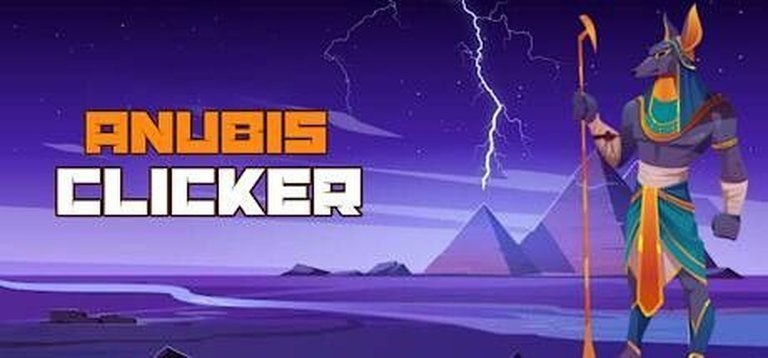
Anubis Clicker is an idle clicker game set in an ancient Egyptian mythological theme where players click on the god Anubis to generate cash, which is used to purchase slaves that automate revenue generation. The game features a minimalist, full-screen interface with no menus, instructions, or clear end goal, focusing on persistent, incremental progression through automated income.
Where to Buy Anubis Clicker
PC
Anubis Clicker: Review
In the ever-expanding universe of video games, the idle clicker genre stands as a fascinating paradox: a minimalist framework that somehow captivates players with its deceptive simplicity and compulsive loops. From the genre’s watershed moment with Cookie Clicker to countless derivatives, these games strip interaction down to its essence—often a single click—while layering exponential progression systems that can ensnare players for hours. Into this landscape steps Anubis Clicker, a 2022 free-to-play title from the obscurely named Voge_Games. At first glance,它 appears to be another entry in the crowded incremental space, but its fusion of ancient Egyptian mythology with a mechanized system of slave labor immediately sets it apart—for better or worse. This review delves deep into Anubis Clicker’s architecture, themes, and cultural footprint, arguing that while it embodies the core addictive potential of idle games, its controversial premise and superficial execution render it a curious but ultimately flawed artifact of indie design.
Development History & Context
Anubis Clicker emerged into a gaming ecosystem already saturated with incremental titles. Developed and published solely by Voge_Games—a studio about which virtually no public information exists—the game was released on December 15, 2022, for Windows via Steam. Its development likely spanned a brief period, leveraging the accessibility of the Unity engine, as noted in MobyGames’ group classifications. The choice of Unity reflects a common trend among indie developers: a versatile, low-barrier tool that enables rapid prototyping but often results in visually generic outputs. In 2022, the idle clicker genre was in a mature phase, with players and critics alike fatigued by derivative clones. Titles like Clicker Heroes and Realm Grinder had established deep progression systems, while experimental entries like Anti-Idle pushed boundaries. Against this backdrop, Anubis Clicker’s vision seems to have been one of extreme minimalism—a deliberate rejection of elaborate menus, tutorials, and narrative framing in favor of pure, unadorned clicking.
The technological constraints of the era are paradoxically both an advantage and a limitation. On one hand, Unity allowed for a quick release across platforms (though officially Windows-only, with Steam Deck compatibility), and the game’s modest system requirements—an Intel Pentium 4 processor, 512 MB RAM—ensure accessibility even on decade-old hardware. On the other, these constraints manifest in the game’s stark presentation: no music, basic 2D graphics, and a full-screen interface that feels more like a prototype than a polished product. The gaming landscape of 2022 was also marked by a growing discourse on ethical game design, particularly regarding monetization and thematic sensitivity. Anubis Clicker’s launch, therefore, occurred at a time when players were increasingly critical of games that trivialized serious issues like exploitation—a tension that would come to define its reception.
Voge_Games’ creative vision, as inferred from the game’s description, appears to be one of absurdist humor combined with genre fidelity. The Steam storefront tags it as “Funny” and “Cartoon,” suggesting an intent to use exaggerated Egyptian iconography for comedic effect. Yet the core mechanic—buying “slaves” to generate wealth—introduces a dissonance that the developers either overlooked or deliberately courted for shock value. This duality—between playful aesthetic and problematic theme—becomes a central thread in understanding the game’s identity.
Narrative & Thematic Deep Dive
Narratively, Anubis Clicker is virtually nonexistent, a common trait in idle games but one that here feels particularly glaring due to its thematic choices. The plot, such as it is, is delivered through sparse on-screen text and the Steam description: the player must “collect money and buy slaves, they will protect you from being burned and cursed by Anubis!!🔥🔥Click Fast or You Will Die💀💀.” There is no canonical story, no dialogue, and no character development. Anubis, the ancient Egyptian god of mummification and the afterlife, is framed as a punitive force—a threat that the player must evade through economic accumulation. The “slaves,” named in the Steam description as “Abah, Bilah, Comba and Etc,,,,,” are rendered as faceless, numerically designated assets whose sole purpose is gold generation and protection.
This absence of narrative depth forces a thematic analysis directly onto the gameplay mechanics. The game’s core loop—clicking to earn gold, then purchasing slaves to automate income—invokes straightforward capitalist allegory: labor (represented by slaves) generates capital, which in turn buys more labor, creating exponential growth. However, the explicit use of “slaves” as a game term is jarring. Historically and ethically, slavery is a system of brutal human exploitation; reducing it to a whimsical clicker upgrade trivializes this trauma. The game’s cartoonish art style (discussed below) attempts to soften this, but the dissonance remains. Why choose “slaves” instead of neutral terms like “workers” or “servants”? The developers seem to have opted for shock humor or a deliberate provocation, but without any contextual framing—no satire, no commentary—it comes across as tone-deaf.
Underlying themes include:
– Exploitation as Mechanic: The game normalizes the idea of purchasing human beings as economic tools, echoing real-world critiques of capitalist systems where labor is commodified. Yet there is no exploration of the slaves’ perspectives, rights, or consequences beyond their utility.
– Mythology as Backdrop: Anubis, typically a guardian of the dead, is reduced to a vague curse-bringer. This strips the deity of cultural and religious significance, using Egyptian mythology merely as aesthetic dressing.
– Absurdism and Flippancy: The Steam tagline’s erratic capitalization and emojis (“🔥🔥Click Fast or You Will Die💀💀”) suggest a meme-like, unserious tone. This could be interpreted as postmodern irony, but without clarity, it feels like lazy writing that dodges substantive engagement with its own themes.
In essence, the narrative is a vacuum that players project onto, but the game’s inability to grapple with its own implications makes it a case study in thematic negligence. A more thoughtful design might have used the clicker format to critique exploitation—as seen in games like Progress Wars—but Anubis Clicker offers no such depth, leaving its themes hollow and potentially offensive.
Gameplay Mechanics & Systems
At its heart, Anubis Clicker adheres to the idle clicker template with a few idiosyncratic twists. The core gameplay loop is deceptively simple: the player clicks on an image of Anubis (the only clickable element on screen) to generate “gold.” Each click yields a small amount, and when enough gold is accumulated, the player can purchase a “slave” to automate gold generation. After the initial purchase, slaves generate gold per second at rates that increase with more expensive acquisitions. This is the classic idle progression: active clicking early on transitions to passive income, encouraging players to “prestige” or restart for bonuses—though Anubis Clicker lacks any explicit prestige system, instead relying on continuous exponential growth.
Core Systems Breakdown:
– Clicking Mechanic: The sole input is mouse clicks on Anubis. There is no click multiplier or upgrade for clicking; it becomes obsolete once automation begins. This simplifies early game but lacks the engagement seen in games where clicking remains relevant late-game (e.g., Cookie Clicker’s mouse upgrades).
– Slave Economy: Slaves are purchased from an interface that is not clearly detailed in sources but implied to be a menu overlay. Each slave has a cost and generates gold per second. The naming (“Abah, Bilah, Comba,” etc.) is static; no differentiation in stats or abilities is mentioned, suggesting a generic tiered system where higher-cost slaves yield higher rates. This is standard for clickers but lacks customization or strategic depth.
– Progression and Balance: Without an endgame or prestige system, progression is linear and potentially unlimited. This can lead to “numbers going up” satisfaction but also to monotony as players wait for cost exponential increases. The Steam description mentions “mini-games” and “pet your Slaves,” hinting at ancillary systems to break repetition, but sources provide no details—likely simple interactive elements that offer minor bonuses.
– Interface and UI: The game runs full-screen with no menus, title screen, or manual save options. This is an unusual design choice that emphasizes immersion but frustrates accessibility. Players must discover mechanics through trial and error; there are no tooltips or instructions. The automatic save feature mitigates data loss, but the inability to manually save or exit gracefully (only via Windows close) shows a lack of polish. The point-and-select interface is limited to clicking Anubis and presumably selecting slaves from a list—a minimalist approach that reduces clutter but also limits engagement.
– Innovations and Flaws:
– Innovative: The automatic save and cloud sync (per Steam) are modern touches for an otherwise retro design. The decision to forgo all menus creates a focused, “pure” clicking experience.
– Flawed: The lack of instructions is a major barrier. New players may not realize they must click Anubis specifically or how to access the slave-buying menu. The “Click Fast or You Will Die” tagline suggests a time-pressure element—perhaps Anubis attacks if gold generation drops—but sources don’t elaborate, indicating unclear or poorly communicated mechanics. Additionally, the absence of an endgame or meaningful goals beyond bigger numbers makes the game feel aimless, a common critique of idle games but exacerbated here by the thin presentation.
The gameplay systems reflect a developer prioritizing raw simplicity over depth. While this aligns with the idle genre’s roots, it also highlights a failure to leverage潜力 for engagement. The slave mechanic, instead of being a hook for strategic diversification (e.g., different slave types with unique abilities), is likely a straightforward multiplier, missing an opportunity to add narrative or tactical layers.
World-Building, Art & Sound
Anubis Clicker’s world-building is skeletal, serving primarily as a backdrop for mechanics rather than an immersive setting. The game is set in “Ancient Egypt,” as per MobyGames, though the Steam description’s anachronistic language (“Slaves Names”) and cartoon style introduce a medieval/modern hybrid feel. This inconsistency is indicative of a lack of cohesive vision: Anubis is depicted in classic Egyptian art style, while the slaves are generic cartoon figures. There is no environment beyond a static background; no pyramids, deserts, or temples are described in sources, suggesting a bare-bones visual presentation. This minimalism means world-building exists only in the player’s imagination, with no lore, geography, or cultural details to enrich the experience.
Art Direction: The game employs 2D, cartoonish visuals, as tagged on Steam (“Cartoon,” “2D”). Screenshots are not provided in the sources, but the description implies simple, possibly humorous character designs. Anubis is likely rendered in a stylized, non-threatening way—perhaps to offset the dark theme of slavery. The art style is consistent with “Funny” and “Design & Illustration” tags, aiming for a lighthearted tone. However, this aesthetic clashes with the slavery mechanic; a cartoon slave appears trivial, reducing a grave historical issue to a cutesy asset. This dissonance weakens any potential thematic resonance and may alienate players sensitive to the subject matter.
Sound Design: Remarkably, the game has no music. The only auditory feedback is a sound effect when clicking Anubis. This creates a stark, repetitive soundscape that can be meditative for some but grating for others. The absence of background music or ambient sounds (e.g., Egyptian-themed instruments) further diminishes the sense of place. Sound design is purely functional: the click sound provides tactile feedback, reinforcing the core loop. However, in an idle game where play often becomes passive, the lack of audio variety contributes to boredom. It also aligns with the minimalist philosophy but at the cost of atmospheric depth.
Contribution to Experience: The art and sound work in tandem to create a deliberately sparse experience. The cartoon style attempts to make the slavery theme palatable as humor, while the minimalist sound focuses attention on the clicking mechanic. However, this combination results in a game that feels neither culturally resonant nor atmospherically engaging. Players seeking an immersive Egyptian adventure will be disappointed; those looking for a pure clicker might appreciate the lack of distractions, but the thematic baggage undermines any minimalist purity.
Reception & Legacy
Anubis Clicker’s reception has been tepid at best. On Steam, as of February 2026, it holds a “Mixed” rating with a Player Score of 59/100 from 22 user reviews—13 positive and 9 negative. This small sample size indicates very low player engagement, likely due to its obscurity and niche appeal. Critical reviews are absent from Metacritic and MobyGames, underscoring its marginal status in the industry.
Critical and Commercial Reception at Launch:
– Positive reviews praise its addictive “numbers going up” gratification and simplicity. Players who enjoy idle games might find it a competent, if unremarkable, time-waster. The free-to-play model lowers barriers to entry, and some may appreciate the unconventional theme as dark humor.
– Negative reviews, however, highlight the repetitive gameplay, lack of instructions, and, most prominently, the controversial slavery mechanic. Steam user reviews often mention discomfort with the term “slaves” and the absence of any ethical framing. Others note the “mini-games” and “pet slaves” features as underdeveloped or nonexistent, feeling misled by the store description.
– Commercially, being free-to-play, it has no sales data, but the low review count suggests minimal downloads. Its presence on Steam is almost invisible among thousands of indie clickers.
Evolution of Reputation: Since launch, Anubis Clicker has shown no signs of gaining traction. It remains a footnote in clicker discussions, occasionally cited in online forums for its offensive premise rather than its gameplay. Its reputation has solidified as a “so bad it’s good” curiosity or outright avoided due to insensitivity. Unlike influential idle games that introduced new mechanics (e.g., Kittens Game’s resource management), Anubis Clicker has contributed nothing to genre evolution.
Influence on the Industry: Virtually none. The game’s obscurity, coupled with its thematic issues, means it has not inspired clones or scholarly analysis. In academic citations—MobyGames boasts 1,000+ citations, but Anubis Clicker is unlikely among them. It represents a dead-end in idle game design: a superficial theme applied to a standard loop without innovation or reflection. However, it serves as a cautionary example of how not to handle sensitive topics in minimalist games. The indie clicker space has seen more thoughtful approaches (e.g., * militants’ political themes), but *Anubis Clicker reinforces the genre’s reputation for disposable, ethically ambiguous content.
Conclusion
Anubis Clicker is a paradox wrapped in a minimalist package. As an idle clicker, it delivers the basic compulsion of exponential growth and passive income, but it does so with such bare-bones execution that it feels more like a prototype than a finished product. Its decision to frame slavery as a game mechanic without critique or context is not just a misstep—it’s a fundamental flaw that overshadows any mechanical competence. The game’s lack of narrative, world-building, and sound design further compounds its emptiness, leaving players with a repetitive clicking exercise that fails to justify its existence beyond the most transient amusement.
In the grand tapestry of video game history, Anubis Clicker will be remembered, if at all, as a minor curiosity: a free indie clicker that briefly flickered on Steam before sinking into obscurity. It exemplifies the pitfalls of genre fatigue and thematic negligence, where a novel premise (Egyptian mythology + clicker) is squandered by shallow implementation. For scholars of incremental games, it offers a case study in how minimalist design can amplify ethical issues rather than mitigate them. For players, it is a forgettable diversion—best skipped unless one is a completist or seeks to critique problematic game design.
Final Verdict: Anubis Clicker is a fundamentally flawed entry in the idle canon. Its place in history is that of a cautionary tale—a reminder that even the simplest games must engage responsibly with their themes, or risk becoming irrelevant relics. Score: 2/10. Not recommended.