
- Release Year: 2022
- Platforms: Nintendo Switch, Windows
- Publisher: 2112Games
- Developer: 2112Games
- Genre: Adventure
- Perspective: 3rd-person (Other) Diagonal-down
- Gameplay: Puzzle elements
- Average Score: 62/100
Description
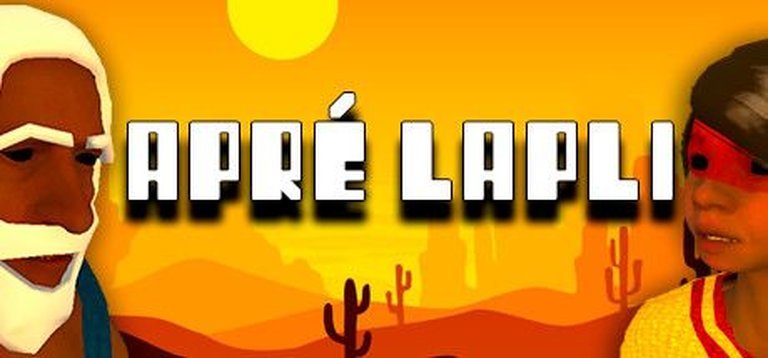
Apré Lapli is an adventure game set in a desolate, water-scarce world where players join Maya and her grandad on a survival journey across vast deserts. Through resource management, puzzle-solving, and listening to grandad’s campfire tales, the game reveals Maya’s mysterious origins and her vivid dreams of a rainy past, all presented in a relaxing, cel-shaded art style that emphasizes contemplation and narrative depth.
Gameplay Videos
Where to Buy Apré Lapli
PC
Apré Lapli Guides & Walkthroughs
Apré Lapli Reviews & Reception
opencritic.com (70/100): A short and relaxing experience that will let not only us find out the history of Maya and her grandad, but also a scenario that belongs to all of us
indiegamesdevel.com : A short and relaxing experience that will let not only us find out the history of Maya and her grandad, but also a scenario that belongs to all of us
nindiespotlight.com (54/100): While clearly aiming to tell an interesting tale of heritage with some flourishes, its technical woes drag it down
Apré Lapli: A Desert Bloom of Ambition and Imperfection
In the vast, often-overlooked canyons of the 2022 independent gaming landscape, few projects arrive with as quiet a whisper yet as profound a thematic resonance as Apré Lapli. From the fledgling studio 2112Games, this title is not merely a game but a deliberate, melancholic meditation on loss, legacy, and the thin, life-giving thread of water in a parched world. It is an experience that consciously rejects the dopamine-driven feedback loops of its contemporaries, instead offering a contemplative, at times plodding, journey that asks more of its players in emotional investment than in mechanical dexterity. This review will argue that Apré Lapli is a critically flawed yet deeply sincere debut—a title whose profound narrative and artistic vision is intermittently thwarted by repetitive gameplay and technical shortcomings, but whose core aspiration to use interactive media as a vehicle for environmental allegory marks it as a noteworthy, if uneven, artifact of its time.
1. Introduction: The Whisper After the Storm
Apré Lapli (Creole for “After the Rain”) enters the stage not with a bang, but with the soft sigh of dust settling. It presents itself as the first act of a planned trilogy, a “chill narrative adventure” that immediately sets itself apart from the pack through its pacified tempo and heavy thematic load. The central thesis of this review is that the game is a case study in prioritization: its developers have clearly and fervently prioritized atmosphere, theme, and a specific, relaxed emotional tone over gameplay depth or technical polish. The result is a game that can feel like a moving interactive short film at its best, and a rudimentary tech demo at its most cumbersome. To analyze Apré Lapli is to dissect the growing niche of “games as contemplative essays” and to question where the line between meaningful simplicity and unsatisfying emptiness is drawn.
2. Development History & Context: A Studio’s First Rain
The Birth of 2112Games: Apré Lapli is the inaugural release from 2112Games, a fact that immediately contextualizes both its ambition and its rough edges. As a debut project from an independent developer, it carries the hallmark of a labor of love—a vision fully realized in concept but navigating the treacherous waters of implementation with limited resources. The studio’s name itself, referencing the iconic year from works like A Clockwork Orange and 2001: A Space Odyssey, hints at a penchant for philosophical and speculative fiction, which aligns perfectly with the game’s thematic core.
The 2022 Indie Landscape: Released in October 2022, the game emerged into an indie scene dominated by the lingering success of “cozy games” (Stardew Valley, Animal Crossing) and the rise of narrative-driven, choice-based experiences (Life is Strange, Tell Me Why). Apré Lapli carves its own path within this space, however, by blending simple, almost archaic, adventure-game puzzles with an open-world-lite traversal and a mandatory co-op mechanic that feels more like a narrative device than a social feature. It stands in contrast to the typically solitary or purely choice-driven narratives of its peers, enforcing a shared physical space (even if单人玩家 controls both characters via dual-stick) that metaphorically reinforces the story’s themes of interdependence.
Technological Constraints: The sources repeatedly highlight significant technical hurdles, particularly on the Nintendo Switch platform. The IndieGamesDevel review notes “drops of the frame rate” in docked mode that “deface the good work conducted during the creation of the landscapes.” This points to a common indie dilemma: an artistic vision (the beautiful, wide desert vistas with their cel-shaded aesthetic) that pushes against the hardware’s limits. The game’s system requirements on Steam suggest a lightweight engine, but the performance issues indicate challenges in optimization, likely stemming from the small team’s lack of experience with console-specific deployment.
3. Narrative & Thematic Deep Dive: The Parched World and the Dreamer
Plot as Vehicle: The plot is sparse but potent. Players follow Maya and her grandfather as they traverse a vast, dried-up desert in a cart pulled by a giant reptile. Their goal is survival and reaching a destination implied to be a new home or source of salvation. The narrative is delivered episodically at campfires the player must help establish. Here, the grandfather recounts the story of Maya’s parents—how they met, loved, and ultimately were part of the world’s ecological collapse. This frame story is the game’s emotional and intellectual backbone.
The Dual Realities: Scarcity and Memory: The genius of the narrative structure lies in its duality.
1. The “Real” World (Scarcity): The present-day journey is one of palpable lack. The environment is a beautiful but deadly monument to absence. Every action—gathering beetles for food, finding condensate for water, lifting rocks for shelter—is a small victory against entropy. The game mechanics directly mirror this theme of struggle for basic resources.
2. Maya’s Dreams (Abundance): In stark contrast, Maya periodically falls asleep and enters lush, vibrant dream sequences where water flows, plants bloom under her feet, and poetry is unveiled. These segments are visually and aurally jarring in the best way—a sensory overload of life compared to the muted desert. The ten poems scattered throughout these dreams are not just collectibles; they are fragments of a lost cultural memory, lyrical artifacts from a world with water.
Underlying Themes: An Uncomfortable Mirror: Apré Lapli is not subtle in its environmental allegory. The review from IndieGamesDevel astutely identifies the core thesis: the game is a “point for reflection on a problem crucial for us, a silent issue to which we do not give importance, the global warming.” The grandfather’s tales implicitly point to the catastrophic mismanagement of the planet by previous generations (Maya’s parents’ generation). Maya, born into the scarcity, represents a future that knows only loss, her dreams a genetic or cultural echo of a planet that once was. The game forces the player to constantly toggle between a world of exhausting survival and dreams of effortless paradise, creating a cognitive dissonance that mirrors the real-world anxiety about climate change: we know what we’ve lost, we feel the scarcity beginning, and we dream of repairing it, but the path to repair feels as arduous as Maya’s desert trek. It’s a personal, intimate scale of an apocalyptic narrative.
Characterization Gaps: The sources are unanimous in noting the limitation in character depth. As the Nindie Spotlight critique states, the voice work is “at least decent,” but the characters remain somewhat archetypal—The Resilient Orphan, The Weary Storyteller. Their backstories are told to us, not shown through complex interaction or deep behavioral systems. This is a necessary sacrifice for the game’s short length and focused pacing, but it does leave the emotional punches feeling slightly theoretical rather than viscerally earned.
4. Gameplay Mechanics & Systems: Simplicity as a Double-Edged Sword
The Four-Part Loop: The Steam description outlines the four experiential pillars:
1. Cart Traversal: The player drives the lizard-pulled cart along a path (with an optional open-world exploration element) between narrative camps. This is the connective tissue, designed to be “relaxing.”
2. Dual-Stick Cooperation: The most innovative mechanic. One stick controls Maya, the other controls the Grandfather. This requires a form of divided attention. Their abilities are asymmetrical: Grandfather is slow but strong (moves boulders); Maya is fast and agile (catches food/water). Puzzles involve simple coordination—Grandfather holds a switch down so Maya can cross, or Maya gathers resources while Grandfather clears an obstacle.
3. Dream Sequences: Single-character, linear platforming/puzzle segments where Maya traverses beautiful landscapes to reveal a poem. These are the most visually stunning and mechanically light parts.
4. Campfire Setup: Upon arrival, the player must gather specific resources to build a fire and shelter, triggering the next story segment.
Innovation vs. Repetition: The dual-stick control scheme is the game’s most laudable innovation. It physically binds the player to the characters’ interdependence, making the act of playing a metaphor for their relationship. However, as Alex Cuculi notes in his review, this leads to “repetitive gameplay.” The cycle of “drive, arrive, gather, sleep, listen” becomes predictable. The puzzles never evolve beyond the initial “Grandfather lift, Maya go” formula. The “open world” desert is, in reality, a corridor with slight detours for collectibles. The gameplay serves the narrative rhythm perfectly but offers little intrinsic joy or challenge beyond its first iteration.
Survival Mechanics as Atmosphere: The gathering of food and water is not a tense Don’t Starve-style management sim but a gentle, timed activity. It’s less about threat and more about ritual, reinforcing the game’s meditative pace. The system works because it is frictionless enough to not frustrate, but present enough to constantly remind the player of the world’s condition.
User Interface & Controls: The interface is minimalist, fitting the aesthetic. The biggest gameplay criticism lies in the implementation of the dual-stick scheme. The Nindie Spotlight review calls the gameplay “wonky,” suggesting imprecise controls that can lead to frustration during what should be serene puzzle-solving. This is the critical flaw: a brilliant conceptual idea (physicalizing cooperation) hampered by execution that can feel unresponsive, breaking the “relaxing” spell.
5. World-Building, Art & Sound: The Beauty of a Dead World
Visual Direction: The Aesthetics of Scarcity and Memory: Apré Lapli succeeds most consistently in its audiovisual presentation. The desert world uses a “good mixture between 3D and cel-shading,” as Cuculi describes. The palette is a masterclass in symbolic color theory: burning oranges and arid yellows for the desert, contrasted with the cool, saturated blues and lush greens of Maya’s dreams. The cel-shading not only gives a timeless, illustrated storybook quality but also softens the geometry, making the world feel desiccated and simplified—like a memory of a world. The wide, panoramic vistas are constantly breathtaking, encouraging the player to stop and look, which aligns perfectly with the game’s intended pace.
Sound Design: The Music of Silence and Echoes: The audio landscape is equally purposeful. The review highlights “relaxing rhythms, minimal accords and environmental noises pretty well re-created.” The desert is filled with the howl of wind, the crunch of sand, the distant call of unknown creatures—a soundscape of immense, empty space. The dream sequences are accompanied by a gentle, melodic score and the sounds of running water and rustling leaves, a sensory overload compared to the sparse reality. The voice acting, while noted as “decent,” carries a weary, melancholic tone that sells the grandfather’s age and trauma. The sound design does the heavy lifting of world-building where the gameplay systems are light.
Contribution to Experience: Together, the art and sound create the game’s true core loop: a cycle of visual/aural deprivation (the desert) followed by perceptual plenty (the dream). This isn’t just a narrative device; it’s the primary emotional experience. The player is made to feel the thirst for color and sound that Maya feels, making the environmental message viscerally felt rather than just intellectually understood.
6. Reception & Legacy: A Quiet, Uneven Echo
Critical Reception: The critical response was muted and divided. IndieGamesDevel awarded a solid 7/10, praising its “narration that accomplishes the task” and “relaxing graphic and sounds” while docking points for “repetitive gameplay” and “recurring bug and glitch.” Nindie Spotlight was considerably harsher, delivering a 5.4/10 (“Bad”) verdict. Their critique is more fundamental: they argue the technical woes and ultra-limited gameplay actively “get in the way of the enjoyment of the story.” This represents the central tension in the game’s reception: is its message worth the friction? The consensus seems to be that for a patient player, yes; for someone expecting engaging gameplay, no. On aggregators like Metacritic and OpenCritic, the game has almost no presence, sitting in the “-1th percentile” on OpenCritic, an indicator of its obscurity.
Commercial & Cultural Impact: Commercially, it appears to have been a very modest success, selling at a deep discount on Steam ($2.52) and likely having very small sales numbers. Its legacy, therefore, will not be in sales charts but in the niche it occupies. It is a data point in the evolution of “ambient games” or “slow games.” It sits alongside titles like Cloud Gardens or The Long Dark (in its narrative mode) that prioritize mood and theme over traditional interactivity.
Influence: Direct influence is unlikely given its low profile. However, it contributes to a growing body of work that demonstrates how to embed serious ecological messaging into a game’s fundamental mechanics (scarcity) and its contrastive spaces (abundant dreams). Its most significant contribution may be as a cautionary tale about the risks of letting thematic ambition outpace gameplay and technical refinement. For the planned trilogy, the sequel will need to expand the mechanics while retaining the soul—a formidable challenge. Will it deepen the dual-character puzzles? Introduce new survival threats? The foundation is thematically strong but mechanically thin.
7. Conclusion: A First, Faltering Step Towards a Thirsty Future
Apré Lapli is an enigma wrapped in a desert dust storm. It is a game that is impossibly easy to admire from a distance and frustratingly difficult to love up close. Its greatest achievement is its unwavering commitment to its message: it makes you feel the dryness of the world through its oppressive color palette, its sparse sound, and its repetitive survival tasks. The dream sequences are moments of transcendent beauty that make the desert’s return feel even more poignant. The frame story of Maya’s parents is a simple but effective tragedy that anchors the larger climate metaphor in personal loss.
However, this commitment comes at a severe cost. The gameplay, outside of the brilliant dual-stick concept, is too thin to sustain a 2-3 hour experience without becoming a chore. The technical issues, while perhaps excusable for an indie debut, on some platforms (docked Switch) undermine the carefully constructed atmosphere. The characters remain ciphers for thematic points, and the open world is an illusion.
Ultimately, Apré Lapli is not a great game by conventional metrics. It is, however, a significant and sincere one. It is a proof-of-concept for a specific kind of narrative experience—one where the mechanics are meant to be felt, not mastered. As the inaugural step of a trilogy, it establishes a powerful, moody foundation. The onus is now on 2112Games to build upon this foundation with more robust, engaging, and polished mechanics if they wish the series to be remembered for more than its beautiful ideas and its problematic execution. For now, Apré Lapli remains a poignant, flawed artifact: a digital parable about water that, ironically, feels a bit too dry in its interactivity to fully quench the player’s thirst for a complete experience. It is a game worth experiencing for its vision, but one must be prepared to wade through some barren gameplay to find the oases it so beautifully creates.