
- Release Year: 2008
- Platforms: Windows
- Publisher: magnussoft Deutschland GmbH
- Developer: magnussoft Deutschland GmbH
- Genre: Action
- Perspective: Side view
- Game Mode: Single-player
- Gameplay: Arcade, Paddle, Pong
- Average Score: 79/100
Description
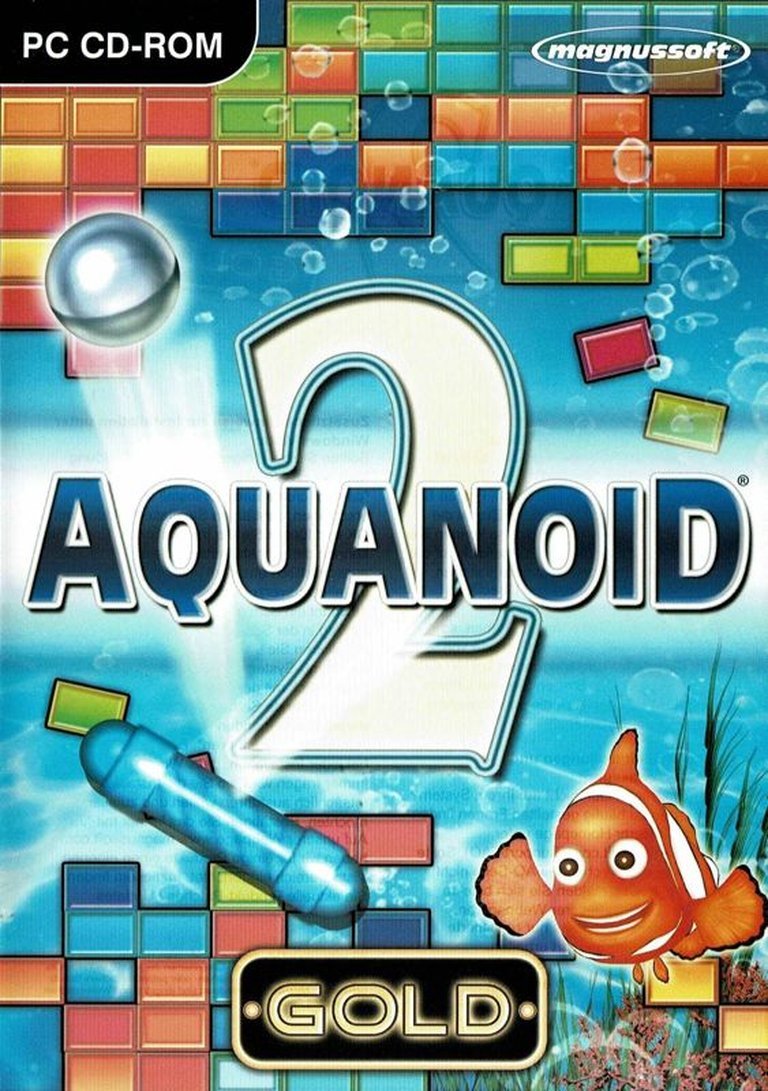
Aquanoid 2 Gold is an enhanced version of the classic arcade-style game Aquanoid 2, featuring over 300 levels with various bonuses, customizable gameplay elements, and an editor for creating custom levels. Players can select from different sets of stones, paddles, and balls, offering a rich and engaging experience in a side-view, fixed/flip-screen format.
Aquanoid 2 Gold Reviews & Reception
gamefaqs.gamespot.com (79/100): A well-received action game with a balanced difficulty and moderate playtime.
Aquanoid 2 Gold Cheats & Codes
Aquanoid (PC)
Enter passwords using the level selector. A master code format of NZHF[Level] can be used to directly access any level. The last level can be accessed with the password GYPSUM.
| Code | Effect |
|---|---|
| CERTIFICATE | Password for Level 10 |
| GYPSUM | Password for Level 20 (also last level) |
| LEVIATHAN | Password for Level 30 |
| PREDECESSOR | Password for Level 40 |
| SKELETON | Password for Level 50 |
| VULTURE | Password for Level 60 |
| FREQUENCY | Password for Level 70 |
| BUCCANEER | Password for Level 80 |
| TRADITION | Password for Level 90 |
| REFLEX | Password for Level 100 |
| AFFLUENCE | Password for Level 110 |
| HOSTAGE | Password for Level 120 |
| MEMORIAL | Password for Level 130 |
| ZODIAC | Password for Level 140 |
| NZHF[Level] | Master code format to directly access any level |
Aquanoid 2 Gold: Review
Introduction
In the crowded ocean of arcade brick-breakers, Aquanoid 2 Gold (2008) emerges as a polished gem—a definitive upgrade to its predecessor that refines the Aquanoid series’ formula with meticulous care. Developed by Germany-based magnussoft, this game combines the hypnotic simplicity of Breakout with a whimsical underwater aesthetic, offering over 300 levels, customizable tools, and a level editor. While not revolutionary, Aquanoid 2 Gold stands as a testament to iterative design, leveraging its niche appeal to create a content-rich experience. This review explores how the game balances nostalgia with innovation, and why it remains a cult favorite among paddle-and-ball enthusiasts.
Development History & Context
Studio Vision & Constraints
Magnussoft Deutschland GmbH, led by veteran designer Maik Heinzig (credited as project lead, programmer, and producer), positioned Aquanoid 2 Gold as a definitive edition of 2004’s Aquanoid 2. The studio aimed to address fan feedback by enhancing visuals, reworking levels, and expanding customization—a challenging task given the technological limitations of late-2000s Windows PCs. The game was distributed on CD-ROM, foregoing digital platforms like Steam, which were still emerging at the time.
Era & Competition
Released in 2008, Aquanoid 2 Gold entered a market dominated by 3D action games and open-world epics. Its retro-inspired, 2D side-view design contrasted sharply with blockbusters like Fallout 3 and GTA IV, yet it catered to a dedicated audience craving bite-sized arcade gameplay. The Breakout subgenre had seen few innovations since the 1990s, making Aquanoid 2 Gold a rare attempt to modernize the formula without abandoning its roots.
Narrative & Thematic Deep Dive
Plot & Characters
True to its arcade lineage, Aquanoid 2 Gold prioritizes gameplay over narrative. However, Retro Replay’s analysis notes a subtle environmental story: players take the role of an unnamed explorer freeing an underwater world from brick-like barriers, implied to be remnants of an ancient catastrophe. Aquatic creatures like dolphins and octopuses serve as obstacles or allies, injecting personality into the abstract premise.
Themes
The game’s themes revolve around restoration and discovery. Breaking bricks “resurrects” coral reefs and kelp forests, while unlockable “tidal logs” provide lore snippets about the ocean’s ecological collapse. Though minimal, these touches elevate the experience beyond mindless destruction, framing the action as a restorative act.
Gameplay Mechanics & Systems
Core Loop
The gameplay is pure Breakout: players deflect a ball with a paddle to shatter rows of bricks. However, Aquanoid 2 Gold innovates with:
– 50+ Power-Ups: Multi-ball, paddle extenders, and speed boosts—alongside cursed tiles that invert controls or split the ball erratically.
– Customization: Six paddle types and ball skins alter physics, adding strategic depth.
– Progression: Unlockables incentivize mastery, while a password system lets players resume progress.
Multiplayer & Level Editor
The split-screen multiplayer mode supports up to four players in competitive brick-clearing or sabotage battles. The built-in level editor, a standout feature, allows玩家 to design and share custom stages—a rarity for 2008.
Flaws
The difficulty curve is uneven, with later levels relying on cheap hazards (e.g., regenerating algae bricks). The UI, though functional, feels dated, with cluttered menus and minimal tutorial guidance.
World-Building, Art & Sound
Visual Design
Aquarena 2 Gold’s overhauled pixel art shines: coral reefs pulse with bioluminescence, wrecked ships loom in the background, and schools of fish dart across the screen. Each level’s palette reflects its depth—sunlit shallows vs. oppressive abysses—creating a cohesive aquatic identity.
Soundscape
Composer Aumeso’s soundtrack blends ambient synth waves with playful melodies, evoking the ocean’s tranquility and unpredictability. Sound effects, like the ping of ball collisions and the gurgle of power-ups, are crisp and satisfying.
Reception & Legacy
Launch Reception
Despite minimal mainstream coverage, niche outlets like Retro Replay praised the game’s “content-rich package” and “vibrant art direction.” However, critics noted its lack of innovation beyond the level editor.
Enduring Influence
While Aquanoid 2 Gold didn’t reshape the genre, it inspired later indie brick-breakers like Wizorb (2011) to embrace thematic storytelling. Its level editor also prefigured the modding tools seen in games like Super Mario Maker.
Conclusion
Aquareoid 2 Gold is a lovingly crafted homage to arcade classics, offering enough customization and content to justify its “Gold” moniker. Though its gameplay loop is familiar, the aquatic aesthetic, multiplayer modes, and creative tools elevate it above typical Breakout clones. While not a landmark title, it remains a noteworthy time capsule of late-2000s indie design—a game best appreciated by retro enthusiasts and patient players willing to dive into its depths.
Final Verdict: A refined, if unambitious, arcade experience that rewards dedication with oceanic charm and near-endless replayability.