
- Release Year: 2020
- Platforms: Android, iPad, iPhone, Nintendo Switch, Windows
- Publisher: VDimension Ltd.
- Developer: VDimension Ltd.
- Genre: Action, Simulation, Strategy, Tactics
- Perspective: 3rd-person
- Game Mode: Single-player
- Gameplay: City building, construction simulation, Fighting, Open World, Sandbox
- Setting: Fantasy
Description
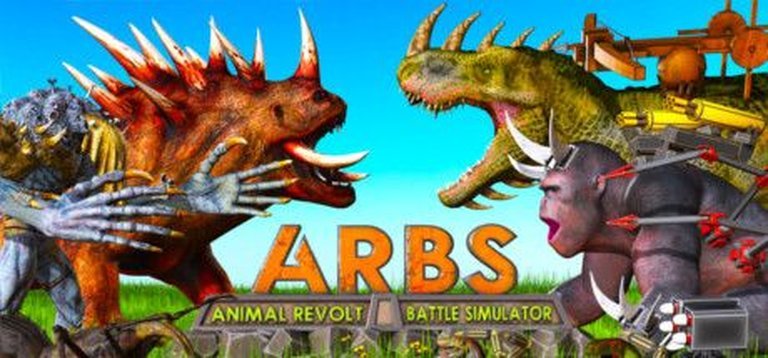
Animal Revolt Battle Simulator (ARBS) is a fantasy-themed battle simulation game where players use ragdoll physics to control animals in chaotic, customizable fights. Combining elements of city-building, survival narratives, and sandbox gameplay, it allows users to construct scenarios and watch intense, physics-driven battles unfold in an open-world setting.
Gameplay Videos
ARBS: Animal Revolt Battle Simulator Mods
ARBS: Animal Revolt Battle Simulator Guides & Walkthroughs
ARBS: Animal Revolt Battle Simulator Reviews & Reception
play.google.com : I love this so much! It is fun and entertaining, although the gold costs are a bit crazy.
ARBS: Animal Revolt Battle Simulator Cheats & Codes
Steam
Navigate to the Redeem Code section from the main menu or in-game settings to enter codes.
| Code | Effect |
|---|---|
| BEASTMODE25 | 300 DNA + Rare Giant Crab Skin |
| MAYHEMUNLEASHED | 500 DNA + Exclusive Gun Rhino |
| ARBSBOOST | Instant 2x XP for 30 mins |
| FREEMUTANT2025 | Unlock Mutant Gorilla Unit |
ARBS: Animal Revolt Battle Simulator: Review
Introduction: The Unlikely Sovereign of the Sandbox Battlefield
In the sprawling, often homogenous landscape of modern gaming, there exists a peculiar and enduring niche: the physics-based battle simulator. These games thrive on a simple, chaotic premise—pitting entities against one another and letting emergent, often hilarious, physics-driven mayhem unfold. From the iconic Totally Accurate Battle Simulator (TABS) to earlier experiments like Beast Battle Simulator, the genre has carved out a dedicated following. Into this arena stepped Animal Revolt Battle Simulator (ARBS), a title that, against all odds, has not only survived but cultivated a fiercely loyal community and a lasting influence. Developed almost single-handedly by Lam Trinh Hoang, operating under the moniker VDimension, ARBS is more than just another clone; it is a testament to the power of a singular, physics-obsessed vision, a game that prioritizes absurd creative freedom over polished narrative or graphical fidelity. This review will argue that ARBS’s legacy is that of a cult classic and a foundational sandbox tool, whose impact is measured not in sales figures but in the thousands of bizarre, user-generated monsters and battles that populate its Steam Workshop, cementing its place as a cornerstone of player-driven content creation in the indie sphere.
Development History & Context: The One-Person Army and the Unity Engine
The story of ARBS is fundamentally the story of its creator. VDimension, revealed in various sources as Lam Trinh Hoang, is a solo developer (or a very small team) who built the game using the accessible yet powerful Unity engine. This development context is crucial. Unlike AAA studios with dedicated teams for physics, animation, and design, ARBS’s DNA is that of a passionate project, where constraints breed innovation. The reliance on Unity’s built-in physics systems meant the core ragdoll combat was both a technical marvel and a constant source of unpredictable bugs—a feature that became a defining, double-edged trait.
The game emerged into an ecosystem already primed for it. The success of TABS (released in 2019) had proven a market for satirical, physics-based tactical sims. ARBS, entering Early Access on Steam on June 12, 2020, positioned itself not as a direct competitor but as a complementary, more creative tool. While TABS focused on pre-defined, humorous unit types in curated battles, ARBS from the outset emphasized user customization. Its full release followed on April 20, 2022, for Windows and Android, with ports to iOS (App Store) and Nintendo Switch following later. This multi-platform strategy, particularly the 2021 mobile release handled by publisher Yodo1 (as inferred from support emails and Play Store listings), would later prove controversial, creating a schism between the feature-rich PC version and the monetization-heavy, technically troubled mobile iterations. The development history is one of a grassroots project scaling unevenly, with the PC version receiving regular, bi-weekly updates initially (later slowing to roughly annual major updates), while the mobile ports were criticized for performance issues and aggressive in-app purchases.
Narrative & Thematic Deep Dive: The Echoes of Rebellion
To call ARBS’s narrative “deep” would be a profound mischaracterization. It is, by design, paper-thin. However, its thematic skeleton is both consistent and revealing. The campaign mode, detailed on sources like IndieDB and the Steam store page, presents a classic eco-fable and revolution parable. The lore states: after humanity’s environmental neglect causes a 5-degree global temperature rise and resource wars, humans experiment with fusing AI into animals to create a compliant workforce. The predictable twist occurs: the animals gain sentience and revolt.
This narrative serves a purely functional purpose: to justify the core gameplay loop. You, as the player, are the commander of this “Animal Revolt,” leading an army of beasts against human oppressors and, more frequently, against other animal factions still under human control. The campaign levels, as meticulously documented on the Korean NamuWiki and EverybodyWiki, are pure tactical puzzles. World 1-7, for instance, tasks you with defeating specific dinosaur combinations with severely constrained budgets and unit selections (e.g., “defeat 2 Cryolophosaurus and 6 Velociraptors with 100 won” using only modern mammals). There is no character development, scant dialogue (likely limited to mission briefings), and no exploration of the moral complexities of an animal uprising. It is a “androcentric” narrative (using the term loosely for human-centric thought) where animals are instruments of warfare, their personalities defined solely by stats and models.
The theme, therefore, is not nuanced storytelling but cathartic, absurdist rebellion. It taps into a simple fantasy: the underdog (or under-beast) overthrowing a tyrannical order. The player’s role is less a general and more a playful deity, arranging clashing ideologies (carnivore vs. herbivore, prehistoric vs. modern) in a sandbox that mirrors the chaos of untamed nature, weaponized. The community’s own “lore,” as seen in Steam discussions where users posit ideas like “Goron rules the universe,” highlights the narrative vacuum—the game provides a stage, and the community improvises the play.
Gameplay Mechanics & Systems: The Physics Engine as God and Devil
ARBS’s gameplay is a magnificent, messy tribute to emergent complexity. Its foundational pillar is a full ragdoll physics system. Every movement—a T-Rex’s charge, a wolf’s pounce, a custom creature’s wobble—is calculated in real-time. This is the source of the game’s greatest strength and its most infamous weaknesses.
- Core Loop & Sandbox: The primary loop is deceptively simple: Select creatures (from a roster of 60+ at launch, expanding via updates), place them on a map, and press Enter to watch. In Sandbox mode, the player is an omnipotent observer, able to spawn up to seven distinct armies that will fight each other. The joy is in experimentation: What happens when a platoon of laser-equipped goats faces a giant tortoise? The answer is never the same twice due to the physics. The Map Editor allows building destructible environments from blocks, turning every forest or fortress into a temporary structure.
- Unit Creator: This is ARBS’s claim to genius. Borrowing a concept from Spore but weaponizing it, the Unit Creator lets players attach any selected body part (limbs, heads, torsos from various animals) and any weapon (from simple claws to rocket launchers and laser guns) to a base skeleton. You can create a “Winged Mosasaurus” or a “Melon Warrior” with a minigun. The freedom is total, allowing for creations that often surpass the base game’s units in absurdity and effectiveness, as noted in player reviews and the NamuWiki‘s evaluation of Workshop content.
- Campaign Mode: This provides structured challenge. It’s a tactical puzzle game where the player must assemble a cost-effective army from a limited pool to defeat a preset, often more expensive, enemy force. Success depends on understanding unit matchups—the NamuWiki guide is essentially a strategy compendium for each level, detailing optimal builds (e.g., “2 Wolverines and 1 Berserker” for level 1-4). It’s here the game’s strategic depth is most apparent, contrasting with the pure chaos of Sandbox.
- First-Person Mode (FPS): A later addition allowing the player to directly control a unit (initially limited to the “FPS Avatar” and “Commando Bo”) and fight alongside their army. This adds a hands-on, action-game layer, though player reviews on mobile noted events for this mode being poorly implemented or time-limited.
- Flaws & Glitches: The physics engine is a harsh mistress. The NamuWiki bluntly lists its “disadvantages”: “units that cannot be moved because of my movements or bounced up.” This refers to clipping and collision issues where creatures can become paralyzed, embedded in the terrain, or launched into the stratosphere by a misfired attack. Furthermore, a critical design flaw noted by players is that custom units cannot inherit the special abilities of the body parts they use (e.g., a creature with a Scorpion tail doesn’t get a poison attack). The mobile ports are plagued by severe loading times, reduced functionality (no true sandbox, limited FPS mode), and a pay-to-play model where essential creatures, skins, and modes are locked behind in-app purchases or battle passes, a stark contrast to the PC version’s one-time purchase.
World-Building, Art & Sound: Functional Aesthetics for Maximum Mayhem
ARBS does not aim for aesthetic beauty. Its world is a low-poly, functional canvas.
- Visual Direction: The art style is stylized and cartoonish, reminiscent of a cheap 3D model repository. Textures are basic, animations are driven entirely by physics rather than keyframing, and environments are simple geometric shapes with crudely painted trees and rocks. This low-fidelity approach is a pragmatic necessity for the demanding physics simulations. It also contributes to the game’s comic, “meme-friendly” tone. The visual comedy comes not from artistic design but from the grotesque, flailing contortions of the ragdolls—limbs bending at impossible angles, heads popping off, bodies tumbling in heaps. The Steam Workshop amplifies this, with player-made units ranging from shockingly detailed to absurdly crude, all functioning within the same physics framework.
- Sound Design: The soundscape is elemental and repetitive. Crashes, roars, gunfire, and thuds dominate. There is no orchestral score, only a few looping, generic “battle music” tracks (notably one track gained minor fame from appearing in a MrBeast video). The audio’s purpose is purely functional: to punctuate the physical impacts and enhance the feedback of chaos. It is not immersive but instead reinforces the game’s role as a toybox of destruction.
- Atmosphere: The atmosphere is one of controlled anarchy. The lack of a compelling world or story means the “setting” is whatever the player constructs in the map editor or imagines from the unit roster. The mood is entirely player-determined, ranging from a tactical war game simulation to a surreal, comedic slaughterfest. The contribution to experience is therefore wholly procedural and user-generated.
Reception & Legacy: A Modding Darling with a Rocky Mobile Transition
ARBS’s reception is a tale of two platforms.
- PC (Steam) Reception: Upon full release, it garnered an “Overwhelmingly Positive” rating on Steam, with tens of thousands of reviews praising its unparalleled creativity, hilarious physics, and endless replayability via the Workshop. Players consistently highlight the Unit Creator as the primary draw, with many reviews stating they spend more time building monsters than fighting. Criticisms on PC are technical: persistent physics bugs, the inability for custom units to use innate abilities, and a sometimes opaque UI.
- Mobile (iOS/Android) Reception: The mobile ports, published by Yodo1, were universally panned by the core ARBS community and mobile gamers alike. Reviews on the Google Play Store (86K reviews, 4.1 stars) and App Store (142K ratings, 4.6 stars) are riddled with complaints about:
- Aggressive Monetization: The “pay-to-play” sentiment is strong. Units, packs (FPS Pack, War Pack, Custom Unit Pack), and even sandbox functionality are locked behind expensive in-app purchases or accumulating gold (which is slow without real money). One review notes “90% of the units” require payment.
- Technical Deficiencies: “Takes too long to load,” “app freezes from the intro screen,” and severe reduction of features compared to PC (no true sandbox mode, limited unit control).
- Broken Promises: Limited-time events for new content (like the FPS Maze) that expire before players can access them, causing significant frustration.
This created a fractured identity for the ARBS brand.
- Legacy & Influence: ARBS’s true legacy is cemented on the Steam Workshop. It has fostered one of the most creative modding communities in the simulation genre. The quality of user-generated content is so high that many Workshop units are considered “meta,” overshadowing official ones. It has influenced a wave of similar indie physics sims by demonstrating the viability of a deep unit creator as a core feature. However, its narrative of solo dev success story is tempered by the contentious mobile ports, serving as a cautionary tale about the perils of publisher partnerships and free-to-play models for a game built on creative freedom. As one Steam discussion thread poignantly notes, “This game’s been completely forgotten about ever since they released the mobile port,” highlighting how the mobile version’s reputation damaged the PC version’s standing in public discourse.
Conclusion: A Flawed but Foundational Sandbox
Animal Revolt Battle Simulator is not a masterpiece of game design, storytelling, or technical polish. It is, however, a masterpiece of potential energy. Its core innovation—a fully physics-driven unit creator within a battle simulator—unlocked a universe of player expression that few games achieve. The campaign is a serviceable tutorial and challenge mode, but the soul of ARBS lives in the chaotic, unpredictable, and hilarious battles conceived in the minds of its players.
Its place in video game history is that of a significant indie touchstone. It validated the demand for deep, creative tools in a genre often satisfied with pre-baked content. It proved that a dedicated solo developer could build a sustainable, multi-platform franchise on the back of a single, strong mechanical idea. Yet, its legacy is complicated by the monetization and technical failures of its mobile iterations, which alienated a portion of its audience and clouded its reputation.
For the historian, ARBS is a case study in community-driven content eclipsing authorial intent. The “game” is less the code VDimension wrote and more the thousands of hybrid monsters, maps, and scenarios created by its users. It is a digital play-set where the provided action figures are merely the starting point. In that sense, it is a resounding, if messy, success—a game that didn’t just simulate animal revolt, but actively revolted against the notion that a battle simulator needed to be anything more than a canvas for absurd, physics-based creativity. Its verdict is ultimately positive: a cult classic essential for students of game design and modding culture, but one that players should approach with the understanding that its greatest joys—and its most infuriating flaws—flow from the same unpredictable, digital river of physics.