
- Release Year: 2010
- Platforms: Windows
- Publisher: SYBEX-Verlag GmbH
- Genre: Compilation
- Game Mode: Single-player
- Gameplay: Arcade, Board game, Puzzle, Racing, Shooter
- Average Score: 75/100
Description
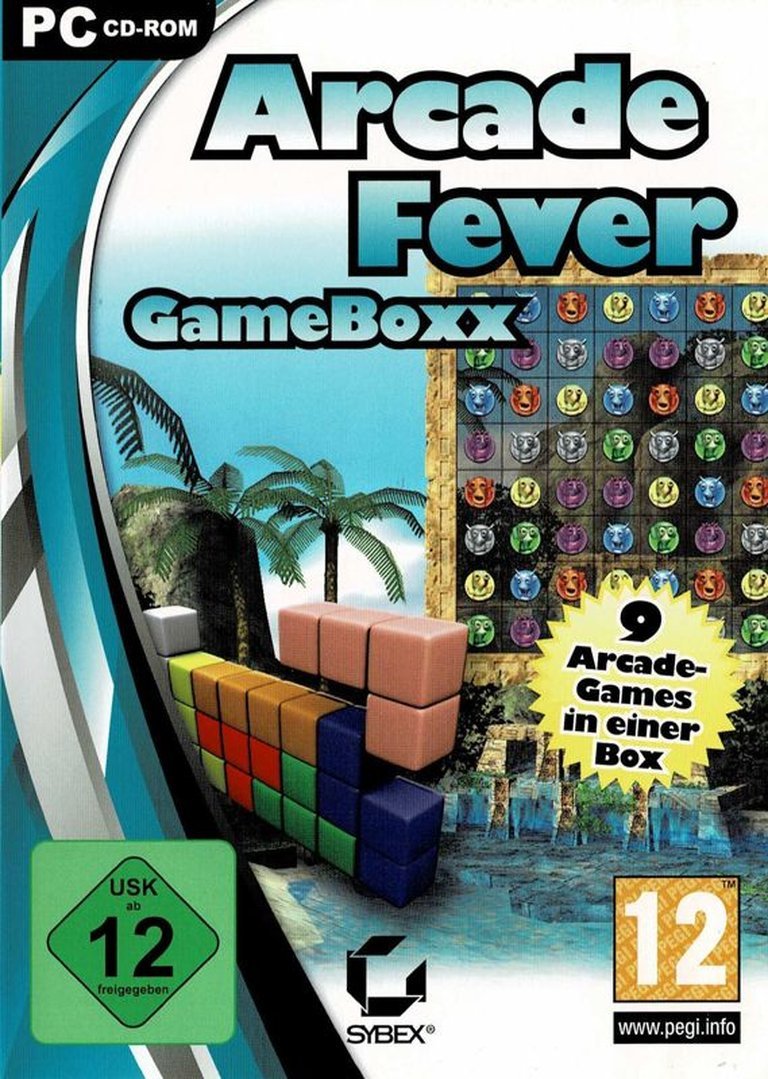
Arcade Fever is a commercial PC game compilation released in 2010, featuring a diverse collection of arcade-style titles for Windows. The compilation includes games such as Paris Chase, a fast-paced pursuit game; Jewel Amazon, a treasure-hunting adventure; Catch’em, a frantic creature-catching challenge; and Schiffe Versenken, a strategic naval battle game. Designed to evoke the spirit of classic arcade entertainment, this CD-ROM package offers a variety of gameplay experiences suitable for players aged 12 and up, providing retro-inspired fun with modern accessibility.
Arcade Fever Cracks & Fixes
Arcade Fever Reviews & Reception
goodreads.com (75/100): Fun. Frequently the subject matter is more evocative than the writing.
thelogbook.com : Sellers’ text is amusing, observant, and conveys the essence of the games.
Arcade Fever: Review
Introduction
In the crowded landscape of budget PC compilations, Arcade Fever (2010) stands as a curious anomaly—a forgotten relic of early 2010s shovelware that bundles nine obscure mini-games under the guise of arcade nostalgia. Released by German publisher SYBEX-Verlag GmbH, this compilation promises “feverish” entertainment but delivers a tepid assortment of simplistic titles devoid of curation or context. This review unpacks Arcade Fever’s baffling existence, examining its place in gaming history as a case study in low-effort repackaging and missed opportunities.
Development History & Context
Studio & Vision: SYBEX-Verlag, primarily known for educational software and tech manuals, ventured into casual gaming with Arcade Fever. The studio’s lack of prior game development pedigree is glaring. The game’s haphazard selection—ranging from puzzle games (Jewel Amazon) to rudimentary action titles (Earth Defence)—suggests a cash-grab strategy targeting budget-conscious buyers rather than arcade enthusiasts.
Technological Constraints & Gaming Landscape: By 2010, digital storefronts like Steam were revolutionizing indie distribution, yet physical compilations like Arcade Fever clung to CD-ROM media, catering to offline audiences. The included games, likely sourced from amateur developers or abandoned projects, reflect early 2000s Flash-game aesthetics, with 2D sprites, minimal sound design, and no hardware demands. This compilation ignored contemporary trends (e.g., digital leaderboards, achievements), feeling archaic even at release.
Narrative & Thematic Deep Dive
Arcade Fever lacks narrative cohesion—its nine games are unrelated mechanically or thematically:
– Paris Chase: A forgettable top-down driving game.
– Das lustige Krokodil: A child-friendly crocodile-themed puzzler.
– Jewel Amazon: A Bejeweled clone with jungle motifs.
– Zootrix: A tile-matching game with zoo animals.
– Power Ball: A breakout-style brick breaker.
– Earth Defence: A static space shooter.
Each title is devoid of plot, characters, or thematic depth. “Fever” implies intensity, but these games lack even basic stakes or progression systems. The compilation’s sole “theme” is its appropriation of arcade terminology—a misdirection given its lack of quarter-munching urgency or high-score competitiveness.
Gameplay Mechanics & Systems
Core Gameplay Loops: The included games suffer from underdeveloped mechanics:
– Repetitive Objectives: Catch’em (a memory game) and Schiffe Versenken (Battleship clone) offer single-note interactions with no difficulty scaling.
– Flawed Controls: Paris Chase’s physics feel floaty and unresponsive, while Earth Defence’s hit detection is inconsistent.
– No Progression: None feature unlockables, difficulty tiers, or save systems. Each game is a shallow sandbox, abandoned after minutes.
UI & Accessibility: The menu is functional but barebones, lacking options for resolution, input remapping, or audio adjustments. Games default to mouse controls, though several (Power Ball, Earth Defence) awkwardly support keyboards.
Innovation or Incompetence?: The sole “innovation” is the compilation’s incoherence—bundling preschool puzzles (Das lustige Krokodil) with apocalyptic shooters (Earth Defence) creates tonal whiplash. This isn’t curation; it’s chaos.
World-Building, Art & Sound
Visual Direction & Atmosphere:
– Art: Generic, low-resolution assets dominate. Frutti Freak’s fruit characters resemble clip art, while Zootrix’s animals are flat and lifeless.
– UI Design: Bland menus use standard Windows fonts without thematic flair.
Sound Design:
– Music: Repetitive MIDI tracks loop ad nauseam (Power Ball’s upbeat tempo clashes with Earth Defence’s droning synth).
– SFX: Stock effects (e.g., Jewel Amazon’s “match” chime) lack impact or variety.
These elements neither immerse nor entertain—they highlight the absence of polish.
Reception & Legacy
Critical & Commercial Reception:
– Launch Impact: Arcade Fever left no mark. No critic reviews existed at launch (per MobyGames), and user reviews remain absent. SYBEX-Verlag’s marketing was nonexistent; the game vanished from shelves swiftly.
– Price & Value: Sold at budget pricing (likely under $10), it failed to justify even this cost. By comparison, contemporary indie bundles like Humble Bundle offered far richer content.
Legacy:
– Industry Influence: Zero. The compilation epitomizes the “shovelware” era but contributed nothing to design trends.
– Cultural Footprint: Its only legacy is confusion with John Sellers’ acclaimed 2001 book Arcade Fever: The Fan’s Guide to the Golden Age of Video Games—a tragic irony given the game’s disdain for arcade history.
Conclusion
Arcade Fever (2010) is less a game compilation and more a cautionary tale—a hollow product assembled without passion or purpose. Its slapped-together selection, prehistoric presentation, and nonexistent ambition render it a footnote even among budget titles. While the similarly named book celebrates gaming’s golden age, this compilation buries its generic mini-games in an unmarked grave. For historians, it serves as a case study in how not to curate retro experiences. For players, it’s a relic best left forgotten.
Final Verdict: A 1/5-star artifact of gaming’s shovelware underworld. Its sole utility? A reminder that not all “arcade” branding deserves nostalgia.