
- Release Year: 2024
- Platforms: Linux, Macintosh, Nintendo Switch, Windows
- Publisher: Panic Inc.
- Developer: Antonio Uribe (Fayer), Franek Nowotniak, José Ramón García López (Bibiki), Max Cahill
- Genre: Role-playing (RPG), Tactical RPG
- Perspective: Diagonal-down
- Game Mode: Single-player
- Gameplay: Tactical RPG, Turn-based combat
- Setting: Western
- Average Score: 86/100
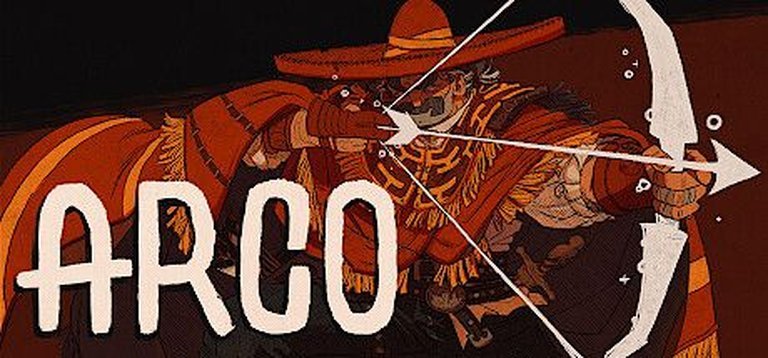
Description
Arco is a turn-based tactical RPG set in a Western-inspired world, blending pixel-perfect art with deep, strategic combat and a gripping narrative. Players navigate a harsh, unforgiving landscape where every decision carries weight, from dynamic battles requiring careful planning to morally complex interactions with NPCs. With its cinematic storytelling, evocative soundtrack, and a mix of exploration and tactical gameplay, Arco delivers a refined and immersive experience that challenges both strategy and empathy.
Gameplay Videos
Where to Buy Arco
PC
Arco Cracks & Fixes
Arco Patches & Updates
Arco Guides & Walkthroughs
Arco Reviews & Reception
metacritic.com (86/100): A triumphant return to form for the series.
polygon.com : Don’t let Arco be the most overlooked game of the year.
en.wikipedia.org (86/100): Arco is a 2024 Western-themed turn-based strategy RPG.
eurogamer.net : A compact and ingenious turn-based battler with an evocative world.
Arco: A Masterclass in Narrative-Driven Tactical RPG Innovation
Introduction: The Overlooked Gem of 2024
In the vast, often homogenizing landscape of modern gaming, Arco emerges as a defiant, brilliant anomaly—a game that refuses to be pigeonholed, yet somehow feels like the natural evolution of multiple genres. Released on August 15, 2024, by Panic Inc. and developed by a small, international team of visionaries, Arco is a Western-themed tactical RPG that blends turn-based strategy with real-time urgency, wrapped in a pixel-art aesthetic that belies its emotional depth. It is, in many ways, the game 2024 didn’t know it needed: a compact, fiercely original experience that challenges conventions while delivering one of the most compelling revenge narratives in recent memory.
At its core, Arco is a story of resistance—both in its themes and its existence. It is a game about Indigenous protagonists fighting back against colonial oppression, but it is also a game that fights back against the industry’s obsession with bloated open worlds and hyper-realistic graphics. With its tight 10-20 hour runtime, Arco proves that brevity and depth are not mutually exclusive. It is a game that respects its players’ time while demanding their full attention, a rare balance in an era where “content” often trumps substance.
This review will dissect Arco in exhaustive detail, exploring its development, narrative, gameplay, and legacy. By the end, it will be clear why Arco is not just one of the best games of 2024, but a landmark title that redefines what a tactical RPG can be.
Development History & Context: A Labor of Love Across Continents
The Team Behind the Vision
Arco is the product of a remarkably small, geographically dispersed team whose collective talent belies their numbers. The game’s development was spearheaded by four key figures:
- Franek Nowotniak (Poland): The pixel artist behind the game’s striking visuals, Nowotniak’s work is a masterclass in minimalism. His ability to convey emotion and detail through tiny, blocky sprites is nothing short of extraordinary, evoking the golden age of 16-bit RPGs while pushing the medium forward.
- José Ramón “Bibiki” García López (Spain): The composer and sound designer, García López crafted a soundtrack that seamlessly blends traditional Mesoamerican instruments with modern rock and orchestral flourishes. The result is a score that feels both timeless and fresh, perfectly complementing the game’s setting.
- Antonio “Fayer” Uribe (Mexico): The writer and programmer, Uribe’s narrative is deeply personal, drawing from the history of Spanish colonization in the Americas while infusing it with magical realism. His writing is sharp, economical, and often devastating, with a knack for conveying complex emotions in just a few lines of dialogue.
- Max Cahill (Australia): The lead programmer, Cahill’s technical prowess is evident in the game’s fluid combat system, which blends turn-based and real-time mechanics in a way that feels intuitive yet deeply strategic.
The team’s international makeup is reflected in Arco’s setting—a fantasy version of frontier-era North America that draws from Mesoamerican and Indigenous South American cultures. This is not a game that romanticizes the Wild West; instead, it subverts the genre’s tropes, presenting a world where the heroes are Indigenous warriors fighting against the encroachment of the “Red Company,” a thinly veiled stand-in for European colonizers.
Technological Constraints and Creative Solutions
Arco was built using the Löve engine (a Lua-based framework) and SDL, a choice that allowed the team to focus on gameplay and art rather than engine development. The use of Love2D is particularly notable, as it is not a common choice for commercial RPGs, yet the team leveraged it to create a game that runs smoothly even on lower-end hardware. This technical restraint forced the team to be creative, resulting in a game that is both visually striking and mechanically innovative.
One of the most impressive feats of Arco’s development is its simultaneous turn-based combat system, which requires precise timing and positioning. The system was inspired by games like Valkyria Chronicles and Into the Breach, but Arco’s execution is uniquely its own. The team’s ability to balance real-time and turn-based mechanics without overwhelming the player is a testament to their design philosophy: complexity should serve clarity, not obscure it.
The Gaming Landscape in 2024
Arco arrived in a year dominated by AAA behemoths and live-service juggernauts. Games like Grand Theft Auto VI and Call of Duty: Black Ops Gulf War monopolized headlines, leaving little room for smaller, narrative-driven experiences. Yet, Arco carved out its own space, proving that there is still an audience for games that prioritize storytelling and innovation over sheer scale.
The game’s release was met with critical acclaim, but its commercial performance was initially lackluster. In a post on the Panic blog, the developers admitted that Arco “sold badly” despite glowing reviews, a fate that has befallen many indie darlings. However, word of mouth and a gradual build-up of positive coverage led to a slow but steady increase in sales, a testament to the game’s lasting appeal.
Narrative & Thematic Deep Dive: A Story of Revenge, Guilt, and Resistance
The Structure: Three Tales, One Vendetta
Arco’s narrative is divided into five acts, with the first serving as a prologue and the next three focusing on separate protagonists before converging in the final act. The structure is reminiscent of Live A Live or Octopath Traveler, but Arco’s storytelling is far more cohesive, with each character’s journey feeding into a larger, unified narrative.
-
Act I: The Prologue (Teco/Tizo)
- The game begins with Teco, a young boy from the Iyo tribe, who witnesses the massacre of his village by the Red Company. Years later, he returns as Tizo, a hardened warrior seeking vengeance. This act serves as both a tutorial and an emotional gut-punch, setting the tone for the rest of the game.
-
Act II: The Cursed Warrior (Itzae)
- Itzae, a warrior cast out from her tribe, seeks to lift a curse that has plagued her. Her story is one of redemption, as she grapples with her past mistakes and the guilt that haunts her.
-
Act III: The Siblings’ Gambit (Afur and Chio)
- Afur and Chio, a pair of siblings, are con artists looking to make a quick buck. Their story is the most lighthearted of the three, but it takes a dark turn as they become entangled in the Red Company’s schemes.
-
Act IV: The Convergence
- The three stories intersect as the protagonists unite to take down the Red Company. This act is where the game’s themes of resistance and solidarity come to the forefront.
-
Act V: The Reckoning
- The final act delivers a climactic showdown with the Red Company, but the ending is bittersweet, reinforcing the game’s central theme: revenge is a cycle, and breaking it requires sacrifice.
Themes: Colonialism, Guilt, and the Cost of Vengeance
Arco is unflinching in its portrayal of colonial violence. The Red Company is not just a faceless evil; they are a manifestation of historical oppression, representing the Spanish conquistadors and the broader forces of imperialism. The game does not shy away from depicting the brutality of colonization, but it also avoids gratuitous violence, instead focusing on the emotional toll it takes on the protagonists.
The guilt system is one of Arco’s most innovative narrative mechanics. Players’ choices—whether to spare or kill enemies, help or betray NPCs—affect their guilt level, which in turn impacts combat. High guilt causes ghosts to spawn during battles, adding an extra layer of challenge. These ghosts are not just mechanical obstacles; they are manifestations of the protagonists’ trauma, a constant reminder of the moral weight of their actions.
The game’s writing is sharp and economical, with dialogue that often feels like a cross between Monkey Island and Red Dead Redemption. The characters are well-defined, each with their own voice and motivations. Tizo is the stoic avenger, Itzae the fiery redeemer, and Afur and Chio the tragicomic duo. Their interactions are filled with humor, pathos, and a deep sense of camaraderie.
The Ending: A Moral Dilemma
Arco’s ending is one of its most divisive aspects. The “true” ending—locked behind the “bad” ending (high guilt)—feels rushed and unsatisfying to some players. However, this is intentional. The game is not interested in providing a neat, heroic resolution. Instead, it forces players to confront the consequences of their actions, reinforcing the idea that revenge is not justice, and justice is not always possible.
Gameplay Mechanics & Systems: A Tactical Masterpiece
The Combat System: Simultaneous Turn-Based Brilliance
Arco’s combat is a hybrid of turn-based and real-time mechanics, a system the developers call “simultaneous turn-based.” Here’s how it works:
- Planning Phase: Players select their actions (move, attack, use an item) for all characters.
- Execution Phase: All actions—player and enemy—play out simultaneously in real-time.
- Magia System: Actions cost Magia, a resource that regenerates by moving or standing still. This encourages constant repositioning, as standing still is often the best way to regain Magia for the next turn.
The system is deceptively simple but deeply strategic. Players must account for:
– Enemy trajectories: Bullets and melee attacks are telegraphed, allowing players to dodge or intercept.
– Environmental hazards: Some arenas have interactive elements, like plants that shoot needles when hit.
– Ghosts: These real-time enemies ignore the turn-based system, forcing players to act quickly.
The result is a combat system that feels dynamic and unpredictable, yet always fair. Mistakes are punished harshly, but the game’s assist mode (which allows players to skip combat or remove ghosts) ensures accessibility without compromising depth.
Character Progression: Skill Trees and Customization
Each protagonist has a skill tree that allows for deep customization. Skills range from ranged attacks (like Tizo’s arrow-bending) to healing abilities and movement upgrades (like dashes and teleports). The system is flexible, allowing players to experiment with different builds.
However, the UI for customization is clunky, a rare misstep in an otherwise polished game. Equipping and unequipping skills requires multiple clicks, and there’s no drag-and-drop functionality, which feels outdated in 2024.
Exploration and World Design
Arco’s world is divided into nodes on a map, each representing a location (town, forest, cave, etc.). Exploration is linear but engaging, with each node offering:
– Side quests: Often with moral choices that affect guilt.
– Combat encounters: Optional but rewarding.
– Hidden items: Scattered throughout the environment.
The game’s pixel-art landscapes are breathtaking, with parallax scrolling that creates a sense of depth. The world feels alive, despite its small scale, thanks to the attention to detail in both art and writing.
World-Building, Art & Sound: A Feast for the Senses
Visual Design: Pixel Art as High Art
Franek Nowotniak’s pixel art is nothing short of a masterclass in the medium. The game’s visuals are minimalist yet expressive, with tiny sprites conveying a remarkable range of emotions. The environments are diverse, ranging from lush forests to scorching deserts, each rendered with a level of detail that belies the game’s retro aesthetic.
The character designs are equally impressive. Each protagonist is distinct, not just in appearance but in animation. Tizo’s stoic stance, Itzae’s fiery determination, and Afur and Chio’s comedic physicality all shine through in their pixelated forms.
Sound Design: A Symphony of Resistance
José Ramón “Bibiki” García López’s soundtrack is one of the best of 2024, blending traditional Mesoamerican instruments (pan flutes, classical guitar) with rock, orchestral, and vocal tracks. The music is dynamic, shifting seamlessly between tense combat themes and melancholic exploration tracks.
The sound effects are equally polished, with each arrow shot, bullet dodged, and ghostly wail adding to the game’s immersive atmosphere. The lack of voice acting is a deliberate choice, allowing the writing and music to carry the emotional weight.
Reception & Legacy: The Game That Deserves More
Critical Reception: A Near-Unanimous Triumph
Arco was met with near-universal acclaim, earning an 86 on Metacritic and a 93% recommendation rate on OpenCritic. Critics praised:
– The combat system: “A masterclass in tactical depth” (PC Gamer).
– The narrative: “A story that needs to be told” (Polygon).
– The art and sound: “A feast for the senses” (Eurogamer).
However, some critics noted technical issues (crashes on Switch) and the abrupt ending as minor flaws.
Commercial Performance: The Struggle of the Indie Darling
Despite the critical praise, Arco underperformed commercially at launch. The developers attributed this to the game’s unconventional blend of genres, which made it difficult to market. However, word of mouth and post-launch coverage led to a slow but steady increase in sales, proving that great games can find their audience, even in a crowded market.
Influence and Legacy: A New Standard for Tactical RPGs
Arco’s legacy is still being written, but its influence is already evident. The game has inspired a wave of indie tactical RPGs that prioritize narrative depth and mechanical innovation over sheer scale. Its simultaneous turn-based combat is likely to be emulated in future games, and its unflinching portrayal of colonialism sets a new standard for historical storytelling in games.
Conclusion: A Modern Classic
Arco is more than just a great game—it is a statement. It is a rejection of the industry’s obsession with bloat, a celebration of indie creativity, and a powerful narrative about resistance and revenge. Its combat is brilliant, its story is devastating, and its art and sound are transcendent.
If there is one flaw, it is that Arco is too short—not because it lacks content, but because it leaves players wanting more. But in an era where games often overstay their welcome, Arco’s brevity is a virtue. It is a game that respects its players’ time while demanding their emotional investment.
Final Verdict: 9.5/10 – A Masterpiece
Arco is not just one of the best games of 2024; it is one of the best tactical RPGs ever made. It is a game that will be remembered, studied, and revered for years to come. If you play only one indie game this year, make it Arco.