
- Release Year: 2007
- Platforms: Windows
- Publisher: Alawar Entertainment, Inc.
- Developer: Alawar Stargaze
- Genre: Action, Puzzle
- Perspective: Side view
- Game Mode: Single-player
- Gameplay: Falling block puzzle
- Setting: Fantasy
Description
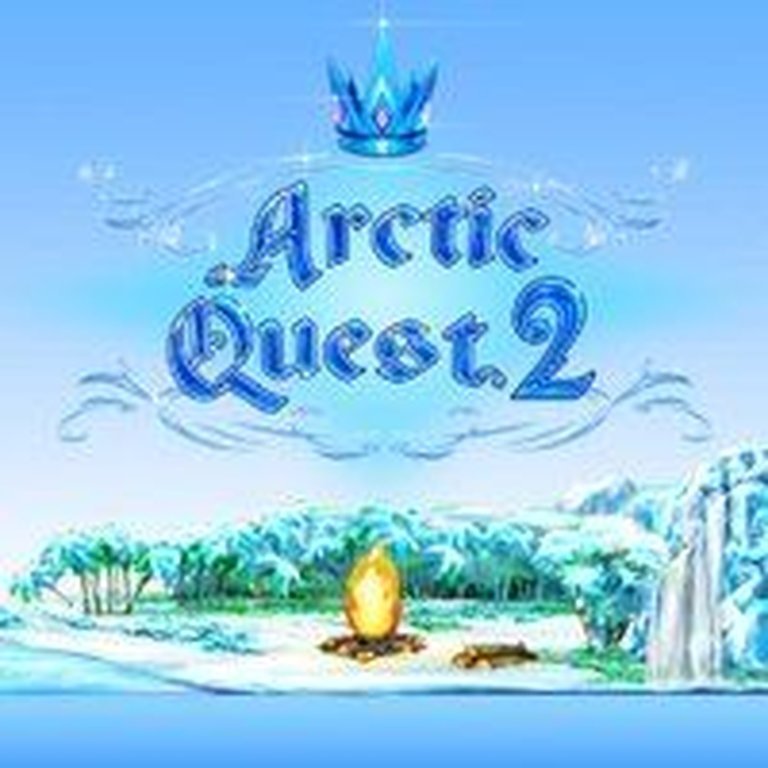
Arctic Quest 2 is a puzzle game where players must rescue creatures trapped in ice by strategically placing falling jewel-like ice pieces into intricate outlines, preventing rising water from causing level failure. Set in a frozen Arctic world under the tyranny of the Snow King’s son, the game features 100 levels, special bonuses for matching colored pieces, unique abilities from rescued creatures like snails and pufferfish, and dynamic elements such as fire to destroy excess ice and water to fill gaps.
Gameplay Videos
Where to Buy Arctic Quest 2
PC
Arctic Quest 2 Free Download
Arctic Quest 2 Reviews & Reception
metacritic.com : There are no critic reviews for this game yet.
gamezebo.com : At the same time, Arctic Quest 2 is quite an interesting game visually.
gamesdb.launchbox-app.com : Easy to learn and fun to play, Arctic Quest 2 will please fans and newcomers alike.
Arctic Quest 2: Review
Introduction
In the frozen annals of casual puzzle gaming, few sequels manage to expand upon their predecessors with both mechanical ingenuity and thematic cohesion. Arctic Quest 2, released in 2007 by Alawar Entertainment, stands as a testament to this rare achievement. As the follow-up to the 2005 hit, it transcends mere level repetition by weaving a darker continuation of the Snow King’s legacy, introducing innovative puzzle mechanics, and refining the signature inlay formula that defined its era. While its narrative ambitions remain modest and its visual polish moderate, the game’s depth of systems, strategic tension, and satisfying progression solidify its status as a defining title in the casual puzzle renaissance of the late 2000s. This review will dissect how Arctic Quest 2 balances accessibility with complexity, cementing its place not just as a sequel, but as a masterclass in structured puzzle design.
Development History & Context
Arctic Quest 2 emerged from the Moscow-based studio Alawar Stargaze, a team known for polished casual titles like the Hyperballoid series. Leveraging the PopCap Games Framework—a middleware suite popularized by Bejeweled and Zuma—the developers utilized Lua scripting to create a game that was both technically stable and rapidly deployable in a market hungry for downloadable content. The technological constraints of 2007 were evident in its modest system requirements (PIII-750 CPU, 128MB RAM, 32MB GPU), but these limitations were ingeniously turned into strengths, ensuring broad accessibility on mid-range Windows XP and Vista machines.
The gaming landscape of 2007 was dominated by the casual revolution, with portals like Big Fish Games and Reflexive Entertainment championing bite-sized, affordable experiences. Arctic Quest 2 positioned itself at the intersection of two thriving subgenres: the falling-block puzzle (Tetris) and the inlay puzzle (Jewel Quest). Its development, led by producer Kirill Plotnikov and game designer Irina Lebsak, aimed to address criticisms of the original’s repetition by doubling the level count (to 100) and introducing dynamic environmental hazards. The result was a product that felt both iterative and ambitious—a sequel that respected its roots while daring to complicate its formula.
Narrative & Thematic Deep Dive
The narrative, penned by Alexei Leonov, is a streamlined morality play set against a backdrop of ecological catastrophe. Whereas the first Arctic Quest focused on the Snow King’s defeat, the sequel centers on his vengeful son, the Snow Prince, who seeks to complete his father’s apocalyptic vision: freezing Earth into a “prison for all creatures.” This inversion of generational legacy adds a poignant layer to the conflict, framing the player’s quest as not just a battle for survival but a repudiation of inherited evil.
The plot unfolds through minimal, functional dialogue—text boxes that deliver mission briefings and the Prince’s taunts (“Your last chance to surrender”). While lacking nuance, these exchanges serve their purpose: they underscore the stakes without bogging down the puzzle gameplay. The narrative’s true strength lies in its environmental storytelling. As players progress through levels, they witness the world thawing from a desolate tundra into vibrant ecosystems, symbolizing the restoration of balance. This visual metamorphosis—frozen grasshoppers unfurling into butterflies, snowflakes expanding into complex lattices—subtly reinforces themes of rebirth and redemption. The game avoids preachy environmentalism, instead weaving its message into the very fabric of its puzzles: every piece of ice placed represents a life saved.
Gameplay Mechanics & Systems
At its core, Arctic Quest 2 is a high-stakes spatial puzzle game where players fill irregular, creature-shaped outlines with falling ice shards. The core loop is deceptively simple: click and drag shards from the top of the screen into the shape, rotating them (right-click) to fit. Yet the game’s genius lies in its layered systems that transform this into a frantic, strategic balancing act.
Core Mechanics:
– Irregular Shapes: Unlike rigid grids, each level’s outline is a unique, organic silhouette—a chameleon’s coiled body, a shark’s angular jaw—that demands spatial reasoning. No single solution exists; success hinges on adaptive placement.
– Environmental Hazards: Water at the bottom of the screen fills with discarded shards. If it overflows, the level fails. Conversely, bonfires on shore burn excess shards, but require cooldown periods. This creates a resource-management dilemma: hoard shards for the shape or sacrifice them to avoid drowning?
– Bonus System: Chaining three or more adjacent shards of the same color triggers combos, rewarding precise planning over brute-force placement.
Innovative Systems:
– Special Shards: Beyond standard pieces, dynamic elements introduce chaos and opportunity. Rainbow shards match any color, while shape-shifting shards morph until grabbed, forcing reactive decision-making. Water shards automatically fill gaps between two placements, whereas fire shards destroy anything sandwiched between them—turning the player’s own design against them.
– Creature Power-Ups: Rescuing trapped animals grants abilities: snails slow time, pufferfish fill empty spaces, crabs smash shards into smaller pieces, and piranhas clear water-logged ice. These add tactical depth, encouraging players to prioritize shard selection.
– External Threats: Later levels introduce storm clouds that zap the shape with lightning, demanding rapid response. Birds flying overhead also provide bonus points if clicked, adding a layer of multitasking.
Progression & UI:
Levels unlock via a world map, transforming the icy wasteland into lush islands as regions are cleared. A trophy room collects achievements, and an online high-score leaderboard fosters replayability. The interface is clean and functional, with a clear visual hierarchy for hazards, bonuses, and the shape outline. However, the lack of an undo button can lead to frustrating moments when a misplaced shard dooms a near-complete level.
World-Building, Art & Sound
Arctic Quest 2’s art direction is a study in restrained elegance. The fixed-screen perspective centers on the puzzle, with a stark arctic backdrop of glaciers and twilight that shifts to warmer climes as the player progresses. The ice shards themselves are rendered as crystalline jewels—sapphires, rubies, emeralds—lending a tactile, gem-like beauty to their placement. Creature outlines are mathematically precise, often resembling geometric tessellations or fractal patterns, which transform into lifelike forms as they’re filled. A caterpillar, for instance, unfurls into a butterfly upon completion, a visual metaphor for the game’s themes of rebirth.
Sound design, credited to “the SandS,” is atmospheric without overwhelming. Ambient sounds—crackling ice, distant howling winds, and the gentle lapping of water—immerse players in the setting without distracting from puzzles. The soundtrack, a blend of ethereal synth melodies and tribal percussion, swells during bonus chains and fades during quieter moments. Sound effects are crisp and functional: the satisfying thud of a shard locking into place, the hiss of fire consuming excess ice, and the triumphant chime of a freed creature. This cohesion between audio and visual elements creates a cohesive world where the cold desolation of the Arctic contrasts with the warmth of salvation.
Reception & Legacy
Upon its June 29, 2007 release, Arctic Quest 2 garnered muted critical attention, reflecting its status as a casual title rather than a mainstream blockbuster. Metacritic lists no professional reviews, but player feedback on platforms like Big Fish Games and Gamezebo was largely positive. Gamezebo awarded it a 70/100, praising its “hectic” pace and strategic depth while noting its repetitive dialogue. Casual gamers lauded its “challenging yet fair” difficulty, with one review calling it “a very challenging game that will improve your coordination and sharpen your mind.”
Commercially, the game thrived in the digital-download market, distributed via portals like Reflexive Entertainment and FreeRide Games, where it became a staple for puzzle enthusiasts. Its legacy endures in two key ways: as a refinement of the inlay puzzle subgenre and as a precursor to modern “environmental hazard” mechanics seen in titles like Chess Ultra and Puzzle Quest. It also expanded the Arctic Quest series into a franchise, with a 2013 Nintendo DS spin-off (Jewel Link: Arctic Quest) and numerous spiritual successors. While its story remains niche, its systems—from shape-shifting shards to water-filling mechanics—have been widely emulated, cementing its influence on the evolution of casual puzzle design.
Conclusion
Arctic Quest 2 is not a game that redefines its genre, but one that perfects it. By building on the foundation of its predecessor with innovative mechanics, environmental storytelling, and a cohesive thematic arc, it delivers a puzzle experience that is both intellectually stimulating and viscerally engaging. The Snow Prince’s chilling ambition provides just enough narrative weight to anchor the game’s mechanical brilliance, while the interplay of fire, water, and creature power-ups ensures that no two levels feel repetitive.
Though its graphics are modest by modern standards and its narrative is skeletal, Arctic Quest 2’s true legacy lies in its masterful balance of accessibility and complexity. It remains a quintessential artifact of the casual gaming boom, a time when downloadable puzzles offered players worlds of depth within bite-sized packages. For historians, it exemplifies how constraints—technological, narrative, and thematic—can fuel creativity. For players, it endures as a testament to the eternal appeal of a well-designed puzzle: a challenge that feels less like a chore and more like a dance with ice and fire. In the pantheon of puzzle games, Arctic Quest 2 may not be a titan, but it is undoubtedly a masterpiece of its craft.