
- Release Year: 2022
- Platforms: PlayStation 4, Windows
- Publisher: Red Art Games, Untold Tales S.A.
- Average Score: 78/100
Description
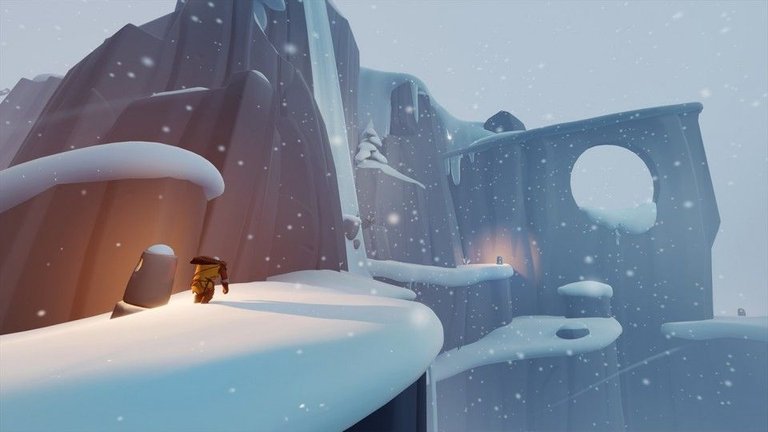
Arise: A Simple Story (Deluxe Edition) is a single-player puzzle-platform game that guides players through the afterlife as an elderly tribesman revisits his life’s memories. Set in a visually dynamic world inspired by Studio Ghibli and classic Disney animation, the game uses art styles that shift from vivid to bleak based on emotions, with puzzles designed to reflect the protagonist’s mental state and age, creating a wordless, emotional narrative.
Arise: A Simple Story (Deluxe Edition) Reviews & Reception
gameravenreview.com (96/100): It’s a bittersweet, wordless story that will punch your gut when you least expect it.
gamingboulevard.com : I’m a sucker for a game that plays with your emotions.
vgamingnews.com (60/100): With some interesting time-based mechanics, you guide an old man through an edited highlight reel of his life, although prepare for some not insignificant tonal whiplash as you go.
Arise: A Simple Story (Deluxe Edition): Review
Introduction: The Weight of a Simple Story
In an industry often obsessed with scale, complexity, and cinematic pretension, Arise: A Simple Story arrives with a title that is both a promise and a profound understatement. Developed by the Barcelona-based debutant studio Piccolo Studio and initially released in 2019, this puzzle-platformer carved a unique niche for itself through an audacious formal constraint: telling a sprawling, gut-wrenching narrative of love, loss, and lifetimes almost entirely without words. The 2022 Deluxe Edition (and its sibling, the Definitive Edition for Nintendo Switch) repackages this poignant journey for new audiences, bundling the core experience with a beautiful soundtrack and artbook. This review posits that Arise is a landmark in environmental storytelling and emotional game design, albeit one whose minimalist approach to its most difficult themes creates a deeply divisive—and therefore fascinating—critical schism. Its legacy is not one of flawless execution, but of brave, vulnerable artistry that proves a “simple story” can carry the weight of the human condition, for better and for worse.
Development History & Context: A Studio’s Dream in Unreal Engine 4
Arise: A Simple Story represents the first major project from Piccolo Studio, a team whose ambition belied their nascent status. Formed in Barcelona, the studio’s vision was intensely personal; developers drew from their own lives to craft a story about universal experiences of grief and joy. This intimate genesis is evident in the game’s handmade aesthetic and deliberate pace.
Technologically, the game was built in Unreal Engine 4, a powerful but demanding choice for a small indie team. Their challenge was to create a visually rich, emotionally resonant world without the resources of a AAA studio. The solution was a stylized, painterly art direction that intentionally avoided photorealism. As noted in its Wikipedia entry, the style was heavily influenced by the lush, expressive animation of Studio Ghibli and early Disney films like Fantasia. This allowed the team to use color, light, and form as primary storytelling tools, evoking mood with clarity. Furthermore, the team studied Clint Eastwood’s minimalist acting to convey the protagonist’s entire emotional spectrum through body language alone, a crucial decision given the complete absence of spoken dialogue.
The game’s initial release in December 2019 on Windows, PS4, and Xbox One placed it in a crowded field of indie darlings. Its 2022 re-release as the Deluxe Edition for Windows (March 30, 2022) and the more feature-rich Definitive Edition for Nintendo Switch (April 28, 2022) was a strategic move by publishers Untold Tales S.A. and Red Art Games to capitalize on the Switch’s portable market and the game’s strong word-of-mouth reputation. The Switch port, handled in collaboration, introduced exclusive features like a Photo Mode and Gyroscope Support, aiming to enhance the contemplative experience for a platform synonymous with intimate play sessions.
Narrative & Thematic Deep Dive: A Wordless Odyssey Through Grief
The plot of Arise is deceptively simple: an old man dies and, in a Viking-esque afterlife, relives the key memories of his life with his wife. The genius—and the source of its most heated debate—lies in how this story is told. There is no dialogue, no narration, no character names. The narrative is constructed entirely through environmental cues, expressive animation, and a sequence of chisel-like memory vignettes.
The structure is a chronological journey through emotional landscapes:
1. Childhood & First Love: Vivid, sun-drenched, playful worlds. Puzzles involve simple, joyful interactions—jumping across blooming fields, chasing butterflies.
2. Separation & Reunion: A more melancholic, cooler palette. The emotional core is the steadfast, wordless devotion between the two central figures, represented as abstract, statue-like figures.
3. “Fruit” / The Stillbirth: This is the narrative’s seismic, controversial rift. The level is a vast, pink, organic cavern where the player guides a growing flower—a clear metaphor for a developing pregnancy. The moment the flower blooms and immediately wilts is a powerful,视听 shock. The subsequent “Ash” level is a hellscape of fire and thorns, depicting the couple cremating their stillborn child. This sequence is where critical opinions violently diverge.
* Praise (Game Raven): Sees it as the emotional apotheosis, a masterclass in visual metaphor. The “womb” level’s heartbeat soundtrack and the sudden, brutal shift to “Ash” are cited as devastingly effective. The portrayal of the wife’s subsequent depression in “Solace” is handled with nuance, showing the husband’s patient, active care.
* Criticism (VGamingNews): Labels the “Fruit”/”Ash” sequence as “spectacularly ill-judged,” “tone-deaf,” and “borderline offensive.” The criticism hinges on the perceived trivialization of miscarriage trauma through saccharine, “confectionary” platforming in the womb and the blunt, “not subtle” symbolism of the ash-covered wasteland. The critic argues the game simplifies profound, complex grief into a series of aesthetic tropes.
4. Healing & Old Age: Subsequent levels show the couple rebuilding their lives in a quiet, Flintstones-esque woodland home, finding small joys. The final act involves the wife succumbing to illness, and the old man’s final journey to a snowy peak to reunite with her spirit, culminating in both turning to stone, cradling their child.
5. The Ending: The final image—the stone statue of the couple forever holding their baby—is unequivocally poignant for some (Game Raven: “I bawled like a baby”), but for others (VGamingNews), it frames a life of subsequent loneliness and sorrow as the ultimate “hope,” a message found “resoundingly bleak.”
Thematic Core: At its heart, Arise argues that a life is defined not by its length or absence of pain, but by the depth of love persisted through it. The time-manipulation mechanic is not just a gameplay tool but a thematic one: we are always moving through our memories, sometimes dwelling, sometimes rushing past, but we cannot change their ultimate outcome. The afterlife setting reframes death not as an end, but as a final, exhaustive review.
Gameplay Mechanics & Systems: Time as a Puzzle Piece
Arise is a 3D puzzle-platformer where the core mechanic is absolute control over the flow of time in the immediate environment. Using the right analog stick (or Joy-Con gyroscope on Switch), players scrub time forward, backward, and can pause it.
- Environmental Manipulation: This control directly alters the world. In a spring level, rewinding time causes plants to regress to seeds, creating new platforms. Forwarding through seasons might melt snow to raise water levels (winter to spring), cause flowers to open and turn to face the sun, or make vines grow and block paths. The puzzles are intrinsically linked to the memory’s theme—youthful memories have more dynamic, exciting time-shifts; older, sadder memories involve more static, melancholic adjustments (like slowly rotating a broken mill).
- Platforming: The player character, the Old Man, has a standard set of jumps and a basic grab/climb. The challenge comes from judging distances in a landscape that is morphing in real-time. As noted by reviewers, the jump physics can feel inconsistent from level to level, leading to moments of frustration. The fixed camera angle (which can only zoom slightly) exacerbates this, making depth perception a recurring, minor obstacle.
- Progression & Exploration: The game is linearly divided into ~10 distinct memory-levels. Hidden within each are secrets (often drawn vignettes) that flesh out the couple’s private moments. Seeking these out is highly encouraged, as they provide essential, wordless context for the main narrative beats. There is no traditional RPG progression; growth is purely narrative and skill-based (player familiarity with time-puzzle logic).
- Co-op: A local co-op mode allows a second player to control the time manipulation. While praised as a thoughtful inclusion (similar to Super Mario Odyssey’s Cappy mechanics), it is inherently lopsided, with the primary player handling navigation and the secondary player acting as a support. It’s best suited for a parent-child or casual pairing.
- Innovation vs. Flaws: The time-control is the acclaimed innovation. It’s intuitive, thematically perfect, and creates “aha!” moments of environmental realization. However, the lack of a free camera is a significant technical flaw, directly causing many avoidable deaths. The puzzle design, while clever, is often not particularly deep, leading some critics to find the gameplay “basic” or lacking a “skill gap.”
World-Building, Art & Sound: A Symphony of Emotion
This is the undisputed crown jewel of Arise. The game’s art direction is a masterclass in using visual language to convey narrative and emotion.
- Visual Style: As stated, the Ghibli/Fantasia influence is paramount. The world is low-poly but richly textured, with a focus on bold colors, dramatic lighting, and sweeping, painterly vistas. The style shifts diegetically with the memories: vivid, saturated colors for joy and young love; bleak, cool, and desaturated palettes for grief and loss (the “Ash” level is a monochrome nightmare of grey and orange). The character models are minimalist—faceless, mannequin-like—which forces players to project emotion onto them through pose and context, a risky gamble that largely pays off.
- World & Atmosphere: Each level is a unique biome representing a mental state: idyllic childhood islands, a stormy sea of conflict, the surreal organic “womb,” the infernal “Ash,” the cozy yet lonely woodland home. The afterlife setting allows for this symbolic, dreamlike logic, where geography is psychology.
- Sound Design & Music: Composed by David Garcia Diaz (known for Hellblade: Senua’s Sacrifice and RiME), the soundtrack is integral to the experience. It swells with orchestral sorrow or twinkles with innocent joy, often anticipating the emotional beat of a scene before the visuals fully register. The use of diegetic sound is brilliant: the heartbeat echo in the womb level, the crackle of the funeral pyre, the wind in the final snowy peak. The only consistent minor criticism is the Old Man’s sometimes overly repetitive “oof” grunts on landing.
Together, art and sound create an immersive, atmospheric experience that prioritizes feeling over interactivity. The game understands that in a wordless story, every color choice and musical cue is a sentence.
Reception & Legacy: Critical Divergence and Enduring Impact
Arise: A Simple Story’s reception has been a study in polarized praise.
- Initial Launch (2019): The base game received generally favorable reviews (Metacritic scores in the high 70s/low 80s across platforms). Critics widely praised its artistry, emotional weight, and innovative time mechanic. Awards followed, including Webby Awards for Best Adventure Game and Best Art Direction (2020) and a D.I.C.E. Award nomination for Outstanding Achievement in Original Music Composition. Common criticisms were the camera control, occasional puzzle simplicity, and uneven platforming precision.
- The “Definitive/Deluxe” Edition Switch Port (2022): This release garnered a Metascore of 81 on Switch, indicating “generally favorable” reviews, but the reviews themselves reveal the central narrative schism.
- The Praise Camp (Push Square, Game Informer, COGconnected, Game Raven): Hails it as an “emotional tour de force,” a “masterclass in storytelling,” and a “gutpunch.” They celebrate its ability to make players feel profound sorrow and joy through pure audiovisual means.
- The Critical Camp (VGamingNews): Acknowledges the technical competence and emotional moments but argues the narrative fails in its handling of the miscarriage plotline, calling it “tone-deaf” and “simplistic.” This review highlights that the game’s minimalist style can backfire when tackling specific, real-world trauma, potentially reducing complex pain to aesthetic symbols.
- Commercial Performance & Legacy: The game found a strong niche audience, particularly on the Nintendo Switch, where its short length (4-6 hours) and emotional punch made it a recommended “experience.” Its influence is less about mechanics (though the time-control in a 3D space is notable) and more about reinforcing the viability of short, art-focused narrative experiences in the indie space. It stands in a lineage with games like Journey, GRIS, and Life is Strange that prioritize emotional resonance over gameplay depth. However, the intense debate around its handling of grief ensures it will be studied as a case study in the risks and rewards of abstract, wordless storytelling for mature themes.
Conclusion: A Flawed, Essential Artifact
Arise: A Simple Story (Deluxe Edition) is not a perfect game. Its platforming can be finicky, its camera restrictive, and its narrative approach to profound tragedy will inevitably strike some as naïve or even offensive. The Deluxe Edition itself offers little beyond the base game—a soundtrack and artbook are lovely physical/digital bonuses for collectors, but do not alter the core experience.
Yet, to dismiss it would be to ignore one of the most viscerally successful attempts in gaming to map the interior landscape of a life. When it works—the sun-drenched joy of first love, the silent horror of “Ash,” the quiet dignity of aging—it achieves a purity of expression that few games dare to attempt. The fact that it can elicit such diametrically opposed reactions—”I bawled like a baby” versus “tone-deaf and bleak”—is a testament to its ambition. It is a game that asks the player to feel rather than to solve, and for many, that gamble results in an unforgettable, cathartic journey.
Final Verdict: Arise: A Simple Story (Deluxe Edition) is a landmark in environmental and emotional storytelling, flawed by technical limitations and a narrative approach that courts controversy. Its place in history is secured not as a flawless masterpiece, but as a brave, beautiful, and deeply human artifact—a reminder that the simplest stories, when told with enough heart and artistry, can echo the most complex truths of existence. It is an essential, if challenging, experience for anyone interested in the evolution of narrative in our medium.