
- Release Year: 2015
- Platforms: Windows
- Publisher: DreamsSoftGames
- Developer: DreamsSoftGames
- Genre: Action
- Perspective: Side view
- Game Mode: Single-player
- Gameplay: Direct control, Shooter
- Setting: Futuristic, Sci-fi
- Average Score: 43/100
Description
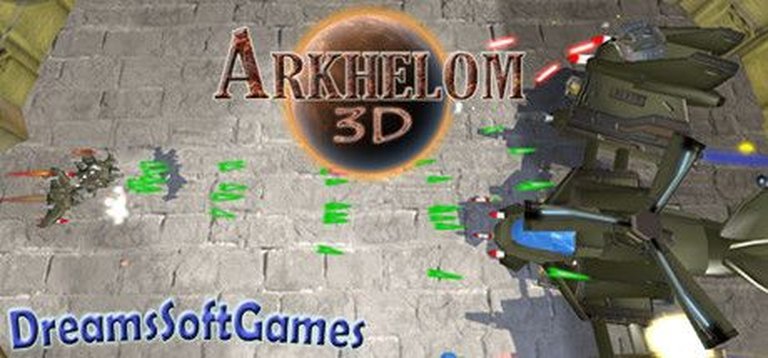
Arkhelom 3D is a classic shoot-em-up game set in a sci-fi futuristic universe, developed by DreamsSoftGames and released in 2015. Players pilot one of nine customizable ships through 24 dynamic levels featuring horizontal, vertical, and side-scrolling action. With over 70 enemy types, including formidable bosses, the game offers diverse challenges enhanced by power-ups, laser upgrades, missiles, and special abilities like time manipulation and enemy capture. An online ranking system tracks global progress as players tackle levels in their preferred order, facing progressively tougher adversaries while evolving their ships’ capabilities.
Where to Buy Arkhelom 3D
PC
Arkhelom 3D: A Shot at Nostalgia That Misses the Mark
Introduction
In the crowded landscape of indie shoot ’em ups, Arkhelom 3D (2015) emerges as a love letter to genre classics—a game that promises frenetic action, varied level design, and retro-inspired innovation. Developed and published by DreamsSoftGames, it ambitiously stitches together multiple scrolling perspectives, a fleet of customizable ships, and a buffet of enemy types. But does this homage elevate itself beyond mere imitation, or does it crumble under the weight of its ambitions? This review argues that while Arkhelom 3D delivers a functional shooter experience, it is hamstrung by technical limitations, repetitive design, and a failure to evolve beyond its inspirations.
Development History & Context
The Studio and Vision
DreamsSoftGames, a modest indie developer with a catalog including casual titles like Tompi Jones and Piggy Princess, sought to leverage the simplicity of classic shoot ’em ups with Arkhelom 3D. Built using Blitz3D, an engine known for facilitating 2.5D projects, the game aimed to merge the accessibility of arcade shooters with modern touches like online leaderboards and ship progression. However, the choice of engine also constrained the game’s visual fidelity, resulting in rudimentary 3D effects that clashed with its 2D sprite-based core.
The 2015 Landscape
Released in an era dominated by polished indie darlings like Nuclear Throne and Galak-Z, Arkhelom 3D faced stiff competition. The mid-2010s saw a resurgence of nostalgic shooters, but players expected innovation—whether through roguelike elements, narrative depth, or audiovisual flair. DreamsSoftGames’ decision to prioritize quantity (70+ enemies, 24 levels, nine ships) over refined quality ultimately left the game feeling like a relic juxtaposed against contemporaries.
Narrative & Thematic Deep Dive
A Story in Name Only
Arkhelom 3D leans heavily into its sci-fi setting without committing to a narrative framework. The game’s Steam description vaguely alludes to futuristic conflict, but in practice, there is no plot, character development, or world-building text. Players pilot generic ships against equally generic enemy swarms—robotic insects, geometric bosses—with no context beyond “destroy or be destroyed.” This absence of thematic cohesion reduces the experience to a series of disconnected skirmishes, stripping away the evocative atmosphere that defines classics like R-Type or Gradius.
Thematic Shortcomings
The game’s “capture enemies” and “stop time” mechanics hint at deeper strategic possibilities but remain underdeveloped. These systems lack narrative justification or integration into the game’s world, functioning as purely utilitarian power-ups. Without lore or environmental storytelling, Arkhelom 3D’s sci-fi aesthetic feels skin-deep—a backdrop rather than a living universe.
Gameplay Mechanics & Systems
Core Loop: A Jack of All Trades
Arkhelom 3D’s chief selling point is its mix of horizontal, vertical, and side-scrolling levels, a nod to genre pillars like 1942 and Xevious. While the shifting perspectives initially excite, they falter in execution. Scrolling direction rarely impacts strategy, with most levels devolving into identical dodging-and-shooting patterns. The “progressive difficulty” touted in promotional materials feels artificial, relying on enemy spam rather than intelligent encounter design.
Ship Customization: Promise vs. Reality
Players can choose from nine ships, each upgradable via collectible credits earned in-level. Lasers, missiles, and drones can be enhanced across five tiers, and “evolution levels” occasionally grant visual overhauls. However, these systems suffer from critical flaws:
– Repetitive Grinding: Credits are scarce, forcing replays of early levels to afford upgrades.
– Lack of Differentiation: Ships share identical weapon pools, negating meaningful tactical variety.
– UI Clunkiness: Menus are unintuitive, with upgrade paths poorly explained (e.g., drone functions lack descriptions).
Busted Innovations
The “stop time” and “capture enemies” mechanics could have been disruptive additions. Instead, they’re gimmicks:
– Stop Time: Freezes enemies briefly but disrupts flow without strategic payoff.
– Capture Enemies: Converts foes into temporary allies but is rendered useless against bosses and swarms.
Technical Grievances
Players reported persistent bugs, including launch crashes on Windows 10 (requiring XP compatibility modes) and a baffling menu system that forces restarts to exit. Combined with “mediocre” hit detection (per Steam reviews), these flaws sap goodwill.
World-Building, Art & Sound
Visuals: A Dated Hodgepodge
Despite its “3D” moniker, the game relies on flat 2D sprites with basic polygonal backgrounds—a mismatch that evokes early-2000s Java mobile games rather than a 2015 Steam title. Enemy designs are forgettable (e.g., geometric shapes, insectoid drones), and environments repeat assets relentlessly. The Blitz3D engine’s limitations are stark, with explosions and effects lacking punch.
Sound Design: Ambition vs. Execution
The soundtrack oscillates between grating synth loops and serviceable chiptunes. Sound effects—laser bursts, explosions—are tinny and lack weight, further diminishing immersion. Notably, the Steam page lists “Full Audio” support, but players found the audio mix uneven and uninspired.
Reception & Legacy
Launch and Long-Term Reception
Arkhelom 3D debuted to a whimper. With no critic reviews tracked on Metacritic and mixed user sentiment (43/100 on Steambase), players criticized its “unremarkable” design (Steam user GoreGrind) and “lack of zest.” Technical issues compounded its woes, with complaints about crashes and clunky controls. Commercially, it vanished into Steam’s abyss, its peak player count barely registering.
Influence and Legacy
The game left no discernible mark on the shoot ’em up genre. Its most enduring legacy is as a cautionary tale: a reminder that quantity cannot substitute for polish, innovation, or narrative intent. DreamsSoftGames’ subsequent projects, like Match 3 Revolution, pivoted to casual markets, abandoning the shooter space entirely.
Conclusion
Arkhelom 3D is a shoot ’em up that checks boxes but forgets to deliver a soul. Its 24 levels, nine ships, and 70 enemies suggest ambition, but repetitive design, technical missteps, and a glaring lack of identity doom it to mediocrity. While genre diehards may appreciate its throwback structure and modest customization, the game fails to justify its existence in a market saturated with superior alternatives. In the pantheon of indie shooters, Arkhelom 3D is less a triumphant salute to the past and more a fading echo—a reminder that nostalgia alone cannot sustain a game. 5/10.