
- Release Year: 2015
- Platforms: Android, iPad, iPhone, Linux, Macintosh, Nintendo Switch, PlayStation 4, Windows, Xbox One
- Publisher: IndieBox, Inc., League of Geeks
- Developer: League of Geeks
- Genre: Strategy, Tactics
- Perspective: Diagonal-down
- Game Mode: Online PVP, Single-player
- Gameplay: Board game, Card management, Cards, Combat, Hex-based, Quests, Tiles, Turn-based
- Setting: Animal, Fantasy
- Average Score: 80/100
Description
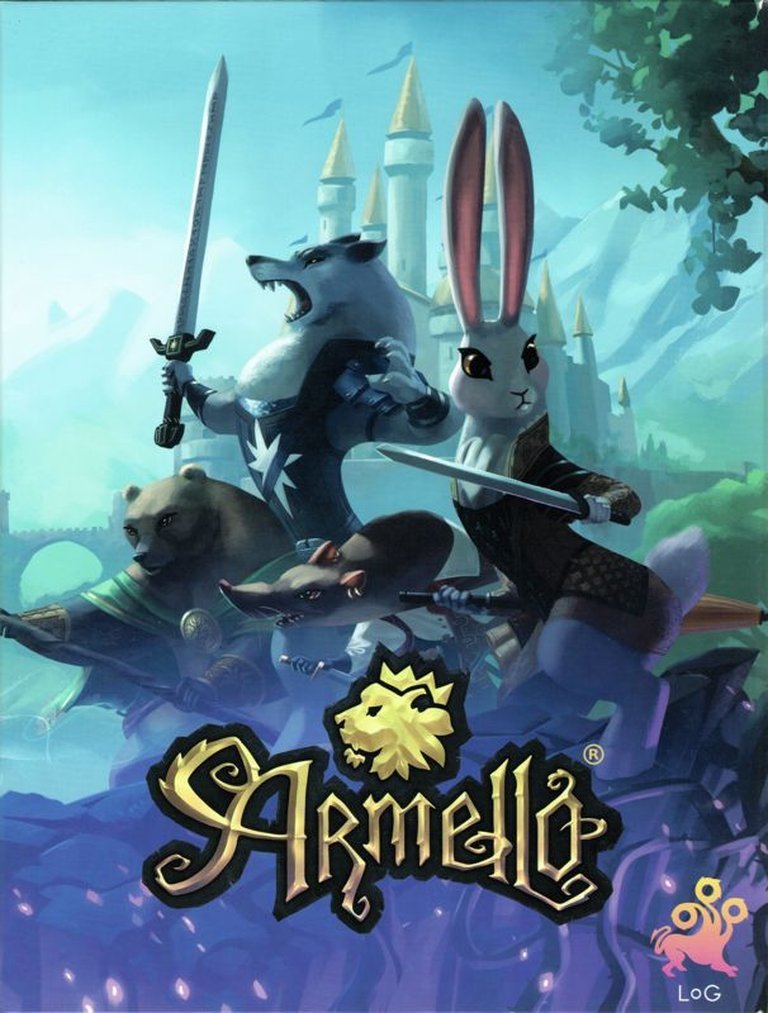
Armello is a fantasy strategy board game where players take on the roles of anthropomorphic animal heroes from four clans—wolves, rabbits, rats, and bears—vying to claim the throne of a decaying kingdom. The corrupted king, afflicted by a plague called ‘The Rot,’ has plunged Armello into chaos. Players explore a hex-based map, complete quests, gather resources, and employ tactical card-based combat to achieve victory through one of four paths: slaying the king, healing him with Spirit Stones, surpassing his Rot, or earning the highest prestige. The turn-based game blends RPG elements, dice-driven battles, and strategic multiplayer competition in a vibrant animal-dominated world.
Gameplay Videos
Where to Buy Armello
PC
Armello Cracks & Fixes
Armello Guides & Walkthroughs
Armello Reviews & Reception
opencritic.com (56/100): Armello makes a great first impression, but it has a bad habit of making you feel like you’re playing alone.
metacritic.com (100/100): With so much to offer and such a great presentation, it’s hard for me not to consider Armello a must-buy for anyone with even a passing interest in digital board games or innovative RPGs.
cgmagonline.com (90/100): Armello handles this well, making repeated games of backstabbing, luck-cursing, and panicking enjoyable and fun.
monstercritic.com (75/100): Story of Armello dazzles with its whimsical fantasy world and political intrigue but sacrifices narrative depth for gameplay mechanics, leaving its story feeling like a hollow framework rather than a compelling journey.
Armello: A Masterpiece of Digital Board Game Alchemy
Introduction
In the golden age of tabletop-inspired digital games, Armello emerges not merely as a title but as a cultural artifact—a glowing hexagon in the mosaic of indie innovation. Released in 2015 by Australian studio League of Geeks, Armello invites players into a lush, anthropomorphic realm poisoned by the eldritch Rot, where animal clans vie for a corrupted throne. This review posits that Armello transcends its genre hybridity, weaving tactical depth, narrative richness, and visual splendor into a digital board game experience that remains unmatched in atmospheric world-building and strategic nuance.
Development History & Context
The Visionaries of League of Geeks
Founded in 2011 by Trent Kusters, Blake Mizzi, and Ty Carey, League of Geeks sought to bridge the tactile charm of physical board games with digital dynamism. Armello began as an iPad-exclusive project but quickly expanded into a multi-platform ambition after securing $305,360 via Kickstarter in 2014—smashing its $200,000 goal. The developers, inspired by Magic: The Gathering’s cardplay, Game of Thrones’ political intrigue, and Studio Ghibli’s aesthetic grace, positioned Armello as a “living board game” defying era-specific constraints.
Technological and Creative Constraints
Built on Unity, Armello faced early criticism for performance hiccups on consoles, particularly the Nintendo Switch. Yet its tile-based procedural generation and card-driven mechanics showcased ingenious optimization. Limited by budget and team size, League of Geeks prioritized systemic depth over AAA spectacle, relying on hand-painted art and Mozartian orchestration to compensate.
The Gaming Landscape of 2015
Launched during a renaissance of indie hybrids (Hand of Fate, Divinity: Original Sin), Armello stood apart for its anthropomorphic lore and asymmetric strategies. It challenged a market saturated with grimdark epics, offering whimsy entwined with existential stakes—a Redwall meets Dark Souls ethos that resonated with critics fatigued by conventional fantasy.
Narrative & Thematic Deep Dive
A Rotting Kingdom
Armello’s lore unfolds in a kingdom besieged by the Rot, a Lovecraftian plague corrupting the Lion King and his realm. Four clans—Wolves (martial honor), Rabbits (technological cunning), Bears (spiritual wisdom), and Rats (shadowy subterfuge)—dispatch heroes to claim the throne. Each character, like Thane Greymane (a wolf exiled for ambition) or Sana (a mystic bear healer), embodies clan philosophies, their quest texts revealing Game of Thrones-esque betrayals and moral ambiguity.
Themes of Corruption and Ambition
The Rot serves as both mechanic and metaphor—a Dark Souls-style curse punishing recklessness while rewarding pragmatic villainy. Heroes can embrace corruption (gaining power at the cost of humanity) or resist it via Spirit Stones, revealing Armello’s core dichotomy: power demands sacrifice. Dialogue snippets, like Zosha the rat assassin hissing “Veyest Dahn” (“I am sorry”) before a kill, underscore a world where loyalty and morality fray at the edges.
Gameplay Mechanics & Systems
The Hexagonal Chessboard
At its heart, Armello is a turn-based strategy opera. Players navigate a hex-based map, balancing Action Points between quests, settlements, and ambushes. Each dawn and dusk cycle shifts gameplay: Guards patrol by day, Banes (Rot-spawned horrors) stalk by night. The dice-and-card combat system channels D&D’s unpredictability—Wyld symbols explode successes, Rot twists fate—while hero talents (e.g., River’s archery precision) add tactical flair.
Four Paths to Victory
- Prestige Victory: Diplomacy via quests and public favor.
- Combat Victory: Slaying the King in open rebellion.
- Spirit Stone Victory: Purging the Rot via magical stones.
- Rot Victory: Becoming more corrupt than the King.
Each path demands distinct strategies. A Prestige-focused Rabbit might hoard gold to manipulate King’s Decrees, while a Rot-obsessed Rat could sow plague via Trickery cards.
Innovations and Flaws
The game’s card-burning system—sacrificing resources for guaranteed effects—reduces RNG frustration. However, critics noted imbalance in late-game snowballing and AI predictability. UI clarity suffered on smaller screens, complicating multiplayer sessions—a flaw partially remedied in later ports.
World-Building, Art & Sound
A Painterly Bestiary
Armello’s art direction channels Brian Froud’s fairy-tale eeriness and anime expressiveness. Hero designs—fang-clicking wolves, clockwork rabbit inventors—blend whimsy with grim detail (e.g., Rot-cracked armor). Environments shift procedurally, from autumnal forests to poisoned swamps, each tile a storybook tableau brought to life by Unity’s lighting.
Sonic Alchemy
Composer Michael Allen and Dead Can Dance’s Lisa Gerrard crafted a score blending Celtic harps, choral chants, and dissonant Rot leitmotifs. The day/night cycle audibly shifts ambiance: daylight themes swell with strings, while night invites brooding percussion. Sound design punctuates tension—Bane wings rattle, dice clatter like bones—immersing players in Armello’s dying world.
Reception & Legacy
Critical and Commercial Impact
Armello garnered a 76% Metacritic average, praised for innovation (Digitally Downloaded: “The best Australian game ever”) but critiqued for pacing (IGN: “Feels like playing alone”). It sold over 500,000 copies by 2017, bolstered by DLCs like The Dragon Clan (2019) that deepened lore and mechanics.
Industry Influence
Armello proved indie studios could rival AAA depth in niche genres. It inspired successors like Oaken and Gordian Quest, while its cross-platform success (PC, consoles, mobile) validated digital board games as a lucrative market. League of Geeks’ community-driven updates set a blueprint for post-launch engagement, though the 2021 pause on expansions (citing pandemic strains) left narrative threads dangling.
Conclusion
Armello is a paradox: a game of calculated strategy dripping with fairy-tale warmth, a multiplayer experience echoing with solitary melancholy. Its flaws—RNG dependence, uneven AI—fade against its triumphs in world-building and mechanical harmony. Nearly a decade post-release, it remains a benchmark for how to weave art, sound, and systems into a living tabletop tapestry. For historians, Armello is a testament to indie ambition; for players, it is a throne worth claiming—again and again. Final Verdict: A 9/10 masterpiece, essential for strategists and storytellers alike.