
- Release Year: 2024
- Platforms: Macintosh, Windows
- Publisher: Lost Mesa Entertainment
- Developer: Red Wolves Studios
- Genre: Action
- Perspective: Top-down
- Gameplay: Shooter, Tank
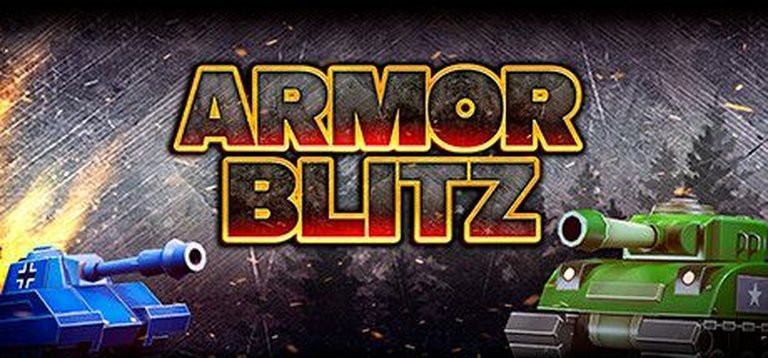
Description
Armor Blitz is a free-to-play mobile and browser game that blends card collection mechanics with tug-of-war lane combat. Players assume the role of a General leading an army of moe anthropomorphic tank girls—each embodying historical tanks from WWI to the Cold War—to reclaim the continent of Factoria from the forces of Corruption. Set in a world where weapons are personified, the game offers a single-player story mode and relationship-focused narratives for specific characters, emphasizing strategic deck-building and tactical battles.
Gameplay Videos
Where to Buy Armor Blitz
PC
Armor Blitz Guides & Walkthroughs
Armor Blitz: A Tale of Two Tanks – Deconstructing a Duplicated Legacy
Introduction: The Blitzkrieg of Confusion
To speak of “Armor Blitz” in the singular is to immediately confront a paradox. The title, a potent combination of armored warfare and rapid assault, belongs not to one game, but to two fundamentally distinct projects separated by time, design philosophy, and genre. One is a 2024 retro-inspired arcade tank brawler for PC and Mac; the other is a 2017-2021 free-to-play mobile and browser gacha RPG. This review will treat them as the separate entities they are, analyzing each in depth before considering their combined impact on the cultural imagination of “tank games.” The central thesis is this: the 2024 Armor Blitz by Red Wolves Studios is a competent but unspectacular revival of a classic arcade formula, while the 2017 Armor Blitz by Hainet represents a fascinating, flawed, and ultimately canonical example of the “moe anthropomorphism” gacha genre that flourished in the late 2010s before its inevitable service termination. Together, they illustrate the divergent paths of “blitz” gameplay—one focused on immediate, physical action, the other on strategic collection and long-term engagement.
Development History & Context: Two Studios, Two Eras
The 2024 Revival: Red Wolves Studios and Lost Mesa Entertainment
The 2024 Armor Blitz emerged from Red Wolves Studios, a developer with a clear, nostalgic mandate. Released on April 22-23, 2024, for Windows and macOS via Steam, its existence is explicitly framed as a love letter to the top-down tank combat of the Atari 2600 era—specifically citing classics like Combat, Triple Action, and Armor Battle. The development context is one of indie revivalism. With minimal marketing (evidenced by its bare-bones MobyGames entry and near-absence of critic reviews), it targets a niche audience seeking “byte-sized rushes of adrenaline” and couch co-op nostalgia. The technological constraints were self-imposed: a fixed/flip-screen visual style and simple 2D top-down perspective were deliberate aesthetic choices to emulate 1980s arcade and console experiences, not limitations of the era. The 2024 gaming landscape was saturated with complex, open-world experiences, making this minimalist approach a deliberate, if risky, counter-programming.
The 2017 Gacha Phenomenon: Hainet and the Moe Military Wave
The original Armor Blitz (often retroactively distinguished as Armor Blitz (2017)) was developed by Hainet and released for browsers and Android. Its context is the peak of the mobile gacha craze, directly following in the footsteps of the enormously influential Kantai Collection (ship-girls) and its numerous imitators (Girls’ Frontline, Azur Lane). Hainet’s vision was to apply the same “moe anthropomorphism” formula to land warfare, specifically tanks from WWI to the Cold War. The game operated on a free-to-play model with aggressive monetization (gacha for tanks and emblems, energy systems via “Oil” and “Metal”). Its existence was tied to a live-service model, with an NSFW version hosted on Nutaku. The announcement of server shutdown on May 5, 2021, for an April 30, 2021 closure, is a critical part of its history, emblematic of the fleeting lifecycle of many mobile gacha games that fail to maintain a critical mass of players. The technological constraint here was the need to function within the limited processing power and screen real estate of mobile devices, leading to a lane-based tactical system rather than direct control.
Narrative & Thematic Deep Dive: War as Personality
Armor Blitz (2024): The Absence of Story
The 2024 iteration makes a purposeful, almost punk-rock decision: there is no narrative. The Steam store description provides zero lore, and the game’s structure is purely arcade. Players select a tank, a map, and a game mode. Any “story” is the one the players create in their couch co-op sessions—the tales of betrayal, the shared victories, the jokes over a destroyed teammate. This is a pure mechanics-forward design, where the thematic through-line is the timeless joy of tank combat, unburdened by plot or character. Its world-building exists solely in the pixel-art representations of “desert, forest, winter, lava” environments.
Armor Blitz (2017): Factoria and the Politics of Personification
The 2017 game’s narrative is its defining, if divisive, feature. The player is the General, tasked with liberating the continent of Factoria from the Corruption. The world-building is an explicit alternate universe where “weapons become anthropomorphized.” Tanks are girls, each a personification of a specific historical vehicle (e.g., Yuliya the T-62, Jagdtiger Odette). Small arms manifest as animal infantry, like the ubiquitous Private Neko (cat infantry) and Private Victor.
The plot is delivered through cutscenes and extensive “relationship stories” for nearly 30 characters. These stories are where the game’s themes crystallize:
* Mildly Military: Despite a world-ending war, romance stories often ignore the conflict, focusing on daily life, creating a jarring but intentional tonal dissonance.
* Cast of Personifications: Conversations are laden with Historical In-Jokes. After defeating the fortress commander Maginot, Renee (presumably representing a French tank) suggests going “around” her, prompting Evie’s confusion and a direct nod to the bypassing of the Maginot Line in WWII. The game constantly winks at its historical basis.
* World of Action Girls: With the exception of the General (the player’s avatar, unseen) and the animal infantry, the cast is entirely female. This creates a unique social dynamic free of traditional gender hierarchies, though often framed through a male-gaze “moe” aesthetic.
* The Corruption as Eldritch Abomination: The enemy is not a rival nation but a decay-inducing, amorphous force. Corrupted tank girls are “decayed versions,” while other enemies are monstrous hybrids with crystals and tentacles. This elevates the conflict from mere geopolitics to a struggle against existential entropy.
* Character Tropes as Identity: The game uses archetypes to define its large cast. The Soviet tank destroyers are Yandere, obsessively devoted to the General. Characters like the lazy but supremely powerful Jagdtiger Odette fit the Bunny-Ears Lawyer trope. This system allows for rapid player attachment but can reduce complex histories to simple personality quips.
The dialogue is generally light, comedic, and fan-service oriented, prioritizing character “charm” over dramatic depth. The central, unspoken theme is the domestication of warfare—turning instruments of destruction into objects of affection and collection, a core tenet of the entire “moe military” subgenre.
Gameplay Mechanics & Systems: Clash of Design Philosophies
Armor Blitz (2024): Arcade Purity in a Multiplayer Shell
The 2024 game’s systems are built for immediate, repeatable play.
* Core Loop: Select tank > select map/mode (PVP, Teams, Co-op Campaign) > brief match (~2-5 mins) > repeat. It’s a perfect “couch game” design.
* Combat: Direct control of a single tank with a main cannon and a secondary weapon. Progression is non-existent within a match; the focus is on spatial awareness, aiming, and managing in-game boosts (triple shot, speed, etc.) scattered on the map.
* Progression & Customization: Extremely shallow. 12 available tanks, each with fixed stats. “Multiple weapons” (railgun, flamethrower, etc.) are likely reskins or minor stat variations of the secondary weapon slot. There is no permanent character growth, no unlockable abilities beyond what’s initial. Campaign mode’s “25+ levels” are simply different map configurations and AI difficulties.
* Systems Analysis: This is a strength-through-simplicity design. The innovative hook is its commitment to the arcade format with modern conveniences (online play, achievements). The major flaw is a lack of depth that will limit long-term engagement. The “classes” (implied by weapon types) are not deeply differentiated, leading to a potential “best tank” meta. The AI is rudimentary, as expected in an arcade title.
Armor Blitz (2017): The Gacha Grind Engine
The 2017 version is a masterpiece of complex, interlocking, and often punishing systems.
* Core Loop: Escort mission / tug-of-war on multiple lanes. Player deploys a squadron (4-15 tank “girls” from their roster) that automatically advances down lanes toward the enemy base, intercepting enemy squadrons. The win condition is typically destroying the enemy commander on the far side.
* Combat: Autobattle with tactical deployment. Unit pathing is AI-controlled, but deployment order, lane assignment, and timing are player-controlled. Each tank has an active skill (e.g., Katyusha’s devastating “Rocket Barrage”), passive skills (e.g., “Armor Shred” for all Light tanks), and core stats (HP, Armor, Evasion, Firepower, Penetration).
* Progression & Customization: Extremely deep and multi-layered.
1. Acquisition: Gacha system for tanks (rarity 1-5) and emblems (equipment).
2. Leveling: Tanks gain XP from battles, but leveling new, low-rarity tanks to parity with high-level veterans is a grind-heavy process due to exponential XP curves.
3. Elite Advancement: A Veteran Unit system requiring max relationship level, duplicate copies (“dupes”), and resources to transform a unit into an “elite” version with significantly boosted stats.
4. Emblem System: Equipment slots with their own upgrade RNG, allowing for stat specialization (boosting Luck for crits, Penetration for armor-ignoring, etc.).
* Systems Analysis: The genius is in the systems interplay. The “Achilles’ Heel” rock-paper-scissors of High HP vs. High Armor vs. High Evasion, the “Glass Cannon” risk/reward of artillery, the “Alpha Strike” potential of one-time-use skills like Katyusha’s, and the “Rocket-Tag Gameplay” where a single unlucky enemy deployment can wipe your squad. The flaws are endemic to the genre: Algorithm of Evil (enemy scaling), Fake Longevity (energy systems forcing energy-login cycles), Schizophrenic Difficulty (spikes based on random enemy composition and pre-set advantages), and the ever-present Random Number God governing gacha pulls, emblem upgrades, and even enemy deployment order. The Computer Is a Cheating Bastard is a notorious flaw, with AI squads often having higher stats, duplicate units, and free stun abilities.
World-Building, Art & Sound: Moe vs. Minimalism
Armor Blitz (2024): Functional Arcade Aesthetics
The 2024 game’s world is a non-diegetic arcade arena. Its “over a dozen environments” are simple, color-coded backdrops (desert tan, forest green, snow white, lava orange) that provide mild tactical cover but exist primarily for visual variety. The art direction is pixel-based and clear, prioritizing readability—you must instantly identify your tank, your allies, and threats. Tanks are generic, unadorned military hardware (12 distinct models), their silhouettes communicating their class (light vs. heavy). Sound design is punctuated and chunky: satisfying thumps for main gun fire, distinct ricochet sounds, and a looping, energetic but forgettable synth track that fades into the background. It succeeds in creating a retro arcade cab vibe—functional, loud, and ephemeral.
Armor Blitz (2017): The Personified Battlefield
The 2017 game’s world of Factoria is built entirely through its character art and UI. The “tank girls” are the sole vessel for world-building. Their designs are a masterclass in moe anthropomorphism: combining recognizable tank features (turrets, treads, gun barrels) with anime-proportioned female forms and distinct civilian clothing (e.g., Setsuko in a Sailor Fuku, Emiko in a Sarashi). This creates a powerful, immediate cognitive link—the Maus is a towering, intimidating girl with an Eyepatch of Power; the tiny Hetzer is a Token Mini-Moe. The interface is cluttered but colorful, using Color-Coded for Your Convenience tank cards (blue=light, green=med, yellow=heavy, red=TD, purple=artillery). The sound combines peppy J-pop-inspired tracks with vocal cries during skill activation (Super Move Portrait Attack) and chipper, often repetitive, voice lines. The atmosphere is one of kawaii militarism—dissonant, charming, and deeply tied to its genre’s conventions. The Corruption enemy designs are the only non-“moe” elements, effectively contrasting the decay of war against the “cuteness” of the arsenal.
Reception & Legacy: From Niche to Null
Armor Blitz (2024): The Silent Bounce
Critical reception is virtually non-existent. MobyGames has no critic reviews and only 1 player collected it as of this writing. Metacritic shows no user reviews. Steambase records 1 user review with a perfect 100 score, but with no text. On Steam, the “Community Hub” is largely empty, with only a single thread about “Serious Server Lag.” This indicates a commercial and critical non-event. Its legacy is currently as a footnote in the retro revival genre. It hearkens back to classics competently but failed to find an audience large enough to sustain discussion. Its place is with other competent-but-forgotten indie arcade revivals like Lethal League or Rivals of Aether—games that faithfully service a core fanbase without breaking through. The “Speakin’ ’bout my generation” nostalgia pitch was not enough to overcome a saturated market and a lack of standout features.
Armor Blitz (2017): A Calculated, Then Canceled, Success
The 2017 game had a modest but dedicated reception within its niche. It was recognized as a clear, if less polished, entry in the “moe military” genre alongside Azur Lane (ships) and Girls’ Frontline (rifles). Its card collection / tug-of-war hybrid was seen as a clever, if Ultimately grindy, system. The sheer volume of characters (over 100) and the depth of the emblem system were praised by hardcore players. Criticisms centered on the “Schizophrenic Difficulty” from AI cheating, the “Fake Longevity” of its energy systems, and the monetization pressure of the gacha model. The server shutdown in 2021 cemented its legacy as a sunset game. Its historical importance lies in its demonstration of the genre’s lifecycle: rapid growth based on a compelling hook (tank girls!), plateau as whales dominate, and decline when operational costs outweigh revenue. It did not achieve the cultural staying power of Kantai Collection but contributed to the proof-of-concept that any military hardware could be “moe-ified”. Its influence is indirect, seen in the continued existence of niche anthro-gacha games and the persistent meme of “tank girls” in anime/game fan art.
Conclusion: Divergent Blitzkriegs, Shared Fate
To definitively place both games in history:
The 2024 Armor Blitz (Red Wolves Studios) is a successful historical reenactment. It accurately replicates the feel of 1980s top-down tank combat in a polished, modern package. Its verdict is competent but niche. It understands its source material deeply but offers little evolution, making it a curation rather than a creation. It will be remembered by the small cohort who enjoy minimalist arcade co-op, but it lacks the systemic depth or cultural impact to enter the canon of great revival games. Its place is in the “faithful emulation” tier of gaming history.
The 2017 Armor Blitz (Hainet) is a textbook case study. It exemplifies the strengths— character-driven collection, strategic layer, genre hybridization—and the fatal weaknesses— predatory monetization, unsustainable live-service model, reliance on RNG—of the late-2010s mobile gacha boom. Its server shutdown is not a failure but a predictable endpoint for its genre’s business model. Its legacy is didactic: it shows us how the “moe anthropomorphism” trend was applied, what players tolerated (deep systems) and what they rejected (overt pay-to-win), and why such games have finite lifespans. It is a critical artifact for understanding an era.
Together, they tell a story of the word “Blitz.” For the 2024 game, it’s a literal description of fast-paced combat. For the 2017 game, it describes the frantic, often exploitative, pace of the gacha grind. One is a preserved museum piece; the other was a vibrant, flawed ecosystem that has since gone dark. Neither revolutionized its genre, but both, in their own ways, perfectly capture the spirit of their respective times: one looking back to the arcade, the other looking to the mobile gaming boom’s cutting edge, now blunt. The name Armor Blitz will likely be remembered more for the bizarre duality it represents than for the individual merits of either game—a fascinating footnote where game history literally duplicated itself.