
- Release Year: 2018
- Platforms: Windows
- Publisher: Breakout
- Developer: Breakout
- Genre: Simulation
- Perspective: Third-person
- Gameplay: Vehicle simulation
- Average Score: 79/100
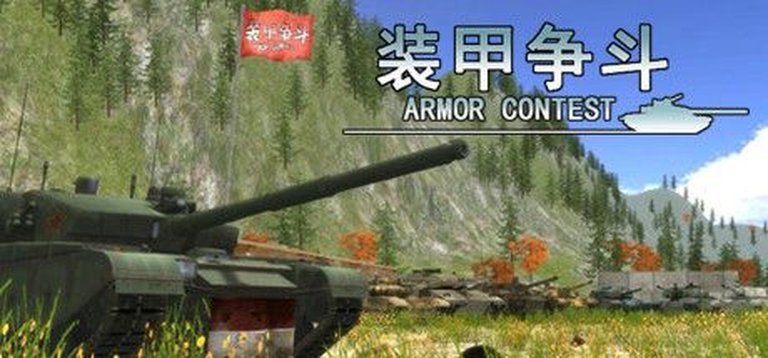
Description
Armor Contest is a tank simulation game that focuses on vehicular combat, where players engage in 6v6 team-based battles with objectives like flag capture and base destruction. Set against a backdrop of armored warfare, it offers a choice of 10 modern tanks and a third-person perspective for an immersive driving and fighting experience.
Where to Buy Armor Contest
PC
Armor Contest: A Steel-Clad Curiosity in the Indie Tank Simulation Wasteland
Introduction: The Ghost in the Machine
In the bustling, noisy ecosystem of 2018’s video game landscape—a year defined by God of War, Red Dead Redemption 2, and the cultural tsunami of Fortnite—a quiet, underfunded passion project rolled onto Steam with little fanfare. Armor Contest, developed and published by the enigmatic solo or micro-studio “Breakout,” is not a game that announced its arrival with a cinematic trailer or a celebrity endorsement. It arrived as a $0.99 digital speck, a bare-bones promise of tank combat nestled between behemoths. This review posits that Armor Contest is not a forgotten masterpiece, nor a catastrophic failure. Instead, it is a fascinating, unvarnished artifact—a genuine developer’s vision of vehicular combat, constrained by obvious limitations yet radiating a earnest, almost naïve, charm. Its true value lies not in its polish or scope, but in its pure, unmediated expression of a niche desire: to drive a tank and shoot another tank in a simple, physics-driven arena. It is a game that asks for little and, in its best moments, gives exactly what it promises.
Development History & Context: The Lone Wolf in a Pack Year
Armor Contest emerged from the workshop of “Breakout,” a developer whose identity is nearly as obscure as the game itself. The Steam store description’s candor—”Games are personal works, so as long as I have time and good ideas, I will keep updating and maintaining”—reveals the project’s foundational DNA. This was not a product of a studio with a QA department or a marketing budget; it was a hobbyist’s dream given commercial form, a testament to the democratizing power of Unity and Steam Direct.
The year 2018 was a paradoxical time for such a project. On one hand, it was a golden age for accessible game development tools. Unity had matured into a formidable engine for 3D projects, allowing a single developer to create something that could run on consumer hardware with passable visuals. On the other hand, the market was brutally saturated. Players’ attention was captured by live-service giants (Fortnite, * PUBG),家用机上的杰作(God of War, *Spider-Man),以及精致的独立游戏(Celeste, Dead Cells)。在这个环境中,一款没有任何故事、没有精良动画、没有知名IP加持的坦克模拟游戏,几乎注定是无声的。
The decision to launch in Steam Early Access (as indicated by its Steam page grouping) was pragmatic, not innovative. It was a lifeline for a small project, allowing for community feedback and incremental updates without the pressure of a “1.0” release. This aligns perfectly with the developer’s stated philosophy of iterative, community-driven development. The game’s existence is a direct consequence of the 2010s indie boom, but its obscurity highlights the sheer volume of projects that could now be made but struggled to be seen.
Narrative & Thematic Deep Dive: The Absence of Story as a Statement
To discuss the narrative of Armor Contest is to discuss a void. The game has no campaign, no characters, no dialogue, and no lore. The Steam description frames it purely as an experiential proposition: “Want to experience driving a tank charge into the enemy ranks? Want to feel the exciting excitement of the iron and steel collision?”
This narrative vacuum is not a flaw but a conscious, thematic design choice. The theme is pure, unadulterated tactical carnage stripped of all context. There are no soldiers with names, no geopolitical stakes, no moral quandaries. The “red and blue two party confrontation” is abstracted to its essence: team A versus team B. The tanks are not historical artifacts with biographies; they are “state-of-the-art” (a term used in the description) tools for a job. This approach is almost Wipeout-like in its purity, focusing on the visceral feedback of metal on metal, explosion on hull. It posits that the thrill of armored combat needs no narrative dressing—the rumble of the engine, the crack of the main gun, the flag capture are sufficient. In this sense, Armor Contest is a purist’s manifesto, rejecting the war-story conventions of games like World of Tanks or War Thunder for a leaner, game-y experience.
Gameplay Mechanics & Systems: The Dance of the Steel Beasts
The core gameplay loop is as simple as the narrative is absent: select a tank, join a match (6v6), capture the flag or destroy the enemy base. The systems are a study in minimal viable product execution, with flashes of competent design.
Core Combat & Physics: The “real physical engine” mentioned in the store blurb is the game’s central pillar. Tank movement has weight; turning the turret requires consideration of momentum. Hitting a target at range leads to shell drop and travel time. These are not hyper-realistic simulation parameters, but they create a satisfying skill gap between players who lead their shots and those who do not. The “iron and steel collision” is realized in impactful, albeit simple, collision models and explosive effects. The combat loop is satisfyingly chunky: aim, fire, watch for the hit marker, listen for the metallic thud of a penetrating hit, and repeat.
Vehicle & Progression: The roster of 10 tanks offers a basic spread of archetypes—likely轻重坦歼结合——但缺乏具体的统计数据或发展树。这是一个“选择你的工具”的系统,而非“升级你的工具”的系统。这符合其竞技场射击游戏的精神:平衡是关键,但“平衡”似乎更多来自于玩家技能而非 meticulously 设计的车辆属性。没有解锁、没有改装、没有科技树。这种缺乏深度是一个主要缺点,将重玩价值完全置于玩家与玩家(PvP)的动态之上。
Modes & Match Structure: The 6v6 “flag and destroy the base” mode is a classic competitive framework. It’s clean, understandable, and encourages map control. The simplicity is both a strength (no confusing rules) and a weakness (no variety). The “vast expanse of maps” promised is likely the game’s greatest asset and its biggest mystery. Without access to screenshots or detailed community analysis, one can only assume the maps are functional, open arenas designed for tank maneuverability, but almost certainly lacking in environmental storytelling or intricate design.
UI & Overall Feel: Given the “Personal works” origin, the UI is almost certainly functional and ugly. Menus are likely basic Unity defaults. There is no mention of a tutorial, suggesting a learn-by-doing approach that can be brutally punishing for new players. The free-camera, third-person perspective is standard for the genre, but the quality of the camera controls (snap-to-target, zoom levels) would be critical to the gameplay feel and is an unknown variable.
Innovation vs. Flaw: The most innovative aspect is its sheer, unpretentious focus. It is not trying to be a simulation or an arcade game; it exists in a messy, functional middle ground. Its greatest flaw is the corollary to this: the lack of any meta-game. No rankings, no meaningful progression beyond a match-to-match score, no persistent unlocks, no robust stats tracking beyond basic match results. In an era obsessed with player retention through rewards, Armor Contest offers none. It is a pure, throwback test of mechanical skill in a specific vehicle type.
World-Building, Art & Sound: The Aesthetic of Function
With no narrative, world-building is reduced to environmental design and audiovisual feedback.
Visuals & Atmosphere: The game runs on Unity, and its aesthetics are best described as “serviceable low-poly.” Tanks are likely blocky but recognizable. Environments are probably comprised of simple terrain textures, basic structures for cover, and expansive, flat areas for tank engagements. The “atmosphere” is one of sterile, abstract warfare—more reminiscent of a Quake arena with tanks than a realistic battlefield. There is no weather, no day-night cycle mentioned. The visual goal is clarity: to see enemy tanks and identify terrain. This functional approach prioritizes framerate and readability over immersion, which is perfectly aligned with its core gameplay goals.
Sound Design: This is where the game’s “exciting excitement” must truly reside. The sound of tank engines (likely a generic rumble), the metallic clang of shots, the roar of explosions—these are the critical feedback mechanisms for the “steel collision” fantasy. The quality is unknown, but for a $0.99 indie title, expectations are low. The soundtrack, if any, is probably absent or a simple looping track in the menu. The sound design’s success is binary: do the guns feel powerful? If yes, the core fantasy is preserved.
Reception & Legacy: The Sound of One Hand Clapping
Armor Contest exists in a state of near-total obscurity, a fact its reception history confirms.
Critical & Commercial Launch: There are zero critic reviews on MobyGames. On Steam, as of the latest data, it has 24 user reviews, with 19 positive and 5 negative, yielding a “Mostly Positive” rating (79%). This is a small but telling sample. Positive reviews almost certainly praise its simplicity, its fun factor as a casual tank game, and its low price. Negative reviews likely cite lack of content, poor netcode (if multiplayer was laggy), dated graphics, or a feeling of emptiness. Its commercial performance is invisible; it is not listed on any best-seller charts, and its “Collected By” status on MobyGames is a mere 2 players. PlayTracker estimates ~19K total owners, with an average playtime of just 0.2 hours. This is the profile of a game bought on a whim, played a few times, and abandoned.
Evolving Reputation: There is no evolution. It remains a absolute footnote. It has not cultivated a cult following, received significant patches that changed its fortunes, or become a topic of retrospection. Its SteamDB charts show flatlining concurrent players.
Industry Influence & Niche Legacy: Armor Contest has had no measurable influence on the industry. It did not pioneer a mode, a graphical technique, or a business model. Its legacy is as a data point and a cautionary tale. It demonstrates the vast chasm between “making a game” and “making a game people play.” In the taxonomy of tank games, it resides in the most niche corner: simpler and less authentic than War Thunder or World of Tanks, but also less refined and content-rich than more polished indie titles like Armored Brigade (2019) or even the campy fun of Rogue Tank.
Its true legacy is as a historical artifact of indie game development. It is proof that the dream of selling your personal project on Steam is real, but also a stark reminder that without marketing, without a hook, and without a plan for sustained engagement, a game can vanish into the digital ether, selling perhaps a few thousand copies to a forgetful audience.
Conclusion: Verdict – The Curio in the Junkyard
Armor Contest cannot be judged by the standards of AAA releases or even most acclaimed indie games. To do so would be like critiquing a roadside shed for not being a skyscraper. Evaluated on its own terms—as a personal project offering a simple tank combat experience for under a dollar—it achieves a baseline of competency.
Final Verdict: Armor Contest is a mediocre curio. Its mechanics are functional but paper-thin. Its presentation is barebones. Its community is nonexistent. Yet, within its tiny scope, it delivers on its most basic promise: piloting a vehicle and firing at an opponent. For a player seeking exactly that specific, uncomplicated adrenaline rush for the price of a cup of coffee, it might provide 20 minutes of serviceable fun. For anyone seeking depth, longevity, or a polished experience, it is an immediate pass.
Historically, it is a footnote. It represents the long tail of Steam—the thousands of games released annually that exist outside of discourse, review cycles, and cultural memory. It is a testament to developer passion, but also a brutal lesson in market saturation. Armor Contest will not be remembered, studied, or emulated. It will simply be, a tiny blip on the radar of 2018, a game that asked for a dollar and, for a handful of players, gave a fleeting moment of armored chaos before fading back into the static. Its place in history is as a perfect example of theSilent Majority of games: released, purchased, played minimally, and silently archived.