
- Release Year: 2018
- Platforms: Windows
- Publisher: Rhino Games
- Developer: Diedemor Studio Games
- Genre: Action
- Perspective: Diagonal-down
- Game Mode: Single-player
- Gameplay: RPG elements, Shooter
- Setting: Fantasy
Description
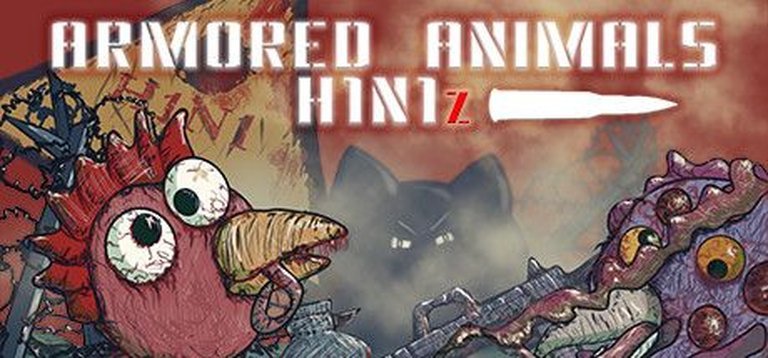
Armored Animals: H1N1z is a 2D action game with RPG elements set in a fantasy world where a mutated bird flu has turned birds into zombies. Players choose from unique heroes like Pigster, Dogster, Catos, or Goaton to parachute into battle and eliminate the infection and its creators, the evil Wild Boars. The game features diagonal-down scrolling and shooter mechanics as players fight to stop the zombie bird apocalypse.
Gameplay Videos
Armored Animals: H1N1z Guides & Walkthroughs
Armored Animals: H1N1z – A Bizarre, Forgotten Gem of Indie Absurdity
Introduction: The Game That Time Forgot (But Shouldn’t Have)
In the vast, often overlooked landscape of indie games, Armored Animals: H1N1z (2018) stands as a peculiar artifact—a game so bizarre in premise, so unapologetically niche in execution, that it defies easy categorization. Developed by the obscure Diedemor Studio Games and published by Rhino Games, this top-down shooter/RPG hybrid thrusts players into a world where anthropomorphic animals wage war against zombie birds in a battle for survival. It’s a game that feels like a fever dream, blending Metal Slug’s chaotic action with the absurdist humor of Earthworm Jim, all while wrapping itself in a thin veneer of pandemic-themed satire.
At first glance, Armored Animals: H1N1z appears to be little more than a low-budget curiosity—a game lost in Steam’s endless sea of indie releases. Yet, beneath its crude pixel art and clunky mechanics lies something far more fascinating: a game that embraces its own weirdness with such fervor that it becomes oddly compelling. This review seeks to dissect Armored Animals in its entirety, exploring its development, narrative quirks, gameplay systems, and the cult following it has quietly amassed. By the end, we’ll determine whether this is a hidden masterpiece of indie absurdity or a fascinating failure—one that, regardless of quality, deserves a place in gaming’s oddball hall of fame.
Development History & Context: The Birth of a B-Movie Masterpiece
The Studio Behind the Madness: Diedemor’s Obscure Legacy
Armored Animals: H1N1z was developed by Diedemor Studio Games, a small, relatively unknown studio with a penchant for dark, often grotesque themes. Their portfolio includes titles like Chernobyl: Road of Death and Pestis, games that revel in post-apocalyptic horror and survivalist dread. Armored Animals, however, marks a sharp departure—a foray into surreal comedy that feels like a deliberate subversion of their usual tone.
The studio’s origins are shrouded in mystery, with little public information available about its founders or development philosophy. What is clear, however, is that Armored Animals was not designed to be a mainstream hit. Released on February 23, 2018, it arrived at a time when the indie market was already saturated with retro-inspired shooters and roguelikes. Yet, rather than competing with the likes of Dead Cells or Enter the Gungeon, Armored Animals carved out its own niche by leaning into its absurd premise.
Technological Constraints & Design Philosophy
The game’s technical limitations are immediately apparent. Running on a 2D diagonal-down perspective with OpenGL 2.1 and DirectX 9.0 compatibility, Armored Animals is a throwback to early 2000s indie development. The system requirements are laughably modest:
– OS: Windows XP SP3+
– CPU: 1 GHz
– RAM: 1 GB
– Storage: 250 MB
This was not a game built to push boundaries; it was a game built to exist, to deliver its bizarre vision without pretension. The art style is deliberately crude, evoking the aesthetic of a Flash game from the Newgrounds era. The animations are stiff, the hitboxes occasionally wonky, and the physics simplistic—but these limitations become part of the game’s charm.
The Gaming Landscape of 2018: A Crowded Indie Scene
2018 was a banner year for indie games, with critical darlings like Celeste, Hollow Knight, and Into the Breach dominating discussions. Armored Animals arrived without fanfare, buried under an avalanche of more polished, more marketable titles. Yet, its release timing may have been intentional. The game’s H1N1z title—a play on the H1N1 swine flu pandemic—positions it as a darkly comedic take on global health crises, a theme that would later become eerily prescient with the COVID-19 pandemic.
In many ways, Armored Animals feels like a cult film in video game form—something destined to be discovered years later by curious players digging through Steam’s obscurities. Its lack of mainstream attention is not a reflection of its quality (or lack thereof) but rather a testament to its refusal to conform to trends.
Narrative & Thematic Deep Dive: A Satirical Avian Apocalypse
Plot Summary: When Birds Go Bad
The premise of Armored Animals: H1N1z is as ridiculous as it is intriguing:
“Sudden mutation of bird flu transforms home birds into bird-zombies! Tricky evil roosters want to peck to death all living creatures! But this insanity was created by Wild Boars, who grew this virus from bird blood and built incubators to breed new infected birds. Stop this nightmare!”
Players take on the role of one of four anthropomorphic animal heroes:
1. Pigster – A pink decorative pig, presumably the “cute” option.
2. Dogster – An old, grizzled dog with a no-nonsense attitude.
3. Catos – A “dexterous cat from Mexico,” complete with a sombrero.
4. Goaton – A “bully alcoholic goat,” because of course.
The story unfolds across Petushland (a pun on “petushok,” the Russian word for rooster), a war-torn region overrun by zombie birds and armed wild boars. The player’s mission is to parachute into battle, eliminate the infected, and dismantle the boars’ viral incubators.
Themes: Satire, Absurdism, and Animal Revolt
At its core, Armored Animals is a satirical allegory—one that mocks pandemic paranoia, animal rights extremism, and even battle royale tropes (given its parachute drops). The game’s tone oscillates between B-movie horror and Looney Tunes slapstick, never taking itself too seriously.
Key themes include:
– The Dangers of Bioengineering: The Wild Boars’ virus is a clear jab at unchecked scientific experimentation.
– Class Warfare: The “evil roosters” represent a bourgeoisie oppressing the working-class animals.
– Absurd Heroism: The player characters are deeply flawed (an alcoholic goat, a “bully,” a decorative pig), subverting traditional hero archetypes.
Dialogue & Writing: Deliberately Stilted, Unintentionally Hilarious
The game’s writing is minimalist, relying more on visual storytelling than exposition. What little dialogue exists is delivered in broken English, adding to the game’s charm. Example:
“Wild Boars grown this virus from bird blood and builded incubators to breed new infected birds. Stop this nightmare!”
The awkward phrasing feels intentional, evoking the lost-in-translation humor of old bootleg games. It’s unclear whether the developers were non-native English speakers or simply leaning into the aesthetic, but the result is a narrative that feels authentically janky.
Gameplay Mechanics & Systems: Chaos in Top-Down Form
Core Gameplay Loop: Parachute, Loot, Shoot, Repeat
Armored Animals is, at its heart, a top-down shooter with light RPG elements. Each mission follows a similar structure:
1. Parachute Drop: Players select a hero and leap from a plane into the battlefield.
2. Scavenging: Upon landing, they must loot crates for weapons, ammo, and health.
3. Combat: Engage in frantic shootouts with zombie birds and boar soldiers.
4. Objective Completion: Destroy incubators, eliminate bosses, or survive waves.
The game’s 10 missions are relatively short, with most playthroughs clocking in at under an hour. This brevity works in its favor, preventing the repetitive combat from overstaying its welcome.
Combat & Weaponry: A Looter’s Delight
Combat is simple but satisfying, with a focus on positioning and resource management. Players can wield:
– Melee Weapons (knives, bats)
– Firearms (pistols, shotguns, machine guns)
– Explosives (grenades, mines)
Ammo is scarce, forcing players to scavenge mid-battle—a mechanic that adds tension. The hit detection is occasionally finicky, and enemy AI is basic (most foes charge blindly), but the sheer chaos of battle makes up for these flaws.
Character Progression & RPG Elements
Each of the four heroes has unique stats:
– Pigster: Balanced, good for beginners.
– Dogster: Higher health, slower movement.
– Catos: Fast and agile, low defense.
– Goaton: High attack power, but “alcoholic” (likely a joke about lowered accuracy).
However, progression is minimal—there are no skill trees or permanent upgrades. Instead, players unlock new weapons as they progress, but the lack of deep customization may disappoint RPG fans.
UI & Controls: Functional, If Unpolished
The user interface is barebones, with a health bar, ammo counter, and score display. The controller support is surprisingly robust, with full remapping and haptic feedback, but the keyboard/mouse controls feel stiff.
One notable flaw: The parachute mechanic is clunky, often dropping players into instant-death scenarios if they land near enemies. This inconsistency can frustrate, but it also adds to the game’s unpredictable charm.
World-Building, Art & Sound: A Feast for the Eyes (and Ears?)
Setting & Atmosphere: Petushland’s Dystopian Charm
Armored Animals takes place in Petushland, a warzone where farmhouses, mines, and viral incubators dot the landscape. The diagonal-down perspective gives the world a tactical, almost Syndicate-like feel, while the pixel-art aesthetic evokes 16-bit era shooters.
The game’s color palette is bold and garish, with neon greens, blood reds, and sickly yellows dominating the visuals. This hyper-stylized approach reinforces the game’s B-movie horror tone.
Sound Design & Music: A Mixed Bag
The soundtrack is minimal, consisting of looping chiptune tracks that fit the aesthetic but lack memorability. The sound effects, however, are delightfully over-the-top:
– Gunshots have a comically loud pew-pew quality.
– Explosions are bassy and satisfying.
– Zombie bird screeches are ear-piercing in the best way.
The lack of voice acting is noticeable, but given the game’s budget constraints, it’s an understandable omission.
Reception & Legacy: The Cult of the Armored Animals
Critical Reception: Ignored by Mainstream, Loved by the Niche
Armored Animals: H1N1z received virtually no mainstream coverage. Metacritic has no critic reviews, and major gaming outlets ignored it entirely. However, Steam user reviews (mostly in Russian) paint a different picture—one of cult appreciation.
Common praises include:
✅ “A hidden gem for fans of weird games.”
✅ “Short, fun, and stupid in the best way.”
✅ “Feels like a lost PS1-era shooter.”
Criticisms focus on:
❌ Repetitive gameplay.
❌ Clunky controls.
❌ Lack of depth.
Yet, even negative reviews often conclude with a begrudging recommendation, acknowledging the game’s unique charm.
Legacy: A Game Ahead of Its Time?
In the years since its release, Armored Animals has developed a small but devoted following. Its Steam achievements (such as “Explode 10 mines” and “Make 10X combo”) have become badges of honor for completionists. The game’s absurd premise has also made it a meme-worthy curiosity, occasionally resurfacing in “weird games” compilation videos.
Its influence is minimal, but its existence is a testament to indie gaming’s boundless creativity. In an era where AAA games chase photorealism and open-world bloat, Armored Animals stands as a defiant middle finger—a game that says, “Why not make a shooter about zombie birds and an alcoholic goat?”
Conclusion: A Flawed Masterpiece of Absurdity
Armored Animals: H1N1z is not a great game in the traditional sense. Its controls are janky, its progression is shallow, and its narrative is nonsensical. And yet… it’s glorious.
This is a game that embraces its own weirdness without apology. It’s a love letter to B-movie schlock, a satirical jab at pandemic fears, and a celebration of indie absurdity. It doesn’t ask for your respect—it demands your bewildered amusement.
Final Verdict: 7/10 – “A Beautiful Trainwreck”
Pros:
✔ Unforgettable premise (zombie birds vs. armed animals).
✔ Short, tight gameplay loop (no padding).
✔ Genuinely funny in its absurdity.
✔ Surprisingly polished for its budget.
Cons:
✖ Repetitive combat.
✖ Clunky controls.
✖ Lack of depth in progression.
✖ Virtually no mainstream recognition.
Armored Animals: H1N1z is not for everyone. But for those who crave the bizarre, who appreciate games that defy convention, it’s a must-play curiosity—one that deserves to be dug up, dusted off, and celebrated for its sheer audacity.
In the grand tapestry of video game history, Armored Animals may be a footnote, but it’s a footnote written in neon ink—one that refuses to fade.
Play it. Laugh at it. Love it. And then ask yourself: Why aren’t more games this weird?