
- Release Year: 2023
- Platforms: PlayStation 4, PlayStation 5, Windows, Xbox One, Xbox Series
- Publisher: Bandai Namco Entertainment America Inc., Bandai Namco Entertainment Europe S.A.S., Bandai Namco Entertainment Inc., FromSoftware, Inc.
- Developer: FromSoftware, Inc.
- Genre: Action
- Perspective: Behind view
- Game Mode: Online PVP, Single-player
- Gameplay: Fast-paced combat, Mech customization, Shooter
- Setting: Futuristic, Sci-fi
- Average Score: 86/100
Description
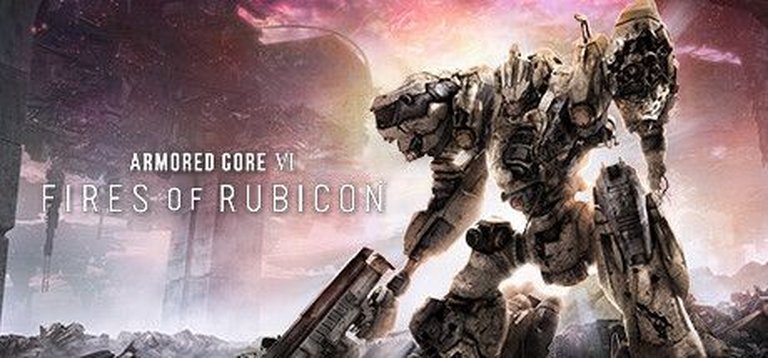
Armored Core VI: Fires of Rubicon is a futuristic mech combat game set on the war-torn planet Rubicon 3, where factions clash over a mysterious energy source called Coral. Players assume the role of a mercenary pilot controlling fully customizable armored cores (ACs), engaging in high-stakes missions, corporate warfare, and explosive mechanized battles. Developed by FromSoftware, the game blends intense tactical combat with deep customization systems, challenging players to adapt their mechs and strategies across single-player campaigns and competitive multiplayer modes in a bleak sci-fi universe.
Gameplay Videos
Where to Buy Armored Core VI: Fires of Rubicon
PC
Armored Core VI: Fires of Rubicon Free Download
Armored Core VI: Fires of Rubicon Cracks & Fixes
Armored Core VI: Fires of Rubicon Mods
Armored Core VI: Fires of Rubicon Guides & Walkthroughs
Armored Core VI: Fires of Rubicon Reviews & Reception
ign.com : Armored Core 6 scores direct hits in the spots it matters the most: specifically the highly customizable, intense, and frantic mecha battles.
metacritic.com (86/100): Armored Core VI: Fires of Rubicon is a delightful departure from the norm in a gaming world filled with sprawling open worlds and never-ending quests.
gamespot.com : Armored Core VI sees From Software return to and refine its roots with a game of thrilling mech combat built on aggression, agility, and customization.
Armored Core VI: Fires of Rubicon: Review
The first new entry in FromSoftware’s cult mecha series since 2013 is a triumphant evolution – and a defiant middle finger to modern design trends.
Introduction: A Phoenix Forged in Coral Flame
When Hidetaka Miyazaki‘s Dark Souls franchise revolutionized gaming in the 2010s, many assumed FromSoftware had abandoned its roots in mechanized combat. Armored Core VI: Fires of Rubicon (2023) doesn’t just revive a sleeping giant—it straps a plasma cannon to its back and redefines what mech games can be. Set against a backdrop of corporate dystopia and cosmic tragedy, this is Blade Runner meets Mad Max by way of Nietzschean philosophy. My thesis? Fires of Rubicon succeeds not despite its old-school leanings, but by weaponizing them into a relentless, anti-compromise vision of mechanized warfare.
Development History & Context: From Ashes to Armored Core
A Franchise Reborn
After Armored Core: Verdict Day (2013) underperformed, FromSoftware shifted focus to Bloodborne and Sekiro. Yet key staff—including Sekiro lead designer Masaru Yamamura, who took directorial reins after Miyazaki’s early prototyping—never abandoned passion for mecha. Development began in earnest in 2018, leveraging lessons from Soulsborne titles while consciously avoiding “Souls-with-mechs” simplification.
Technological Liberation
Kota Hoshino’s soundtrack—described by Yamamura as evoking “loneliness and nostalgia”—benefited FromSoftware’s proprietary engine advancements post-Elden Ring. Unlike previous entries constrained by PS2/PS3 hardware, ACVI leverages modern tech for:
– 120 FPS support on PC
– Ray-traced garage environments
– Destructible terrain in massive battlefields
The 2023 gaming landscape, dominated by open-world bloat, made ACVI’s mission-based structure a rebellious statement. As Yamamura told Famitsu: “We wanted to recapture the purity of assembling your ideal machine and testing it in focused combat scenarios.”
Narrative & Thematic Deep Dive: Capitalism in a Blast Furnace
Coral and the Human Cost
The discovery of Coral—a sentient energy source echoing Dune’s spice—ignites interplanetary greed. FromSoftware’s storytelling remains cryptic (audio logs, terse mission briefings), but key themes emerge:
– Resource Colonialism: Megacorps (Arquebus, Balam) exploit Rubicon 3’s post-apocalyptic wasteland.
– Transhuman Horror: Augmented pilots like C4-621 (“Raven”) are disposable tools. Scenes of neural scarring and voice modulator static humanize mechanical warfare.
– Ecocide: The Fires of Ibis catastrophe parallels climate disaster denial.
Character as Cipher
Handler Walter’s paternal menace and Ayre’s Coral-symbiont mystique exist to frame your choices. Three branching endings—ranging from Coral genocide to cosmic symbiosis—reflect NieR: Automata’s existential weight. The real protagonist? Your customization decisions.
Gameplay Mechanics & Systems: Ballet of Bullets and Boosters
The Customization Cathedral
ACVI’s Garage is gaming’s deepest mech lab:
– 487 parts across 12 categories (legs, generators, FCS)
– Weight/energy tradeoffs: Tank treads enable heavy artillery but cripple aerial mobility
– Weapon synergy: Pairing a pulse gun (shield-shredding) with a pile bunker (melee crits) creates high-risk/high-reward playstyles
Combat: Velocity and Violence
The Stagger System—a Sekiro-inspired posture break—rewards aggression. Bosses like the ICE WORM (a 2km-long mining machine) demand loadout experimentation. Key mechanics:
– Assault Boost: Dash canceling transforms clunky mechs into acrobatic predators
– Energy Management: Overusing quick boosts leaves you stranded mid-air
– Arena Rankings: S-rank missions require near-perfect execution
Pain Points
- Brutal difficulty spikes (Chapter 1’s BALTEUS boss walled many players)
- Minimal co-op outside PvP arenas
- UI clutter during four-weapon management
World-Building, Art & Sound: Rubicon’s Poisoned Poetry
Visual Design: Beauty in Decay
- Industrial Hellscapes: BAWS weapon factories ooze rusted oppression
- Contrast: Coral’s neon glow against ashen wastelands
- Enemy Diversity: PCA enforcement mechs mirror capitalist excess with gold-plated armor
Sound as a Character
Kota Hoshino’s score blends industrial drones with choral melancholy. Gunplay audio design is tactile:
– Kinetic Crunch: Melee impacts vibrate with hydraulic menace
– Coral Resonance: Ayre’s voice distorts into ethereal static during surges
– Silence as Weapon: The vacuum of space missions amplifies missile lock-ons
Reception & Legacy: Bloodied but Unbowed
Critical Response
- Metacritic: 86 (PC/PS5), 82 (Xbox)
- Destructoid (9/10): “The mech game I’ve waited a decade for”
- IGN (8/10): “Buildcrafting nirvana hampered by repetitive missions”
Commercial Impact
- 3 million copies sold by July 2024 (series record)
- Steam peak: 156,000 concurrent players
Awards
- The Game Awards 2023: Best Action Game
- Japan Game Awards 2024: Excellence Prize
Industry Influence
ACVI inspired:
– Resurgence of mission-based action games (Warhammer 40K: Boltgun)
– Mech customization depth in Exoprimal and Atlas Fallen
– Modding scene: 20,000+ Nexus mods (cosmetic to gameplay overhauls)
Conclusion: The Last Cinders Burn Brightest
Armored Core VI: Fires of Rubicon isn’t flawless. Its storytelling frustrates Soulsborne converts, and some bosses feel tuned for masochists. Yet FromSoftware’s uncompromising vision—prioritizing mechanical depth over trend-chasing—makes this the definitive mech experience of the decade. By merging AC’s garage-bound soul with Sekiro’s kineticism, they’ve crafted a game that values player ingenuity over handholding. In an era of homogenized open worlds, Fires of Rubicon is a volcanic eruption—a masterpiece that reminds us games can be demanding, complex, and utterly thrilling.
Verdict: A genre titan reborn. Essential for mecha fans; mandatory for students of game design.