
- Release Year: 2017
- Platforms: Windows
- Publisher: Phobetor, Plug In Digital SAS
- Developer: Phobetor
- Genre: Strategy, Tactics
- Perspective: Diagonal-down
- Game Mode: Single-player
- Gameplay: Turn-based combat
- Average Score: 53/100
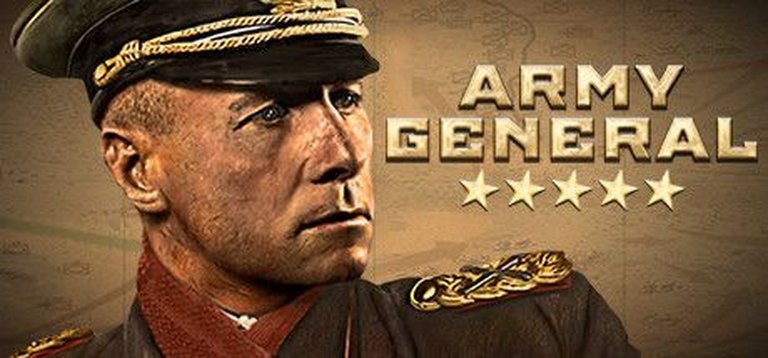
Description
Army General is a turn-based strategy game set during World War II, focusing on the North African and Mediterranean campaigns. Players command customizable units, including tanks, bombers, and battleships, across detailed battle maps. With 250 equipment types, officer progression systems, and 20 German and 5 British campaign scenarios, the game emphasizes tactical flexibility and historical authenticity. It also supports custom map and campaign creation for shared or solo play experiences.
Where to Buy Army General
PC
Army General Cracks & Fixes
Army General Mods
Army General Guides & Walkthroughs
Army General Reviews & Reception
steambase.io (56/100): Army General has achieved a Steambase Player Score of 56 / 100. This score is calculated from 62 total reviews on Steam — giving it a rating of Mixed.
mobygames.com : Army General is a turn-based strategy game that depicts the desert war in North Africa and parts of the Mediterranean during World War 2.
store.steampowered.com (52/100): All Reviews: Mixed (52% of 40)
games-popularity.com (52.5/100): 52.50% positive (21/40)
Army General: A Desert Storm of Ambition and Frustration in WWII Strategy
Introduction
In the vast theatre of World War II strategy games, Army General (2017) marches onto the field not as a revolutionary force, but as a niche tactician’s sandbox—one that ambitiously melds granular unit customization with the unforgiving deserts of North Africa. Developed by Phobetor and co-published by Plug In Digital, this turn-based hex-grid wargame aimed to capture the logistical complexity and officer-driven drama of the Afrika Korps and Desert Rats campaigns. Yet, like many underfunded operations, it stumbled under the weight of its own ambitions. This review argues that while Army General offers a compelling depth of mechanics for hardcore strategy devotees, its clunky execution and lack of polish relegate it to a footnote in the annals of WWII gaming—a fascinating experiment more notable for its aspirations than its achievements.
Development History & Context
Studio Vision & Technological Constraints
Phobetor, a little-known developer with a sparse portfolio, positioned Army General as a love letter to classic wargaming titans like Panzer General (1994) and Allied General (1995). Released on April 26, 2017, the game emerged during a renaissance for turn-based strategy, with titles like XCOM 2 (2016) modernizing the genre for mainstream audiences. Yet Army General deliberately eschewed flashy production values, targeting instead a purist audience craving historical detail. Built on a modest technical framework (requiring only 2GB of storage and DirectX 9.0c), its visuals leaned into a retro-friendly, top-down aesthetic reminiscent of early 2000s wargames—a pragmatic choice given Phobetor’s limited resources.
The 2017 Strategy Landscape
The game’s launch coincided with Total War: Warhammer II and Divinity: Original Sin II, titans that dominated the strategy discourse. Against these behemoths, Army General’s focus on hyper-specialized, historically rooted mechanics felt like a defiant throwback. Its $14.99 price point (often discounted to $1.49 on Steam) reflected its niche appeal: a budget-tier entry for grognards rather than a mainstream contender.
Narrative & Thematic Deep Dive
Campaign Structure & Historical Fidelity
Army General eschews cinematic storytelling for a documentary approach. Players command either the German Afrika Korps across 20 scenarios (chronicling Rommel’s 1941–42 push toward Suez) or the British “Operation Compass” across five missions, repelling Italy’s 1940 invasion of Egypt. The narrative emerges not through cutscenes or dialogue, but through objective-driven vignettes: securing supply lines at Tobruk, defending El Alamein, or orchestrating naval skirmishes in the Mediterranean.
Themes of Leadership & Adaptation
Thematically, the game explores the burdens of command. Officers—over 450 from ten nations—are not mere stat boosters but evolving entities. A lieutenant who excels in tank assaults might gain traits like “Desert Navigator” (reducing movement penalties), while poor decisions could lead to “Logistical Blunder” debuffs. This system mirrors the historical realities of desert warfare: terrain, supply, and morale were as critical as firepower. The British campaign’s asymmetry—fewer scenarios but tougher logistical constraints—subtly underscores the Allies’ desperate, resourceful defense against Axis momentum.
Gameplay Mechanics & Systems
Core Loop: Customization Over Combat
At its heart, Army General is a game of preparation. Before each battle, players dissect units into modular components:
– Officers: 450+ options with distinct traits (e.g., “Artillery Specialist” grants +10% range).
– Equipment: 250 types, from Panzer IVs to Wellington bombers, each affecting mobility, armor, and supply drain.
– Support Units: Attachable battalions (e.g., flamethrower teams or reconnaissance units) that grant situational perks.
Combat unfolds on hex-based maps with terrain modifiers (sandstorms reduce visibility, dunes slow armor). The UI, however, is a minefield of nested menus and ambiguous tooltips. Assigning support units requires multiple clicks (select unit → “+” icon → confirm hook button), a sluggish process that magnifies in larger battles.
Progression & Persistence
Units persist across campaigns, accruing veterancy but also wear-and-tear. A veteran infantry regiment might gain “Elite Morale” (resisting panic), but if decimated at Tobruk, replacing its equipment drains scarce resources. This creates compelling risk-reward tension—do you preserve your elite forces for later missions, or expend them for short-term victory?
Editor & Replayability
The scenario editor is the game’s unsung hero, allowing players to craft custom campaigns or recreate historical engagements. Yet its learning curve is steep, with minimal tutorials—a missed opportunity to foster community content.
Flaws: Clarity & Pacing
The game’s greatest weakness is opaque design. One Steam review notes confusion during the Axis campaign’s Tobruk defense: “Do diverted units return post-mission? The game doesn’t say.” Missions often end abruptly, with objectives like “divert six units” lacking context. The pacing, too, is uneven; early scenarios feel like tutorials, while later ones escalate difficulty without adequate onboarding.
World-Building, Art & Sound
Visuals: Functional Over Flourish
Army General’s visuals divide critics. Its maps are geometrically precise, with weather effects (sandstorms, night cycles) altering visibility. Unit sprites, however, are rudimentary—tanks and infantry lack detail, resembling board-game pieces. The aesthetic echoes Panzer General’s minimalist charm but feels outdated even for 2017.
Sound Design: A Whisper in the Sand
Sound is sparse: artillery blasts and engine growls punctuate turns, but ambient silence dominates. The absence of stirring music or voice acting dampens immersion, reducing epic assaults to quiet spreadsheet calculations.
Atmosphere: The Desert’s Brutal Logic
Where the game excels is evoking the desert’s ruthlessness. Supply lines dictate every move; overextended tank divisions grind to a halt without fuel. The camera’s free rotation (“Diagonal-Down Perspective”) lets players survey the battlefield like a general studying a map table—a subtle but effective nod to its wargaming roots.
Reception & Legacy
Launch Reception: Mixed Salvoes
The game garnered a “Mixed” Steam rating (52% positive from 40 reviews). Praise centered on depth: “The customization options are insane—like Football Manager for WWII buffs” (Steam user, 2019). Criticism targeted UI and clarity: “Managing units feels like bureaucratic hell” (RAWG, 2020). Notably, no major critic reviews surfaced—a testament to its niche visibility.
Legacy: A Cult Artifact
Army General’s influence is negligible in mainstream circles, but it retains a cult following among modders and hardcore strategists. Its editor inspired fan campaigns like “Operation Crusader,” while its officer progression system faintly echoes in contemporary titles like Warhammer 40,000: Gladius (2018). Yet its greatest legacy is as a cautionary tale: ambition without usability is a fortress built on sand.
Conclusion
Army General is a paradox—a game bursting with intricate systems yet hobbled by its inability to communicate them. For historians and masochistic tacticians, its customization offers a rich toybox to simulate Rommel’s gambits or Montgomery’s counterstrokes. But for most players, the clunky interface, lackluster presentation, and elliptical design make it a chore rather than a triumph. In the pantheon of WWII strategy games, it sits uneasily: too complex for casuals, too opaque for purists. Its discounted price ($1.49 on Steam) makes it a curiosity worth sampling, but like the desert it depicts, Army General is a harsh, unyielding experience—rewarding only to those stubborn enough to conquer its dunes.
Final Verdict: A diamond-rough relic for the hardcore, lost in the shadow of strategy’s giants.