
- Release Year: 2002
- Platforms: Macintosh, Windows
- Publisher: Jordan Freeman Group, LLC, Learning Company, The, Wanderful Inc.
- Developer: ImaginEngine Corp., Presage Software, Inc.
- Genre: Educational
- Perspective: Third-person
- Game Mode: Single-player
- Gameplay: Mini-games
- Setting: Fantasy
- Average Score: 50/100
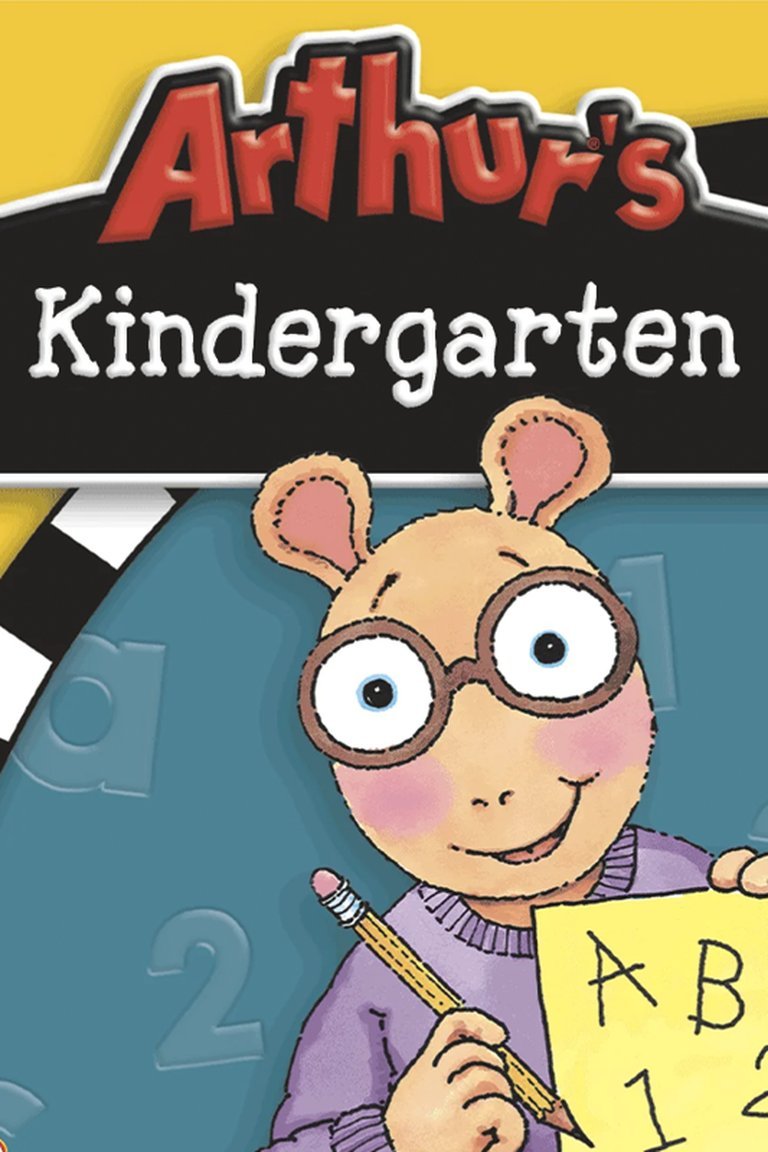
Description
Arthur’s Kindergarten is a 2002 educational game based on Marc Brown’s Arthur book series, designed for children aged four to six. It features two discs: the main ‘Trouble at Arthur’s Treehouse’ where players complete learning mini-games to rebuild tree houses and unlock new activities like painting ducks or memory matching, and a creative activities disc. Set in a fantasy world with a point-and-click interface, it teaches skills in art, math, logic, music, and reading, with progress tracking and certificates.
Gameplay Videos
Where to Buy Arthur’s Kindergarten
PC
Arthur’s Kindergarten Free Download
Arthur’s Kindergarten: A Time Capsule of Turn-of-the-Millennium Edutainment
Introduction: The Niche and the Narrative
In the crowded landscape of early 2000s educational software, few titles carried the dual weight of a beloved literary franchise and the daunting task of preparing children for formal schooling. Arthur’s Kindergarten, a 2002 Windows reissue of a 1999 original, stands not as a revolutionary landmark but as a meticulously crafted, representative artifact of its time. It embodies the peak—and impending twilight—of the CD-ROM-based “edutainment” boom, leveraging the cultural capital of Marc Brown’s Arthur to deliver a package of mini-games wrapped in a gentle narrative about community and problem-solving. This review posits that Arthur’s Kindergarten is historically significant not for its innovation, but for its perfect capture of a specific developmental and technological moment: a period where licensed properties were translated into interactive learning via point-and-click interfaces, with a heavy emphasis on graphical creativity and discrete skill drills, all housed on physical media. Its legacy is one of competent, charming, but ultimately transitional design.
Development History & Context: The Engine of a Franchise
The game’s development history is a study in the collaborative, studio-driven model of late-90s/early-2000s licensed software. It was developed by ImaginEngine Corp. and Presage Software, Inc., two studios deeply embedded in the educational and children’s software ecosystem. ImaginEngine, in particular, was a powerhouse, having worked on numerous titles in the Arthur series (Arthur’s 1st Grade, 2nd Grade, Camping Adventure) and other Scholastic/ Learning Company properties. This repetition created a streamlined, assembly-line efficiency in translating Brown’s world into game mechanics.
The 2002 version is explicitly a “new, updated version” of the 1999 original. This speaks to the business realities of the CD-ROM era: a successful title would receive a “2.0” release, often adding bonus content to justify a new retail SKU and extend the product lifecycle. The technological constraints are palpable. The game requires a mouse (“Input Devices Supported/Optional: Mouse”), indicating a design philosophy utterly anchored to the WIMP (Windows, Icons, Menus, Pointer) paradigm. Its “Fixed / flip-screen” perspective and “Point and select” interface were the non-negotiable standards for accessibility aimed at pre-literate or early-reader children, prioritizing simplicity over navigational freedom. The two-disc format—one for the core “Trouble at Arthur’s Treehouse” adventure, another for “creative activities”—was a common tactic to increase perceived value in an era where a single CD’s capacity was finite and retail shelf presence was key. The game’s existence is a direct product of The Learning Company’s (later absorbed by Mattel) dominance in the school and home educational market, where licensed tie-ins were the gold standard for consumer trust.
Narrative & Thematic Deep Dive: Rebuilding More Than Treehouses
The narrative framework is deceptively simple: a storm has damaged the beloved treehouses in Elwood City, and Arthur and his friends must work together to rebuild them. This plot, drawn from the provided description of “Trouble at Arthur’s Treehouse,” serves a dual purpose. On the surface, it provides a child-friendly motivation for the series of learning activities. Thematically, however, it is a direct metaphor for cognitive and social development. Each repaired treehouse represents a mastered skill or concept—patience, memory, artistic expression, logical reasoning.
The characters—Arthur, D.W., Brain, Buster, Muffy—are not merely skins but active participants whose personalities are briefly evoked. The game assumes a player’s familiarity with the series; there is no introduction to who these characters are. This reliance on pre-existing affection is a hallmark of licensed edutainment. The dialogue, while not extensively documented in the sources, is implied to be light, encouraging, and in keeping with the show’s tone of resolving conflicts through teamwork and understanding. The underlying theme is constructivism: knowledge is built (the treehouses) through active, playful doing. The “goal checker” and “personalized certificate” mentioned in the description provide external scaffolding and reward, mirroring the classroom environment of achievement charts and gold stars. The addition of three “entirely new” treehouses after completion (the rubber duck painting factory, tic-tac-toe, monkey match) extends the game’s longevity and shifts subtly from core curriculum to pure creative and cognitive play, suggesting a developmental progression from structured learning to freeform application.
Gameplay Mechanics & Systems: The Grind of the Mini-Game
The core gameplay loop is a masterclass in the “menu-based mini-game compilation” genre dominant in this era. The player navigates a top-down or isometric map of the treehouse grounds (the “Fixed / flip-screen” perspective). Clicking on a damaged structure or a character icon initiates a specific learning activity. These are discrete, one-off challenges with no persistence between sessions—a series of skill stations.
The described activities reveal the targeted educational domains:
* Graphics / Art: “Painting rubber ducks in a factory” is a clear digital coloring/painting activity, fostering color recognition, fine motor control (mouse manipulation), and possibly pattern or design replication.
* Math / Logic: “Tic-tac-toe” is a classic game of strategic logic and turn-taking. “Monkey match” is a memory concentration game with a twist: the monkeys only display their unique animation when clicked, forcing the player to observe, remember the animation, and then match based on that memory. This elevates a simple matching game into a test of visual recall and attention.
* Music & Reading / Writing: While not detailed, these themes are listed as educational categories, implying activities around note recognition, rhythm, letter identification, or basic spelling.
The systems are straightforward but functional. The “goal checker” is a vital UI innovation for this context. It provides transparent progress tracking for both child (a sense of “what’s left”) and parent/educator (a report on engagement and completion). This is early gamification, using completionism as a motivator. The “personalized certificate” is the ultimate extrinsic reward, a printable trophy that bridges the digital and physical worlds, a common feature in titles from The Learning Company and The JumpStart Series.
Where the systems show their age is in their atomization. There is no overarching narrative integration beyond the treehouse theme; the mini-games feel like bolted-on modules rather than emergent challenges within a living world. Progression is non-linear (choose any treehouse) but ultimately leads to the same endpoint. There is no adaptive difficulty; the challenge is static. This reflects a “content delivery” rather than “systemic” design philosophy, where learning objectives are matched 1:1 to game mechanics.
World-Building, Art & Sound: The Aesthetic of Familiarity
The game’s setting is the idealized, storybook version of Elwood City and Arthur’s treehouse, directly lifted from the TV series and books. This is not an original world but a licensed simulation. The art direction’s primary goal is recognition and comfort. The visuals, while rendered in the era’s standard 2D sprite-based style, are faithful to the source material’s warm, rounded shapes and muted, autumnal color palette. The “Fixed / flip-screen” perspective creates a charming, diorama-like tableau, a snapshot of the world rather than a simulated environment.
The sound design follows a similar philosophy of non-intrusion. The background music is described as “unobtrusive” and turn-off-able—a critical feature for parents and classroom teachers concerned about auditory overload. It likely consists of light, melodic, looping tracks that underscore the activity without demanding attention. The voice acting, curated by Voice Talent & Casting Director Jim Foote, would feature sound-alikes or possibly original cast members, delivering sparse, encouraging lines (“Good job!”, “Try again!”). The audio is functional, supportive, and entirely in service of the educational tasks, never competing for the player’s cognitive focus.
Collectively, the audiovisual package creates a low-anxiety, high-familiarity bubble. It is not about awe-inspiring spectacle but about recreating the safe, predictable world of the Arthur books within an interactive format. This was a calculated design choice: the cognitive load of the learning tasks should be the primary challenge, not learning a new interface or game world.
Reception & Legacy: A Modest Footnote in a Dying Era
Contemporary reception was muted to negative. The sole cited critic review from All Game Guide awards a 50% (2.5/5 stars). The critique is telling: it acknowledges the game’s successful formula—”cute graphics,” “straightforward gameplay,” “easy-to-read progress charts,” the rewarding certificate—but delivers a damning verdict on its nature as a reissue: “As a re-issued game, though, many of the drawbacks should have been addressed and corrected.” This suggests the 2002 version was seen as a cash-grab, a repackaging of existing content with minor additions (the three new treehouses) that failed to modernize or substantially improve upon the 1999 original. In a rapidly evolving tech landscape ( broadband was spreading, Flash was burgeoning), a CD-ROM title from three years prior already felt dated.
Its commercial and critical legacy is practically invisible. It has no notable reviews on Metacritic, a minuscule collector following, and exists primarily in databases as a data point. Its influence on the industry is indirect, representing the end of an era. By the mid-2000s, the CD-ROM edutainment market was collapsing under the weight of cheap, web-based alternatives (e.g., Starfall.com), subscription models, and the rise of mobile gaming. Arthur’s Kindergarten is a last gasp of the old model: a expensive, physical, single-subject product tied to a linear completion path.
Its true legacy is as a genre specimen. It exemplifies the strengths of its type—accessible, themed, curriculum-aligned—and its fatal weaknesses—lack of depth, repetitive mini-games, technological stagnation. It shares DNA with the JumpStart series, Math Blaster, and Dr. Seuss games, but with the particular gentle, narrative-lite coating of the Arthur brand. It is a game that would have been perfectly at home in a 1999-2002 school computer lab, likely gathering dust by the late 2000s.
Conclusion: A Preserved Relic, Not a Lost Classic
Arthur’s Kindergarten is not a game that warrants rediscovery for its gameplay or narrative brilliance. Evaluated on its own merits, it is a competent but unambitious collection of mini-games that successfully teaches basic preschool skills within a warm, familiar wrapper. The critical assessment that it was an unrefined reissue is almost certainly correct.
However, as a work of video game historiography, it is invaluable. It is a pristine example of the CD-ROM edutainment paradigm at its most conventional. It demonstrates how licensed properties were mechanized into learning modules, how physical media dictated design (two discs, no streaming), and how progress tracking and reward structures were implemented for a pre-literate audience. It captures the moment when “interactive storybook” aesthetics met the rigid demands of educational standards, resulting in a product that was more digital workbook than exploratory game.
Its place in history is that of a cultural artifact: a perfectly preserved moment when parents trusted a CD-ROM from The Learning Company to prepare their child for kindergarten, when a treehouse was a believable hub world, and when “point-and-click” was synonymous with “child-friendly interface.” It is a testament to a bygone business model and a sincere, if flawed, belief in the power of branded software to make learning fun. For the historian, its value is not in the playing, but in the understanding it provides of an entire category of software that raised a generation before being rendered obsolete by the very connectivity and accessibility it helped pioneer.