
- Release Year: 2017
- Platforms: Windows
- Publisher: ebim Studio, Plug In Digital SAS
- Developer: ebim Studio
- Genre: Action
- Perspective: 1st-person
- Game Mode: Single-player
- Setting: Asia
Description
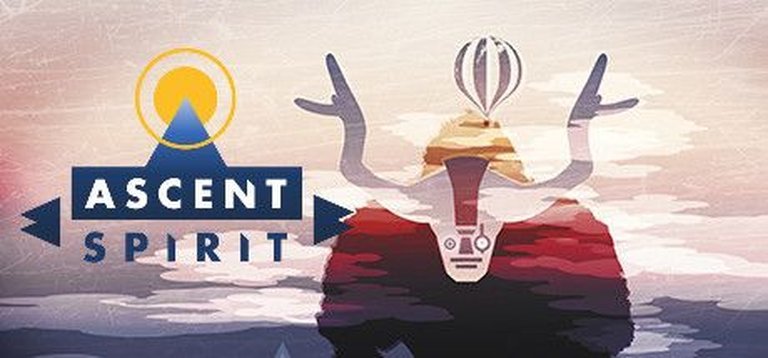
Ascent Spirit is a first-person survival action game set in Asia. Players navigate through a challenging environment, utilizing motion controls to ensure their survival. The game was developed and published by ebim Studio and Plug In Digital SAS, and it was released on Windows in August 2017.
Where to Buy Ascent Spirit
PC
Ascent Spirit: Review
Introduction
In the crowded landscape of VR experiments and survival simulators, Ascent Spirit (2017) stands as a forgotten relic—a game that dared to blend historical drama with immersive climbing mechanics, only to vanish into the fog of technical limitations and muted reception. Developed by ebim Studio, this first-person VR adventure tasks players with surviving the harsh Himalayan peaks as a stranded French legionnaire in 1940, wielding little more than improvised ice axes and determination. While its vision of VR-as-mountaineering-simulator was ambitious, Ascent Spirit ultimately serves as a case study in unrealized potential, caught between its lofty aspirations and the constraints of its era.
Development History & Context
Ascent Spirit emerged from ebim Studio, a small developer known for niche experimental projects. Released in August 2017 for Windows (and later for VR platforms), the game arrived during a transitional period for VR technology. The Oculus Rift and HTC Vive were still in their infancy, and most developers hesitated to commit fully to VR-first experiences. Ebim Studio’s decision to focus on motion-controlled climbing mechanics—using Unity Engine—was a gamble, leveraging VR’s physicality to simulate the tactile struggle of scaling a mountain.
However, the studio faced significant hurdles. Early VR hardware struggled with motion sickness and inconsistent tracking, and Ascent Spirit’s reliance on precise ice-axe swings exacerbated these issues. The game’s Steam page reveals a modest scope: NASA-topography-derived landscapes and a survival narrative wrapped around a 1-2 hour experience. Unlike contemporaries such as The Climb (2016), which prioritized spectacle over realism, Ascent Spirit aimed for grounded authenticity—a choice that may have limited its appeal in a market hungry for VR “wow” moments.
Narrative & Thematic Deep Dive
Set against the backdrop of WWII-era colonial tensions, Ascent Spirit casts players as a French soldier whose reconnaissance balloon crashes into the Tibetan mountain Kawagarbo. The narrative is minimalist, conveyed through environmental cues and the protagonist’s desperate climb. Themes of isolation and human fragility dominate: The mountain is both antagonist and muse, its slopes littered with hazards like avalanches and crevasses.
The game’s three endings—determined by route choices and resource management—hint at deeper existential questions. Will the soldier succumb to the mountain’s wrath, die in pursuit of salvation, or escape with newfound humility? While lacking character development, the story’s sparse dialogue and haunting solitude evoke Touching the Void’s raw survivalist ethos. Yet, the absence of narrative payoff (no logs, flashbacks, or NPCs) leaves the experience feeling undercooked, more tech demo than cohesive tale.
Gameplay Mechanics & Systems
At its core, Ascent Spirit is a physics-based climbing simulator. Players grip virtual ice axes (via motion controllers or gamepad) and swing them to anchor into ice, leveraging momentum to ascend. The mechanics emphasize realism:
- Stamina Management: Overextending leads to exhaustion and fatal slips.
- Dynamic Hazards: Wind gusts, falling rocks, and crumbling handholds demand improvisation.
- Route Flexibility: Multiple paths up the mountain encourage replayability.
However, the execution falters. Steam user reviews cite clunky controls and frequent crashes, particularly on HTC Vive. The lack of motion-controller support baffled players, as trailers prominently featured VR wand interactions. Worse, the game’s steep difficulty curve—punishing misaligned swings with instant deaths—clashes with its janky physics, turning climbs into exercises in frustration.
The UI is similarly barebones, with only a stamina bar and minimal prompts. While this minimalism enhances immersion, it also obscures critical mechanics (e.g., how to recover from near-falls). Ebim Studio’s decision to prioritize realism over accessibility likely alienated casual players, leaving Ascent Spirit cultified among masochistic VR enthusiasts.
World-Building, Art & Sound
Ascent Spirit’s greatest strength lies in its bleakly beautiful depiction of Kawagarbo. Using NASA topographic data, the mountain feels authentically colossal, its snowfields gleaming under a merciless sun. Ebim Studio’s art direction leans into desolation:
- Visual Design: Jagged rock faces, shifting weather patterns, and distant storm clouds create a palpable sense of scale.
- Sound Design: Howling winds, muffled breaths, and the crunch of ice underfoot immerse players in the protagonist’s struggle. There’s no soundtrack—only the mountain’s indifferent roar.
Yet, technical limitations mar the presentation. Low-resolution textures and minimal interactivity (e.g., static ice formations) break the illusion. The Himalayan vistas, while ambitious, lack the detail needed to sell their grandeur.
Reception & Legacy
Ascent Spirit debuted to little fanfare. Metacritic lists no critic reviews, and Steam user ratings—buried under technical complaints—paint a mixed picture. Players praised its novel concept but lambasted its instability:
“Crashes on launch. Right after the ‘made with Unity’ logo. Can’t even play.” — Steam User, 2021
The game’s commercial failure underscores the risks of VR-first development in 2017. Yet, Ascent Spirit’s DNA lives on. Its focus on tactile, physics-driven climbing influenced later titles like The Climb 2 (2021) and Among the Sleep’s VR adaptations, proving that ebim Studio’s vision was ahead of its time—if fatally flawed in execution.
Conclusion
Ascent Spirit is a fascinating artifact—a game that reached for the summit but slipped into obscurity. Its blend of historical setting, brutal realism, and VR immersion remains compelling, hamstrung by technical woes and a lack of polish. For VR historians and hardcore climbing sim fans, it offers a glimpse into what might have been. For everyone else, it’s a cautionary tale about the perils of ambition outpacing execution.
Final Verdict: Ascent Spirit earns a place in the pantheon of “almost great” VR experiments—a game whose peaks and valleys mirror the mountain it depicts. While not essential, it’s a poignant reminder of VR’s untapped potential.