
- Release Year: 2019
- Platforms: Windows
- Publisher: Oculus VR, LLC
- Developer: Sanzaru Games Inc.
- Genre: Role-playing (RPG)
- Perspective: 1st-person
- Game Mode: Single-player
- Gameplay: Action RPG, Hack and Slash
- Setting: Fantasy
- Average Score: 88/100
- VR Support: Yes
Description
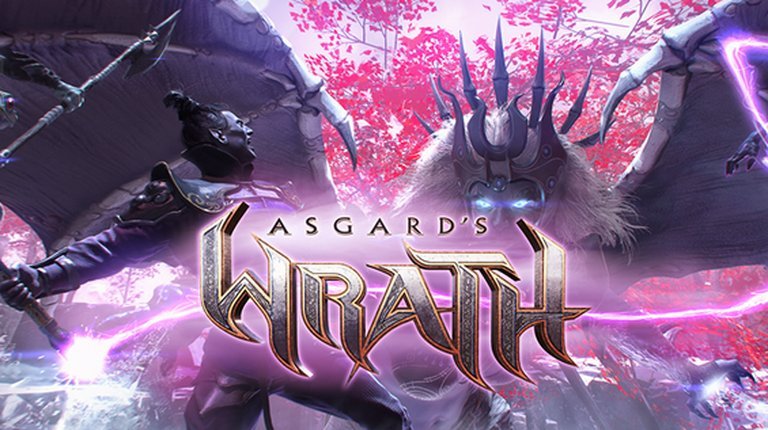
Asgard’s Wrath is a first-person action RPG set in a fantasy world inspired by Norse and Germanic mythology, where players wield motion controls in VR to engage in hack-and-slash combat across epic sagas, battling mythical creatures and gods in a vast, immersive adventure developed by Sanzaru Games exclusively for Oculus Rift.
Gameplay Videos
Asgard’s Wrath Guides & Walkthroughs
Asgard’s Wrath Reviews & Reception
metacritic.com (88/100): It’s a captivating experience full of enchanting adventure from start to finish.
ign.com : I’ve finally gotten the grand-scale VR adventure I waited so long for – and it’s been worth it.
uploadvr.com : Asgard’s Wrath is the best VR game I have played to date.
metro.co.uk : Asgard’s Wrath is a 25-hour role-playing epic that may be the most impressive VR game ever.
Asgard’s Wrath: Review
Introduction
Imagine swinging a gleaming sword through the misty fjords of Midgard, parrying a draugr’s icy strike with a flick of your wrist, only to shrink to god-scale and pluck boulders from the earth like toys—this is the visceral thrill of Asgard’s Wrath, a 2019 Oculus Rift exclusive that redefined virtual reality gaming. Developed by Sanzaru Games and published by Oculus Studios, it arrived as VR’s first true AAA epic, boasting 30-40 hours of content in a Norse mythology sandbox that eclipses short-form tech demos. Its legacy endures as a benchmark for immersion, paving the way for its 2023 sequel and proving VR could rival flat-screen blockbusters like The Elder Scrolls V: Skyrim VR—but with native motion controls and godlike scale-shifting. My thesis: Asgard’s Wrath isn’t just a game; it’s a historical milestone, the most ambitious VR title of its era, blending RPG depth, mythological grandeur, and VR-exclusive mechanics into an unforgettable saga that cements Sanzaru’s place in gaming history.
Development History & Context
Sanzaru Games, a Foster City, California studio known for platformers like Sly Cooper: Thieves in Time (2013), pivoted to VR in the mid-2010s amid Oculus’s Rift launch. Founded in 2007, Sanzaru had dabbled in VR with VR Sports Challenge (2016) and Ripcoil (2017), but Asgard’s Wrath marked their breakout. Development kicked off in 2016 alongside Marvel Powers United VR, with a 90-person team led by Game Director William A. Spence IV, Executive Producer Glen Egan, and Senior Creative Director Mat T. Kraemer. Powered by Unreal Engine 4, middleware like NeoFur, Simplygon, SpeedTree, and FMOD audio, it targeted PC VR exclusively for Oculus Rift/Rift S, demanding high-end rigs amid 2019’s hardware constraints—no Quest port due to fidelity compromises.
The vision evolved dramatically: initially a Lemmings-inspired god-command puzzle game where players directed mortals from afar, playtests revealed the joy of scale-shifting possession. “Everyone said, ‘This looks so cool! This is so much fun!’” Kraemer recalled in a VentureBeat interview. This pivot birthed a hybrid action-RPG, announced at Oculus Connect 5 (Feb 2019) and released October 10, 2019, for $39.99. The 2019 VR landscape was nascent—Beat Saber dominated rhythm, Superhot VR innovated time manipulation, but lengthy RPGs were scarce. Ports like Skyrim VR (2018) exposed flaws (wonky controls, nausea), while exclusives like Lone Echo prioritized narrative over combat. Asgard’s Wrath filled the void, leveraging Touch controllers’ motion precision amid competition from Valve Index and HTC Vive. Its success prompted Facebook’s acquisition of Sanzaru (Feb 2020), fueling VR’s golden age.
Narrative & Thematic Deep Dive
Asgard’s Wrath weaves a treacherous Norse tapestry, casting players as the nascent God of Animals, mentored by the affably evil Loki (voiced with sly charm). Loki tasks you with possessing five mortal heroes—Ingrid the shieldmaiden, Frodi the hermit, Stikkan the smuggler, Risi the half-giant, and Rognvald—across six “sagas” spanning realms like Midgard, Niflheim, Helheim, and Jotunheim. Each hero’s arc manifests a “Hero Stone” embodying virtues (courage, greed), ostensibly aiding Loki’s escape from imprisonment. Subtle exposition via codex, environmental storytelling, and hero narration builds dread: Aesir gods like Odin (deep-voiced David Sobolov), Thor, Týr (blood knight in rage helm), and Hel scheme amid Ragnarök omens.
Plot Structure and Twists
The narrative unfolds episodically: Saga I (god-form prologue vs. Kraken) bookends with Saga VI’s betrayal climax. Loki’s “Treacherous Quest Giver” arc peaks in a “Ray of Hope” ending—he traps you in his void-prison illusion (tavern hub revealed as facade), but Heimdall (gender-flipped) gifts an Ankh for sequel tease. Heroes’ personal tales—Ingrid’s vengeance, Stikkan’s smuggling heists—interlink via god-mode interventions, emphasizing possession as “God Was My Co-Pilot.”
Characters and Dialogue
Standouts include Loki’s devious daggers and pleasant facade shattering into rage; jerkass Aesir (Thor oppresses giants, Týr toys with mortals); loyal followers like voiced animals (Fred Tatasciore, Matthew Mercer). Dialogue shines in monologues—heroes vocalize awe/hatred of gods mid-exploration—but falters in cheesiness (repetitive god-bashing). Themes probe divinity’s hubris: mortals’ destinies as godly chess pieces, animal-god bonds critiquing exploitation, Loki’s betrayal underscoring trickster unreliability. Norse fidelity (Yggdrasil, nine realms) elevates it beyond Marvel-lite, blending epic soap opera with player agency.
Gameplay Mechanics & Systems
Asgard’s Wrath‘s loops fuse Zelda-like Metroidvania exploration, God of War-inspired combat, and VR-native scale-shifts into 40+ hours of progression.
Core Loops
Possess heroes for saga quests (5-6 hours each), backtrack with new followers/abilities. God-mode (bird’s-eye) manipulates toy-like worlds—reposition canals, clear paths—contrasting mortal grit. Tavern hub (Aegir’s Hall) enables crafting, minigames (axe-throwing, coin-bounce), merchant trades.
Combat Deconstruction
Physics-blended melee demands spatial mastery: swing swords/axes (throw/recall like Leviathan Axe), parry/dodge (build Rage meter for Signature Attacks stripping Runic Armor). Ranged (bows, crossbows, explosives) diversifies; followers frenzy (shark shreds shields, eagle snipes). Reactive rhythm parries Until You Fall, but repetition creeps in groups—stagger via potions/charged attacks mitigates. Flaws: canned animations mismatch slices (horizontal hit triggers vertical bisect), hitbox leniency enables cheese.
Progression and UI
Level heroes/followers separately (10 animals: turtle blocks fire, owl shrieks bridges, frog tongues keys). Loot crates/barrels for crafting (upgrade gear at blacksmith—skippable animations QoL miss). Inventory woes (“I can’t carry anymore!”) frustrate; UI excels—crisp holographic menus, wrist-map/journal. Smooth locomotion (no teleport) with comfort options (snap-turn, blinders); three difficulties (easy skips parry, hard HUDless).
Innovations/Flaws
Followers revolutionize puzzles (switch-command multi-solve); scale duality awes (“towering obstacle becomes toy”). AI stubbornness (micromanagement), loading hiccups, no sprint (dashes compensate) mar polish.
World-Building, Art & Sound
Nine realms pulse with Norse authenticity: Midgard’s fjords, Niflheim’s ice caverns, Helheim’s undead hordes, Jotunheim’s peaks. Layered zones brim secrets—dungeons, brambles (Fafnir clears), sidequests (90-min Ingrid backstory)—fostering wonder. Art direction stuns: Unreal 4 visuals (high-res textures, dynamic lights) evoke God of War; detailed models (horned Týr helm), NeoFur beasts. Atmosphere immerses via scale—god-view dwarfs mortals.
Sound design elevates: FMOD-driven dynamic audio (clanging steel, echoing roars); Rob Westwood’s orchestral score swells epic battles, haunts explorations. VO (Mercer, Tatasciore, Gough) breathes life—heroes’ banter, gods’ authority—though occasional cheese jars. Result: VR’s most enveloping Norse odyssey.
Reception & Legacy
Launch acclaim peaked Metacritic 88/100 (15 critics), MobyGames 87% (5 reviews: Gameplay 92%—”better Skyrim VR”; Road to VR 88%—”competent RPG, VR-native controls”). UploadVR (100/100): “VR’s best, most ambitious”; IGN (9.4/10): “Must-play”; Jeuxvideo.com (90%): “Exceptional 30h adventure.” User scores: 7.9/10, praising length/immersion, critiquing repetition/AI/motion sickness.
Commercial: Oculus exclusive boosted Rift sales; no sales figures, but awards noms (Game Awards 2019 Best VR/AR, D.I.C.E. Immersive Reality) and Sanzaru buyout signal triumph. Reputation evolved: Pre-Half-Life: Alyx (2020) as VR’s pinnacle RPG; post, enduring benchmark. Influence: Sequel Asgard’s Wrath 2 (Quest, 2023) expands mythologies; inspired VR RPGs (Legendary Tales), proving full-length viability. Historically, it shifted VR from arcade to epic, challenging “short-form” stigma.
Conclusion
Asgard’s Wrath masterfully synthesizes Norse myth, VR ingenuity, and RPG heft into a 40-hour triumph—flaws like repetitive combat and AI quirks paling against god-mode awe, follower synergy, and realm-spanning depth. Sanzaru’s pivot from Lemmings prototype to VR landmark endures, its 88 Metacritic and industry noms affirming a legacy as early VR’s Skyrim: flawed yet foundational. Verdict: Essential hall-of-famer, securing VR’s epic potential in gaming history. 9.5/10—Play it, possess it, ascend.