
- Release Year: 2001
- Platforms: Windows
- Publisher: Microsoft Corporation
- Developer: Turbine Entertainment Software Corp.
- Genre: Role-playing
- Game Mode: MMO
- Gameplay: Action RPG, Massively Multiplayer
- Setting: Fantasy
- Average Score: 80/100
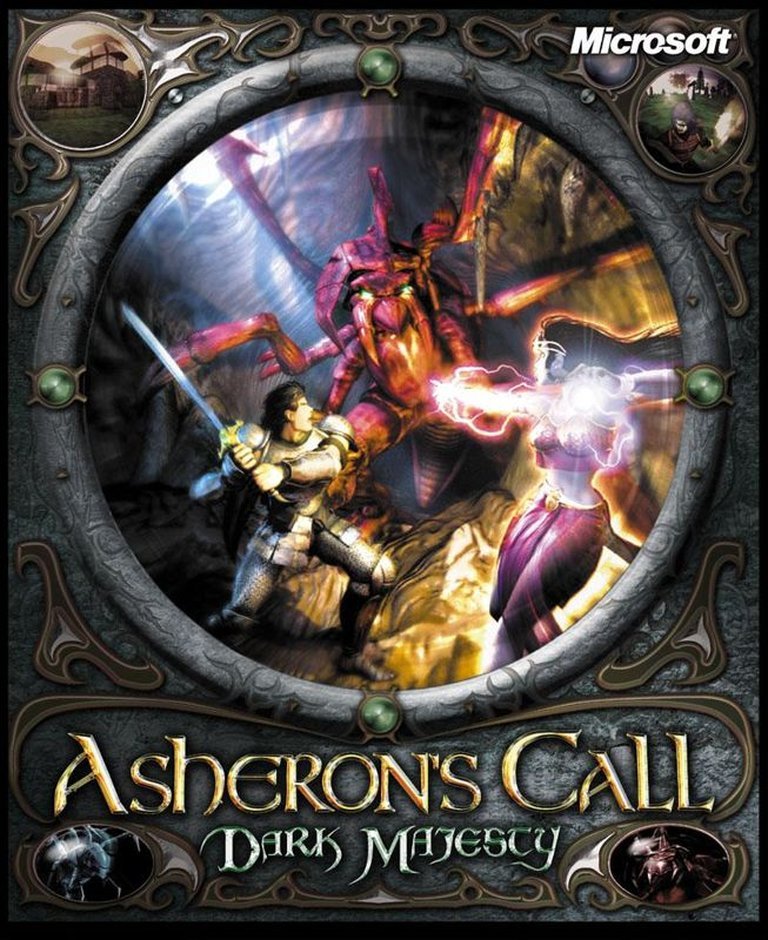
Description
Asheron’s Call: Dark Majesty is a fantasy MMORPG expansion that introduces new exploration opportunities on Marae Lassel, the ability to own castles, and an evolving storyline with regular updates. Unlike other MMORPGs, it stands alone without requiring the original game, allowing players to dive into its rich community, form alliances, and experience real-time adventure.
Gameplay Videos
Asheron’s Call: Dark Majesty Mods
Asheron’s Call: Dark Majesty Guides & Walkthroughs
Asheron’s Call: Dark Majesty Reviews & Reception
gamespot.com : If you’re looking for classic online RPG hack-and-slash gameplay, Dark Majesty has more than enough to keep you busy for quite some time–and at a price that’s more than reasonable.
ign.com (84/100): Venture into the land of Dereth, a multiplayer world brimming with constantly evolving stories, real-life comrades, and strange and fearsome monsters.
game-over.com (80/100): Dark Majesty is actually Asheron’s Call plus the new expansion pack features all rolled into one.
Asheron’s Call: Dark Majesty Cheats & Codes
PC
Enter codes during gameplay.
| Code | Effect |
|---|---|
| *ATOYOT* | Character jumps and freezes like the actors in the old Toyota commercials |
| *YMCA* | Character’s hands sparkle, character does The Village People’s ‘YMCA’ dance, and leaves a sparkling trail behind as it moves through game world |
| *TEAPOT* | Character does ‘I’m a little teapot’ dance |
| *SNOWANGEL* | Character creates a snow angel on the ground |
| *MOCK* | Character points and laughs |
| *AKIMBO* | Character places hands on hips and laughs |
| *AFK* | Character sits while floating in air |
| *MEDITATE* | Character meditates |
| *PLEAD* | Character pleads for mercy |
Asheron’s Call: Dark Majesty: Review
Introduction
In the autumn of 2001, as the MMORPG landscape was being reshaped by titans like EverQuest and Ultima Online, Microsoft and Turbine Entertainment released Asheron’s Call: Dark Majesty. This wasn’t merely an expansion; it was a re-entry ticket into a world that had captivated players for two years. Dark Majesty introduced groundbreaking features—player housing, a vast new continent, and the original game bundled into one affordable package—at a time when the genre was evolving rapidly. Its value proposition was staggering: for $19.95, new players received the full game plus a free month of play, while veterans gained unprecedented personalization and exploration. Yet, as it stepped into a ring of newer, flashier competitors, Dark Majesty embodied the resilience of a seasoned veteran. This review will dissect how Dark Majesty expanded not just the world of Dereth, but the very definition of what an MMORPG expansion could achieve—balancing legacy innovation with the demands of a burgeoning genre.
Development History & Context
Asheron’s Call: Dark Majesty emerged from a unique confluence of creative ambition and commercial pragmatism. Developed by Turbine Entertainment Software—studio co-founders Chris Foster and Ken Troop leading a dedicated expansion team—and published by Microsoft, it was the first official expansion for a game that had launched in late 1999. In 2001, the MMORPG space was dominated by the “big three”: Ultima Online, EverQuest, and Asheron’s Call. While EverQuest was preparing its graphical overhaul (Shadows of Luclin) and Ultima Online was refining its systems, Asheron’s Call stood apart for its seamless world and player-driven narratives. Dark Majesty was Turbine’s response to both player demand (for housing) and market pressure (from newer titles like Dark Age of Camelot and Anarchy Online).
Technologically, the expansion was constrained by the original engine. Turbine enhanced colored lighting and polygon counts but avoided a full engine overhaul. Instead, they leveraged the game’s monthly update infrastructure to revamp art assets, making the new content visually striking on 3D accelerators. The team emphasized accessibility: as Creative Director Chris Foster noted, the expansion was designed to be “a gateway” for new players, bundling the base game and offering a “level playing field” for housing acquisition. This approach reflected a broader industry trend toward continuous content delivery, positioning Dark Majesty as a bridge between first-generation MMORPGs and the emergent wave of “second-gen” games. Its development was a masterclass in iterative design—adding systems without disrupting the live team’s monthly storytelling cadence.
Narrative & Thematic Deep Dive
Dark Majesty’s narrative architecture was rooted in Asheron’s Call’s signature strength: a living, player-influenced world. The expansion centered on the discovery of Marae Lassel (“The Sheltering Isle”), a continent long hidden by Asheron’s magic. The plot unfolded through two interwoven conflicts. The primary story arc involved the resurgence of the Olthoi, the insectoid race previously defeated by players. On Marae Lassel, the Olthoi had mutated into deadlier forms (e.g., Olthoi Eviscerators, Harvesters), and their queen was poised to return, threatening all of Dereth. This echoed the game’s first major storyline but with higher stakes, as players could directly influence the outcome through quests like the Olthoi Queen Quest.
Secondary narratives revolved around the Tumerok factions—the Aun and Hea—who colonized Marae Lassel. The Aun, led by figures like Aun Ralirea, were nomadic and spiritual, while the Hea, under Hea Arantah, were militaristic and aligned with the Virindi. Their conflict, detailed through town crier dialogues and quests (e.g., An Aun Hea Romance), explored themes of cultural clash and ideological purity. Martine, the tragic Virindi hybrid, served as the catalyst for Marae Lassel’s revelation, his actions underscoring the theme of corruption—whether through the Olthoi’s “infection” of the land or the Hea’s dark pacts. The expansion’s monthly updates ensured these narratives weren’t static; the world reacted to player achievements, creating a sense of shared history. This player-driven evolution remains one of Dark Majesty’s most enduring legacies.
Gameplay Mechanics & Systems
At its core, Dark Majesty retained Asheron’s Call’s signature skill-based progression system, where players allocated experience points to attributes and skills freely, avoiding rigid classes. This philosophy extended to the expansion’s two headline features:
Player Housing revolutionized player investment in Dereth. Approximately 1,000 houses per server were available, ranging from cottages to “awe-inspiring” multilevel mansions. Acquisition involved completing quests to collect keys and deeds, then purchasing plots with in-game currency. Houses served dual purposes: social hubs and secure storage. Owners could grant access to trusted allies, creating a dynamic economy for item sharing. Maintenance costs ensured houses remained valuable assets, preventing a “slum lord” scenario. As Turbine’s FAQs emphasized, this system catered to “casual players” and veterans alike, fostering community and permanence in a transient world.
Marae Lassel introduced a 25-square-mile landmass, meticulously designed for accessibility. The island’s geography split into an upper plateau (hosting Olthoi hives and Empyrean ruins) and lower coasts (colonized by humans and Tumeroks). New dungeons like the Royal Hive and Palenqual’s Cavern offered tiered challenges, with low-level quests (e.g., Hunting Aun Ralirea) and endgame content (e.g., the Virindi Scalpel Quest). Combat remained real-time and action-oriented, but the expansion refined quest technology. NPCs reacted more dynamically to player progress, and quests like Tesserae required multi-step problem-solving, rewarding exploration over grinding. The allegiance system—where players swore fealty to patrons for shared XP—remained central, reinforcing Turbine’s focus on community over solo play.
These systems, however, were hindered by the game’s aging interface. Critics noted cluttered inventories and reliance on keyboard shortcuts, though secure trades and dyes (added via live updates) improved quality of life. Ultimately, Dark Majesty’s gameplay loop was one of endless progression: hunt, quest, hoard, and repeat—a formula that kept players engaged despite lacking the crafting depth of contemporaries like Ultima Online.
World-Building, Art & Sound
Dark Majesty’s world-building excelled in its diversity and ecological storytelling. Marae Lassel was a masterclass in environmental design, contrasting the “lush” mossy plains and waterfalls of the southern coasts with the fungus-choked, corrupted plateau—an Olthoi “infection” that warped the land. Native creatures like the Siraluun (peacock-like birds) and Carenzi (prairie dog-like pack hunters) added biographical depth, their behaviors mirroring the island’s factions. The expansion also expanded Dereth’s lore through Empyrean ruins, such as the stone dam—a “structure from the world’s Empyrean past” that served as a centerpiece dungeon. Every location, from the Hea town of Ahurenga to the Aun village of Timaru, was steeped in cultural detail, with town criers weaving environmental storytelling into their dialogues.
Artistically, Dark Majesty was a mixed bag. While the new terrain and monsters (e.g., the multi-limbed Mutated Olthoi) showcased Turbine’s art evolution, the base game’s blocky models and textures couldn’t hide their age. Critics like GameSpot noted the “simplistic” graphics compared to EverQuest’s upcoming overhaul. Yet, moments of beauty persisted: the Marescent Plateau’s bioluminescent flora or the Siraluun’s iridescent plumage hinted at the world’s potential. Sound design was minimalist, relying on ambient crickets, water, and monster cries—effective but repetitive. As one reviewer quipped, the “absence of music” made the world feel serene but isolating. Despite these limitations, Dark Majesty’s art and sound created an immersive, if sometimes dated, tapestry.
Reception & Legacy
Upon release, Dark Majesty was hailed as a “value-packed” triumph, earning a Metascore of 80 and praise from outlets like PC Gamer (“A worthy add-on”) and GameSpot (“more than enough to keep you busy”). Its pricing was universally lauded: at $19.95 with a free month, it undercut competitors like Phantasy Star Online v2.0 ($10/month after initial cost). Critics highlighted housing and Marae Lassel as “essential” for veterans, while newcomers appreciated the bundled base game. Thunderbolt Games awarded it 90%, calling it “accessible” and “addicting,” though PC Gamer UK (63%) lamented its interface quirks. Sales were robust, driven by the low entry point and Turbine’s reputation for post-launch support.
Legacy-wise, Dark Majesty cemented Asheron’s Call as a pillar of MMORPG history. It pioneered player housing in Western MMORPGs (predating World of Warcraft by years) and demonstrated the power of continuous content updates. Its influence is evident in games like The Lord of the Rings Online, which adopted tiered dungeons and faction-based quests. However, the expansion couldn’t halt the genre’s shift toward newer titles. By 2002, Dark Age of Camelot and Anarchy Online siphoned players, and Asheron’s Call’s eventual closure in 2017 underscored the era’s volatility. Yet, for its time, Dark Majesty was a landmark—a testament to Turbine’s ability to innovate without reinventing, proving that “polish over perfection” could define an era.
Conclusion
Asheron’s Call: Dark Majesty stands as a paradox: a product of its time yet ahead of it. Its aging graphics and interface were glaring flaws, but its core additions—housing and Marae Lassel—were revolutionary. By packaging the original game at an unbeatable price, Turbine made MMORPGs accessible to millions, while the expansion’s systems laid groundwork for future genre standards. Its legacy isn’t in technical prowess but in philosophy: that community, narrative, and value could sustain a world. For players, Dark Majesty was more than an expansion; it was a kingdom, a quest, and a home. In the annals of MMORPG history, it remains a testament to the power of iteration—a quiet masterpiece that expanded not just a game, but a genre.