
- Release Year: 2012
- Platforms: Windows
- Publisher: Ubisoft Entertainment SA
Description
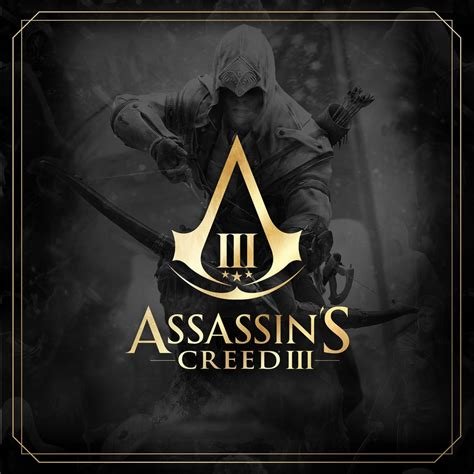
Assassin’s Creed III (Digital Deluxe Edition) is an action-adventure game set in 18th-century Colonial America during the American Revolution. Players follow the intertwined stories of Haytham Kenway, a British Templar, and his half-Mohawk son Connor, who becomes an Assassin to protect his people’s land and fight against Templar influence in the Revolution. This edition includes the base game, three additional single-player missions, a Season Pass with DLC, a 25-track soundtrack, Benedict Arnold missions, and George Washington’s notebook digital content.
Gameplay Videos
Assassin’s Creed III (Digital Deluxe Edition) Cracks & Fixes
Assassin’s Creed III (Digital Deluxe Edition) Patches & Updates
Assassin’s Creed III (Digital Deluxe Edition) Guides & Walkthroughs
Assassin’s Creed III (Digital Deluxe Edition) Reviews & Reception
ign.com : It turns a fascinating section of history into a vast open-world playground, letting you conquer the rooftops, stalk the forests and sail the seas of revolutionary America.
Assassin’s Creed III (Digital Deluxe Edition) Cheats & Codes
PC
Collect the hidden Pivots throughout the game to unlock the following cheats under the options menu.
| Code | Effect |
|---|---|
| Infinite Ammunition | Infinite pistol ammo and arrows |
| Killing Spree | Allowed to assassinate enemies while not in stealth mode |
| Made Of Steel | Invincibility |
| Ninja | Enemy AI disabled; enemies will not see or hear you |
| Recruit | Infinite recruit tokens |
| Season Changer | Toggle seasons between summer and winter |
| Semi-Automatic | Ranged weapons have no reload time between shots |
| Sun And Moon | Toggle between day and night |
| Thunder Kill | Thunder and lightning after each kill |
| Weather Man | Set current weather conditions |
PlayStation 3
When you have completed the main storyline collect the following Pivots to unlock the corresponding Animus Hack at the ‘Options’ menu.
| Code | Effect |
|---|---|
| Infinite Ammo | Infinite ammo for pistols and bows |
| Killing Spree | Ability to assassinate even when not in stealth |
| Made of Steel | Invicibility |
| Ninja | Enemies completely ignore you |
| Recruit | Infinite Recruit Tokens |
| Season Changer | Switch seasons between summer and winter |
| Semi-Automatic | Ranged weapons have no reload times per shot |
| Sun and Moon | Switch between day or night |
| Thunder Kill | Lightning will strike every time you kill |
| Weather Man | Change weather conditions |
PlayStation 3
For this go to ‘Connor’ in Sequence 6 at the Davenport Homestead manor. Now walk to left-side of the manor and you will find a turkey. Now to feed this turkey you have to use the Konami Code.
| Code | Effect |
|---|---|
| Up, Up, Down, Down, Left, Right, Left, Right, Circle, X | Turkey wears an Assassin’s hood |
Assassin’s Creed III (Digital Deluxe Edition): A Revolutionary Experiment in Historical Storytelling
Introduction
The smoke of musket fire hangs heavy over Boston Harbor. The chill of a virtual New England winter bites at your fingertips. When Assassin’s Creed III launched in 2012, it promised not just a new chapter in Ubisoft’s flagship series but a seismic shift in scope, ambition, and thematic weight. As both game journalist and historian, I argue that ACIII remains one of the franchise’s most daring yet uneven entries — a flawed masterpiece that redefined the series’ technological capabilities while grappling with the moral complexities of revolution. The Digital Deluxe Edition bundles its sprawling vision with meaningful extras, but does it elevate the experience? Let’s dive into the heart of Colonial America.
Development History & Context
Ubisoft Montreal’s Gambit in a Crowded Era
By 2012, the Assassin’s Creed franchise was at a crossroads. After the critical darling Ezio Trilogy, Ubisoft Montreal faced immense pressure to reinvent the series. Development began in 2010 with a 300-person team collaborating across Montreal, Singapore, and Ukraine — an unprecedented scale for the studio. The goal? To harness the new AnvilNext engine for dynamic weather, seamless parkour in wilderness environments, and advanced AI for large-scale battles.
Technological constraints shaped key decisions. The studio sought to “look next-gen on current-gen consoles,” per creative director Alex Hutchinson, but hardware limitations forced compromises. Early prototypes featured canoe navigation (later cut) and real-time seasonal transitions, but the team settled on scripted seasonal shifts to preserve performance. Competing with Red Dead Redemption’s open-world realism, Ubisoft integrated hunting and frontier exploration, though Hutchinson admitted Rockstar’s success influenced their approach (“a convergence of minds”).
The 2012 gaming landscape was unforgiving. Annualized franchises risked fatigue, yet ACIII’s American Revolution setting — a first for triple-A games — positioned it as a narrative gamble. Ubisoft’s marketing leaned into patriotic imagery, sparking controversy over potential anti-British bias. However, as historical consultant Teiowí:sonte Thomas Deer (Mohawk Cultural Center) revealed, the team prioritized authenticity, even removing scalping mechanics after consultation. This commitment extended to casting Mohawk actors and language specialists, though not without friction.
Narrative & Thematic Deep Dive
Freedom’s Cost: Connor vs. Haytham’s Ideological War
ACIII’s narrative structure is its boldest innovation. Players initially control Haytham Kenway, a suave Templar, in a 5-hour prologue that subverts expectations by revealing the Assassins’ foes as nuanced idealists. His son, Ratonhnhaké:ton (Connor), emerges as the true protagonist — a half-Mohawk warrior torn between his people’s genocide and the hypocrisy of the American Revolution.
Core Themes:
– The Illusion of Freedom: Connor’s arc exposes the Founding Fathers’ compromises (e.g., slavery, Indigenous displacement). A deleted monologue (later novelized in Forsaken) sees him lamenting Washington’s betrayal: “You fought to throw off one chains only to forge another.”
– Cultural Erasure: The Digital Deluxe Edition’s George Washington’s Notebook PDF juxtaposes his writings with Connor’s undocumented struggle — a meta-commentary on historical marginalization.
– Desmond’s Final Act: The modern-day storyline culminates in Desmond’s sacrifice to avert the 2012 apocalypse, concluding his trilogy with tragic weight but rushed execution.
Dialogue oscillates between Shakespearean gravitas (Haytham’s “Men must be free to do what they believe!”) and Connor’s stoic brevity. Critics divided over his “emotionless” demeanor, but Noah Watts’ Mohawk-language performance — a first for mainstream gaming — lends authenticity.
Gameplay Mechanics & Systems
A Revolution in Flux
Ubisoft Montreal rebuilt ACIII’s systems from scratch, yielding brilliance and frustration:
Innovations:
– Naval Combat: The Aquila missions (expanded in DLC) introduced physics-based sailing, broadside cannons, and storm navigation — a prototype for Black Flag’s acclaim.
– Dynamic Ecosystems: Hunting deer with bow traps or baiting bears in blizzards felt revolutionary, though clunky animations undermined immersion.
– Homestead Crafting: Recruiting artisans to build a self-sustaining community offered Oregon Trail-meets-Skyrim depth, but tedious menu navigation hampered flow.
Flaws:
– Mission Design: Linear “100% Sync” objectives punished creative play (e.g., failing missions for taking damage). The notorious “Chase Lee” sequence drew ire for finicky parkour.
– UI Clutter: The controversial radial menu and map markers overwhelmed players — issues partially addressed in the 2019 Remaster (included in this edition).
The Digital Deluxe Edition’s Lost Mayan Ruins and Ghost of War missions add lore-heavy content, but their linear design feels incongruous alongside the open world.
World-Building, Art & Sound
Colonial America Brought to Life
ACIII’s rendition of 1776 Boston, New York, and the Frontier remains breathtaking. Snow accumulates on tricorn hats, tracks deform beneath boots, and cherry blossoms bloom in spring — details that showcase AnvilNext’s power. The Digital Deluxe Edition’s 25-track soundtrack (MP3s) highlights Lorne Balfe’s score, blending period fife-and-drum marches with brooding synths but excludes Jeremie Touzeau’s ambient frontier tracks.
Cultural Authenticity:
– Mohawk villages feature accurate longhouse designs and Kanien’kéha dialogue, though the “noble savage” trope haunts Connor’s portrayal.
– Boston’s crowds feel alive, with townsfolk debating revolution and Redcoats singing Rule, Britannia! — a subtle nod to British perspectives.
However, technical hiccpers persist: texture pop-in, NPC pathfinding errors, and the infamous “floating gun” glitch.
Reception & Legacy
From Divisive Launch to Reappraisal
At launch, ACIII earned 85/100 on Metacritic (PS3). Critics lauded its ambition but skewered pacing and bugs. Game Informer praised its “staggering scope,” while PC Gamer lambasted “mission design hell.” The Digital Deluxe Edition’s Season Pass sparked debate, as fragmented DLC (e.g., Tyranny of King Washington) felt tonally disjointed.
Commercial success was undeniable: 12 million sold, making it 2012’s 4th bestselling title in North America. Its legacy reverberates:
– Mechanical Foundations: Naval battles birthed Black Flag; recruitment systems influenced Brotherhood.
– Cultural Benchmark: As one of gaming’s first portrayals of Indigenous genocide, it sparked academic discourse on historical representation.
Yet, the 2019 Remaster (not this edition) retrospectively highlighted its strengths, smoothing UI issues and enhancing textures.
Conclusion
A Flawed Triumph for the Ages
Assassin’s Creed III (Digital Deluxe Edition) encapsulates gaming’s most conflicted revolution. It’s a game of staggering ambition — a meticulously researched frontier, morally gray storytelling, and systems that reshaped the franchise — weighed down by technical growing pains and design missteps. While the Deluxe bonuses offer fleeting value (the MP3 soundtrack feels anemic versus streaming), they complement a package still worthy of study.
Historically, ACIII matters not just for Connor’s tomahawk but for challenging players to witness revolution’s casualties. It’s a messy, vital artifact — a testament to Ubisoft’s high-risk ethos. 8/10 – Imperfect, indispensable, and infinitely discussable.
Final Verdict: A watershed moment in interactive historical fiction, best experienced with tempered expectations and historian’s curiosity.