
- Release Year: 2015
- Platforms: PlayStation 4, Windows, Xbox One
- Publisher: Ubisoft Entertainment SA
- Genre: Extra content, game, Physical extras, Special edition
- Setting: City – London
- Average Score: 72/100
Description
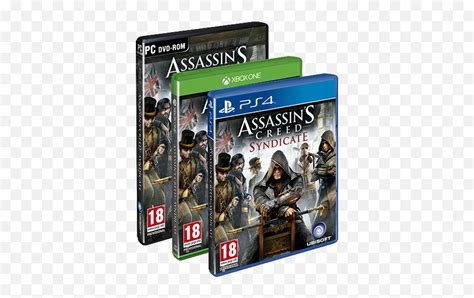
Assassin’s Creed: Syndicate is set in London and is part of the Assassin’s Creed series, which revolves around the historical conflict between the Assassin Brotherhood and the Templar order. Players explore the city’s streets in an action-adventure narrative focused on liberating London from Templar influence.
Where to Buy Assassin’s Creed: Syndicate (The Rooks Edition)
PC
Assassin’s Creed: Syndicate (The Rooks Edition) Mods
Assassin’s Creed: Syndicate (The Rooks Edition) Guides & Walkthroughs
Assassin’s Creed: Syndicate (The Rooks Edition) Reviews & Reception
ign.com : London makes for the best Assassin’s Creed experience in an age.
metacritic.com (76/100): Assassin’s Creed Syndicate is a fantastic game. Let me repeat that: It’s a fantastic game.
imdb.com (68/100): incredible graphics and awesome game-play = great assassins creed game
Assassin’s Creed: Syndicate (The Rooks Edition): Review
Introduction: The Twin Engines of a Stalled Revolution
In the annals of the Assassin’s Creed franchise, 2015 represents a critical inflection point—a year of deliberate recalibration following the tumultuous, bug-ridden launch of Unity. Into this fraught atmosphere stepped Assassin’s Creed Syndicate, a game tasked with restoring player faith while pushing the series forward. Developed not by the Montreal studio that birthed the franchise, but by the newly empowered Ubisoft Quebec, Syndicate represented a clear-eyed pivot: it abandoned the pursuit of raw graphical spectacle at all costs, leaned into character-driven storytelling, and refined rather than reinvented its core systems. The Rooks Edition, a collector’s offering bundled with a DLC mission, art book, double-sided map, and soundtrack, serves as a physical artifact of this moment—a premium package for a game that was, at its heart, a competent and charming course correction. This review argues that Assassin’s Creed Syndicate is a game of profound contrasts: it is both the last, polished iteration of the classic annual Assassin’s Creed formula and a harbinger of the series’ eventual RPG-infused reboot. It is a Victorian-era steampunk fantasy that captures the grime and grandeur of London with exceptional artistry, yet is shackled by a repetitive open-world template. Its legacy is not one of revolutionary genius, but of steady, reliable craftsmanship—a solid pillar in a series known for its towering, if sometimes crumbling, monuments.
Development History & Context: Quebec’s Turn at the Helm
The development of Assassin’s Creed Syndicate must be understood within the shadow of its immediate predecessor. Assassin’s Creed Unity (2014), developed by Ubisoft Montreal, was a critical and commercial misstep notorious for its excessive technical issues, despite an ambitious vision of a dense, seamless Paris. The negative reception created a crisis of confidence for the franchise’s annual release model. In a significant strategic shift, Ubisoft announced in July 2014 that Ubisoft Quebec would take the lead development reins for the next mainline entry, marking the first time since Assassin’s Creed II that Montreal did not helm a primary sequel. This was framed as a “major investment” in the Quebec studio, which had previously provided support on every main series title since Assassin’s Creed II and worked on notable DLC like The Tyranny of King Washington and Freedom Cry.
The creative vision was spearheaded by Marc-Alexis Côté (Creative Director) and Scott Phillips (Game Director), with François Pelland returning as Senior Producer. Their mandate was clear: deliver a technically stable, fun, and focused experience that learned from Unity’s mistakes. The game was built on the AnvilNext 2.0 engine, the same foundation as Unity, meaning much of the underlying technology was already in place. The development team’s challenge was not to create a new engine but to polish, streamline, and re-prioritize. As noted in contemporary interviews, the goal was a “lighter” modern-day narrative, the removal of the mandatory companion app and multiplayer (both features of Unity and Black Flag), and a sharper focus on the core fantasy of being an Assassin in a historically rich setting. The setting, fictionalized 1868 London at the onset of the Second Industrial Revolution, was chosen for its stark visual contrast to previous European Renaissance and French Revolution settings. It offered a city defined not by churches and palaces, but by factories, railways, gas lamps, and stark social inequality—a perfect backdrop for a story about gang warfare and taking back a city from corrupt industrialists.
The game’s development was not without its external pressures. It leaked early under the title Assassin’s Creed Victory in December 2014, forcing Ubisoft into an early, unofficial reveal. This pre-release embarrassment, coupled with the lingering stigma of Unity, meant Syndicate launched under a cloud of cautious expectation rather than unbridled hype. The Rooks Edition itself is part of a complex Special Edition strategy. Alongside a standard edition, Ubisoft announced four premium editions for Europe, including the Rooks Edition (featuring the Runaway Train DLC, art book, map, and soundtrack), the Charing Cross Edition (with a steampunk outfit pack), the Collector’s Edition (with a figurine), and the Big Ben Edition (with a larger statue). This tiered approach was designed to maximize revenue from the core fanbase still reeling from Unity’s launch.
Narrative & Thematic Deep Dive: Sibling Rivalry and Social Revolution
Assassin’s Creed Syndicate’s narrative is its most celebrated and most contentious element. It successfully injects a much-needed dose of levity and character chemistry into a series often criticized for excessive solemnity, while simultaneously grappling with the inherent dissonance of its premise.
The Protagonists: Jacob and Evie Frye
The introduction of twin protagonists, Jacob (Paul Amos) and Evie Frye (Victoria Atkin), is the game’s masterstroke. They represent two divergent philosophies of Assassinhood, dramatizing the series’ central conflict between pragmatic action and ideological purity. Jacob is the brawling, charismatic social revolutionary. He sees the immediate suffering of London’s working class under the Templar-controlled “Blighters” gang and believes the Assassins’ primary duty is to liberate the streets now by building their own gang, the Rooks. His missions are confrontational, focusing on assassinating Starrick’s lieutenants in finance, politics, and transportation. Evie, conversely, is the devout traditionalist, obsessed with the metaphysical conflict. Her priority is finding the Piece of Eden (the Shroud) hidden in London, believing that securing this ancient artifact is the true key to victory. Her missions are stealth-focused, involving infiltration of historical sites like the Tower of London.
Their dynamic is the engine of the story’s best moments. The writing, credited to Corey May and Jeffrey Yohalem, deftly balances banter, genuine affection, and ideological friction. Evie’s struggle with her sense of duty versus the tangible good Jacob achieves provides the narrative’s emotional core. However, the game’s structure undermines this dichotomy: while side missions are open to both, the main campaign is strictly divided. Jacob leads the majority of the “core assassinations” and gang liberation missions, while Evie’s story missions are fewer and more focused on the Piece of Eden plot. This forces players to experience Jacob’s more grounded, gritty storyline as the de facto main narrative, rendering Evie’s arc feel somewhat sidelined until the late-game convergence—a point of frustration noted by many critics, including IGN’s Daniel Krupa.
The Antagonists and Setting
The primary Templar antagonist is the impeccably dressed industrialist Crawford Starrick (Kris Holden-Ried), who controls London through a network of corrupt officials and the Blighters gang. Starrick’s circle of lieutenants—each controlling a borough or a sector of London’s economy (Dr. Elliotson’s addictive tonic, Milner’s omnibuses, Twopenny’s Bank of England)—cleverly reflects the game’s thematic focus on systemic control. The setting, Victorian London, is not merely a backdrop but a character. The narrative explicitly ties the Assassins’ war to the real-world struggles of the Industrial Revolution: child labor, worker exploitation, and the rise of organized crime as a response to systemic abandonment. Historical figures like Charles Dickens (working with Jacob on “penny dreadful” exposes), Karl Marx (consulted by Evie), Charles Darwin, Florence Nightingale, and Queen Victoria are woven into side missions, grounding the fantastical plot in a recognizable historical texture.
Modern-Day and Time Anomaly Segments
Following Unity’s approach, the present-day narrative is minimized. The unnamed Initiate (the player) assists Rebecca Crane and Shaun Hastings in a brief, perfunctory search for the Shroud in modern London, culminating in a confrontation with Templars Isabelle Ardant and Juno’s manipulative influence. This framework is widely criticized as dull and perfunctory, serving only to bookend the historical story.
More interesting is the “Time Anomaly” segment, a glitch in the Animus that allows players to experience the memories of Lydia Frye, Jacob and Evie’s granddaughter, during World War I in 1916 London. Tasked by Winston Churchill, Lydia battles German spies who are, in turn, infiltrated by Templars led by a Sage (a reincarnation of Juno’s husband Aita). This segment, while short, is a fascinating narrative experiment, linking the Frye legacy to a new global conflict and explicitly tying the historical gameplay to Juno’s long-term scheming. It also provides a rare, direct gameplay segment featuring a female Assassin in a non-Victorian setting.
Story Expansions and The Rooks Edition DLC
The Rooks Edition includes the Runaway Train DLC, a single mission. The true narrative weight comes from the three major story expansions, which significantly expand the lore:
* Jack the Ripper (2016): Set in 1888, this is the most critically acclaimed DLC. An older Evie hunts the Ripper in Whitechapel, who has kidnapped Jacob and rallied former Rooks. It’s a darker, more personal story exploring the consequences of their earlier actions and the trauma of the East End.
* The Last Maharaja: Focuses on Duleep Singh, the last Maharaja of the Sikh Empire, and his quest to reclaim his birthright and the Koh-i-Noor diamond, revealing a connection to the Fryes’ father, Ethan, and the Assassin Arbaaz Mir (from Assassin’s Creed Chronicles: India). This DLC strengthens the global scope of the Assassin-Templar conflict.
* The Dreadful Crimes: A murder investigation mystery featuring Henry Raymond and a young Arthur Conan Doyle, tasking the twins with solving cases across London. It adapts the investigation mechanics from Unity but is often considered the weakest of the DLCs.
Thematic Analysis
The central theme is social revolution versus ideological purity. Jacob embodies the belief that Assassins must be agents of immediate, tangible change—“from the underground up,” as the synopsis states. Evie represents the traditional, lore-heavy Assassin path focused on ancient artifacts. The game’s resolution, where they unite to defeat Starrick, suggests a synthesis: both approaches are necessary. This contrasts sharply with the grim, philosophical depth of earlier entries like Assassin’s Creed II or Brotherhood. Syndicate is, in the words of many reviewers, the “silliest” Assassin’s Creed, delighting in its anachronistic humor (Jacob dressed as Sherlock Holmes) and pulp-inspired side missions. This tonal shift was a direct response to Unity’s overblown melodrama. However, this lightness often clashes with the grim realities of Victorian London’s poverty and pollution, a tension the game never fully resolves. The infamous, abrupt ending—a triumphant ball at Buckingham Palace that feels disconnected from the preceding struggle—epitomizes this tonal whiplash, criticized as “at odds with the story” (Krupa, IGN) and a missed opportunity for a more profound conclusion.
Gameplay Mechanics & Systems: Refinement Over Revolution
Syndicate’s gameplay philosophy is one of polished iteration. It builds upon the foundation of Assassin’s Creed IV: Black Flag and Unity but removes or simplifies contentious systems. The result is the most mechanically satisfying and least frustrating Assassin’s Creed since Brotherhood, though one that still suffers from the formula’s creeping repetitiveness.
Core Loop and Dual Protagonists
The core loop—explore, climb, assassinate, liberate—remains intact but is framed around the gang warfare mechanic. London is divided into seven boroughs (Westminster, Strand, City of London, Whitechapel, Thames, Southwark, Lambeth), each controlled by the Blighters. The player’s primary open-world activity is liberating districts by completing various activities (assassinations, intercepting cargo, freeing child laborers, bribing police). Success fills a “liberation meter,” culminating in a large-scale gang brawl to take the borough. Once liberated, the Rooks establish a HQ, and the player can spend money earned from gang revenue on upgrades (weapon upgrades, carriage types, economic boosts). This system, reminiscent of Brotherhood’s Recruit system but simpler, gives the open-world activities a tangible, narrative purpose. As IGN noted, “it feels like you’re chipping away at the enemy, clawing back parts of the city.”
The ability to freely switch between Jacob and Evie in the open world (and during some side missions) was a major new feature. However, campaign missions lock the player to one twin, a design decision that undercuts the premise. As critic Brett Makedonski (Destructoid) pointed out, this means “you can’t switch between characters within campaign missions,” leading to situations where a mission’s optimal route is blocked because you didn’t invest skill points in the locked character’s abilities (e.g., Evie’s lockpicking).
Combat and Stealth
Combat was overhauled from Unity’s parry-heavy system. Syndicate adopts a faster, more cinematic style focused on chaining attacks and blocks. Enemies can be beaten into a “near-death” state, allowing for brutal multi-kill finishers. The new weaponry—brass knuckles, cane-swords, kukri knives, and compact revolvers—is period-accurate and visceral. However, critics widely noted the combat’s repetitiveness. Makedonski called it “unsatisfying,” and Livingston (PC Gamer) criticized the repetitive side missions that often devolve into combat. The system is flashy but lacks depth; once mastered, most encounters feel similar.
Stealth benefits from several refinements. The kidnapping mechanic allows taking an enemy hostage to blend in, a clever way to navigate patrols. Evie’s “Invisibility” skill (a temporary, stationary stealth boost) makes her the clear better choice for stealth missions. The Black Box assassination missions from Unity return but are improved with more infiltration routes, distractions, and “cinematic kills” unlocked by meeting optional objectives. The level design of these missions, particularly Evie’s infiltration of the Tower of London, is frequently cited as a series highlight.
Navigation: The Rope Launcher
The most significant new navigation tool is the rope launcher. It allows players to rappel up buildings or create ziplines between structures. Crucially, its “ratcheting” mechanism prevents it from making traversal trivial or overly fast, as noted by IGN. It’s a superb tool for navigating London’s wide streets and grand architecture without constantly descending to ground level, elegantly solving a problem of verticality in a city of broad boulevards. It’s a gameplay innovation that feels perfectly suited to the setting.
Carriages and Trains
The introduction of horse-drawn carriages as drivable vehicles was framed as a “GTA-style” addition. They handle decently and are useful for rapid travel and dynamic chase sequences. However, many found controlling them to be a “pain” (Makedonski) and not particularly exciting. More integral is the train, the Fryes’ mobile headquarters, which serves as a fast-travel point, a safehouse, and a narrative hub.
Skill Trees and Progression
Progression uses a skill point system. Earning 1,000 XP unlocks a point to spend in three trees: Combat, Stealth, and Ecosystem (which covers gang upgrades and economic perks). Jacob and Evie share money and XP but have separate gear and skill trees, with a few unique abilities for each (e.g., Jacob’s combat combos, Evie’s invisibility). Critics were mixed on the system. Some appreciated its simplicity compared to Unity’s gear score; others found the perks uninspired and the level cap (level 10) too low, leading to a lack of meaningful long-term progression. The gang upgrade system, purchased via a menu, was seen as sterile but effectively conveyed the idea of building a criminal empire.
What’s Missing: A Deliberate Subtraction
Syndicate famously lacks multiplayer and the companion app (both present in Unity and Black Flag). This was a conscious decision to focus on the single-player experience, widely praised as the right call after Unity’s app-driven content felt like a chore. The removal of these ancillary systems made the core game feel more self-contained and accessible.
World-Building, Art & Sound: The Crown Jewel of Victorian London
If Syndicate has an undisputed triumph, it is the reconstruction of 1868 London. This is a world of breathtaking scale, intricate detail, and atmospheric cohesion.
Visual Design and Atmosphere
The map is approximately 30% larger than Unity’s Paris. It’s a condensed, idealized London where landmarks are brought closer together for gameplay fluidity, but the essence is unmistakable. The seven boroughs offer stark visual contrasts: the opulence of Westminster, the soot-choked slums of Whitechapel, the industrial might of the Thames docks. The color palette is dominated by smoggy greys, browns, and the warm glow of gas lamps at night—a deliberate aesthetic choice that, as IGN’s Krupa observed, “at first, I thought it was fairly ugly—a smear of brown and grey—but it slowly yields its charms.” The period-accurate architecture, from St. Paul’s Cathedral to the Houses of Parliament (Big Ben), is rendered with impressive fidelity. The environmental storytelling is superb: moving cranes, smokestacks belching fumes, bustling markets, and the constant motion of steam trains and carriages create a city that feels alive and industrial. The recent 60fps patch for PS5/Xbox Series X/S further enhances the visual fluidity, revealing the art direction’s enduring strength.
Sound Design and Music
The audio, directed by Lydia Andrew (returning from ACIII, Black Flag, Unity), excels in ambient soundscape. The clatter of carriage wheels on cobblestones, the hiss of steam engines, the distant chime of church bells, and the murmur of crowded streets create an immersive auditory layer. The original score was composed by Austin Wintory (Journey, Abzû), who delivered a soundtrack that blends orchestral grandeur with period-inspired motifs. The lyrical “murder ballads” sung by Australian comedy trio Tripod are a uniquely Syndicate touch, playing in certain areas and perfectly capturing the game’s darkly humorous, pulp-adventure tone. For the Jack the Ripper DLC, Bear McCreary provided a distinctly more ominous and tense score, demonstrating how music could pivot the game’s emotional core.
Contribution to Experience
Together, the world and sound design do the heavy lifting of selling the fantasy. The act of parkouring across rooftops while looking down into foggy, gas-lit streets, or riding a carriage through a crowded market, is consistently engaging because the world feels so tangible. It successfully evokes a specific, romanticized vision of the Industrial Revolution that prioritizes adventure and intrigue over historical grimness, aligning perfectly with the game’s lighter narrative tone.
Reception & Legacy: The Underappreciated Pivot
Critical Reception
Assassin’s Creed Syndicate received generally favorable reviews at launch, with Metacritic scores of 76 (PS4), 78 (Xbox One), and 74 (PC). The critical consensus was that it was a significant, commendable recovery from Unity. Praises consistently centered on:
* The strong, charismatic protagonists (Jacob and Evie).
* The beautiful, alive, and well-designed world of London.
* The fun and useful rope launcher.
* The lighthearted, engaging story that avoided Unity’s pitfalls.
* Its technical stability (few major bugs reported at launch).
Criticisms were equally consistent:
* Repetitive combat and side missions.
* A weak, disjointed ending that failed to land its thematic points.
* Underdeveloped protagonist differentiation in gameplay (aside from a few unique skills).
* A sterile, formulaic open-world structure despite the gang warfare veneer.
* A forgettable modern-day narrative.
IGN’s 8.2/10 review encapsulated this, calling it “the most fun I’ve had with an Assassin’s game since Black Flag” but noting the “ill-fitting conclusion.” PC Gamer’s 66/100 review was harsher, focusing on repetitive side content. The Telegraph’s scathing 4/10 review declared it “a massive shame,” arguing the yearly cycle was degrading the series.
Commercial Performance and Series Impact
Commercially, Syndicate sold below expectations. It debuted at #1 in the UK but was the second worst-selling launch in the UK franchise history at the time, only outselling Assassin’s Creed Rogue. Ubisoft explicitly attributed this to “series fatigue” stemming directly from the Unity launch disaster. By February 2016, it had sold 4.12 million units; by November 2017, 5.5 million. While not a failure, this was a notable drop from the 10+ million units typical of earlier entries like III, IV, and Unity.
This commercial underperformance had profound consequences. Ubisoft cited Syndicate’s sales as a key reason to end the annual release cycle. The next mainline game, Assassin’s Creed Origins (2017), would be a soft reboot, moving to Ancient Egypt, embracing full RPG mechanics (level scaling, dialogue choices, deeper loot), and fundamentally restructuring the narrative approach. Syndicate thus stands as the last, definitive iteration of the classic Assassin’s Creed formula—the peak of the linear mission structure, the traditional stealth/assassination gameplay, and the constrained modern-day framing. All subsequent games would alter these foundations.
Evolving Legacy
In the years since, Syndicate’s reputation has undergone a modest reassessment. It is no longer seen as a mere disappointment, but as a competent, charming, and visually stunning capstone to an era. In April 2020, Game Informer ranked it as the 2nd best game in the series, a testament to its improved standing among fans who appreciated its polish after Unity. Its strengths—the charismatic twins, the phenomenal London setting, the fun rope launcher, and the genuinely enjoyable side content like the Dickens missions—are now often celebrated as high points of the pre-Origins era.
Its influence is subtle but present. The success of the dual-protagonist structure (even with its flaws) can be seen in Valhalla’s choice of male/female Eivor. The tightened, more stable technical foundation proved the AnvilNext 2.0 engine could be reliable. Most importantly, its commercial and critical “good but not great” performance gave Ubisoft the cover to take the two-year development cycle needed for the Origins reboot—a risk that ultimately revitalized the franchise. Syndicate is the bridge between the problematic last days of the old guard and the successful new direction.
Conclusion: A Polished Pause, Not a Leap Forward
Assassin’s Creed Syndicate, and by extension The Rooks Edition, is not a landmark entry that redefines its genre. It does not possess the revolutionary spark of Assassin’s Creed II, the atmospheric mastery of Brotherhood, or the sheer audacity of Black Flag. Instead, it is a game of redemption through refinement. Under the stewardship of Ubisoft Quebec, it successfully shed the most toxic baggage of Unity—technical instability, mandatory apps, multiplayer bloat—and delivered a mechanically smooth, visually gorgeous, and character-driven adventure. The Frye twins are among the most likable protagonists in the series, the city of London is arguably the best-realized open world in the classic trilogy of IV, Unity, and Syndicate, and the core act of climbing, assassinating, and liberating districts feels consistently satisfying.
Yet, its limitations are inherent to the formula it so carefully polishes. The open-world activities, while tied to the gang warfare plot, grow repetitive. The combat, though improved, lacks depth. The narrative’s tonal inconsistency and weak ending betray a lack of directorial confidence. It is a game that comfortably exists within established parameters rather than seeking to break them.
The Rooks Edition’s physical contents—the sturdy collector’s box, the detailed art book, the double-sided map—are fitting artifacts for a game that is itself a lovingly crafted monument to a bygone design philosophy. They appeal to the completionist and the enthusiast, packaging the game’s strengths (its world, its aesthetic) into a premium product.
In the grand tapestry of Assassin’s Creed, Syndicate is the calm, well-appointed room before the entire house is renovated. It proved the series could still be fun, stable, and charming without constant spectacle. It gave the developers the breathing room to dream bigger. For that, and for the sheer joy of swinging through a gas-lit London with a rope launcher, it deserves recognition not as a forgotten gem, but as the essential, understated prelude to the franchise’s second act. It is, in the final analysis, a very good Assassin’s Creed game—and in an era of yearly releases, that was both a victory and a vindication.