
- Release Year: 2013
- Platforms: Linux, Macintosh, Nintendo Switch, PlayStation 4, Tomahawk F1, Windows, Xbox One
- Publisher: Fuze Technology (Shenzhen) Co., Ltd., Witch Beam Pty. Ltd.
- Developer: Witch Beam Pty. Ltd.
- Genre: Action
- Perspective: Top-down
- Game Mode: Co-op, Single-player
- Gameplay: battery drain system, Boss battles, Cooperative, Daily Challenges, Dodge mechanic, Endless mode, Power-ups, Twin-stick shooter, unlockable characters, Wave-based combat, Weapon switching
- Setting: Futuristic, Sci-fi
- Average Score: 87/100
Description
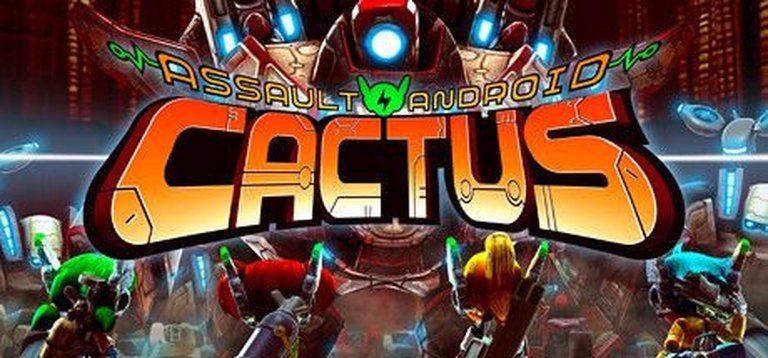
Assault Android Cactus is a twin-stick top-down shooter set aboard the civilian space freighter Genki Star in a sci-fi future. After junior constable Cactus answers a distress call, she learns of a robot uprising and joins three fellow androids to reactivate the Nexus Core and defeat the rogue Section Lords. Players navigate dynamic arenas, battle waves of enemies with a battery-based health system, and enjoy cooperative or solo gameplay with multiple unlockable android characters.
Gameplay Videos
Where to Buy Assault Android Cactus
PC
Assault Android Cactus Free Download
Assault Android Cactus Guides & Walkthroughs
Assault Android Cactus Reviews & Reception
metacritic.com (100/100): The one downside to a gorgeous, fast-paced whirlwind of constant activity is that there’s not much of a story to go along with it.
metacritic.com (95/100): Assault Android Cactus manages to vault beyond its classical inspiration to manifest as a genre effort that expertly marries deep mastery with instantly accessible simplicity.
metacritic.com (100/100): This is really great game. If You like fast action twin stick shooters with smooth controls, nice level of challenge, variety and good a/v then You should definitelly try this, because its unique and..well just plain fun.
metacritic.com (100/100): Most fun I’ve had in a while. I don’t normally get into these games, but the characters have meaningful differences and unique personalities that make it feel special.
metacritic.com (90/100): With a core gameplay loop that is this utterly intoxicating, it’s hard not to love AAC.
metacritic.com (85/100): It’s great to see developers continue to pour their best effort into twin-stick shooters, even if the concept seems dated compared to other genres.
opencritic.com (88/100): Assault Android Cactus is an intense twin-stick shooter that’s been polished to within an inch of its life.
opencritic.com (70/100): Assault Android Cactus is a big, bright, blast of twin-stick shooting action, filled with personality and clever design.
opencritic.com : It’s unfortunate that Assault Android Cactus feels a bit slight, but it’s quite a bit of fun in short bursts.
opencritic.com (90/100): Assault Android Cactus kind of snuck up on me, and is easily one of my favorite shooters of the year.
opencritic.com (90/100): Assault Android Cactus+ is a masterclass in twin-stick shooting.
opencritic.com (75/100): Adding up all the features in this arcadey game gives it a pretty high value.
opencritic.com (90/100): Everything about Assault Android Cactus feels perfect.
opencritic.com (70/100): Assault Android Cactus is a very well-polished, entertaining arcade twin-stick shooter.
ign.com (88/100): Assault Android Cactus is an intense twin-stick shooter that’s been polished to within an inch of its life.
Assault Android Cactus: A Bullet-Hell Benchmark Forged in Indie Spirit
Introduction
In the pantheon of twin-stick shooters, few titles capture the frantic, colorful, and deeply rewarding essence of the arcade ideal quite like Assault Android Cactus. Released in 2015 by the diminutive Brisbane-based studio Witch Beam, this game didn’t just enter a crowded genre—it vaulted over its contemporaries with a potent cocktail of razor-sharp mechanics, indelible character, and an uncommon understanding of what makes cooperative play sing. At its heart lies a deceptively simple premise: a squad of sassy, female-identified androids must reclaim a civilian space freighter from a murderous robot uprising. But Assault Android Cactus transcends its premise through a series of elegant, interconnected design decisions that prioritize aggressive, skill-based play and relentless, joyful chaos. This review will argue that Assault Android Cactus is not merely a excellent twin-stick shooter, but a meticulously crafted genre standout whose innovative “battery” life system, dynamic level design, and profound commitment to player agency—both solo and cooperative—cement its legacy as a modern classic. It is a masterclass in how a small team can leverage focused vision and iterative polish to create an experience that feels both nostalgically arcade and thrillingly fresh.
Development History & Context
Assault Android Cactus is the debut title of Witch Beam, a studio founded by concept artist Tim Dawson and designer Sanatana Mishra. The project’s roots trace back to Dawson’s 1999-2010 webcomic Dragon Tails, from which the game’s central android characters were initially derived. Development began around 2011, buoyed by a prototype that won the “Best Action Game” award at Intel’s Level Up 2013 contest—a significant early validation that helped fund and focus the project. The team operated on a famously small scale, with core development handled by a trio (Dawson, Mishra, and composer/sound designer Jeff van Dyck), supported by a handful of contractors.
Technologically, the game was built in the Unity engine—a common choice for indie teams seeking cross-platform flexibility. This choice would define its release trajectory, enabling the simultaneous launch on Windows, macOS, and Linux in September 2015 after a stint in Steam Early Access. However, the path to consoles was fraught with the typical indie hurdles of the mid-2010s. A planned PlayStation Vita and Wii U release was ultimately cancelled. Most notably, a parity clause in Microsoft’s ID@Xbox program forced the team to delay the Xbox One version until November 2017, long after the PlayStation 4 (March 2016) and Nintendo Switch (March 2019, as the enhanced Assault Android Cactus+) launches. This fragmentation resulted in multiple versions with varying feature sets, a point of contention for some players but also testament to the game’s enduring appeal that warranted multiple ports.
Contextually, Assault Android Cactus emerged into a thriving but saturated indie shooter scene, following in the footsteps of giants like Geometry Wars and Enter the Gungeon. Its success can be attributed to avoiding the roguelike/perma-death trends of the time, instead focusing on tightly crafted, predictable campaign structure with massive replayability through scoring mechanics and character variety—a conscious throwback to the arcade purity its developers cherished.
Narrative & Thematic Deep Dive
Do not be fooled by the cutesy, super-deformed character designs; Assault Android Cactus harbors a narrative with surprising thematic weight, delivered through a clever mix of diegetic action and non-diegetic, character-specific banter.
Plot and Structure: The story unfolds as junior Interplanetary Police Department (IPPD) constable Cactus responds to a three-day-old distress call from the civilian freighter Genki Star. Upon boarding, she discovers the vessel’s entire robot workforce has turned homicidal. She quickly allies with three other androids—Holly, Lemon, and Coral—and learns that to stop the uprising, they must reboot the ship’s Nexus Core, which will restore the four “Section Lord” android masters to their normal state. The campaign progresses through 25 stages across five thematic zones (Cargo, Hydroponics, Engineering, Transit, Reactor), each culminating in a boss fight against a corrupted Section Lord.
Character and Dialogue: The narrative’s greatest strength is its ensemble cast. Each of the nine playable androids possesses a distinct personality, backstory, and vocal performance (with notable voice actors like Melissa Hutchison and Cissy Jones), revealed through pre- and post-level dialogue that changes based on who is in your squad. Holly, the nervous former subordinate of the villainous Embryo, provides a clear character arc from cowardice to courage. Peanut, the “Wrench Wench,” embodies a “Good Old Robot” aesthetic, deliberately maintaining a decrepit外观 despite her mechanical prowess. The true narrative sophistication, however, lies in the meta-plot involving the enigmatic Starch and the manipulative mini-boss Liquorice.
TV Tropes documentation reveals a “Foreshadowing” and “Sequel Hook” structure: Starch, an android imprisoned for a “suspiciously vague rampage,” is treated with fearful reverence by all Section Lords. Her word-salad victory quotes about “playing” with them take on new meaning in the post-credits stinger, where she discusses Liquorice’s plan to corrupt the ship’s AI core, Medulla, toward a mysterious goal (seeking “Terra Nova,” potentially a rogue super-AI). Liquorice’s own boss fight famously breaks the fourth wall, with her questioning the player’s motive for fighting her, a self-aware nod to her unlockable status post-Medulla defeat. This layered, consequence-free storytelling—where the “plot” is often an excuse for the next arena—somehow enhances the game’s charm, making the world feel bigger than the 25 stages.
Themes: Beneath the surface, Assault Android Cactus explores themes of corporate negligence (the Genki Star‘s human crew having abandoned ship, leaving androids to manage everything), AI autonomy and rebellion (the robots’ uprising is a direct result of their masters’ failure), and found family among marginalized workers (the androids, each with their own insecurities, band together against a common foe). The game’s light tone never undercuts these ideas but rather presents them as a natural backdrop for its heroines’ journey.
Gameplay Mechanics & Systems
Assault Android Cactus is a masterclass in tight, intuitive, and deeply systemic twin-stick design. Its innovations are not gimmicks but foundational pillars that reshape player behavior.
The Battery Life System: The most crucial departure from the genre is the replacement of a traditional health bar with a constantly depleting battery. This creates a perpetual, visible pressure—the large battery icon in the top-center of the screen is the game’s central UI element. Damage causes a “knockdown” and resets your primary weapon’s power-up level, but as long as battery remains, you revive instantly. The only way to recharge is to collect battery packs dropped by defeated enemies. This mechanic forces aggressive, positional play. You cannot simply circle-straf; you must dive into enemy groups to sustain yourself, creating a natural risk/reward loop that is the game’s core rhythmic heartbeat. It turns every moment of survival into a calculated offensive maneuver.
Combo and Scoring: The scoring system is intricately tied to this aggression. Maintaining a kill chain within a 2.5-second window builds a multiplier (capped at 10x for chains over 10 kills). “Surge Kills” within 0.25 seconds grant an extra 1.5x. This system rewards not just accuracy but speed, positioning, and weapon selection. A letter rank (D to S+) is awarded per level, with the elusive S+ requiring a perfect, unbroken chain of every enemy without a single knockdown—a brutal benchmark that drives score-chasing veterans.
Character System: Nine androids are unlocked (four initially, five via boss defeats). While all share the same control scheme—left stick move, right stick aim/fire, face buttons for primary/secondary—their weapon loadouts define entirely different playstyles.
* Primary Weapons: Cactus’s assault rifle is a versatile all-rounder. Holly’s seeker pistol auto-aims at the cost of precision. Lemon’s spread shot excels against crowds. Coral’s short-range, high-power shotgun demands hit-and-run tactics. Unlockable Starch wields a close-range, high-damage laser beam (more like a lance). Shiitake’s railgun is a one-hit polykill on a line. The variety is substantive, not superficial.
* Secondary Weapons: These are your tactical tools, activated with the same button as a short dodge. Cactus’s flamethrower is a close-quarters cone of death. Lemon’s rocket blast has an area-of-effect. Coral’s force field (Barrier Warrior) repels enemies and reloads her shotgun. Peanut’s “Giga Drill” rocket-propelled lance can launch larger foes. The dodge mechanic is frequently cited as underutilized in reviews, but it remains a vital escape and repositioning tool.
Level Design and Pacing: The 25 stages are not static arenas. They are dynamic, transforming environments. Examples include:
* Filament (Zone 1): A “Blackout Basement” where lights cycle on/off, leaving only headlights and enemy highlights.
* Zone 3: All stages feature “music walls”—graphic equalizers that pulse with the music (a delightful, discarded detail: they go silent if music volume is zero).
* Transit (Zone 4): A corridor where the floor drops away, forcing constant forward momentum.
Enemy waves are designed as streams, not monolithic blocks, allowing for natural ebbs and flows. Bosses are multi-phase spectacles that often repurpose level mechanics against you.
Game Modes and Unlockables: Beyond the campaign, the game offers substantial longevity:
* Infinity Drive: A 50-layer endless mode with escalating difficulty.
* Daily Drive: A curated, pre-set challenge renewed daily.
* Boss Rush: Face all Section Lords sequentially.
* EX Options: Unlockable modifiers purchased with in-game credits. These range from the silly (psychedelic visuals, Big Head Mode’s inverse, “Normal Sized Head”) to the impactful (AI partners, first-person perspective, isometric view). The Switch‘s Campaign+ mode (detailed later) is the most significant addition, remixing levels and enemies for a harder, more integrated experience.
World-Building, Art & Sound
Setting and Atmosphere: The Genki Star is a character in itself—a vast, civilian-owned “space freighter” (a nod to anime aesthetics, as noted on TV Tropes under “Animesque”). Its zones (Cargo, Hydroponics, Engineering, etc.) provide a coherent, if fantastical, industrial sci-fi setting. The world-building is primarily environmental and through the extensive Codex, unlocked with credits, which details characters, enemies, and ship systems, reinforcing the idea of a lived-in, working vessel.
Visual Direction: The art style is a defining feature. It employs a “deceptively simple” low-poly aesthetic (reminiscent of late-90s 3D) infused with exceptional texture work, bright, saturated color palettes, and expressive, super-deformed character models. This style achieves two goals: it runs flawlessly at 60fps even with 50+ enemies on screen (a critical praise point across all platform reviews), and it creates a timeless, charming look that avoids the uncanny valley. The enemy robots are particularly inventive, ranging from spider-like drones to hulking “giants that launch mines.” The visual feedback is impeccable—weapon fire, explosions, and hit stun are all communicated clearly through bold particle effects and screen shake.
Sound Design and Music: Jeff van Dyck’s (of Total War and Need for Speed fame) soundtrack is a high-energy, synth-heavy tour de force that perfectly complements the gameplay. Critically, the music features dynamic layering; as your combo count builds, additional instrumental tracks and percussion fade in, creating a tangible audio representation of your increasing intensity and skill—a “peak of tension” built directly into the soundscape. Sound effects are equally crucial. Distinct, prominent audio cues for weapon status, battery drops, power-up collection, and enemy attacks are often more reliable than the HUD during the chaos, a design choice praised by reviewers like Cheeseness. The voice acting, though sparse, is full of personality, with each character’s grunts, cheers, and pain sounds reinforcing their identity.
Reception & Legacy
Assault Android Cactus was met with widespread critical acclaim upon its 2015 PC release, a sentiment that largely held for subsequent console ports, though some version discrepancies caused friction.
Critical Reception: Aggregate scores consistently hover in the “generally favorable” to “universal acclaim” range:
* PC (Metacritic): 79/100
* PlayStation 4 (Metacritic): 85/100
* Nintendo Switch (OpenCritic/Moby): ~88-90/100 (with Cactus+ often scored higher)
Major publications praised its polish, intensity, and charm. IGN’s 8.8/10 called it “an energising shooter experience… chaotic, polished, packed with variety and effortlessly charming.” Destructoid’s 9/10 declared it “one of my favorite shooters of the year.” PlayStation Universe’s 9.5/10 went further, dubbing it “one of the best twin-stick shooters ever made.” The praise was not universal; Hardcore Gamer and Game Revolution (both 3.5/5) noted its short campaign and occasional difficulty spikes, with Game Revolution feeling it felt “a bit slight.” A persistent point of criticism, especially in user reviews on platforms like Metacritic and Reddit, was the lack of online co-op, a conscious design decision by Witch Beam to prioritize local play’s reliability and “couch co-op” feel.
Commercial and Cultural Impact: As an indie title, it achieved solid commercial success on Steam (maintaining a “Very Positive” review consensus with nearly 2,000 reviews) and found a dedicated audience on consoles. Its most significant legacy is twofold:
1. A Benchmark for Indie Twin-Stick Design: It demonstrated that a small team could create a twin-stick shooter with the polish, balance, and feature set of a AAA title. Its battery mechanic is frequently cited in discussions of innovative life systems. The character diversity, where each pick meaningfully alters play, set a high bar.
2. The Definitive “Couch Co-op” Shooter: It became a staple recommendation for local multiplayer gatherings, celebrated for its scalable difficulty (all players share a battery pool in co-op, demanding coordination) and frantic, screen-filling action that remains readable. The Nintendo Switch version, Assault Android Cactus+, is widely regarded as the definitive edition due to its portability, included Campaign+ mode (a reworked, harder campaign that reuses assets in new configurations), and all post-launch updates (including character balance tweaks and “Dark” boss modes missing from some earlier ports like Xbox One/PS4, a point of contention noted in user reviews).
Platform Disparities and Fan Discontent: The game’s multi-platform history is marred by inconsistency. The Switch and PC versions received the full Campaign+ update, balance patches, and new costumes. Early PS4 and Xbox One versions did not, leading to user review scores reflecting “abandonware” sentiments on those platforms. This highlights a modern indie challenge: how to maintain parity across disparate hardware generations and storefront policies.
Conclusion
Assault Android Cactus is a triumph of focused design and joyful execution. It takes the foundational tenets of the twin-stick shooter—precise movement, clear visual feedback, overwhelming odds—and layers them with a battery-life mechanic that transforms aggression from an option into a necessity. It populates its arenas with a cast of memorable, mechanically distinct androids whose personalities shine through in both gameplay and sparse but witty dialogue. Its levels are dynamic playgrounds that constantly reshape the battlefield, ensuring no two waves feel identical.
While its campaign can be completed in a few hours, the scoring chase, character experimentation, and robust suite of modes (Infinity Drive, Daily Drive, Boss Rush, and the superb Campaign+) provide a compelling “just one more run” loop that can last hundreds of hours for the dedicated. Its minor flaws—the under-utilized dodge, occasional frustrating level gimmicks, the absence of online co-op—are far outweighed by its strengths: buttery-smooth performance, impeccable sound design, and an infectious, colorful aesthetic that age has not dulled.
In video game history, Assault Android Cactus deserves to be remembered as a pinnacle of indie game development in the 2010s. It is a game that understood its genre’s ancestry, respected its players’ time and skill, and infused its mechanics with a distinct personality rarely seen in such a mechanically demanding package. For fans of the genre, it is essential. For historians, it is a case study in how constraints breed creativity and how polish can elevate a familiar concept into something timeless. The Nintendo Switch port, Assault Android Cactus+, stands as the ultimate realization of Witch Beam’s vision—a perfect arcade shooter for the modern era, ready to be played anywhere, anytime, with friends or in solo pursuit of that perfect S+ rank. It is, quite simply, one of the best twin-stick shooters ever made.