
- Release Year: 1998
- Platforms: Game Boy Color, Macintosh, PlayStation, Windows
- Publisher: Activision, Inc., MacSoft, Softkey London, Success Corp., TLC Tewi Verlag GmbH
- Developer: Syrox Developments, Ltd.
- Genre: Action
- Perspective: Top-down
- Game Mode: Hotseat, Single-player
- Gameplay: Arcade, Shooter
- Setting: Futuristic, Sci-fi
- Average Score: 67/100
Description
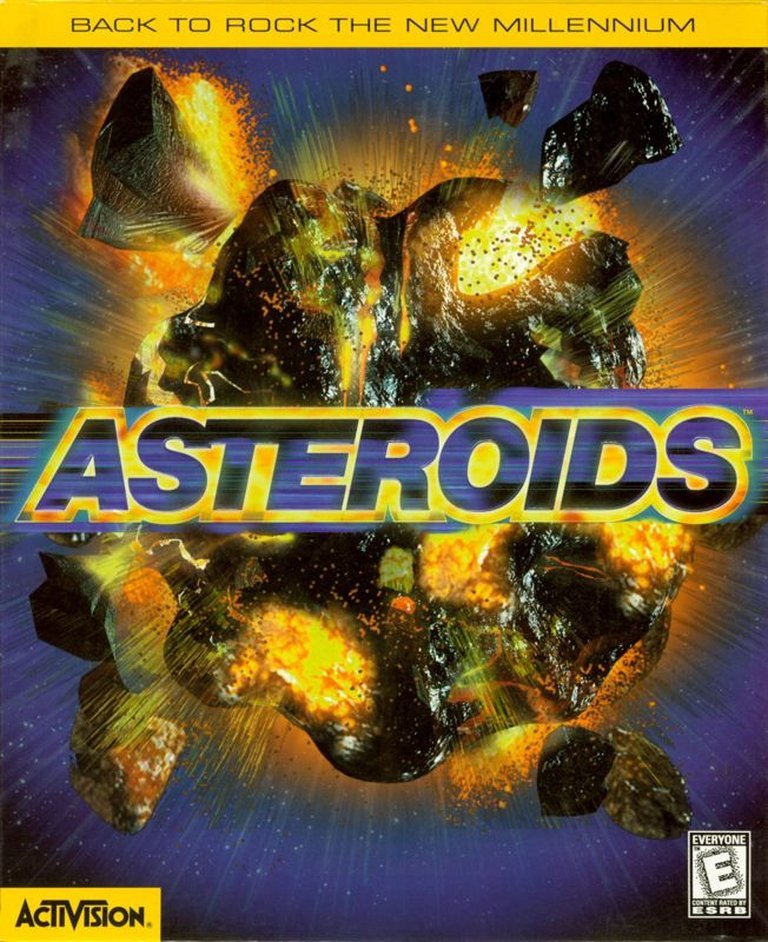
Asteroids is a modern remake of the classic Atari arcade game, blending the original’s top-down shooter mechanics with 3D graphics and new features. As an employee of the Astro-Mining Corporation, players navigate through five distinct zones, each with 15 levels, to clear asteroids and debris while facing various hazards like exploding asteroids, alien eggs, and hostile ships. The game offers three ship types, multiple power-ups, and both single-player and competitive two-player modes, along with a hidden ‘Classic Asteroids’ option for nostalgia.
Gameplay Videos
Where to Buy Asteroids
PC
Asteroids Reviews & Reception
mobygames.com (67/100): Unlike Activision’s earlier remake of an Atari arcade classic, Battlezone, this one stays close to its namesake.
oldpcgaming.net : Well, no, since this remake is little more than a cosmetic update of the arcade game.
Asteroids Cheats & Codes
PC
Enter codes during gameplay or at the main menu.
| Code | Effect |
|---|---|
| issallgood | Grants all power-ups |
| vector | Unlocks the original game |
Asteroids (1998): A Classic Reimagined
Introduction
In the pantheon of video game history, few titles resonate with the same timeless appeal as Asteroids. Originally released in 1979 by Atari, Asteroids became an arcade phenomenon, captivating players with its simple yet addictive gameplay. Nearly two decades later, Activision sought to revive this classic with a 1998 remake, blending nostalgia with modern enhancements. This review delves into the 1998 version of Asteroids, exploring its development, gameplay mechanics, reception, and enduring legacy.
Development History & Context
The 1998 Asteroids remake was developed by Syrox Developments, Ltd. and published by Activision. Unlike its predecessor, which was a groundbreaking vector-based arcade game, the 1998 version aimed to modernize the experience with 3D graphics and additional features. The game was released across multiple platforms, including Windows, PlayStation, Game Boy Color, and Macintosh, showcasing its broad appeal.
The development team, led by Michael Latham and Seth Gerson, sought to retain the core essence of the original while introducing new elements. The game’s narrative is minimalistic, focusing on the player’s role as an employee of the Astro-Mining Corporation, tasked with clearing asteroids and debris from assigned areas of space. This premise, while simple, serves as a backdrop for the game’s primary objective: survival and high-score chasing.
Narrative & Thematic Deep Dive
Asteroids (1998) does not boast a complex narrative. Instead, it relies on the player’s immersion in the gameplay experience. The thematic elements are rooted in the classic arcade tradition, emphasizing skill, reflexes, and strategic thinking. The game’s setting—a vast, open space filled with asteroids and enemy ships—creates a sense of isolation and urgency, driving the player to navigate and survive in a hostile environment.
The absence of a detailed plot or character development is not a detriment but rather a testament to the game’s focus on pure gameplay. The thematic depth lies in the player’s interaction with the game’s mechanics, the thrill of dodging asteroids, and the satisfaction of achieving high scores. This simplicity is a hallmark of classic arcade games, and the 1998 remake successfully captures this essence.
Gameplay Mechanics & Systems
The core gameplay of Asteroids (1998) remains faithful to the original, with the player controlling a spaceship that can rotate, thrust, and fire lasers. The game introduces several enhancements, including multiple ship types, power-ups, and varied asteroid types. These additions add layers of complexity and strategy, making the game more engaging for both newcomers and veterans.
Core Mechanics
- Ship Control: The player’s ship can rotate left and right, thrust forward, and fire lasers. The controls are intuitive, allowing for precise maneuvering in the game’s open space.
- Asteroid Types: The game features a variety of asteroids, including standard asteroids, mined asteroids that explode, indestructible asteroids, fireball comets, crystal asteroids that regenerate, and alien egg asteroids containing deadly space worms.
- Enemy Ships: In addition to asteroids, the player must contend with enemy ships such as Standard and Super Saucers, Asteroids Tugs, Fuel Transports, Hexes, Nuke Drivers, and Vulturoids.
- Power-Ups: The game introduces power-ups like GunSat, Mines, Homing Missiles, Plasma Drill, and Trigger Bombs, which provide temporary advantages and strategic options.
Game Modes and Progression
The game consists of five zones, each with 15 levels. The zones feature different backgrounds and special features, adding variety to the gameplay. The player’s objective is to clear each zone of asteroids and enemies, progressing through increasingly challenging levels. The game supports both single-player and two-player modes, with the latter focusing on competitive scoring.
Innovations and Flaws
The 1998 remake introduces several innovations, including 3D graphics, varied asteroid types, and power-ups. These enhancements modernize the gameplay while retaining the core mechanics of the original. However, the game is not without its flaws. Some critics noted that the controls could be overwhelming, with too many buttons to manage during intense gameplay. Additionally, the power-ups, while varied, could be difficult to distinguish, leading to confusion during play.
World-Building, Art & Sound
The visual and auditory elements of Asteroids (1998) play a crucial role in creating an immersive experience. The game’s 3D graphics, while not groundbreaking by modern standards, were a significant upgrade from the original’s vector graphics. The backgrounds feature burning suns, eerie black holes, and other cosmic elements, adding depth and atmosphere to the gameplay.
The sound design is equally impressive, with laser blasts, asteroid explosions, and ambient space sounds enhancing the player’s immersion. The game’s soundtrack, while minimalistic, complements the gameplay, creating a sense of urgency and excitement.
Reception & Legacy
Upon its release, Asteroids (1998) received mixed reviews from critics. The game was praised for its faithfulness to the original and its modern enhancements, but some critics found it overly complex and lacking in innovation. Despite these criticisms, the game was well-received by fans of the original, who appreciated the updated graphics and additional features.
The game’s legacy is rooted in its ability to capture the essence of the original while introducing modern elements. It serves as a bridge between the classic arcade era and the modern gaming landscape, appealing to both nostalgic players and new audiences. The inclusion of the original Asteroids as a hidden feature further enhances its appeal, allowing players to experience the classic gameplay alongside the modernized version.
Conclusion
Asteroids (1998) is a commendable attempt to modernize a classic arcade game. While it may not have achieved the same level of acclaim as the original, it successfully captures the core gameplay mechanics and adds modern enhancements that appeal to a new generation of players. The game’s faithfulness to the original, combined with its updated graphics and additional features, makes it a worthy addition to the Asteroids legacy.
In the annals of video game history, Asteroids (1998) stands as a testament to the enduring appeal of classic arcade games. It serves as a reminder of the simple yet addictive gameplay that defined the golden age of arcade gaming, while also showcasing the potential for modern enhancements to breathe new life into timeless classics. For fans of the original and newcomers alike, Asteroids (1998) offers a nostalgic yet fresh gaming experience that is both challenging and rewarding.