
- Release Year: 2016
- Platforms: Linux, Windows
- Publisher: Doomsday Games
- Developer: Doomsday Games
- Genre: Action, Simulation
- Perspective: 1st-person
- Game Mode: Single-player
- Gameplay: Shooter, Space flight, Vehicular combat
- Setting: Futuristic, Sci-fi
- Average Score: 63/100
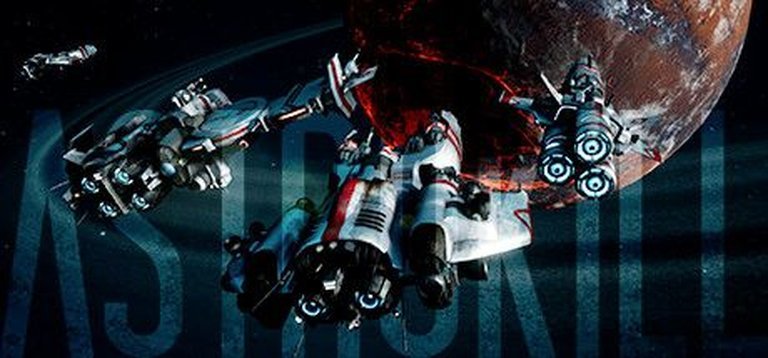
Description
Astrokill is a modern space combat simulator that blends action and realism, drawing inspiration from classics like TIE Fighter and Freespace 2. Players engage in intense ballistic dogfights across a sci-fi setting, piloting various spacecraft—from fighters to medics—for warring factions like the Dominion of Man or the Outer Belt Alliance. The game features 6DoF flight controls, kinetic and energy weapons (including missiles, lasers, and railguns), and strategic squad management. With dynamic AI, zero-G physics, and destructible environments, players must master their ship’s systems, utilize anti-gravity shields, and navigate asteroid fields to outmaneuver enemies in high-stakes space warfare.
Where to Buy Astrokill
PC
Astrokill Guides & Walkthroughs
Astrokill Reviews & Reception
steambase.io (64/100): ASTROKILL has earned a Player Score of 64 / 100.
niklasnotes.com (64/100): Overall, ASTROKILL is praised for its beautiful graphics and engaging combat, but it faces criticism for frustrating controls, a lack of content, and technical issues.
stmstat.com (61/100): I don’t say this often but this game blows hard and feels like a tech demo. Incredibly boring, one of the worst most uninspired games I’ve ever played.
Astrokill: A Modern Space Combat Simulator’s Unfulfilled Promise
Introduction: The Ghost of a Space Shooter’s Past
In the vast, zero-gravity expanse of space combat simulators, Astrokill (2016) emerges as a curious artifact—a game that dared to revive the golden age of TIE Fighter and Freespace 2 while grappling with the realities of modern indie development. Released by the obscure Doomsday Games, Astrokill promised a hard-hitting, physics-driven dogfighting experience, blending ballistic warfare with strategic squad management. Yet, despite its ambitious vision, the game remains a polarizing relic—haunted by its Early Access limbo, technical shortcomings, and the unshakable feeling of unfulfilled potential.
This review dissects Astrokill in its entirety: its development journey, its mechanical depth, its narrative (or lack thereof), and its troubled legacy. Was it a bold revival of classic space combat, or merely a tech demo masquerading as a full experience? Let’s strap in and find out.
Development History & Context: A Labor of Love in the Shadows
The Studio Behind the Stars
Doomsday Games, the one-developer studio helmed by bluemoon (as seen in Steam community posts), operated in near-total obscurity. Unlike larger indie darlings, Astrokill lacked the marketing muscle or crowdfunding hype of contemporaries like Star Citizen or Elite Dangerous. Instead, it was a passion project, built on the bones of Unreal Engine 4 and a deep reverence for 1990s space combat sims.
The game entered Steam Early Access on May 27, 2016, with a roadmap promising:
– A full campaign with branching missions.
– Expanded ship rosters for both the Dominion of Man (the authoritarian regime) and the Outer Belt Alliance (the rebels).
– Enhanced AI, VR support, and Linux compatibility.
Yet, as the years passed, updates slowed. The last major patch (0.9.9.0) arrived in 2019, and by 2022, the developer admitted in a Steam post:
“I need to communicate my progress on this game better (especially when I’m being distracted by life-events).”
The game’s development was abandoned in all but name, leaving it in a state of perpetual incompletion.
The Gaming Landscape of 2016
Astrokill launched into a crowded but niche market:
– Space sims were experiencing a renaissance (Elite Dangerous in 2014, Star Citizen’s persistent alpha).
– Early Access was both a blessing and a curse—players were wary of unfinished games after high-profile disappointments (DayZ, No Man’s Sky at launch).
– VR was emerging as a new frontier, and Astrokill’s support for Oculus Rift and HTC Vive was a selling point.
Yet, unlike its competitors, Astrokill lacked:
✔ A persistent universe (it was mission-based).
✔ Procedural generation (missions were handcrafted).
✔ Multiplayer (strictly single-player).
This made it a hard sell—a game that appealed to purists but struggled to find a broad audience.
Narrative & Thematic Deep Dive: A War Without a Story
The Factions: Dominion vs. Outer Belt Alliance
Astrokill presents a binary conflict:
– The Dominion of Man: A sprawling, oppressive empire with superior firepower.
– The Outer Belt Alliance: A ragtag rebellion fighting for independence.
Problem? There’s no lore, no characters, no dialogue—just a text-based mission briefing before each sortie. The game’s Steam description mentions “characters and dialog” as planned Early Access additions, but they never materialized.
Themes: Realism Over Romance
Where Astrokill excels is in its mechanical storytelling:
– Ballistic warfare dominates—no magic lasers, just kinetic projectiles obeying Newtonian physics.
– GShields (anti-gravity shields) repel bullets but are useless against beams, forcing tactical adaptability.
– Zero-G dogfighting means no artificial drag—momentum is your ally and enemy.
This is a game about mastery, not narrative. It’s Freespace 2’s combat without Freespace 2’s soul.
Gameplay Mechanics & Systems: A Physicist’s Playground
The Core Loop: Dogfight, Die, Repeat
Astrokill’s gameplay revolves around:
1. Choosing a ship class (Fighter, Gunship, Interceptor, Medic).
2. Engaging in 6DoF (six degrees of freedom) combat—no “up” or “down,” just pure spatial awareness.
3. Managing weapons, shields, and squad commands in real-time.
Weapons & Combat: Kinetic Carnage
The game’s ballistic focus sets it apart:
– Machine Guns: High-rate-of-fire, low-damage spam.
– Flak Cannons: Explosive bursts for area denial.
– Railguns: Single-shot, high-velocity snipes.
– Homing Missiles: Lock-on but easily dodged.
– EMP Missiles: Disable enemy shields temporarily.
– Lasers: Ignore GShields but overheat quickly.
The GShield Mechanic is the game’s most innovative (and divisive) feature:
– Uses anti-gravity to deflect projectiles.
– Useless against lasers, forcing players to switch tactics mid-fight.
– Drains energy, requiring careful management.
Squad Management: A Half-Realized Feature
Players can:
– Order wingmen to hold position, guard an area, or rearm.
– Play as a Medic to repair allies mid-battle.
Problem? The AI is inconsistent—sometimes brilliant, sometimes suicidal.
Controls & Customization: A Double-Edged Sword
- Fully rebindable controls (mouse/keyboard, gamepad, joystick, VR).
- True 6DoF flight—no “flight assist” mode, making it punishing for newcomers.
Steam reviews frequently cite:
✅ “The controls are the most realistic I’ve ever used in a space sim.”
❌ “The learning curve is a vertical cliff.”
World-Building, Art & Sound: A Beautiful Void
Visuals: A Feast for the Eyes
- Unreal Engine 4 delivers stunning asteroid fields, nebulae, and capital ship explosions.
- Dynamic lighting makes laser fire and missile trails viscerally satisfying.
- VR support (though rarely used) offers unparalleled immersion.
Sound Design: The Silence of Space
- No music—just engine hums, weapon fire, and radio chatter.
- EMP blasts emit a distinctive crackle.
- Missile locks trigger a tense beeping (a nod to TIE Fighter).
Problem? The lack of a soundtrack makes long sessions feel sterile.
Reception & Legacy: The Mixed Verdict of History
Critical & Commercial Reception
- Steam Reviews: Mixed (53% positive, 45 total reviews).
- Common Praise:
- “The most realistic space combat since Freespace.”
- “GShields are a game-changer.”
- Common Criticisms:
- “Feels like an Early Access tech demo.”
- “No campaign, no story, no reason to keep playing.”
- “Abandoned by the dev.”
Influence & Legacy
Astrokill’s impact is minimal but notable:
– Proved there’s still demand for hardcore space sims.
– Inspired later indie titles (House of the Dying Sun, Everspace 2).
– Demonstrated that physics-based combat can work—if executed properly.
Yet, its abandonment serves as a cautionary tale for Early Access developers.
Conclusion: A Flawed Gem Lost in the Void
Astrokill is not a bad game—it’s an incomplete one. Its physics-driven combat and innovative shield mechanics make it a standout experience for hardcore fans, but its lack of content, abandoned development, and punishing difficulty relegate it to cult obscurity.
Final Verdict: 6.5/10 – “A Diamond in the Rough, Buried Too Deep”
- For hardcore space sim fans: A must-try, if only for the GShield mechanics.
- For casual players: Avoid—the learning curve is brutal, and the lack of content makes it unsustainable.
- For historians: A fascinating case study in Early Access pitfalls.
Astrokill could have been great. Instead, it’s a ghost ship—drifting silently through the cosmos of forgotten games, its engines cold, its potential unfulfilled.
Would I recommend it? Only if you’re willing to forgive its flaws for the sake of pure, unadulterated space combat. Otherwise, wait for a spiritual successor—one that finishes what Astrokill started.
Final Thought:
“In space, no one can hear you scream—but in Astrokill, no one can hear you beg for an update.”