
- Release Year: 2000
- Platforms: Windows
- Publisher: Imagineer Co., Ltd., Taiwan TGL Corporation
- Developer: Gust Co., Ltd.
- Genre: Role-playing (RPG)
- Perspective: Isometric
- Game Mode: LAN, Online Co-op
- Setting: Fantasy
Description
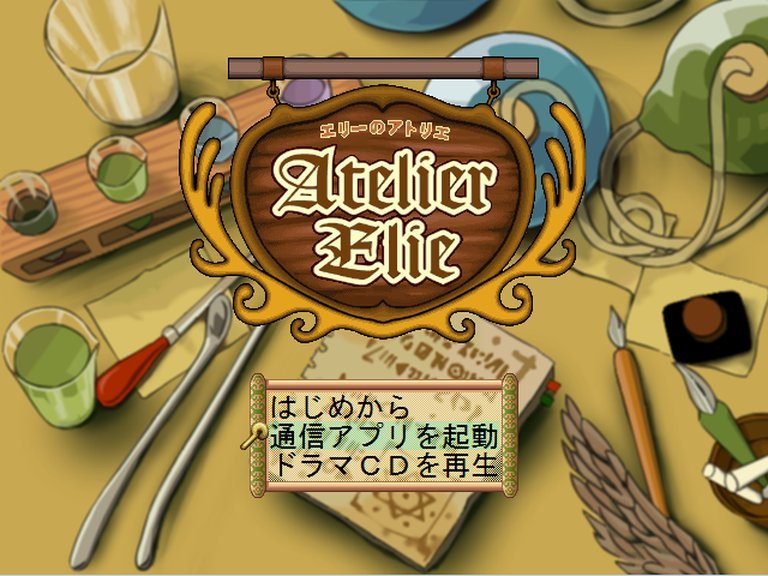
Atelier Elie: Salburg no Renkinjutsushi 2 (Premium Box) is a role-playing game set in the fantasy world of Salburg, where players assume the role of Elfir ‘Elie’ Traum, a novice alchemist attending the Salburg Academy. The gameplay centers on alchemical research, item synthesis, and exploration to gather ingredients, all within a time-management framework, with this PC port featuring enhanced graphics, exclusive story events, and an online communication mode for accepting customer requests.
Gameplay Videos
Atelier Elie: Salburg no Renkinjutsushi 2 (Premium Box) Reviews & Reception
romhacking.net : A great translation of an almost forgotten non-localized gem
Atelier Elie: Salburg no Renkinjutsushi 2 (Premium Box): A Preserved Artifact of the Atelier Series’ Foundational Era
Introduction: The Unlocalized Cornerstone
Nestled within the expansive and beloved Atelier franchise lies a significant, yet for decades Western inaccessible, pillar: Atelier Elie: Salburg no Renkinjutsushi 2. Released in Japan in 1998 for the PlayStation and later reimagined for Windows PCs as the 2000 Premium Box edition, this title represents the critical evolutionary step from Gust’s first experimental foray into the now-iconic alchemy-simulation RPG formula. While its predecessor, Atelier Marie, established the core promise—a young alchemist’s quest against a deadline within a charming academy town—its direct sequel, Elie, refined and expanded that vision with greater narrative ambition, a more expansive world, and systems that would become franchise staples. This review will assert that Atelier Elie (Premium Box) is not merely a sequel but a foundational text whose design philosophies, thematic preoccupations, and structural innovations cast a long shadow over the entire series. Through an analysis of its historical context, deconstruction of its gameplay loops, and appreciation of its preserved legacy (largely thanks to a superlative fan translation), we will uncover why this “Japan-only” gem is an essential study for any serious historian of Japanese RPG development.
Development History & Context: Gust’s adolescence and the Pre-Millennial PC Port
The Atelier series was conceived by developer Gust Co., Ltd., a studio that, in the late 1990s, was carving out a niche for itself with detailed, mechanically rich RPGs that prioritized player-driven synthesis and time management over epic, linear narratives. The original Atelier Marie (1997) was a modest success, but its technical and design limitations were apparent on the PlayStation’s hardware. The development of Atelier Elie for the same platform in 1998 represents Gust’s first true iteration on a successful formula. The technological constraints were significant: the PlayStation’s 3D capabilities were limited, leading to the series’ signature pre-rendered isometric backgrounds and sprite-based character models. This aesthetic choice, born of necessity, became a defining, enduringly charming visual identity.
The Premium Box version, released for Windows on April 28, 2000, is a crucial artifact in itself. This was not a simple re-release but a deliberate “premium” repackaging concurrent with a similar PC port of Atelier Marie. The move to the PC platform allowed for higher resolutions (a major upgrade from the PS1’s 320×240), hinting at the series’ future on more powerful hardware. More importantly, the Premium Box introduced new, exclusive events and a pioneering communication mode. This latter feature allowed players to download “customer requests” via the internet (over dial-up or LAN), completing them for in-game rewards like screensavers and items. This was an exceptionally early, almost proto-live-service experiment for a single-player RPG, attempting to create a persistent, connected community around a niche title in the year 2000. It speaks to Gust’s ambition to foster player engagement beyond the cartridge/disc and reflects the experimental online spirit of the early internet era. The PC port was handled with assistance from publishers Imagineer Co., Ltd. (Japan) and Taiwan TGL Corporation, illustrating the game’s regional distribution strategy focused on East Asian markets.
Narrative & Thematic Deep Dive: From Student to Heroine
The narrative of Atelier Elie marks a significant thematic maturation from its predecessor. The protagonist is Elfir Traum (“Elie”), a serious, kind-hearted girl who enrolls in the Salburg Academy of Alchemy not as a slacker like Marie, but under “special conditions”—a backstory shrouded in tragedy. The core plot is elegantly dualistic:
- The Academic Contest: The Academy holds an annual alchemy competition. For Elie, a new student still earning her place, proving her skill by crafting a remarkable item within the five-year term is her primary academic mandate, mirroring Marie’s goal but with the pressure of entering mid-cycle and needing to prove her worth from the outset.
-
The Personal Quest: Elie is driven by a deeply personal mission: to find the person who saved her life during a deadly plague that ravaged her hometown. This mystery is woven into the world’s lore, connecting her directly to the world’s history and to the events of the first game. The person who saved her was, in fact, Marie, the protagonist of the first game. This creates a profound, respectful link between the two heroines, positioning Elie as both a successor and a peer rather than a replacement.
The supporting cast is expanded and more deeply integrated into the world and Elie’s journey. While Marie’s story was largely about building a found family of adventurers, Elie features characters with more complex ties to Salburg and its political/social fabric. Figures like the mature and supportive Eisel, the boisterous Nordis, and the enigmatic Romauge have their own subplots that enrich the town’s atmosphere. The dialogue, as gleaned from the fan translation’s quality, is praised for its warmth, humor, and emotional beats, successfully balancing the game’s lighter “slice-of-life” alchemy shop sim elements with a more urgent, personal narrative drive.
Thematically, the game explores legacy and inheritance—Elie inheriting Marie’s mantle and Salburg itself. It also deepens the series’ core theme of alchemy as a force for good and understanding, moving beyond mere item creation to healing (the plague cure) and community support (town requests). The time-sensitive structure (the five-year term) imbues every action with weight, a mechanic that directly reinforces the theme of making the most of one’s given time and opportunities.
Gameplay Mechanics & Systems: The Refined Loop
Atelier Elie does not reinvent the wheel but polishes every spoke. The core loop, established by Marie, remains: explore dungeon → gather ingredients → synthesize items → fulfill requests/earn money → improve equipment/abilities → repeat within a time budget. Elie refines this:
- Alchemy System: The synthesis menu is more intuitive and feature-rich. The “quality” and “effect” of an item are determined by the ingredients used and the order of combination, with the introduction of more complex “traits” that carry over and can be compounded. This system encourages deep experimentation and cataloging, forming the game’s intellectual core.
- Combat: Turn-based battles occur on a small, isometric grid atop the exploration field. Party composition is crucial. Elie herself is physically weak, relying on synthesized bombs, healing items, and status-effect tools. Her adventurer companions form the frontline. The system is tactical but simple; the major flaw, noted by players of the fan translation, is a notoriously punitive escape mechanic—failure is often assumed, making every random encounter a serious commitment.
- Time Management: The calendar system is even more demanding. Actions like gathering, battling, and synthesizing consume in-game hours and days. The annual contests and town events (like the “Festival of the Harvest Moon”) create tiered deadlines. This creates a palpable sense of pacing and consequence, where inefficiency can lead to a failed ending.
- Premium Box Additions: The Communication Mode is the defining new feature. By connecting online, players receive time-limited “customer requests” for specific high-quality items. Completing these yields unique rewards, effectively adding a meta-goal layer that encouraged (in 2000) internet connectivity to extend playtime and community interaction.
- Flaws: The game’s difficulty can be brutally uneven. Certain late-game monsters have attack patterns that can wipe the party before effective countermeasures are synthesized. The escape issue compounds this. The user interface, while functional, is still rooted in the PS1/PC transition era, with menu navigation that feels clunky by modern standards.
World-Building, Art & Sound: The Salburg Aesthetic
Salburg, the fictional European-inspired town, is more than a hub; it’s a character. The isometric perspective allows for a beautifully detailed, lived-in feel. The town square, the alchemy academy, the bustling bar (where requests are taken), and surrounding forests, caves, and ancient ruins are rendered with a distinct, soft anime aesthetic that was Gust’s hallmark. Character portraits during dialogue are expressive and charming.
The sound design, composed by the legendary Shinji Hattori and others, is a high point. The soundtrack masterfully complements the mood: gentle, melodic town themes contrast with tense dungeon exploration music and triumphant combat fanfares. Tracks like “Solo [Legend of the Moon]” (noted in the fan translation bug report) are memorable and evocative, underscoring the game’s fairy-tale heart. The combination of a quiet, methodical pace with an underlying magical melody creates a uniquely cozy yet epic atmosphere.
The Premium Box PC enhancement in higher resolution made these visuals sharper, but the art direction’s timeless quality is what truly endures. It’s a world that feels simultaneously small and intimate yet full of discovery, perfectly suiting the gameplay’s focus on meticulous, personal creation rather than world-saving.
Reception & Legacy: From Regional Success to Cult Classic
At the time of its 1998 PS1 release, Atelier Elie was a commercial success in Japan, solidifying the Atelier brand. Its 2000 Premium Box PC release was a niche product, catering to dedicated fans and PC gamers in Japan and Taiwan. Critically, it was praised for its refined mechanics and deeper story, often considered the peak of the “Salburg trilogy” (including Marie and Lilie). However, its Western reception was non-existent due to a lack of localization—a common fate for many mid-tier JRPGs of the era.
Its legacy is twofold:
- Series Evolution: Elie established the “direct sequel with a new protagonist” model and proved that the alchemy RPG formula could sustain narrative depth and improved mechanics. It directly influenced subsequent entries, from the Arland series (Rorona, Totori) to the more recent Ryza games, which all trace their lineage to the time-based synthesis and cozy town life perfected here.
- Preservation Through Fan Efforts: For over two decades, the game was a “lost classic” to non-Japanese speakers. The 2018 fan translation patch for the PS2 remaster Marie to Elie no Atelier: Salburg no Renkinjutsushi 1 & 2 (which includes both games with enhanced graphics) was a monumental event. As the reviewer “Swetzie” attested, the translation quality is “top-notch…better done than some of the later Atelier localizations,” and the patch itself restored cut content and fixed bugs present in the official remaster. This effort did not merely translate text; it archaeologically preserved a key chapter in JRPG history, allowing a global audience to finally experience the game. The fact that it runs flawlessly on modded hardware underscores the dedication of the preservation community.
Conclusion: An Indispensable Artifact
Atelier Elie: Salburg no Renkinjutsushi 2 (Premium Box) is a masterclass in iterative game design and a poignant snapshot of late-90s Japanese RPG development. It takes a promising premise and executes it with greater confidence, narrative weight, and systemic depth. Its flaws—the punishing difficulty spikes and the dated UI—are balanced by its profound strengths: an irresistibly cozy world, a beautifully balanced alchemy sandbox, a soundtrack that captures a specific magical realism, and a story about legacy and personal growth that resonates.
While the Premium Box version’s online features are now a historical curiosity, they represent a fascinating “what if” in connected single-player experiences. Its true significance, however, lies in its preservation and reevaluation. Thanks to the fan translation, this is no longer a obscure Japanese exclusive but a readily accessible piece of gaming heritage. It stands as a testament to Gust’s early design ingenuity and the enduring power of a well-crafted, intimate RPG. For the historian, it is an essential study in franchise evolution. For the player, it is a deeply rewarding, often challenging, and ultimately heartwarming experience that proves the timeless appeal of making potions in a snow-dusted academy town. It is not just a sequel; it is a cornerstone, and its place in video game history is now, rightfully, secure.