
- Release Year: 2023
- Platforms: Nintendo Switch, PlayStation 4, PlayStation 5, Windows
- Publisher: Koei Tecmo America Corp., Koei Tecmo Games Co., Ltd.
- Developer: Gust
- Genre: Role-playing
- Perspective: Diagonal-down
- Game Mode: Single-player
- Gameplay: Crafting, Exploration, Time management, Turn-based combat
- Setting: Fantasy
- Average Score: 76/100
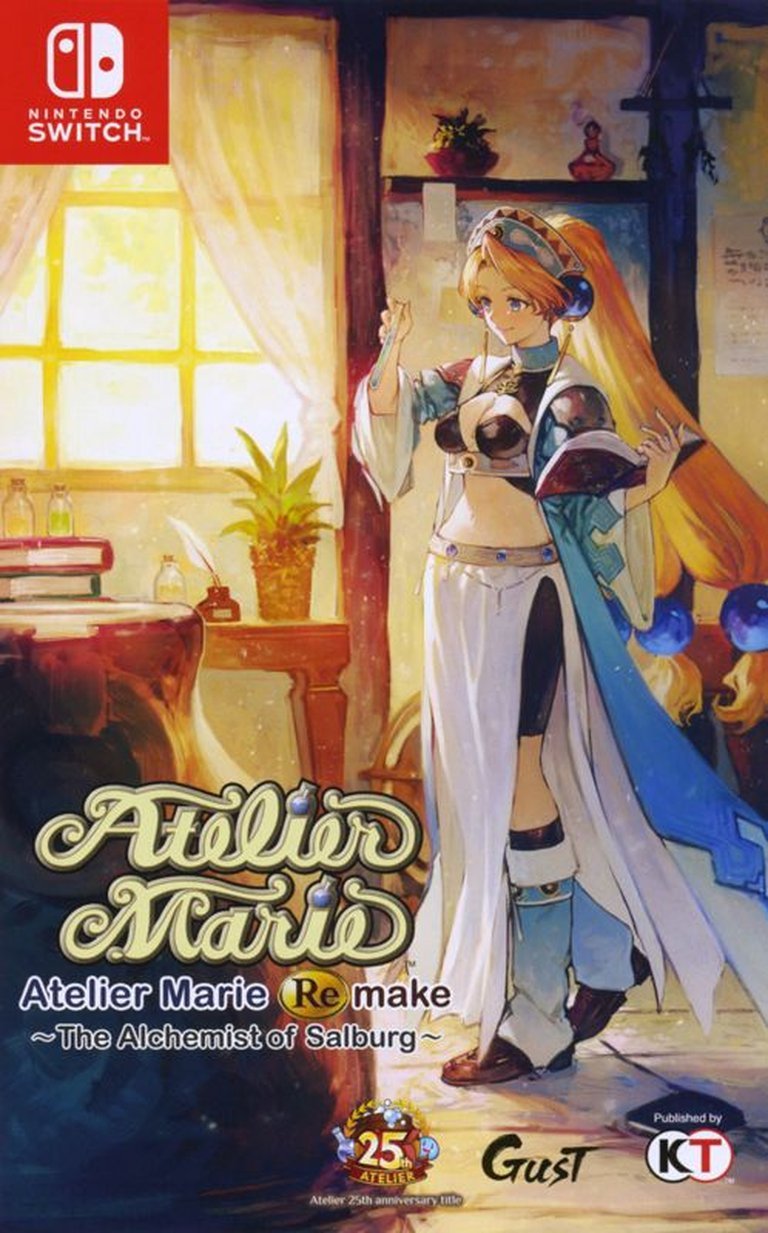
Description
Atelier Marie Remake: The Alchemist of Salburg is a fantasy Japanese-style RPG remake set in the enchanting town of Salburg, where players take on the role of Marie, a determined young alchemist striving to master her craft amid the challenges of a magical school and community. Featuring turn-based combat, deep alchemy synthesis mechanics, and a vibrant anime-inspired art style, the game blends exploration, item creation, and character-driven storytelling in a classic JRPG framework.
Gameplay Videos
Where to Buy Atelier Marie Remake: The Alchemist of Salburg
PC
Atelier Marie Remake: The Alchemist of Salburg Free Download
Atelier Marie Remake: The Alchemist of Salburg Guides & Walkthroughs
Atelier Marie Remake: The Alchemist of Salburg Reviews & Reception
nintendolife.com : it’s an impressingly enjoyable RPG adventure
metacritic.com (76/100): This might be one of the coziest ‘cozy games’ in years.
rpgamer.com : Atelier Marie Remake is a loving reflection on how far the franchise has come.
Atelier Marie Remake: The Alchemist of Salburg: Review
Introduction: The Genesis of a Gentle Revolution
To understand the modern Atelier series—with its intricate alchemy puzzles, character-rich narratives, and sprawling open worlds—one must first travel back to a modest workshop in the medieval-inspired city of Salburg. Atelier Marie Remake: The Alchemist of Salburg is not merely a re-release; it is an archaeological excavation of game design, a meticulously preserved artifact that reveals the foundational DNA of one of Japan’s most enduring RPG franchises. Originally locked to Japanese shores for 26 years, this 2023 remake serves as both a nostalgic homecoming for veteran fans and a historical document for newcomers. Its thesis is deceptively simple: that profound engagement can stem from the quiet pursuit of personal mastery, not world-saving grandeur. In an industry saturated with epic stakes, Atelier Marie whispers that the most satisfying adventure is the one where you merely strive to graduate on time, bake a decent cookie, and be a good friend. This review will dissect how a game that could easily feel archaic instead emerges as a timeless, if deliberately unambitious, treasure—a “cozy” RPG that helped define the very genre it helped birth.
1. Development History & Context: From a Single Vision to a Franchise Pillar
Atelier Marie was born not from a corporate mandate, but from the singular passion of a young designer with something to prove. Shinichi Yoshiike, then an aspiring developer, drafted the core concept document for Atelier Marie before he was hired by the modest studio Gust in 1996. His vision was radical for its time: a low-stakes, character-driven fantasy centered on mundane alchemy—crafting everyday tools and medicines—inspired by a university course on historical alchemy. In an era dominated by Final Fantasy’s operatic save-the-world sagas, Yoshiike sought to create a “light-hearted, fluffy” experience, drawing narrative inspiration from classics like Anne of Green Gables.
The technological constraints of the original PlayStation (1997) were severe. The team worked with pre-rendered 2D backgrounds, limited sprite animations, and a miniscule memory budget. Yet, these limitations forced elegant solutions. The iconic, super-deformed (chibi) character sprites became a stylistic signature, not a compromise. The menu-driven exploration and synthesis were born from a need to conserve resources, but they fostered a gameplay loop focused on resource management and mental planning over real-time action. Artist Kohime Ohse’s pastoral, “pastoral” art style—inspired by a research trip to medieval Germany—provided the cohesive, warm aesthetic that would become the series’ hallmark. The original sold over 212,000 units in Japan by 1997’s end, resonating powerfully with young female gamers—a demographic largely ignored by the male-centric RPG market of the time.
The 2023 remake, spearheaded by series producer Junzo Hosoi to celebrate the series’ 25th anniversary, is a direct response to the modern audience raised on the more complex Ryza and Sophie trilogies. Development began in early 2022, wrapping alongside Atelier Sophie 2. The stated goal was accessibility: to lower the barrier to entry without betraying the original’s spirit. This meant introducing Unlimited Mode (removing the five-year deadline), more explicit tutorials (“Professor Ingrid’s Tasks”), and adding new social events. Yet, the team consciously preserved the original’s core loop, even incorporating the original 1997 voice recordings in some contexts as a “nostalgic” touch. The remake is a bridge, built not to erase the past, but to make it walkable for a new generation.
2. Narrative & Thematic Deep Dive: The Quiet Triumph of Being “Good Enough”
Plot & Structure: A Calendar-Driven Slice-of-Life
The plot is deliberately thin. Marie (Marlone) is a terrible student at the Royal Academy of Magic, given one last chance: to run an atelier and synthesize an item of “adequate quality” within five in-game years (roughly 10-15 real-time hours). There is no dark lord threatening the kingdom (though a optional one exists), no prophecy, and no grand conspiracy. The central conflict is internal and academic: Marie’s struggle to overcome her own clumsiness and prove her worth. The narrative is delivered through short, frequent text-based events and visual novel-style cutscenes in the remake.
The genius lies in the time-limit mechanic. Every action—gathering, synthesizing, traveling—consumes days. This transforms the plot from a linear story into a player-authored schedule. Will you spend the first month grinding for money to hire a better party, or will you rush to fulfill that tavern request for a Healing Herb to boost your reputation? The “story” is the aggregate of these decisions, culminating in one of multiple endings based on completion metrics and relationship levels with key characters like the ailing childhood friend, Schea Donnerstag.
Characters & Relationships: Archetypes with Heart
The characters are simple archetypes—the stern teacher (Ingrid), the loyal heiress (Schea), the stoic knight (Enderk)—but the remake’s new social events add crucial depth. You can now trigger specific scenes by visiting characters at specific times with specific items, slowly peeling back layers. The relationship system is not about romance, but platonic camaraderie and professional respect, a deliberate choice by Yoshiike to appeal to a broad audience. Your investment in these characters stems from the time you choose to spend with them, making their support in battles or their gratitude for a crafted item feel earned.
Themes: Wholesome Capitalism & the Dignity of Labor
This is the game’s most profound and overlooked layer. Atelier Marie is a simulation of petite-bourgeois aspiration. Marie is a small business owner. She must:
* Manage capital (earn and spend “Cole” currency).
* Invest in tools (buy better utensils to reduce synthesis failure rates).
* Hire labor (party members, with costs scaling with their “hiring distance”).
* Fulfill market demand (tavern requests that act as quests with deadlines).
* Produce goods (synthesis with material costs and fatigue risks).
It’s a cozy, gamified version of entrepreneurship, where failure is merely a reputation hit and bankruptcy is impossible. The theme is that competence and diligence are their own rewards, a stark contrast to the isekai power fantasies that would later dominate the genre. The game reinforces that you don’t need to be “the chosen one”; being a reliable, skilled craftsperson in your community is a valid and noble path. The final exam is not to slay a demon lord, but to create something fit for a professor’s approval—a deeply human, relatable goal.
3. Gameplay Mechanics & Systems: The Elegant Simplicity of a Prototype
Core Loop: The Three-Act Cycle
Each in-game day is a resource. The optimal loop is rigid yet flexible:
1. Tavern Check: Accept/decline timed requests (primary income/reputation source).
2. Gathering/Exploration: Travel to a field (cost: days), spend days collecting materials or encountering enemies.
3. Synthesis: Return to the atelier, spend days combining ingredients into items.
4. Delivery/Interaction: Turn in requests, visit characters to trigger events or lower hire costs.
This loop is addictively cyclical. The tension comes from optimizing the calendar. Can you finish this “Medium Healing Potion” request in 15 days? You have 20 days until the deadline, but you need 2 days to travel to the forest, 1 day per herb (you need 4), 2 days back, and 3 days to synthesize. The math is simple, the stakes are gentle, but the satisfaction of a perfectly planned run is immense.
Alchemy: The Born-Simple Heart
Compared to later series entries with their complex ingredient placement grids, traits, and quality stats, Marie’s synthesis is refreshingly straightforward. If you have the ingredients and the recipe, you can craft it. The only wrinkle is fatigue: each synthesis increases Marie’s fatigue meter, raising failure chance. This introduces a soft limit—you can’t synthesize endlessly in one day—but it’s easily managed with rest. There is no “min-maxing” of effects; an Herb of Healing is always an Herb of Healing. This simplicity is a double-edged sword: it’s accessible and eliminates analysis paralysis, but veterans may find it bare. The remake’s addition of a complete recipe log and “Professor Ingrid’s Tasks” guides new players without overcomplicating.
Combat & Party Management: Functional, Not Focal
Battles are turn-based with a simple positional system (front/middle/back rows affecting attack/magic/defense stats). Marie is non-negotiable in the party; you hire up to two allies from the tavern. Their cost to hire is dynamic, based on how far you’ve traveled from their home base. Befriending them via events lowers their fee, creating a direct link between social and mechanical investment. Combat is trivial for most of the game; its purpose is to provide material drops and minor XP. The remake’s auto-battle and 3x speed toggle are essential quality-of-life features that let you breeze through fodder encounters. The only meaningful challenge is the optional “Dark Lord’s Tower,” a late-game dungeon with tough bosses that offer unique endings.
The “Unlimited Mode” & Modern Accommodations
This is the remake’s most significant systemic addition. By removing the five-year hard deadline, it transforms the game into a pure salon sim. Players can savor rare seasonal ingredients, slowly build relationships, and complete every event without pressure. It’s an acknowledgment that modern players, accustomed to Stardew Valley or Story of Seasons, may find a hard timer anathema to relaxation. However, the mode slightly breaks the original’s intended pacing—the gentle pressure of the calendar was key to its “leisure adventure” design. The new “Story Log” in the menu, which tracks all possible events and their triggers, is another masterstroke, preventing players from missing content due to cryptic original design.
Flaws: Echoes of 1997
- Gathering Mini-Games: The remake replaces random chance-based gathering success with timed mini-games (e.g., catching a mouse in a maze). While conceptually fun, they are frequent and often monotonous, feeling like busywork rather than rewarding diversions.
- Minimal Deep Customization: There are no character classes, skill trees, or meaningful equipment choices. Stats rise passively via leveling and “Knowledge” (a general synthesis proficiency stat). This can feel shallow.
- Reputation System’s Opacity: It’s often unclear how exactly your reputation score changes with townfolk, making optimization guesswork.
4. World-Building, Art & Sound: A Pastoral Dream in Plastic and Polygons
Setting & Atmosphere: The Cozy Kingdom of Salburg
Salburg is a compact, idyllic hub. The remake expands it into a fully explorable 3D town, but it remains a diagrammatic space—a few key locations (Tavern, Shop, Ingrid’s Office, Forest, Cave) connected by simple paths. There is no sprawling overworld; it’s a conceptual map of a cozy, safe kingdom. The atmosphere is one of unhurried domesticity. The most pressing concerns are a friend’s cough and a shopkeeper’s request for a hair tonic. This deliberate lack of epic scale is the game’s greatest strength; it makes the world feel manageable, intimate, and real.
Visual Design: Chibi as Canon
The remake’s visual philosophy is a faithful translation of sprites to polygons. Characters are rendered in a low-poly, toy-like chibi style with large heads and stubby limbs, directly emulating the original’s 2D sprites. This is a brave choice—it eschews the more anime-realistic style of the Ryza games. The result is a diorama-like aesthetic. Environments have a clean, plastic sheen with soft lighting and depth-of-field effects, making Salburg look like a crafted set piece. It’s charming and consistent, though some may find it “cheap” compared to modern JRPGs. The 2D event illustrations, redrawn by Benitama, are lush and expressive, perfectly capturing the series’ signature blend of cute and delicate.
Sound Design: A Dual-Timeline Score
The remake includes two full soundtracks: the original PS1 compositions by Daisuke Achiwa and Toshiharu Yamanishi, and a new arrangement by Atelier veteran Kumi Tanioka. The original score is synth-heavy, innocent, and slightly melancholic—a perfect acoustic match for the 1997 pixel art. Tanioka’s rearrangement is more orchestral and buoyant, adding layers and warmth without losing the melodies’ core identity. Both are exceptional and serve as a musical bridge between eras, highlighting how the series’ audio identity has remained remarkably stable. The voice acting (Japanese only) is a mix of original and new recordings, with the original’s slightly stiff delivery retained as an archival curiosity.
5. Reception & Legacy: From Cult Classic to Canonized Classic
Initial Reception (1997–2005)
The original Atelier Marie was a commercial success in Japan (212k+ units in 1997) but a niche oddity to Western critics. Its focus on synthesis and time management was seen as esoteric, even “boring,” compared to active combat epics. Famitsu gave it a middling 30/40. Yet, it cultivated a fiercely loyal fanbase, primarily women, who appreciated its cozy, goal-oriented gameplay. Its success spawned two direct sequels (Atelier Elie, Atelier Lilie) and numerous spin-offs, cementing the “Salburg trilogy” as the foundation of the entire franchise.
Modern Reception (2023 Remake)
The remake’s critical reception is overwhelmingly positive but measured. It holds a 76% on Metacritic (75+ critic reviews) and a “Very Positive” user rating on Steam (89% of 295 reviews). The consensus is succinct: “A superb update of a classic, but its simplicity shows its age.”
Praises:
* Visual & Audio Revitalization: The 3D chibi models and dual soundtracks are universally lauded as faithful and beautiful.
* Preservation of Core Charm: Critics repeatedly use words like “cozy,” “wholesome,” “relaxing,” and “charming.” The low-stakes narrative and compulsive time-management loop are highlighted as strengths.
* Gateway Drug: Many reviewers (Hardcore Gamer, RPG Site) call it the perfect entry point for curious newcomers due to its short runtime (~10 hours) and simple systems. Nintendo Life’s “must-buy for fans” verdict is common.
* Quality-of-Life Additions: The Unlimited Mode, Story Log, and improved UI are cited as thoughtful, non-intrusive modernizations.
Criticisms:
* Price-to-Length Ratio: The most frequent critique, especially in European press (Everyeye.it, GameQuarter). At a near-full-price €50/$50 for a ~10-hour game, many feel it’s overpriced, urging players to wait for a sale.
* Dated Gameplay for Veterans: Fans of the Arland or Mysterious sub-series find the alchemy too simplistic and the time pressure too restrictive. Touch Arcade explicitly states it’s not the best starting point for new players—Ryza is.
* Repetitive Mini-Games & Combat: The new gathering mini-games are often called “chores.” Combat is dismissed as “brainless” and “unimportant.”
* Simple Story & Characters: Even with new events, the narrative is called “thin,” “cartoonish,” and “barely there” compared to later entries.
Legacy & Influence
Atelier Marie’s legacy is profound but subtle. It established the series’ non-negotiable pillars:
1. Crafting as Core Loop: Alchemy/synthesis is not a mini-game; it is the central pillar around which all other systems orbit.
2. Time as a Resource: The calendar system, refined over decades, remains a signature (even if later games like Ryza made it optional).
3. “Cozy” Anti-Epic: It proved an RPG could be about personal, local growth rather than global salvation.
4. Female-Centric Design: Its success with female gamers in 1997 paved the way for the series’ enduring demographic.
5. Industrial Template: The “workshop management + exploration + relationship-building” trifecta is now a recognized subgenre (“cozy sim-RPG”).
The remake itself is a cultural repatriation. For 26 years, Western fans could only read about this origin story. Its release allows a complete historical understanding of the series. It answers the question: “Where did this come from?” The answer is: a scrappy, simple, heartfelt game about a girl trying not to fail.
6. Conclusion: A Flawed but Foundational Artifact
Atelier Marie Remake: The Alchemist of Salburg is a textbook case of a product evaluated incorrectly if judged by contemporary standards. It is not Atelier Ryza 4. It does not have 100+ hours of content, deep crafting puzzles, or a sprawling cast with melodramatic backstories. To demand that is to miss the point entirely.
Judged on its own terms—as a preservation of a 1997 design philosophy and a gentle introduction to the series’ soul—the remake is a resounding success. It is a game that understands its own identity: a leisure adventure. Its “playtime” is not a measure of content, but of the number of times you can fit a satisfying little cycle of “gather, craft, deliver, chat” into an evening. The time pressure is a metronome, not a guillotine. The simplicity of alchemy is a feature, not a bug—it leaves room for the player to project their own satisfaction onto the act of creation.
Verdict: Atelier Marie Remake is an essential historical experience for any serious student of RPG design and a highly recommended, bite-sized delight for fans of cozy, management-focused games. Its 7.5/10 MobyScore is fair—it loses points for its steep asking price and mechanics that feel archaic next to its descendants. But it gains immense points for its irrepressible charm, its flawless preservation of tone, and its role as the foundational stone of a beloved franchise. It is not the pinnacle of the Atelier series; it is the crucible from which that pinnacle was forged. For that reason, it earns its place not just as a remake, but as a vital piece of interactive history. Recommended for series fans and curious newcomers with the caveat to wait for a sale if price is a primary concern.