
- Release Year: 2004
- Platforms: PlayStation 2, Windows
- Publisher: Eidos Interactive Limited, Noviy Disk, Sony Computer Entertainment America Inc., Sony Computer Entertainment Europe Ltd.
- Developer: Eurocom Developments Ltd
- Genre: Sports
- Perspective: Third-person
- Game Mode: Hotseat, Single-player
- Gameplay: Analog control, Button mashing, Dance pad, Pace management, Routine selection, Timing-based, Wind adjustment
- Setting: 2004, Athens, Olympic Venues
- Average Score: 52/100
Description
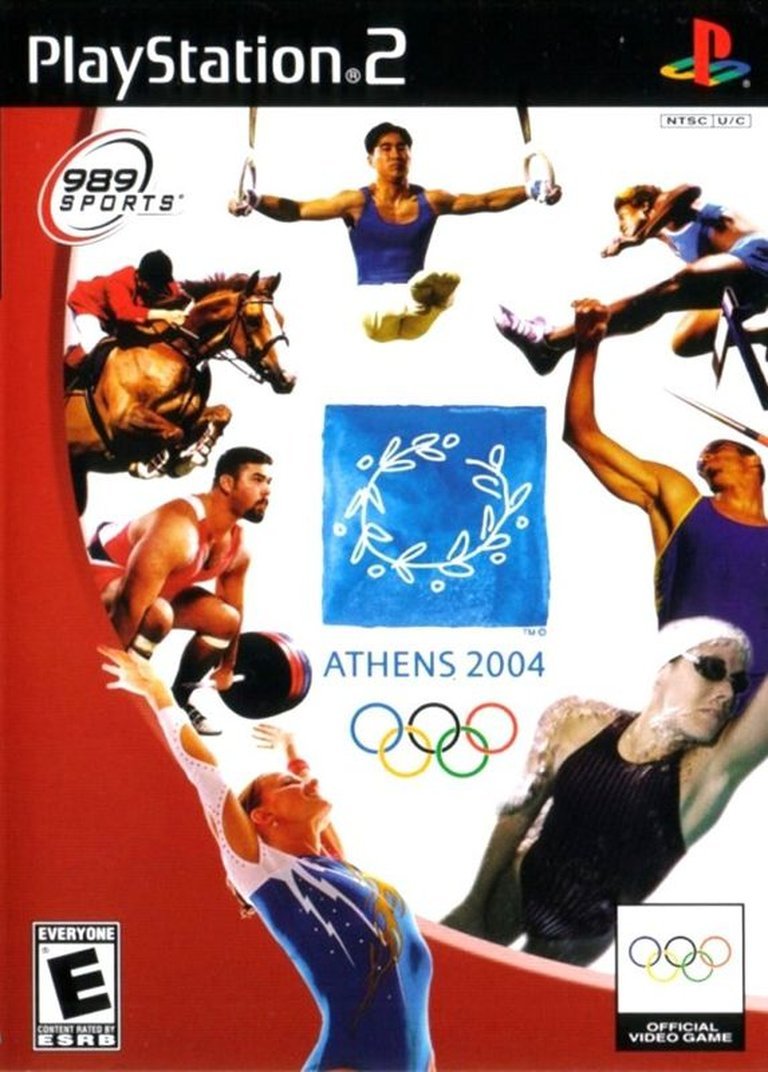
Athens 2004 is the official video game of the Games of the XXVIII Olympiad held in Athens in 2004, featuring 25 events across 8 sports like athletics, swimming, and gymnastics. Set in authentic venues including the Olympic Stadium and Panathinaiko, it includes 64 nations and blends classic button-mashing gameplay with event-specific twists, offering arcade and competition modes for 1-4 players.
Gameplay Videos
Where to Buy Athens 2004
PC
Athens 2004 Free Download
Athens 2004 Cracks & Fixes
Athens 2004 Patches & Updates
Athens 2004 Mods
Athens 2004 Reviews & Reception
metacritic.com (61/100): Athens 2004 maybe mostly a button-mashers paradise, but the game is also a great deal of fun.
monstercritic.com (41/100): I see absolutely no point to this game.
ign.com (45/100): My wrists feel like they are burning.
Athens 2004 Cheats & Codes
PlayStation 2
Enter button sequences at the main menu.
| Code | Effect |
|---|---|
| Up, X, Square, Triangle, Left, Right, Select | Unlocks Balance Beam event and new events |
| B4336FA9 4DFEFB79 | Must Be On |
| 3FAA4601 435CFF2E | Must Be On |
| E5EDEF19 0AAB790E | Must Be On |
| 58BEBF8B 790AB918 | Must Be On |
| D39FE30B 8A9B2AC9 | Infinite Breath |
| D6CBCA96 8334B0B7 | Infinite Breath |
| 9547EFF1 30A79C7A | Infinite Breath |
| EACB4AD7 41FDA517 | Infinite Strength |
| B5335E1A A2C56137 | Infinite Strength |
| 72CF91B2 304450C7 | Always Low Time |
| 12072C3E 932245A4 | Max Strength |
| B0728488 D2307784 | Max Strength |
| 91DF5617 CF96451B | Max Strength |
| 48C04254 4E361EB8 | Infinite Ammo |
Athens 2004: The Button-Masher’s Last Stand
Introduction: The Gold Medal of Mediocrity
The 2004 Summer Olympics in Athens represented a grand return to the birthplace of the Games, a spectacle of modern athleticism infused with ancient reverence. For video game publishers, it presented an unmissable licensing opportunity. Athens 2004, developed by Eurocom and published by Sony Computer Entertainment for the PlayStation 2 (with a Windows port by Eidos Interactive), arrived as the official game of the XXVIII Olympiad. It promised to bring the grandeur of the event into living rooms worldwide. Yet, from its very design philosophy, it was trapped in the past. This review argues that Athens 2004 is a fascinating historical artifact—a game that encapsulates the dying gasp of the classic “button-masher” sports genre just before motion controls would revolutionize athletic simulations. It is a title of stark contradictions: technically competent yet creatively inert, packed with events yet hollow in spirit, and a multiplayer party game that utterly fails to capture the singular human drama that defines the Olympics themselves.
Development History & Context: A Legacy Forged in Repetition
The Studio and the Vision: Eurocom Developments Ltd., the developer, was not new to the sports genre. Following two games from ATD, they inherited a mandate from Sony to create the official Olympic title. The vision, as described in the official MobyGames synopsis, was deliberately retro: “kept most of the gameplay still inspired by the old button-mashers of the early 80s.” This was not an attempt to innovate but to recapture the simple, twitch-based fun of Konami’s Track & Field (1983) and Epyx’s Summer Games. In an era where sports simulations were becoming complex statistical affairs (Madden, FIFA), Athens 2004 positioned itself as an accessible arcade experience.
Technological Constraints and Design Choices: The game was built using Eurocom’s proprietary EngineX/EngineXT for the PS2. The source material indicates a focus on functionality over flair. Animations, as noted by multiple critics (e.g., Games TM citing “rough in-game visuals and limited animation”), were serviceable but not state-of-the-art. The technological “constraint” was less about hardware limits and more about a conscious design decision to prioritize the core button-mashing loop, which required minimal animation complexity. The inclusion of dance pad support (“a special mode developed with dance mats in mind”) was a nod to the era’s peripheral craze (DDR, EyeToy), but its implementation was limited to only 10 events, a token gesture rather than an integrated revolution.
The Gaming Landscape of 2004: The early 2000s were a transitional period for sports games. While simulation franchises dominated annual releases, the pure, pick-up-and-play arcade sports game had a niche but loyal audience. Athens 2004 entered a market with little direct competition for the Olympic license, but it was competing against the ghost of Track & Field and the memory of Sydney 2000. Its release window was critical—tied directly to the summer games themselves, creating a hard deadline that likely fostered a “get it out the door” mentality. This urgency is palpable in the final product: technically functional, occasionally charming, but fundamentally underdeveloped.
Narrative & Thematic Deep Dive: The Athlete That Wasn’t There
Athens 2004 has no traditional narrative. There is no story mode, no career path beyond a barebones “Champion mode” that simply strings all events together. The thematic void is precisely the point of analysis. The game’s failure is not in what it includes, but in what it utterly omits: the human element.
The Void of Personality: The official license granted access to the Olympic rings, the mascots Phevos and Athena (featured on load screens), and the real stadiums (the Olympic Stadium and Panathinaiko). Yet, it granted no likeness rights to actual athletes. As the player review on MobyGames astutely laments, the game is “vanilla. It’s inoffensive. All the countries are equal and there is no emphasis on individual athletes—no Michael Phelps, no Paul Hamm, no Svetlana Khorkina.” The Olympics, in reality, are a theater of personal journeys—underdogs, reigning champions, national heroes. Athens 2004 reduces this to a generic contest between stock athletes. You select a nation from a list of 64, but this choice is purely cosmetic, affecting only the jersey color. The absence of national anthems (noted as a glaring omission in multiple reviews) further severs the link to the patriotic fervor that is core to the Olympic experience.
Missed Historical Drama: The 2004 Athens Games were themselves dramatic, marked by judging controversies, surprising upsets, and the return of the Games to their ancestral home. The game captures none of this “magic and grandeur.” There is no sense of place—Athens is merely a logo and a few stadium skins. The commentary, while competent, is repetitive and often nonsensical, failing to build tension or narrative context. Events occur in a vacuum. A disqualification in the long jump (triggered by a fault) is met with a generic crowd boo, not the specific drama of a favored contender’s mistake. The game treats the Olympics not as a global human story, but as a decentralized series of abstract mini-games.
Gameplay Mechanics & Systems: The Rhythm of Repetition
The core of Athens 2004 is its control scheme, a direct lineage from the 1980s. The “X and O” button-mash is the default for most events. The analysis must separate the events into three categories: the perpetually flawed button-mashers, the clever variations, and the failed experiments.
The Button-Masher Core (The Flawed Majority): Sprints (100m, 200m, 400m) and all swimming events (freestyle, breaststroke, backstroke, butterfly) rely on rapid, alternating presses of X and O. The swimming events add a breath button (L1), creating an insurmountable coordination challenge that many reviewers found “unplayable.” The player review succinctly states: “I found all of the swimming events to be unplayable, because I couldn’t sustain the XOXOXOX pattern and still breathe.” This exposes the genre’s fundamental problem: it poorly translates the aerobic, paced nature of endurance sports into a frantic, arm-tiring input. Weightlifting (+105kg clean & jerk) also falls here, requiring a masher to build a power meter before a timed press, but the masher element is described as “torture” and a point of failure for many.
Innovative Twists (The Bright Spots): A handful of events break the mold, showcasing Eurocom’s capacity for creative input design.
* Middle-Distance Running (800m, 1500m): The smartest innovation. Players use the analog stick to control pace, managing an energy bar. The strategy is to conserve energy for a “second wind” sprint on the final curve. This introduces genuine tactical decision-making.
* Field Events with Analog Nuance: High jump requires timed button presses synced to the athlete’s steps, not just speed. Discus throw uses the analog stick for a wind-up and release, translating physical rotation into input. Javelin and shot put follow a build-up masher then a release mechanic.
* Gymnastics: The gender-divergent approach is notable. Men’s floor is power-based (masher sequences). Women’s floor uses a DDR-like on-screen cue system (functional with a dance pad, clunky with a controller). Rings use both analog sticks to match cues. Vault combines a masher with a timed cue. These offer variety, though the women’s floor’s single piece of music is cited as “shallow.”
* Equestrian Show Jumping: A standout first for an official Olympic game. Players use analog sticks to steer the horse and control speed, navigating a course for time and penalty faults. It’s a test of precision and pacing, not frantic button-pressing.
* Archery and Skeet: Archery has a dynamic where the target shrinks the longer you hold the draw, requiring balance between aim and power. Skeet shooting, a departure from Sydney 2000, forces players along a predefined path, reducing freedom but increasing tension.
The Menu and Modes: The structure is adequate. “Arcade” mode offers practice and single events. “Competition” mode allows for custom Olympics, Decathlon/Heptathlon, and the all-event “Champion mode.” The inclusion of up to 4-player local multiplayer (via multitap or dance mats) is the game’s saving grace, transforming it into a chaotic party title. However, the complete lack of any online component—even for leaderboards—is a significant oversight for a 2004 release, as noted by VGPub: “An online component of some sort… would have made things a lot more interesting.”
World-Building, Art & Sound: A Facade of Authenticity
The game presents a competent, if unspectacular, audiovisual package that prioritizes function over form.
Visuals and Setting: The “real stadiums and arenas” are recreated with a workmanlike fidelity. The Panathinaiko Stadium, with its historic significance, is a nice touch. However, in-game athlete models are generic, animations are recycled and limited (a common criticism: “limited animation”), and environmental detail is sparse. The presentation is “inactionable” and “vanilla”—it looks like an Olympic game, but lacks the cinematic grandeur of the real event or the stylized charm of earlier arcade sports titles. The load screens featuring the official mascot logos are one of the few authentic touches that feel genuinely tied to the 2004 brand.
Sound Design and Commentary: The sound effects for starting guns, crowd roars, and impacts are sufficient. The commentary, provided by recognizable voices like Wolf-Dieter Poschmann (as noted in the German review from 4Players), is a licensed attempt at authenticity that falls flat due to repetitiveness and a lack of context-sensitive lines. The review from Games TM notes it “has a tendency to have scant correlation with what’s happening on screen.” The absence of national anthems is a severe blow to the atmosphere, making the medal ceremonies feel hollow. The single piece of music for the women’s floor exercise is another example of cost-cutting that undermines the event’s perceived importance.
The Atmosphere Gap: The greatest failure is in capturing the feeling of the Olympics. The “magic and grandeur” of Athens 2004—the ancient sites, the passionate Greek crowds, the weight of history—is entirely absent. The game’s world is a sterile, placeless collection of tracks and fields. It has the skin of the Olympics but none of its soul.
Reception & Legacy: A Medal of Two Colors
Critical Reception at Launch: Reviews were polarized, landing at a Metacritic average of 61/100 on PS2 and a paltry 41/100 on PC. The spectrum was wide: GameZone (90%) praised it as a sterling simulation of the Olympic experience, while IGN (45%) derided it as a “wrist obliterator” with “negative skill.” The consensus, reflected in scores around 70/100 (Eurogamer, Games TM, Jeuxvideo.com), was that it was a competent, fun multiplayer title but a shallow, repetitive single-player experience. The PC port was particularly reviled for its terrible graphics and lack of online play, with Jeuxvideo.com calling it “immondes” (filthy).
Commercial Performance: Despite critical middlingness, it sold reasonably well, winning a German VUD Gold Award for over 100,000 units in DACH regions. Its status as the only officially licensed game of the 2004 Games guaranteed it a market among casual fans and families seeking Olympic-themed entertainment.
Evolving Reputation and Industry Influence: Athens 2004 is not remembered as a classic but as the last major hurrah of its subgenre. Its legacy is twofold:
1. The End of an Era: It represents the final gasps of the pure button-masher Olympic game. Just four years later, Beijing 2008 would be released for the Wii, with motion controls finally offering a more intuitive, if still imperfect, translation of athletic motion. The genre Athens 2004 epitomized was rendered obsolete.
2. The Party Game Paradigm: Its strongest suit—local multiplayer chaos—cemented its place as a “rental” or “party” title. Modern retrospectives often cite it as a fun-but-flawed nostalgia piece for those who grew up with Decathlon and Track & Field. It demonstrated that the Olympic license, stripped of simulation aspirations or deep single-player engagement, had value as a framework for competitive mini-games.
Its influence is negative—a cautionary tale about licensing greed overriding creative ambition. The review from Game Revolution (25%) sums it up: “It simply feels like it was rushed out in time to capitalize on the upcoming Games, merely some advance merchandising rather than a full-fledged, smartly developed sports gaming endeavor.”
Conclusion: A Definitive Verdict on the Podium
Athens 2004 does not deserve a place on the podium of great video games. It is not a “great Olympics game,” as the player review correctly notes, pointing toward the future: “Beijing is only four years away.” However, to dismiss it entirely is to ignore its historical context and its specific, narrow appeal.
As a single-player experience, it is a failure. The repetitive button-mashing, the uneven event quality, the lack of any career mode or personality, and the sterile presentation make it a tedious grind. The thematic void—the complete absence of the human stories, national pride, and historical weight of the 2004 Games—is its greatest sin. It uses the Olympics’ name but understands none of its spirit.
As a multiplayer party game, it achieves a bronze medal. With friends, a multitap, and ideally some dance mats, the frantic competition in events like the hurdles, equestrian, and the silly button-mashers can generate genuine laughter and rivalry. It succeeds where it was most obviously designed to: as a social catalyst.
Its place in video game history is that of a transitional fossil. It is the last major console title to treat Olympic sports as a series of abstract, input-based challenges divorced from the athletes’ realities. It embodies the creative exhaustion of a formula that began with Decathlon. For historians, it is a clear case study in licensed games prioritizing brand safety over innovation. For players, it is a curious relic—a game that captures the physical exhaustion of its control scheme more effectively than it captures the thrill of victory.
Final Verdict: Athens 2004 is not a terrible game, but it is a profoundly missed opportunity. It is a technically adequate, often infuriating, and sometimes fun collection of mini-games that wears the Olympic rings as a hollow costume. Its legacy is that of the last button-masher standing, looking confused as the future, in the form of the Wii Remote, sprinted right past it. Gold medal in commercial timing, bronze in multiplayer party value, and disqualified for any claim to artistic or historical significance beyond being a cautionary tale.