
- Release Year: 2015
- Platforms: Macintosh, Windows
- Publisher: rokapublish GmbH
- Developer: rokapublish GmbH
- Genre: Card, Patience, Puzzle, Solitaire, Tile game
- Perspective: Top-down
- Game Mode: Single-player
- Gameplay: Cards, Tiles
- Average Score: 60/100
Description
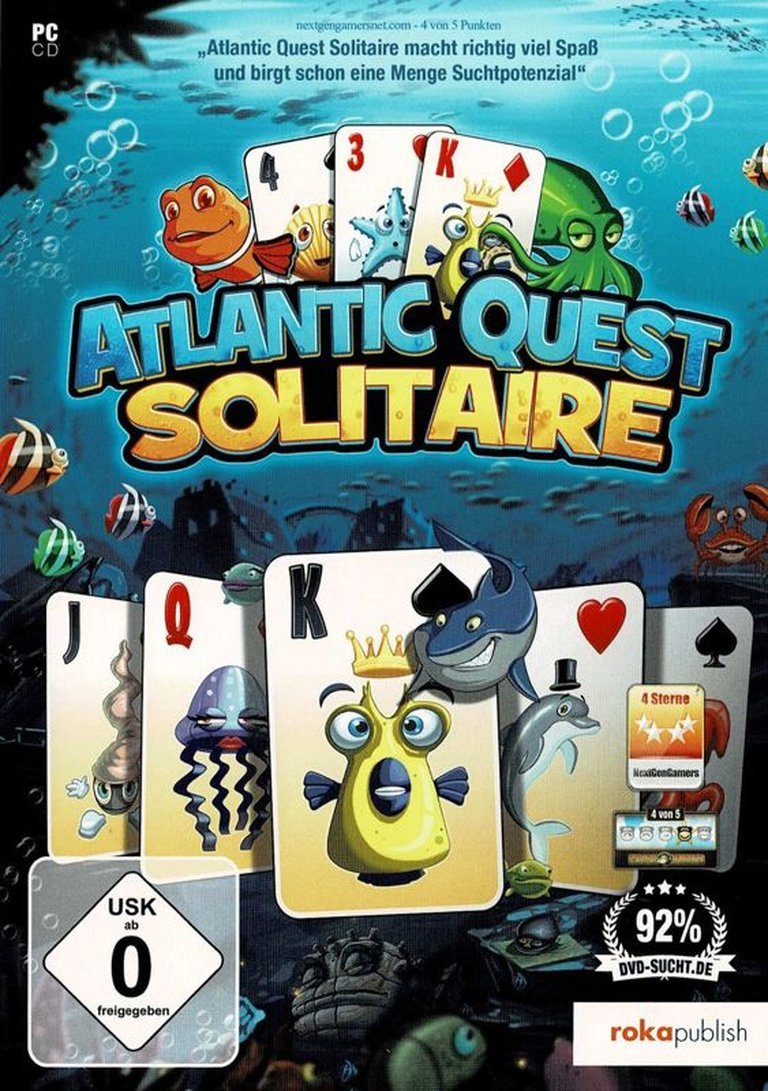
Atlantic Quest Solitaire is a puzzle game that combines classic solitaire gameplay with an underwater adventure. Players join Clowny and Sharky, two deep-sea dwellers, as they investigate a sunken ship and uncover the mysteries behind its demise. The game features over 70 levels, 10 power-up cards, boss battles, and a humorous deep-sea casino, all set in a vibrant comic-style underwater world.
Where to Buy Atlantic Quest Solitaire
PC
Atlantic Quest Solitaire Free Download
Atlantic Quest Solitaire Guides & Walkthroughs
Atlantic Quest Solitaire Reviews & Reception
steambase.io (60/100): Atlantic Quest Solitaire has earned a Player Score of 60 / 100.
store.steampowered.com : All Reviews: Mixed (61% of 18)
steamcommunity.com : This Solitaire game was great — just play the cards to get the next level.
Atlantic Quest Solitaire: A Deep Dive into the Underwater Card Adventure
Introduction
In the vast ocean of digital card games, Atlantic Quest Solitaire emerges as a charming, if somewhat overlooked, gem. Released in 2015 by rokapublish GmbH, this title blends the timeless appeal of solitaire with a whimsical underwater narrative, creating an experience that is both familiar and refreshingly unique. While it may not have made waves in the broader gaming landscape, its niche appeal and inventive mechanics warrant a closer examination. This review will explore the game’s development, narrative, gameplay, and legacy, offering a comprehensive analysis of its place in the pantheon of casual games.
Development History & Context
The Studio and Vision
Atlantic Quest Solitaire was developed and published by rokapublish GmbH, a German studio known for its focus on casual and family-friendly games. The studio’s portfolio includes titles like Zombie Solitaire and Aztec Venture, which share a similar blend of accessible gameplay and lighthearted themes. The vision for Atlantic Quest Solitaire was clear: to create a solitaire game that stood out from the crowd by infusing it with a narrative-driven, underwater adventure. The game’s development was led by a small team of five, with Thomas Schäfer handling the coding, Adrian Kaiser and Erkan Karagöz managing the graphics, and Soundsnap providing the audio elements.
Technological Constraints and Era
Released in 2015, Atlantic Quest Solitaire arrived during a period when casual games were flourishing, particularly on digital platforms like Steam. The game’s technical requirements were modest, reflecting its target audience of casual gamers. It required a mere 1.2 GHz processor, 256 MB of RAM, and 100 MB of storage, making it accessible to a wide range of players. The visual style, while not groundbreaking, was designed to be colorful and engaging, with a fixed top-down perspective that suited its card-based gameplay.
The Gaming Landscape
At the time of its release, the gaming market was saturated with solitaire variants, many of which relied on traditional mechanics without much innovation. Atlantic Quest Solitaire sought to differentiate itself by incorporating a narrative framework and unique power-ups, setting it apart from more generic offerings. However, its release coincided with a shift toward more complex and visually impressive casual games, which may have contributed to its relatively low profile.
Narrative & Thematic Deep Dive
Plot and Characters
The game’s narrative revolves around Clowny and Sharky, two anthropomorphic fish who stumble upon a sunken ship and embark on an adventure to uncover the mystery behind its sinking. The story is presented in a lighthearted, comic-style format, with dialogue appearing in text boxes as the characters interact with their underwater environment. While the plot is simple, it serves as a charming backdrop to the solitaire gameplay, giving players a sense of progression and purpose.
Themes and Tone
Atlantic Quest Solitaire embraces a whimsical, family-friendly tone, with themes of exploration, teamwork, and problem-solving. The underwater setting is vibrant and playful, filled with colorful coral reefs, quirky sea creatures, and humorous interactions. The game’s dialogue and character designs reinforce this tone, making it appealing to younger audiences and casual gamers looking for a lighthearted experience.
Dialogue and Storytelling
The game’s storytelling is minimal but effective, using text-based dialogue to advance the plot between levels. While the lack of voice acting may detract from the immersion for some players, the written dialogue is witty and engaging, adding personality to the characters. The narrative is divided into chapters, with each level representing a step forward in Clowny and Sharky’s investigation, providing a sense of continuity and progression.
Gameplay Mechanics & Systems
Core Gameplay Loop
At its heart, Atlantic Quest Solitaire is a solitaire game based on the “Golf” variant, where players must remove all cards from the playing area by sequencing them in ascending or descending order. The game introduces several twists to this classic formula, including power-up cards, boss battles, and a currency system based on pearls. These elements add depth and variety to the gameplay, preventing it from becoming repetitive.
Power-Ups and Progression
One of the game’s standout features is its power-up system. Players can collect or purchase special cards that provide unique abilities, such as removing specific cards, clearing stacks, or revealing hidden cards. These power-ups are earned through gameplay or bought using pearls, which are collected by completing levels or gambling at the in-game casino. This system encourages strategic thinking, as players must decide when and how to use their limited resources.
Boss Battles and Challenges
The game also includes boss battles, which introduce a competitive element to the solitaire gameplay. These battles require players to complete specific objectives within a set number of moves, adding a layer of challenge and excitement. While these encounters are not overly difficult, they provide a welcome change of pace from the standard levels.
UI and Accessibility
The user interface is straightforward and intuitive, with clear visual cues and easy-to-navigate menus. The game offers several customization options, such as adjustable volume levels, animated backgrounds, and different card designs, allowing players to tailor the experience to their preferences. However, the lack of individual profile settings—where changes apply globally—can be frustrating for multiplayer households.
World-Building, Art & Sound
Setting and Atmosphere
The underwater setting of Atlantic Quest Solitaire is one of its strongest assets. The game’s environments are richly detailed, with vibrant colors and animated elements that bring the ocean to life. From coral reefs to sunken ships, each level offers a distinct visual theme, enhancing the sense of adventure. The comic-style art direction is charming and well-suited to the game’s lighthearted tone.
Visual Design
The visual design is consistent and polished, with a fixed top-down perspective that keeps the focus on the card gameplay. The character designs for Clowny and Sharky are playful and expressive, adding personality to the narrative. The animations, such as swaying cards and moving backgrounds, contribute to the game’s immersive atmosphere.
Sound and Music
The sound design is functional but unremarkable. The background music is pleasant and fits the underwater theme, while the sound effects are simple and effective. The lack of voice acting is a missed opportunity, as it could have further enhanced the game’s charm and immersion. However, the audio elements are well-balanced and do not detract from the overall experience.
Reception & Legacy
Critical and Commercial Reception
Atlantic Quest Solitaire received mixed reviews upon release, with a Steam user score of 60/100 based on 18 reviews. While some players praised its charming narrative and innovative mechanics, others criticized its repetitive gameplay and lack of depth. The game’s commercial performance was modest, with limited marketing and visibility contributing to its niche appeal.
Evolution of Reputation
Over time, Atlantic Quest Solitaire has maintained a small but dedicated fanbase, particularly among casual gamers and solitaire enthusiasts. Its inclusion in bundles and collections, such as the Atlantic Quest Box and Ozean Kollektion, has helped keep it relevant. However, it has not achieved the same level of recognition as other solitaire variants, such as Zombie Solitaire or Mystery Solitaire.
Influence on Subsequent Games
While Atlantic Quest Solitaire may not have had a significant impact on the broader gaming industry, its blend of narrative and solitaire mechanics has influenced similar titles within the casual genre. Games like Solitaire Legend of the Pirates and Restaurant Solitaire have adopted comparable approaches, combining traditional card gameplay with thematic storytelling.
Conclusion
Atlantic Quest Solitaire is a charming and inventive take on the solitaire genre, offering a unique blend of narrative-driven adventure and classic card gameplay. While it may not have achieved widespread acclaim, its whimsical setting, engaging characters, and innovative mechanics make it a standout title for casual gamers. The game’s modest reception and limited legacy are a testament to the challenges of standing out in a crowded market, but its enduring appeal among niche audiences speaks to its quality and creativity.
Final Verdict: Atlantic Quest Solitaire is a delightful underwater adventure that breathes new life into the solitaire genre. While it may not be a must-play for all gamers, its charming narrative and inventive mechanics make it a worthwhile experience for fans of casual and card-based games. 7/10