
- Release Year: 2004
- Platforms: Macintosh, Windows
- Publisher: Akella, Anuman Interactive SA, DreamCatcher Interactive Inc., Mindscape SA
- Developer: Atlantis Interactive Entertainment
- Genre: Adventure
- Perspective: 1st-person
- Game Mode: Single-player
- Gameplay: Inventory management, Mini-games, Point-and-click, Puzzle elements
- Setting: Fantasy, Lost city of Atlantis
- Average Score: 64/100
Description
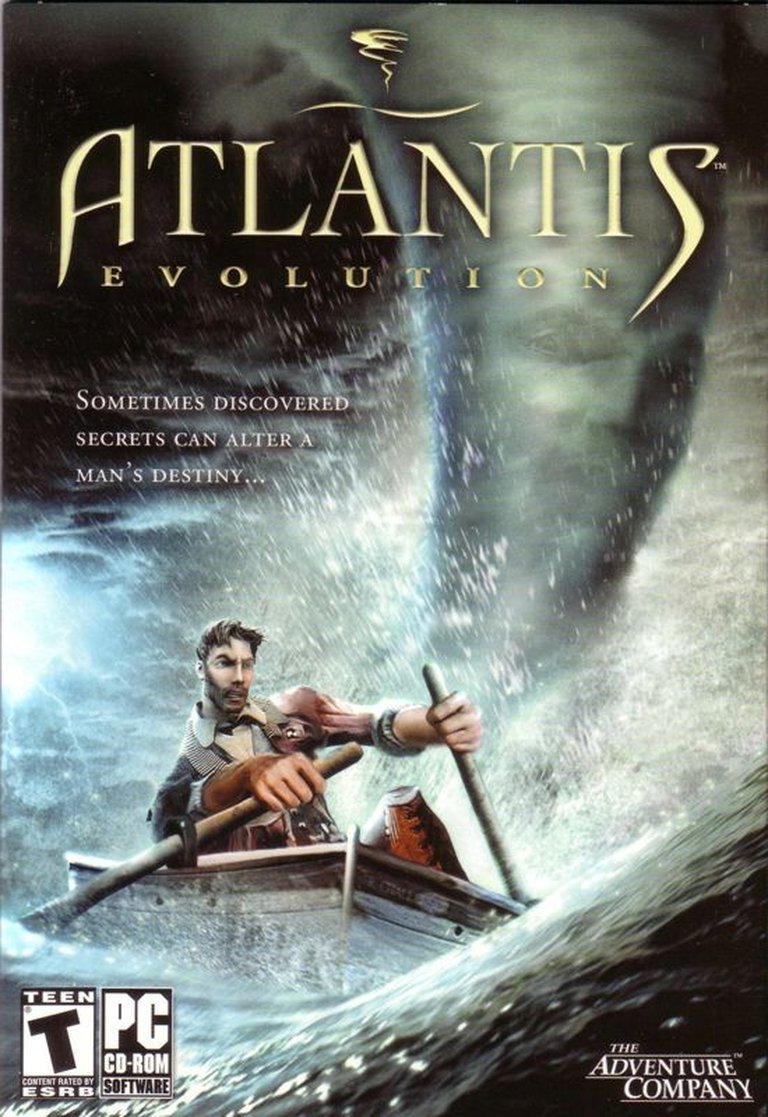
In ‘Atlantis: Evolution’, players take on the role of Curtis Hewitt, a photo-journalist who survives a shipwreck only to be pulled into the legendary lost city of Atlantis. This point-and-click adventure game immerses players in a world of advanced technology and ancient myths, where they must solve puzzles, interact with citizens, and overthrow the oppressive gods ruling the city to find a way home. The game features a mix of inventory-based gameplay, conversations, and mini-games, all set to an original soundtrack.
Gameplay Videos
Where to Buy Atlantis: Evolution
PC
Atlantis: Evolution Free Download
Atlantis: Evolution Patches & Updates
Atlantis: Evolution Guides & Walkthroughs
Atlantis: Evolution Reviews & Reception
metacritic.com (54/100): A point ‘n’ click adventure with fresh ideas and a good storyline. However, the game is full of stupid problems, like stick hunting, and the voice actors are quite bad.
en.wikipedia.org (55/100): A point ‘n’ click adventure with fresh ideas and a good storyline. However, the game is full of stupid problems, like stick hunting, and the voice actors are quite bad.
mysterymanor.net : The tough puzzles and slow, thoughtful gameplay that were the hallmark of Atlantis II and Atlantis III are gone, replaced with ancient arcade games, sneaking/timing sequences and a near constant threat of death.
adventuregamers.com (83/100): This game manages to recapture the fun of the Adventure game genre, mixing character involvement with good graphics and a great story to make an immersive gaming experience.
Atlantis: Evolution – A Flawed but Fascinating Relic of Adventure Gaming
Introduction
Atlantis: Evolution (2004) is a game that exists in the liminal space between ambition and execution, a title that tantalizes with its visual splendor and narrative potential but frustrates with its clunky mechanics and baffling design choices. As the fourth entry in the Atlantis series—originally spearheaded by the now-defunct Cryo Interactive—it represents both a rebirth and a misstep, a phoenix rising from the ashes of its predecessors only to stumble under the weight of its own contradictions. Developed by Atlantis Interactive Entertainment, a studio formed by ex-Cryo employees, Evolution attempts to modernize the franchise while clinging to outdated conventions, resulting in a game that is as fascinating as it is flawed.
This review will dissect Atlantis: Evolution in exhaustive detail, exploring its development history, narrative ambitions, gameplay mechanics, artistic achievements, and the mixed legacy it has left behind. Through this analysis, we will argue that Evolution is a game of stark contrasts: a title that showcases the potential of its creators while simultaneously highlighting the pitfalls of misguided design decisions. It is a game that, despite its many shortcomings, remains a curious artifact of early 2000s adventure gaming—a relic worth examining for both its successes and its failures.
Development History & Context
The Rise and Fall of Cryo Interactive
To understand Atlantis: Evolution, one must first grapple with the turbulent history of its spiritual predecessor, Cryo Interactive. Founded in 1992 by Jean Martineau and Philippe Ulrich, Cryo was a French studio known for its visually stunning but often mechanically flawed adventure games. Titles like Dragon Lore (1994) and Lost Eden (1995) wowed players with their pre-rendered graphics and ambitious storytelling, but they were frequently criticized for their clunky interfaces and underwhelming gameplay. The Atlantis series, which began with Atlantis: The Lost Tales (1997), was no exception. While the first game was a commercial success, its sequels—Atlantis II (1999) and Atlantis III: The New World (2001)—received mixed reviews, with critics praising their visuals but lamenting their repetitive puzzles and lack of innovation.
By the early 2000s, Cryo was in financial turmoil. The studio filed for bankruptcy in 2002, leaving the future of its franchises—including Atlantis—in limbo. The rights to the series were acquired by DreamCatcher Interactive, a Canadian publisher known for its adventure games, which subsequently absorbed parts of Cryo’s European division. This acquisition led to the formation of DreamCatcher Europe, a short-lived entity that attempted to revive Cryo’s properties. However, by the summer of 2003, DreamCatcher Europe had shuttered its game development divisions, leaving the fate of Atlantis uncertain once again.
The Birth of Atlantis Interactive Entertainment
It was in this environment of corporate upheaval that Atlantis: Evolution began to take shape. In September 2003, a group of former Cryo employees, led by executive producer Robert Stevenson and creative director Desmond Oku, founded Atlantis Interactive Entertainment. The studio’s mission was clear: to revive the Atlantis franchise while distancing itself from the shortcomings of its predecessors. Evolution was announced in April 2003 as part of DreamCatcher’s E3 lineup, with the publisher positioning it as a bold new direction for the series. Unlike earlier entries, which often ventured beyond the titular city, Evolution would focus entirely on Atlantis, promising a deeper exploration of its lore and culture.
The game’s development was not without its challenges. The team at Atlantis Interactive Entertainment was working with a relatively modest budget and tight deadlines, constraints that would later manifest in the game’s rushed pacing and underdeveloped mechanics. Additionally, the studio was tasked with modernizing the Atlantis formula for a new generation of players, a goal that led to the inclusion of several controversial design choices, including arcade-style mini-games and stealth sequences. These elements, while intended to broaden the game’s appeal, ultimately alienated many fans of the series.
The Gaming Landscape of 2004
Atlantis: Evolution arrived at a pivotal moment in the history of adventure gaming. The genre, which had dominated the PC market in the 1990s, was in decline, overshadowed by the rise of first-person shooters, real-time strategy games, and massively multiplayer online role-playing games (MMORPGs). Titles like Half-Life 2 (2004) and World of Warcraft (2004) were redefining what players expected from their gaming experiences, leaving little room for the slow, methodical gameplay of traditional adventure games.
In this climate, Evolution was something of an anomaly. It was a first-person adventure game with pre-rendered 3D graphics, a throwback to the glory days of Myst (1993) and Riven (1997). However, unlike those classics, Evolution attempted to incorporate action-oriented mechanics, a decision that reflected the industry’s shifting priorities. The game’s blend of adventure and arcade elements was intended to appeal to a broader audience, but it ultimately left the title stranded between two worlds, satisfying neither hardcore adventure fans nor action enthusiasts.
Narrative & Thematic Deep Dive
Plot Summary: A Journey to the Center of the Earth
Atlantis: Evolution follows the adventures of Curtis Hewitt, a 25-year-old photojournalist returning from an assignment in Patagonia in the early 20th century. Hewitt’s journey takes a dramatic turn when his ship is caught in a violent storm and sucked into a whirlpool, depositing him in the hidden world of New Atlantis. This subterranean civilization, founded by the survivors of the original Atlantis, is a society of advanced technology and rigid theocracy, ruled by a pantheon of tyrannical gods who demand absolute obedience from their subjects.
Hewitt’s arrival in New Atlantis is met with suspicion and hostility. He is quickly branded a heretic and forced to flee from the city’s authorities. As he explores the labyrinthine streets and cavernous depths of Atlantis, he encounters a diverse cast of characters, including disillusioned citizens, rebellious scholars, and fanatical priests. Through his interactions with these individuals, Hewitt learns of the gods’ oppressive rule and the suffering it has inflicted upon the Atlantean people. Inspired by their plight, he joins forces with a group of revolutionaries determined to overthrow the divine regime and restore freedom to Atlantis.
The game’s narrative is divided into several distinct acts, each of which introduces new locations, characters, and challenges. Hewitt’s journey takes him from the bustling streets of the Atlantean capital to the treacherous depths of its underground rivers, from the hallowed halls of its temples to the hidden chambers of its ancient machinery. Along the way, he uncovers the dark secrets of the gods’ origins and the true nature of their power, culminating in a climactic confrontation that will determine the fate of Atlantis.
Themes: Oppression, Rebellion, and the Illusion of Divinity
At its core, Atlantis: Evolution is a story about the struggle for freedom in the face of tyranny. The game’s central conflict—between the oppressed citizens of Atlantis and their divine overlords—serves as a metaphor for the broader human experience of resisting authoritarianism. The gods of Atlantis are not true deities but rather mortal beings who have manipulated their subjects into believing in their divinity. Their power is derived not from supernatural abilities but from advanced technology and psychological control, a theme that echoes real-world examples of cults and totalitarian regimes.
The game’s exploration of this theme is both timely and thought-provoking. In an era marked by the rise of extremist ideologies and the erosion of democratic norms, Evolution’s depiction of a society enslaved by false gods resonates with contemporary concerns. The Atlantean citizens’ blind faith in their rulers, despite the suffering it inflicts upon them, serves as a cautionary tale about the dangers of unquestioning obedience. Conversely, Hewitt’s role as an outsider who challenges the status quo highlights the importance of critical thinking and individual agency in the face of oppression.
However, the game’s treatment of these themes is not without its flaws. While the narrative’s broad strokes are compelling, its execution often falls short. The dialogue, in particular, is frequently melodramatic and clichéd, with characters spouting exposition-heavy monologues that do little to deepen their personalities. The gods, in particular, are portrayed as one-dimensional villains, their motivations reduced to little more than a desire for power and control. This lack of nuance undermines the game’s thematic ambitions, leaving its exploration of oppression and rebellion feeling shallow and underdeveloped.
Characters: A Mixed Bag of Archetypes and Stereotypes
Atlantis: Evolution’s cast of characters is a study in contrasts, featuring a mix of compelling archetypes and forgettable stereotypes. Curtis Hewitt, the game’s protagonist, is a likable if somewhat generic hero. His sarcastic wit and determination make him an engaging presence, but his lack of depth prevents him from rising above the level of a standard adventure game protagonist. Hewitt’s voice acting, while competent, occasionally veers into over-the-top territory, further detracting from his credibility as a turn-of-the-century photojournalist.
The supporting cast fares little better. The Atlantean citizens Hewitt encounters are largely defined by their roles in the narrative, with little attention paid to their individual personalities or motivations. The revolutionaries, for example, are portrayed as noble but faceless figures, their ideals reduced to little more than a desire to overthrow the gods. The gods themselves are even less developed, their villainy expressed through exaggerated voice performances and ham-fisted dialogue. The game’s most memorable character is arguably the city of Atlantis itself, a sprawling, labyrinthine metropolis that serves as both a setting and a silent protagonist.
Dialogue and Writing: A Tale of Missed Opportunities
The writing in Atlantis: Evolution is perhaps the game’s most glaring weakness. While the premise is intriguing and the world-building is ambitious, the execution leaves much to be desired. The dialogue is frequently stilted and unnatural, with characters delivering exposition in a manner that feels more akin to a poorly written screenplay than a living, breathing conversation. The game’s attempt to blend modern sensibilities with a turn-of-the-century setting results in anachronisms that further undermine its credibility. Hewitt’s contemporary slang, for example, feels jarringly out of place in a game set in 1904.
The game’s narrative structure is similarly flawed. While the story’s broad strokes are engaging, its pacing is uneven, with long stretches of aimless wandering punctuated by sudden, poorly explained plot developments. The game’s reliance on timed sequences and instant-death scenarios further exacerbates this issue, as players are frequently forced to repeat sections of the narrative due to minor mistakes. This repetitive gameplay loop not only disrupts the story’s flow but also undermines its emotional impact, leaving players frustrated rather than invested.
Gameplay Mechanics & Systems
Core Gameplay Loop: A Hybrid of Adventure and Arcade
Atlantis: Evolution is, at its heart, a point-and-click adventure game, but it incorporates a variety of mechanics that blur the lines between genres. The game’s core gameplay loop revolves around exploration, puzzle-solving, and inventory management, all of which are presented from a first-person perspective. Players navigate the game’s pre-rendered environments by clicking on hotspots, which allow them to interact with objects, engage in conversations, and progress through the story.
However, Evolution distinguishes itself from traditional adventure games through its inclusion of arcade-style mini-games and stealth sequences. These elements, while intended to add variety to the gameplay, often feel jarring and out of place. The mini-games, which include variations of Pong, Frogger, and Tanks, are presented as puzzles that Hewitt must solve to activate or deactivate machinery. While these sequences are visually impressive, they are mechanically simplistic and lack the depth of traditional adventure game puzzles. The stealth sections, meanwhile, require players to navigate through guarded areas without being detected, a mechanic that feels more at home in a Metal Gear Solid game than an adventure title.
Combat and Stealth: A Frustrating Blend
One of the most controversial aspects of Atlantis: Evolution is its handling of combat and stealth. Unlike traditional adventure games, which typically avoid action-oriented mechanics, Evolution forces players to engage in a series of timed sequences and evasion challenges. These sections are often punishingly difficult, requiring precise timing and memorization to overcome. The game’s lack of a quicksave feature exacerbates this issue, as players are frequently forced to repeat lengthy sequences after a single mistake.
The stealth mechanics, in particular, are a source of frustration. Players must navigate through environments patrolled by guards, avoiding detection by hiding behind objects or moving quickly between cover points. However, the game’s controls are imprecise, and the guards’ detection algorithms are inconsistent, leading to frequent instances of unfair deaths. The lack of a mini-map or other navigational aids further compounds this issue, as players are often left guessing about the locations of their pursuers.
Puzzle Design: A Study in Contrasts
Atlantis: Evolution’s puzzle design is a microcosm of the game’s broader strengths and weaknesses. On the one hand, the game features a handful of well-crafted, logic-based puzzles that reward careful observation and critical thinking. These sequences, which typically involve combining inventory items or deciphering ancient scripts, are the highlights of the gameplay experience. On the other hand, the game is plagued by a series of poorly designed challenges that rely on trial-and-error mechanics and pixel-hunting.
The game’s most egregious puzzles are its maze sequences, which require players to navigate through labyrinthine environments while avoiding instant-death traps. These sections are often tedious and repetitive, with little to no guidance provided to the player. The game’s reliance on timed events further exacerbates this issue, as players are frequently forced to repeat these sequences due to minor mistakes. The lack of a hint system or other forms of player assistance makes these sections particularly frustrating, as players are left to fend for themselves in a game that often feels determined to punish them.
Inventory and UI: A Clunky but Functional System
The inventory system in Atlantis: Evolution is a mixed bag. On the one hand, it is functional and easy to use, allowing players to combine items and examine them in detail. On the other hand, it is plagued by a series of design quirks that detract from the overall experience. The game’s reliance on a traditional point-and-click interface, for example, feels outdated in an era where more intuitive control schemes were becoming the norm. Additionally, the game’s lack of a hotspot highlighter makes it difficult to identify interactive objects, leading to frequent instances of pixel-hunting.
The user interface (UI) is similarly flawed. While the game’s menus are visually appealing, they are often cumbersome to navigate, with players forced to click through multiple screens to access basic functions. The dialogue system, which uses a series of icons to represent conversation topics, is particularly problematic. While this approach is visually distinctive, it often leads to confusion, as players struggle to determine which icons correspond to which topics. The lack of a text-based dialogue tree further compounds this issue, as players are left to guess at the meaning of the game’s cryptic symbols.
Mini-Games: A Nostalgic but Misguided Inclusion
The inclusion of arcade-style mini-games is perhaps the most divisive aspect of Atlantis: Evolution’s gameplay. These sequences, which include variations of classic games like Pong and Frogger, are presented as puzzles that Hewitt must solve to progress through the story. While these mini-games are visually impressive and nostalgic, they are mechanically simplistic and lack the depth of traditional adventure game puzzles.
The mini-games are often criticized for their lack of integration with the broader gameplay experience. Rather than feeling like organic extensions of the game’s world, they come across as arbitrary obstacles that exist solely to pad out the playtime. The lack of difficulty settings or other forms of customization further exacerbates this issue, as players are forced to engage with these sequences regardless of their skill level or interest in arcade-style gameplay.
World-Building, Art & Sound
Setting: A Visually Stunning but Underutilized World
Atlantis: Evolution’s greatest strength lies in its world-building. The game’s depiction of New Atlantis is a feast for the eyes, a sprawling metropolis of towering spires, labyrinthine streets, and cavernous depths. The city is a blend of advanced technology and ancient architecture, a testament to the ingenuity of its founders and the opulence of its rulers. The game’s pre-rendered graphics are among its most impressive features, with detailed textures, dynamic lighting, and fluid animations bringing the world to life.
However, the game’s visual splendor is often undercut by its underutilized setting. While New Atlantis is a stunning backdrop, it is frequently reduced to little more than a series of corridors and mazes, with little attention paid to its cultural or historical depth. The city’s inhabitants, for example, are largely forgettable, their personalities and motivations reduced to little more than exposition delivery devices. The game’s lack of environmental storytelling further compounds this issue, as players are left to piece together the world’s lore through fragmented dialogue and cryptic clues.
Art Direction: A Blend of Beauty and Repetition
The art direction in Atlantis: Evolution is a study in contrasts. On the one hand, the game features some of the most visually impressive environments in the adventure genre, with detailed textures, dynamic lighting, and fluid animations bringing the world of Atlantis to life. The game’s use of pre-rendered 3D graphics is particularly noteworthy, as it allows for a level of detail and realism that was rare in adventure games of the era.
On the other hand, the game’s art direction is plagued by a series of repetitive design choices. Many of the game’s environments, for example, feature similar architectural styles and color palettes, leading to a sense of visual monotony. The game’s character models, while detailed, are often stiff and lacking in expression, further detracting from the overall immersion. The lack of environmental variety is particularly noticeable in the game’s maze sequences, which often feel like recycled assets rather than distinct locations.
Sound Design: A Haunting but Repetitive Score
The sound design in Atlantis: Evolution is a mixed bag. The game’s original soundtrack, composed by Pierre Estève, is one of its most impressive features, with haunting melodies and atmospheric textures that enhance the game’s sense of mystery and wonder. The score is particularly effective in the game’s more dramatic moments, where it serves to underscore the emotional weight of the narrative.
However, the game’s sound design is not without its flaws. The voice acting, while competent, is often melodramatic and over-the-top, with characters delivering their lines in a manner that feels more akin to a soap opera than a serious adventure game. The lack of environmental sound effects further detracts from the immersion, as the game’s world often feels eerily silent. The repetitive nature of the soundtrack, which loops frequently during extended gameplay sequences, also becomes grating over time, undermining its initial impact.
Reception & Legacy
Critical Reception: A Divisive but Memorable Experience
Atlantis: Evolution was met with a mixed reception upon its release in October 2004. Critics praised the game’s visuals, soundtrack, and ambitious storytelling, but they were largely critical of its gameplay mechanics and design choices. The game’s Metascore of 54 on Metacritic reflects this divide, with reviews ranging from glowing praise to scathing criticism.
Positive reviews highlighted the game’s strengths, particularly its visuals and narrative. Aventura y Cía, for example, awarded the game a perfect score of 100%, praising its immersive world and engaging storyline. 2404.org PC Gaming similarly lauded the game’s graphics and first-person perspective, calling it a “flott gemachtes Render-Abenteuer” (a well-made rendered adventure). Other critics, such as Game Chronicles and Pelit, commended the game’s atmospheric soundtrack and intriguing premise, noting that it stood out in a genre that was increasingly overshadowed by action-oriented titles.
However, the majority of reviews were more critical, focusing on the game’s flawed mechanics and frustrating design choices. IGN and GameSpot, for example, panned the game’s arcade sequences and instant-death scenarios, calling them outdated and unfair. Adventure Gamers and Worth Playing similarly criticized the game’s reliance on trial-and-error mechanics, noting that it often felt more like a chore than an enjoyable experience. The game’s dialogue and voice acting were also frequent targets of criticism, with many reviewers describing them as melodramatic and poorly written.
Commercial Performance: A Niche Success
Despite its mixed reception, Atlantis: Evolution enjoyed modest commercial success. The game’s visuals and narrative appeal helped it find an audience among adventure game enthusiasts, particularly those who were fans of the Atlantis series. However, its flawed mechanics and outdated design choices prevented it from achieving mainstream success. The game’s sales were further hampered by the declining popularity of the adventure genre, which was increasingly overshadowed by action-oriented titles.
Legacy: A Cautionary Tale of Innovation Gone Awry
Atlantis: Evolution’s legacy is a complex one. On the one hand, the game is remembered as a visually impressive and ambitious title that attempted to modernize the adventure genre. Its blend of pre-rendered graphics, first-person exploration, and arcade-style mechanics was a bold experiment that set it apart from its contemporaries. On the other hand, the game is also remembered as a cautionary tale about the dangers of misguided innovation. Its reliance on outdated mechanics and frustrating design choices ultimately undermined its potential, leaving it as a footnote in the history of adventure gaming.
The game’s influence on subsequent titles is similarly mixed. While Evolution did not spawn a direct sequel, it did pave the way for future entries in the Atlantis series, including The Secrets of Atlantis: The Sacred Legacy (2006). However, these later titles largely abandoned the arcade-style mechanics of Evolution, returning to the more traditional adventure gameplay of the series’ earlier entries. In this sense, Evolution serves as a reminder of the importance of balancing innovation with player expectations, a lesson that continues to resonate in the gaming industry today.
Conclusion: A Flawed but Fascinating Relic
Atlantis: Evolution is a game of contradictions, a title that showcases the potential of its creators while simultaneously highlighting the pitfalls of misguided design choices. Its visuals are stunning, its narrative is ambitious, and its world-building is immersive, but its gameplay is frustrating, its mechanics are outdated, and its execution is uneven. It is a game that tantalizes with its promise but ultimately fails to deliver on its potential.
And yet, despite its many flaws, Atlantis: Evolution remains a fascinating relic of early 2000s adventure gaming. It is a game that dared to experiment, that sought to push the boundaries of its genre, even if it ultimately stumbled under the weight of its own ambitions. For adventure game enthusiasts, it is a title worth experiencing, if only to appreciate its strengths and learn from its weaknesses. For the broader gaming community, it serves as a reminder of the importance of balancing innovation with player expectations, a lesson that continues to resonate in an industry that is constantly evolving.
In the end, Atlantis: Evolution is neither a masterpiece nor a disaster. It is a game that exists in the liminal space between success and failure, a title that is as frustrating as it is fascinating. It is a game that, despite its many shortcomings, deserves to be remembered—not as a triumph, but as a cautionary tale, a testament to the risks and rewards of pushing the boundaries of what adventure games can be.
Final Verdict: 6/10 – A visually impressive but mechanically flawed adventure that is worth experiencing for its ambitions, if not its execution.