
- Release Year: 2004
- Platforms: Windows
- Publisher: DreamCatcher Interactive Inc.
- Developer: Cryo Studios
- Genre: Special edition
- Perspective: Third-person
- Game Mode: Single-player
- Average Score: 54/100
Description
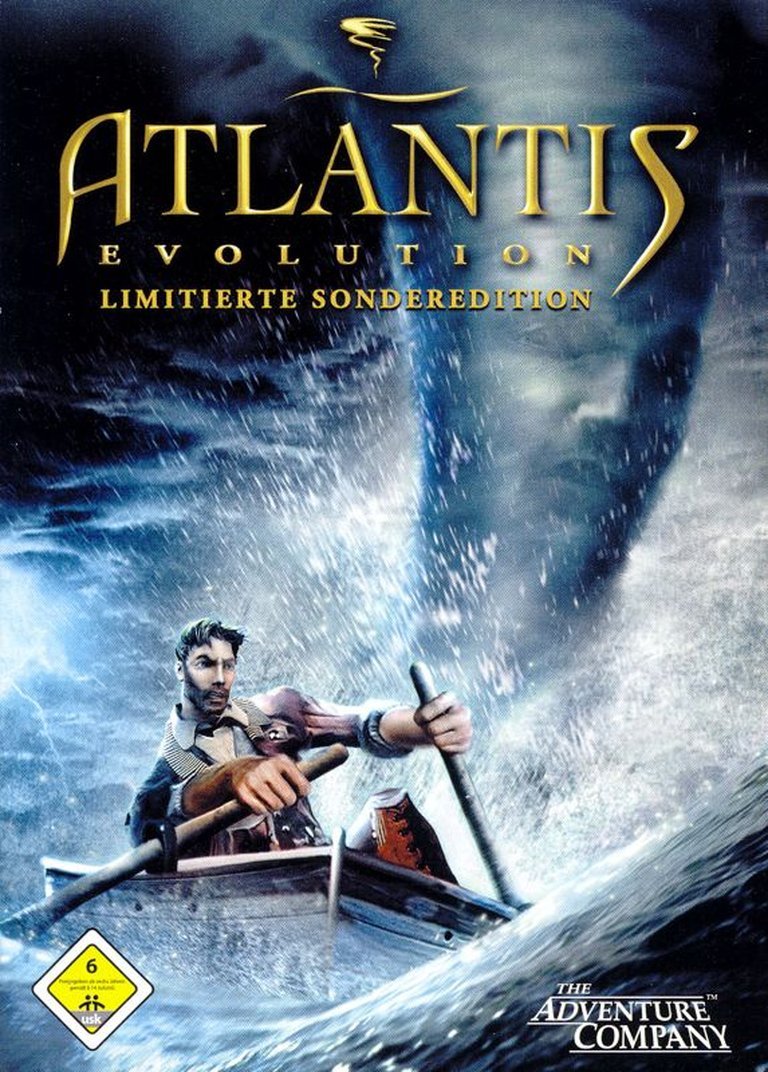
Atlantis: Evolution (Limitierte Sonderedition) is a special edition of the 2004 graphic adventure game, part of Cryo’s Atlantis series. Set in the early 20th century, players follow Curtis Hewitt, a journalist stranded in the mythical realm of Atlantis after a storm. There, he uncovers a conflict between the native populace and oppressive deities, embarking on a quest to liberate them. This limited edition includes the base game and a printed strategy guide, offering an immersive experience into the Atlantean lore.
Where to Buy Atlantis: Evolution (Limitierte Sonderedition)
PC
Atlantis: Evolution (Limitierte Sonderedition) Guides & Walkthroughs
Atlantis: Evolution (Limitierte Sonderedition) Reviews & Reception
metacritic.com (54/100): Mixed or Average Based on 17 Critic Reviews
Atlantis: Evolution (Limitierte Sonderedition): Review
Introduction
In the pantheon of early 2000s adventure games, Atlantis: Evolution stands as a fascinating relic of ambition and missed potential. Released in 2004 by Atlantis Interactive Entertainment—a studio formed by ex-Cryo Interactive developers after its parent company’s bankruptcy—the game sought to revive Cryo’s storied Atlantis series with a fresh narrative and technological flourish. This limited special edition, Limitierte Sonderedition, bundled the base game with a 62-page strategy guide, appealing to collectors and completionists. But beneath its glossy exterior lies a game torn between reverence for its roots and a chaotic embrace of arcade-style mechanics. This review unpacks Atlantis: Evolution as a flawed but visually arresting attempt to rekindle the magic of a beloved franchise.
Development History & Context
Studio Origins & Vision
Atlantis: Evolution emerged from the ashes of Cryo Interactive, a French studio renowned for atmospheric titles like Dragon Lore and Lost Eden. After Cryo’s 2002 bankruptcy, DreamCatcher Interactive absorbed its assets and reassembled former Cryo developers under Atlantis Interactive Entertainment. Their mission: to reinvent the Atlantis series with modern sensibilities while retaining its mythic allure. Director Desmond Oku and writer Johan Robson aimed to craft a standalone story set entirely within Atlantis, diverging from the globetrotting narratives of prior entries.
Technological Constraints & 2004 Landscape
Released in an era transitioning from 2D to 3D dominance, Evolution relied on pre-rendered, fixed-camera backdrops with 360-degree panning—a nod to classic adventure design. However, its 4GB installation (a mammoth size for 2004) and CD-ROM distribution highlighted the growing pains of physical media. Competing with titles like Syberia and The Longest Journey, Evolution faced scrutiny for its blend of adventure conventions and ill-conceived arcade segments, a gamble that alienated purists.
Narrative & Thematic Deep Dive
Plot & Characters
Set in 1904, the game follows Curtis Hewitt, a wisecracking photojournalist stranded in New Atlantis after a storm swallows his ship. This dystopian iteration of the legendary city is ruled by tyrannical “gods” who enslave its inhabitants. Curtis becomes entangled in a rebellion, evolving from “deviant” outsider to messianic “God of Life.”
While the premise brims with potential, the execution falters. Curtis’s snarky dialogue clashes with the solemn tone, and supporting characters—like the revolutionary Miranda and disillusioned god Cosmo—feel underdeveloped. The plot’s latter half leans into sci-fi intrigue, revealing cosmic secrets and familial betrayals, but pacing issues and repetitive dialogue (e.g., the infamous “Halt, deviant!”) undermine its gravity.
Themes
The game explores liberation vs. oppression, questioning blind faith in authority. The Atlantean gods, later revealed as flawed usurpers, symbolize corrupt power structures. Yet these themes are overshadowed by inconsistent storytelling and a rushed climax involving time loops and ancestral vendettas.
Gameplay Mechanics & Systems
Core Loop & Puzzles
Evolution employs a traditional point-and-click interface with inventory puzzles and environmental interactions. While early puzzles are logical (e.g., combining a rope and bucket to draw water), later challenges devolve into pixel hunts and maze navigation, including a notorious jungle sequence criticized for its trial-and-error design.
Arcade Mini-Games
The game’s most polarizing feature is its植入 arcade-style mini-games. From Frogger-inspired escapes to Pong battles against holographic foes, these segments disrupt immersion. Critics lambasted them as outdated and incongruous with the series’ cerebral roots.
Stealth & Combat
Stealth sections, where Curtis evades laser-wielding guardians, are unforgiving. Instant-death scenarios and unclear guard patrol paths frustrate, relying on memorization over skill.
World-Building, Art & Sound
Visual Direction
Evolution’s pre-rendered backdrops are its crowning achievement. New Atlantis blends Art Deco architecture with bioluminescent flora, while cosmic realms shimmer with ethereal beauty. Character models, though stylized, animate fluidly—a testament to Cryo’s legacy of artistry.
Sound Design
Composer Pierre Estève, a veteran of prior Atlantis titles, delivers a haunting orchestral score that elevates the game’s atmosphere. Voice acting, however, is uneven: Curtis’s sarcastic tone clashes with the gods’ melodramatic performances, undermining dramatic moments.
Reception & Legacy
Launch Reception
Reviews were mixed-to-negative (Metacritic: 54/100). Praise focused on visuals and ambition, while criticism targeted repetitive gameplay, arcade gimmicks, and narrative pacing. Just Adventure called it a “C+” effort, praising its “major highs” but lamenting its “major lows.”
Commercial Performance & Influence
The game sold modestly, overshadowed by contemporaries like Syberia II. Its legacy is one of caution—a reminder that genre hybridization risks alienating core fans. The 2006 sequel, The Secrets of Atlantis, course-corrected with a noir-inspired narrative, leaving Evolution as a cult curio.
Conclusion
Atlantis: Evolution (Limitierte Sonderedition) is a paradoxical artifact: a visually sumptuous revival hamstrung by identity crisis. Its ambition to modernize the Atlantis series is admirable, but clunky gameplay, jarring tonal shifts, and ill-advised arcade elements erode its potential. For collectors, the special edition’s strategy guide offers nostalgic charm, yet the game itself remains a footnote—a flawed but fascinating relic of a bygone era in adventure gaming.
Final Verdict: A beautiful misfire, best appreciated for its art and historical significance rather than its execution.