
- Release Year: 2017
- Platforms: Android, iPad, iPhone, Linux, Macintosh, Nintendo Switch, PlayStation 4, Windows, Xbox One, Xbox Series
- Publisher: Atom Team
- Developer: Atom Team
- Genre: Role-playing
- Perspective: Diagonal-down
- Game Mode: Single-player
- Gameplay: Crafting, Pickpocketing, Radiation, Radioactive poisoning, Survival, Turn-based combat
- Setting: Post-apocalyptic
Description
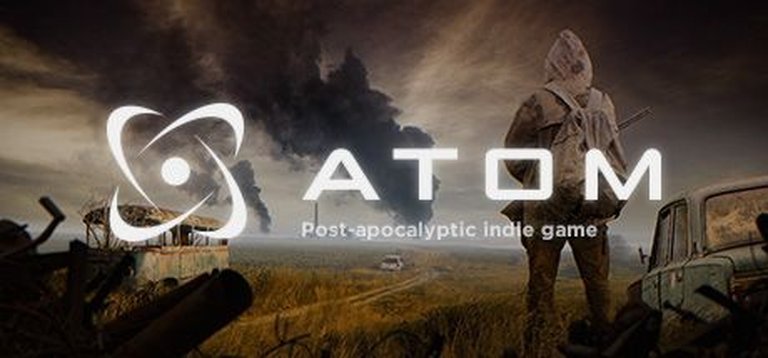
Atom RPG is an indie role-playing game set in a post-apocalyptic world inspired by classic CRPGs like Fallout. Players explore a retro-futuristic, nuclear wasteland through 2D scrolling environments, engage in turn-based combat, complete quests, and make narrative choices that impact the story, with features such as pickpocketing, radiation hazards, and optional female protagonists.
Gameplay Videos
Where to Buy Atom RPG
PC
Atom RPG Free Download
Atom RPG Mods
Atom RPG Guides & Walkthroughs
Atom RPG Reviews & Reception
cyberpowerpc.com : Right from the start, Atom RPG evokes vivid memories of CRPGs like the Fallout and Wasteland series.
Atom RPG Cheats & Codes
PC
Press Numpad * and Numpad 0 simultaneously in-game, then enter ‘youshallnotpass’ to activate the console.
| Code | Effect |
|---|---|
| AddItem | Spawns specified item in specified quantity (use AddItem [item] [amount]) |
| AddLevel | Increases character level by specified amount (use AddLevel [number]) |
| AddXP | Adds specified experience points (use AddXP [number]) |
| AP | Sets action points to specified amount (use AP [number]) |
| addfuel | Adds specified amount of fuel to vehicle (use addfuel [number]) |
| Hero | Sets all characteristics to 10 and all skills to 100 |
| Help | Displays list of available console commands |
| hunger | Sets hunger level to specified value (use hunger [number]) |
| KillAll | Kills all NPCs on the current map |
| Pobeda | Spawns GAZ-20-SG1 vehicle (only outside settlements) |
| radiation | Sets radiation level to specified value (use radiation [number]) |
| Teleport | Teleports player to cursor location |
| toxic | Sets toxin level to specified value (use toxic [number]) |
| UnlockCraft | Unlocks all crafting recipes |
| UnlockMap | Reveals all map locations |
| youshallnotpass | Activates cheat console |
Mobile
After loading a save, go to Options, exit Options, and tap the ATOM logo multiple times. Alternatively, navigate to Settings > game version > letter O.
| Code | Effect |
|---|---|
| AddItem | Spawns specified item in specified quantity (use AddItem [item] [amount]) |
| AddLevel | Increases character level by specified amount (use AddLevel [number]) |
| AddXP | Adds specified experience points (use AddXP [number]) |
| AP | Sets action points to specified amount (use AP [number]) |
| addfuel | Adds specified amount of fuel to vehicle (use addfuel [number]) |
| Hero | Sets all characteristics to 10 and all skills to 100 |
| Help | Displays list of available console commands |
| hunger | Sets hunger level to specified value (use hunger [number]) |
| KillAll | Kills all NPCs on the current map |
| Pobeda | Spawns GAZ-20-SG1 vehicle (only outside settlements) |
| radiation | Sets radiation level to specified value (use radiation [number]) |
| Teleport | Teleports player to cursor location |
| toxic | Sets toxin level to specified value (use toxic [number]) |
| UnlockCraft | Unlocks all crafting recipes |
| UnlockMap | Reveals all map locations |
Atom RPG: A Post-Soviet Love Letter to Classic CRPGs, Forged in Eurojank
Introduction: The Wasteland Awaits, Comrade
In the vast, irradiated expanse of post-apocalyptic video games, few titles dare to trade the familiar iconography of the American Southwest for the collapsed utopias of the Soviet sphere. Atom RPG stands as a defiant, brilliantly idiosyncratic monument to this brave alternative. Developed on a shoestring budget by the international Atom Team collective from Latvia, Poland, Russia, and Ukraine, this 2017 indie role-playing game is not merely a homage to the classics of the Fallout and Wasteland lineages; it is a passionate, often chaotic, and deeply personal commentary on the socio-economic aftermath of the USSR’s collapse, filtered through the lens of 1990s “internal apocalypse.” Its legacy is that of a cult phenomenon—a game that transcended its technical limitations and initial obscurity to become a touchstone for a generation of Eastern European RPG fans and a testament to the enduring power of niche, developer-driven vision. This review argues that Atom RPG’s true genius lies not in its polished mechanics, but in its unwavering commitment to a specific time, place, and melancholic-humorous worldview, making it an essential, if deeply flawed, artifact of modern indie game history.
Development History & Context: A Leap of Faith in the Eurojank Trenches
The genesis of Atom RPG is a story of persistence over prosperity. The initial concept dates back to 2008, when a small group of enthusiasts began work on a custom engine, only to abandon the project due to a lack of experience and funding. Years later, galvanized by a shared love for classic isometric CRPGs like Fallout 1 & 2, Arcanum, and Baldur’s Gate, the core founders reconvened and assembled the Atom Team through online forums. This was no corporate venture; it was a “leap of faith,” as game designer Alexander Kompanets later described it in a VGTimes interview. Team members quit day jobs, lived on savings, and invested their own money, driven by a collective goal rather than profit. “We didn’t work for money and buying a personal island,” Kompanets stated. “We had a goal: to make a game, and then let the grass not grow.”
Their chosen tool was the accessible but demanding Unity 5 engine, a pragmatic choice for a small team but one that imposed its own constraints. The financial bedrock came from a successful Kickstarter campaign in early 2017, which raised over $33,000. However, as Kompanets revealed, this sum was significantly reduced after platform fees and an intermediary agent (necessary due to CIS restrictions), and it was immediately funneled back into the project—salaries were non-existent. The core team numbered just eleven people, with additional freelancers, all “working more for the idea than for the money.” This context is crucial: Atom RPG was born in the twilight of the post-Pillars of Eternity Kickstarter boom, when the genre’s commercial viability was already in doubt. Its development was a defiant act of faith in a niche design philosophy, embracing what fans affectionately term “Eurojank”—grand ambition matched with limited polish, where passion bleeds through the seams.
The team’s multinational composition (Latvia, Poland, Russia, Ukraine) directly informing the game’s unique setting. They weren’t just depicting a post-Soviet world; they were processing their own lived experiences of the 1990s—a period Kompanets candidly called “our internal apocalypse.” This personal lens, combined with a desire to carve an identity distinct from Fallout, shaped every aspect of the game. “We haven’t rethought Fallout,” Kompanets insisted. “On the contrary, we are trying our best to show that we are not Fallout.” The result was a game that felt both intimately familiar to CRPG veterans and startlingly fresh in its sociocultural texture.
Narrative & Thematic Deep Dive: The Cosmonaut’s Cradle of Horrors
Atom RPG‘s plot begins with a premise echoing its inspirations: in an alternate 1986, the Cold War turned hot, and nuclear annihilation consumed the globe. Nineteen years later, in 2005, the player is a cadet of ATOM—a clandestine pre-war Soviet organization tasked with preserving knowledge and rebuilding civilization from the shadows. The primary mission is to locate the missing squad of General Morozov, last seen investigating the enigmatic Bunker #317.
What unfolds is a sprawling, player-driven sprawl across the “Soviet Wasteland,” a region that, while devastated, is portrayed as relatively “prosperous” compared to neighboring territories—a crucial detail that reframes the apocalypse as a failure of societal structure rather than pure destruction. The narrative is deceptively simple, but its power lies in the myriad ways it is experienced through side quests, character interactions, and environmental storytelling. The main story is largely railroaded in its core beats, but the how is fiercely non-linear, offering “dozens of quests, each with many alternative solutions,” as the official Steam description boasts.
Themes: More Than Just Mutants and Bottlecaps
The game is a layered satire that operates on multiple registers:
1. The Post-Soviet Condition: This is the game’s soul. The wasteland is not a tabula rasa; it is populated by people who remember the USSR. Their dialogue is saturated with references to perestroika, glasnost, and the chaotic 1990s—the era of “real devastation,” as Kompanets put it. Bureaucrats act as gangsters, gangsters mimic bureaucrats, and the remnants of state power (like the corrupt militia in Krasnoznamenny) are indistinguishable from organized crime. The satire is both subtle and crass, from the “happy merchant” caricature of the bookseller Abraham to the systemic corruption that defines every settlement.
2. Cosmic Horror and the Loss of Self: Diverging sharply from Fallout‘s often punchy tone, Atom RPG weaves a thread of genuine, Lovecraftian dread. The central conspiracy revolves around the Mycelium—a cult/scientific society based in Krasnoznamenny that venerates a sentient fungal network, the “Mushroom Mind.” Their goal is the Assimilation Plot: to contaminate water supplies with spores and achieve a hive-mind “Unity,” eradicating individualism to collectively face a greater cosmic threat, the Hesperus Star (a looming asteroid). This isn’t just a villainous plan; it’s presented as a terrifyingly logical, if monstrous, solution to humanity’s fragmented fragility. The diaries from Bunker #317 reveal a pre-war bioweapons project that induced shared nightmares and psychic compulsion, a clear nod to The Whisperer in Darkness and The Inhabitant of the Lake. The horror is psychological: the feeling of being a puppet with many masters, a question of identity that haunts characters like Alexander, whose amnesia hints at a “Skin Worm” parasite.
3. Deconstruction of Fallout Tropes: The game lovingly parodies its progenitor. Bottlecaps are explicitly dismissed as a failed currency idea. The “Vault” analogy (Bunker #317) is subverted—it’s a biolab, not a social experiment, and it’s a failure. The “courier” archetype is acknowledged as absurdly lucky. Non-feral mutants are grotesque, unstable, and largely ostracized, not integrated into society. The hero’s starting brute-force survival against the bandit ambush was so common that developers patched it, framing it as a “seemingly hopeless boss fight” that was never meant to be winnable—a direct critique of player entitlement.
4. The Liberator’s Dilemma: The narrative constantly asks what “restoring civilization” truly means. The ATOM organization, initially seeming like a benevolent Brotherhood of Steel analog, is revealed to have its own political agendas, with a squadron later attempting to annex Krasnoznamenny. The core companion Fidel, a Cubanophile ATOM agent, represents altruistic communist idealism. In contrast, Dan, the ex-KGB crime boss running a factory gang, is a Well-Intentioned Extremist. His tyrannical protection racket, while brutal, provides a stabilizing force. The game’s Bittersweet Ending mechanic proves this: killing Dan leads to Otradnoye’s destruction by marauders, while allowing his gang to persist ensures its survival at the cost of constant oppression. There is no clean victory, only trade-offs.
Characters: Archetypes with a Slavic Twist
The companion quintet forms a Five-Man Band that reflects the game’s thematic tensions:
* The Cadet (You): The Leader, expected to handle social tasks. Their background (via optional Distinctions) can range from “Vanguard of Progress” to “Wasteland Elder,” altering dialogue.
* Fidel: The Lancer. The moral compass, a genuinely kind soul whose faith in ATOM’s mission is absolute. His potential fate—dying heroically years later—cements his tragic nobility.
* Hexogen: The Smart Guy. A deranged, hyper-intellectual Soviet writer, a walking syncretism of Soviet and Tsarist identity. His ramblings are a parody of dissident intellectualism, yet he possesses startling insight.
* Alexander: The Big Guy. A Soviet-Afghan War veteran with a clear PTSD-like edge and a hidden Skin Worm infection, causing amnesia and cravings. His storyline is a grim metaphor for the wars the USSR left behind.
* Dzhulbars: Team Pet. The Dogmeat analog, but with unique armor and surprising combat efficacy. His acquisition involves a Failure Is the Only Option scenario where his former owner must die.
The stand-out, however, is Galina Bathory, a mutually exclusive companion if you side with Dan’s rivals. She is a pragmatic, ruthless survivor who locks you out of the main plot, embodying the game’s commitment to consequence.
Writing & Dialogue: A Flawed but Fertile Garden
The script is a point of fierce division. On one hand, it is voluminous. As Kompanets noted, “we have more characters than in The Lord of the Rings trilogy.” The writing team works “around the clock.” NPCs have names, histories, and countless unique dialogue lines, creating a sense of a lived-in world. The humor is dour, specific, and deeply rooted in Russian post-Soviet pop culture (references to Viktor Tsoi, obscure internet memes, the “Rat Ke’eng” viral video). Quests range from the absurd (retrieving adulterous underwear, making a porno) to the profoundly creepy (cannibal slaughterhouses, cult sacrifices).
On the other, it is uneven. Many reviewers, including the GameStar critic, found “90 percent of dialogues… completely meaningless.” The prose can be meandering, and companion quips often feel grafted onto pivotal moments rather than organic. The English localization, handled by a small team, is notably rough, with grammatical errors and occasionally stilted phrasing that may obscure jokes or nuances. Yet, this very roughness contributes to the “Eurojank” authenticity. As the Substack analyst observed, the writing sometimes “sabotages its own narrative,” but this can be read as an intentional拒斥 of Western RPG slickness—a commitment to a messier, more tragicomic reality where not every conversation deepens the plot, just as in real life.
Gameplay Mechanics & Systems: GURPS in the Gopnik Zone
Atom RPG‘s systems are a direct, almost architectural, descendant of Fallout 1 & 2, built on a modified GURPS (Generic Universal RolePlaying System) framework.
Character Creation & Progression:
Players distribute points across * seven primary statistics (S.P.E.C.I.A.L.-style: Strength, Perception, Endurance, Charisma, Intelligence, Agility, Luck)* and a sprawling list of skills (Lockpicking, Barter, Speechcraft, etc.) from 1 to 100+. Skills above 100 grant bonuses to hit specific body parts in combat or reduce situational penalties. Progression is handled through a simplified perk tree (“Abilities”). There are no stat requirements to unlock perks, but you must purchase lower-tier perks to access higher ones, encouraging either “wide” (diversified) or “deep” (specialized) builds. The system heavily favors specialization. A “jack of all trades” will struggle, as combat is frequent and brutal. Endurance and Dexterity are near-mandatory for survival.
Survival Meters:
Beyond health, the Cadet must manage:
* Hunger: Depletes over time. Ignoring it causes HP loss. Easily managed by eating (cooking at campfires provides bonus XP and better saturation).
* Radiation: Reduced by expensive anti-rad drugs or cheap vodka. Vodka is prevalent but causes addiction—a direct Fallout reference with a Soviet twist.
* Toxins: Flushed by expensive anti-venom or common, heavy water.
These meters create a constant resource management loop, reinforcing the scavenger-world aesthetic.
Combat:
Turn-based, grid-less, and action point (AP)-driven. Each action (moving, shooting, reloading, aiming) costs AP. Weapon types have distinct AP costs and skill requirements (e.g., Pistols are cheap and lightweight; Automatic Firearms are heavy, require high Strength/Dexterity, but offer devastating burst fire). “Difficult, but Awesome” defines high-tier automatic weapons like the Vintorez or the Vitinsky Experimental Rifle. Friendly fire is a constant hazard, and companions, while competent, can inadvertently kill you or each other. The difficulty curve is spiky: early bandit ambushes are brutal, mid-game sees a power surge with better gear, and late-game zones (Dead City, Tunnel of Death) can be Brutal Bonus Levels filled with elite enemies and environmental hazards (massive radiation, poison gas). The combat AI is functional but not brilliant; tactical positioning is key.
Companions & Party System:
A refreshing Arbitrary Headcount Limit averted. Charisma does not limit party size. You can recruit up to five unique companions (Fidel, Hexogen, Alexander, Dzhulbars, Galina) plus temporary allies. They level up, can be equipped, and have customizable AI stances. However, they refuse to perform certain actions (Barter, Pickpocket), reinforcing the player’s role as the leader. Permanent death is possible, encouraging Save Scumming.
Stealth, Crafting & Quests:
* Stealth is rudimentary. There is no dedicated “sneak mode”; your Sneak skill is always applied to pickpocketing or approaching enemies. With companions, the lowest skill in the party is used, making it unreliable.
* Crafting is simple and practical. You create homemade pipe weapons, armor, and useful items from scavenged junk. Recipes are scarce in-game, forcing wiki consultations (Guide Dang It!). Crafted gear is viable for a long time but is eventually outclassed.
* Quests are the star. They are multi-layered, with multiple solutions (combat, stealth, dialogue, bribery, creative use of items). The infamous car quest exemplifies both brilliance and frustration. Pursuing a legendary GAZ-20-SG1 Pobeda sports car leads through a mutant-guarded scrapyard, only to reveal a parallel, pointless quest chain with a scam artist car dealer—a “Awesome, but Impractical” red herring that tests player patience. Many quests have permanent consequences. Heel–Face Door-Slam is real: attacking a neutral NPC can lock you out of entire settlements and the main plot (Unintentionally Unwinnable averted only by a final assault).
The Eurojank Signature:
The systems are functional but lack polish. Tooltips are sparse, UI navigation can be confusing for those not steeped in Fallout conventions, and the sheer volume of text occasionally suffers from poor proofreading (a recurring developer admission). Bugs, while not game-breaking for most, exist. Yet, these imperfections are part of the charm. They signal a game made with love, not a committee, where the mechanics directly serve the grim, resource-scarce world.
World-Building, Art & Sound: Cassette Futurism on the Volga
Atom RPG’s most triumphant achievement is its atmosphere—a perfect synthesis of visual, auditory, and systemic design that sells its unique setting.
The Soviet Wasteland (Cassette Futurism):
This is not a generic wasteland. It is Soviet Cassette Futurism: a world frozen in the aesthetic of late-1970s/early-1980s retro-futurism. Technology is bulky, analog, and faded: CRT televisions, VHS tapes, floppy disks, LCD displays with green text, and chunky rotary phones. The color palette is muted—browns, greys, dusty oranges—but punctuated by splashes of Soviet-era gaudiness (neon signs, gilded statues, bright propaganda posters). The architecture is a mix of crumbling commieblocks, ramshackle shanties, and pre-war industrial shells. The world feels lived-in and specific. As the Substack writer noted, it evokes “the lyrics of late Viktor Tsoi” and the “troubled times that saw the fall of the Soviet Union.”
Art & Graphics:
Built in Unity, the game uses isometric 2D scrolling with 3D character models. The environments are detailed and often large (the trainyard random encounter map is “at least as large as Otradnoye”). Character portraits in dialogue are static and occasionally reused, a clear cost-saving measure. The visual storytelling is strong: you can gauge an enemy’s装备 by their model, and environmental details (a plush Cheburashka on a shelf, a faded hammer-and-sickle mural) constantly reinforce the setting. The “Mushroom” symbolism (arc symbol) is pervasive, from picked mushrooms in Otradnoye to cult amulets.
Sound & Music:
The sound design is functional, but the soundtrack and ambient noises are exceptional. Composer Evgeniy Bagatiy employs a blend of melancholic, atmospheric synth tracks and authentic Russian/Soviet-era music (or evocative pastiches) that perfectly underscore the desolation and quirky humor. The use of Russian-language voice lines (for NPC chatter) and sound effects (the chime of an old telephone, the crackle of a radio) is immersive. A clever, if potentially annoying, detail: animal sounds (wolf howls, rat chitters) loop continuously when creatures are nearby, even after they’re killed—a minor “bug” that actually enhances the feeling of a persistent, hostile wilderness.
Atmosphere & Tone:
The game masterfully juggles dour tragedy, black comedy, and cosmic horror. One minute you’re organizing a local election riddled with mafia fraud; the next, you’re navigating sewers filled with a cult that sacrifices people to a mushroom god. The “1990s as Apocalypse” analogy is pervasive. As Kompanets said, “How are the nineties different from a post-apocalypse?” The world is filled with “nutjobs” (doomsday cults, Cloud Cuckoo Land Krasnoznamenny), but their madness feels grounded in the specific chaos of post-Soviet collapse. The tone is uniquely Eastern European, less sarcastic and more resignedly absurd than its Western counterparts.
Reception & Legacy: From Eurojank Curiosity to Cult Staple
Critical Reception at Launch:
Atom RPG debuted to a mixed but generally favorable critical response. Aggregate scores reflect this: MobyGames 7.0/10, Metacritic 70/100 (PC), 65/100 (Switch). Reviews highlighted its ambitious scope and authentic setting while criticizing its technical rough edges.
* Praised: The dense world, multitude of quests, strong Soviet atmosphere, and faithful turn-based combat. Thirsty Mage (Switch, 80%) called it “a wonderful job of bringing the classic feel of CRPGs” to the console with commendable stability. PC Games (Germany, 70%) appreciated its “very well-thought-out RPG experience” and Fallout-like comfort for fans.
* Criticized: Frequent typos and “miserable” text descriptions (GameStar, 60%), “viscous” world immersion (Hooked Gamers, 65%), and a punishing early game with fragile weapons. The GameStar review captured the central paradox: “With so little money to develop a game of this type… that deserves respect. But you notice the lack of money… clearly.”
Commercial Performance & Player Reception:
Sales exceeded the developers’ modest expectations. While not a blockbuster, the game approached half a million copies sold by 2024, a significant figure for a niche indie title sold at a budget price ($14.99, frequently on sale). This success, as Kompanets noted, allowed them to fund the sequel, Trudograd, without Kickstarter. Player reception on Steam is “Very Positive” (88%), with the community passionately engaged in the lore, modding, and the game’s infamous jank. The MobyGames player score (based on a tiny sample) is less telling, but the broader Steam and forum sentiment is one of affectionate tolerance for its flaws.
Legacy and Influence:
Atom RPG’s legacy is multifaceted:
1. The Eurojank Flagbearer: It stands alongside Encased and Pathologic as a premier example of Eastern European RPG design—prioritizing systemic depth, philosophical themes, and a specific cultural lens over AAA polish. It proved that a small team could create a compelling, 60+-hour CRPG in the Fallout mold.
2. A Unique Narrative Space: It carved out a post-Soviet sub-genre within the post-apocalyptic genre. Its success encouraged more games to explore non-American, non-Western apocalyptic visions. The setting is not a veneer; it is the game’s core argument.
3. Developer Passion as a Model: Atom Team’s story—quitting jobs, self-funding, working for the idea—is a modern indie fable. Their commitment to post-launch support (the massive “Dead City” DLC, seasonal events, ports to Switch, Xbox, PlayStation) demonstrated a sustainable, community-focused model.
4. Cultural Commentary: The game serves as a primary source artifact for understanding how a generation of post-Soviet developers processed their late-20th-century history. Its themes—the failure of state structures, the rise of oligarchic gangsterism, the search for meaning in ruins—resonate deeply in a way a Western-developed Soviet wasteland never could.
5. The Trudograd Evolution: The standalone sequel/expansion, Trudograd (2020), shows the team’s growth. It features significantly improved graphics, refined mechanics, and the popular in-game card mini-game Bombagan (which is being spun off into a standalone mobile title). While Trudograd has sold slower (likely due to Early Access stigma), it represents the maturation of the Atom vision.
Its influence is less about direct mechanics (too idiosyncratic) and more about proof of concept: that a deeply localized, politically nuanced, mechanically old-school RPG could find a global audience. It bridged the gap for Western players between Fallout and the richer, more melancholic traditions of Slavic speculative fiction.
Conclusion: A Flawed, Essential Artifact of Passion
Atom RPG is not a perfect game. Its writing is uneven, its UI obtuse, its combat can be brutally unforgiving, and its localization bears the scars of a small, stretched team. It is, in the words of one LParchivist, an “abortion” of jank at times. Yet, to dismiss it for these reasons is to miss the point entirely. It is a love letter to classic CRPGs written in the ink of lived experience and constrained by the stark economics of indie development.
Its genius is contextual and cultural. It successfully transplants the Fallout skeleton into a body of late-Soviet/early post-Soviet flesh, creating something that feels both nostalgic and eerily new. The world is not just a backdrop for combat; it is a argument—about the nature of societal collapse, the ghosts of ideology, and the thin line between cult and commune, hero and tyrant. The “Eurojank” aesthetic is not a bug; it is a feature that signals authenticity over artifice.
For the hardcore CRPG enthusiast, Atom RPG is an essential excavation. Its quests are brilliantly designed sandboxes of possibility. Its systems, while dated, are deep and rewarding for specialist builds. Its atmosphere is unparalleled. For the historian of games, it is a vital case study in cross-cultural adaptation, indie resilience, and the use of interactive media for socio-political commentary. It shows that the classic isometric RPG formula still has territory to explore, not by reinventing itself, but by being transplanted into a soil rich with untold stories.
In the canon of post-apocalyptic games, Atom RPG will not hold the mainstream prestige of the Fallout series. But it will hold a revered, cultish place among those who seek not just another wasteland to loot, but a wasteland that means something—a wasteland that whispers of gopniki and perestroika, of cosmic fungi and broken ideals, of a civilization that died and left behind not just rubble, but riddles. It is a game that, for all its flaws, earns its place by being utterly, defiantly itself. Its legacy is secure: a brilliant, blemished, and deeply human monument to the power of doing it yourself, for love of the game and the world you’re trying to save.