
- Release Year: 2006
- Platforms: Windows
- Publisher: NCsoft Corporation
- Developer: Netdevil, Inc.
- Genre: Action, Driving, Racing, Role-playing (RPG)
- Perspective: 3rd-person
- Game Mode: MMO
- Gameplay: Base building, Crafting, Shooter, Vehicle Customization
- Setting: Futuristic, Post-apocalyptic, Sci-fi
- Average Score: 60/100
Description
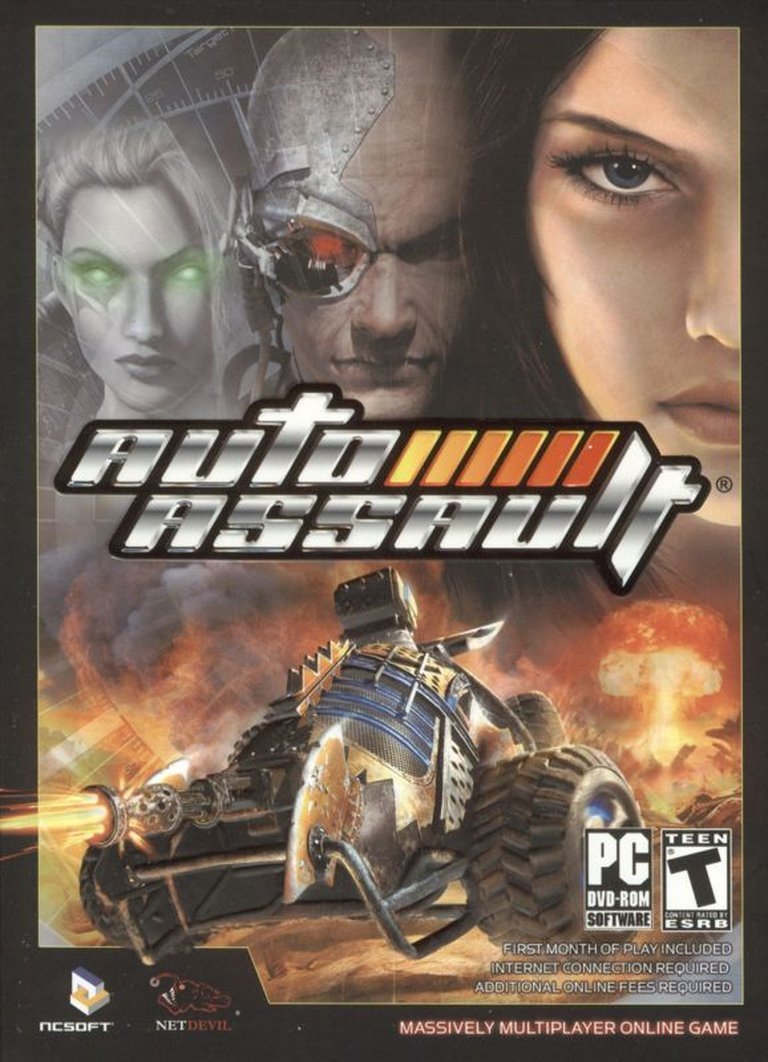
Auto Assault is a fast-paced MMORPG set in a post-apocalyptic world where players choose from three factions—human, biomek, or mutant—and engage in vehicular combat against enemy groups and mutated creatures. The game features character progression up to level 80, customizable vehicles with various paint styles and accessories, and a random loot system for gear and upgrades. Players spend most of their time inside their vehicles, battling in a persistent online world with dynamic combat and faction-based conflicts.
Auto Assault Patches & Updates
Auto Assault Mods
Auto Assault Reviews & Reception
metacritic.com (72/100): Mad Max brought to MMORPG world, finally! Too bad that action-packed fighting is almost the only thing the excellent setting is used for, at least for now.
imdb.com (20/100): Do people actually play this tripe? The only thing that stopped me from giving this game a 1. Is the pity i have the company who created this waste of a CD.
mobygames.com (73/100): Auto Assault is an MMORPG with fast-paced combat in a post-apocalyptic setting.
ign.com (75/100): Fast-paced vehicular combat, high-tech, futuristic weaponry, and hundreds of intense skills provide a unique departure from traditional MMORPGs.
Auto Assault: A Post-Apocalyptic Dream Deferred
Introduction
In the annals of MMORPG history, Auto Assault (2006) stands as a fascinating “what if?”—a game that dared to fuse the adrenaline of vehicular combat with the depth of role-playing, all within a post-apocalyptic wasteland. Developed by NetDevil and published by NCsoft, Auto Assault was a bold departure from the fantasy tropes dominating the genre, offering players a chance to battle not with swords and spells, but with machine guns, rocket launchers, and armored cars. Yet, despite its ambition and moments of brilliance, the game sputtered out after just 16 months, leaving behind a legacy of unfulfilled potential. This review explores Auto Assault‘s development, its innovative (and flawed) design, its reception, and its place in the pantheon of MMOs that could have been.
Development History & Context
The Studio and the Vision
NetDevil, founded in 1997, was a small but ambitious studio that had already dabbled in the MMO space with Jumpgate, a space combat title. For their follow-up, they sought to explore another niche: post-apocalyptic vehicular combat. Inspired by Mad Max and infused with a dash of Greek mythology, Auto Assault was conceived as a hybrid of action and RPG, where players would spend most of their time behind the wheel of customized cars, trucks, or tanks, battling mutants, biomechanical soldiers, and rival factions.
The game’s development was not without its challenges. NetDevil’s team admitted in interviews that Auto Assault entered beta too early, a decision that backfired when testers encountered what was essentially an alpha build. As Scott Brown, NetDevil’s president, later reflected, “Like it or not, beta is marketing. It’s when the public is playing your game and you want to put your best foot forward.” The rushed beta left a poor first impression, and the game struggled to recover.
The Gaming Landscape of 2006
Auto Assault launched in April 2006, a year dominated by titans like World of Warcraft, Guild Wars, and The Elder Scrolls IV: Oblivion. The MMO market was crowded, and fantasy settings were the norm. Auto Assault’s post-apocalyptic aesthetic was a breath of fresh air, but it also alienated players accustomed to elves and orcs. The game’s vehicular combat, while innovative, was a hard sell for traditional MMO fans who preferred the methodical pacing of tab-targeting and spellcasting.
Technologically, Auto Assault was ambitious. It utilized the Havok physics engine to create destructible environments, a rarity in MMOs at the time. The game’s world was vast, with sprawling wastelands and ruined cities to explore. However, the technical demands of rendering these environments, combined with the game’s steep learning curve, made it inaccessible to casual players.
Narrative & Thematic Deep Dive
The World and Its Factions
Auto Assault’s lore is a dark tapestry of survival, mutation, and corporate greed. In the 23rd century, Earth has been ravaged by alien terraforming pods, which unleashed contamination that killed millions and mutated others. The survivors split into three factions:
- Humans: The remnants of humanity, who retreated underground to escape the contamination. They emerged to find a world overrun by mutants and biomechanical soldiers. Humans rely on advanced technology, including deflector shields and psychic powers, to survive.
- Mutants: Humans transformed by the alien contamination, who were once persecuted and interned. They now fight for their survival, using organic technology and regenerative abilities.
- Biomeks: Cybernetically enhanced soldiers created by the Human corporation Hestia to combat the mutants. After being abandoned and nuked by their creators, they seek revenge.
The game’s narrative unfolds as players progress through their faction’s territory, uncovering the truth behind the alien invasion and the factions’ ongoing conflicts. The story is delivered through quests, environmental storytelling, and occasional cutscenes, though it often takes a backseat to the game’s combat-focused gameplay.
Themes of Survival and Identity
Auto Assault’s themes are deeply rooted in post-apocalyptic tropes. Survival is paramount, and the game’s factions each represent a different approach to it. The Humans cling to their technology and order, the Mutants embrace their newfound abilities, and the Biomeks struggle with their forced cybernetic existence. The game’s world is a scavenger’s paradise, where ruins of the modern age litter the landscape, and players must scavenge for resources to upgrade their vehicles.
The game also explores the idea of identity. Players’ avatars are secondary to their vehicles, which become extensions of themselves. Customization is key, allowing players to express their personality through their car’s paint job, weapons, and accessories. This focus on vehicles over characters was a double-edged sword—it made the game unique but also made it harder for players to connect emotionally with their avatars.
Gameplay Mechanics & Systems
Vehicular Combat and Customization
At its core, Auto Assault is a vehicular combat game. Players spend the majority of their time in their cars, engaging in real-time, third-person shooter-style combat. The game offers a variety of vehicles, from nimble motorcycles to hulking tanks, each with its own strengths and weaknesses. Combat is fast-paced and chaotic, with players dodging enemy fire, ramming opponents, and unleashing devastating weapons.
The game’s customization system is one of its strongest features. Players can modify their vehicles with a wide range of weapons, armor, and accessories, allowing for a high degree of personalization. The loot system, while random, provides a steady stream of upgrades, keeping players engaged in the grind.
Character Progression and Classes
Despite the focus on vehicles, Auto Assault includes a traditional MMO progression system. Players level up to a maximum of 80, gaining new skills and abilities along the way. The game features four classes, each with its own role:
- Tank: Heavy armor and high damage output, ideal for frontline combat.
- Healer: Support class with healing and buffing abilities.
- Stealth: Focuses on stealth and ambush tactics, often using motorcycles.
- Pet Master: Summons drones or mutant creatures to aid in battle.
The class system is familiar to MMO veterans, but the execution is uneven. Some classes, like the Tank, feel overpowered, while others, like the Healer, struggle to keep up. The game’s lack of a death penalty—players respawn at the nearest repair station with no lasting consequences—further unbalances the combat, making it feel weightless at times.
Quests and Exploration
Auto Assault’s quests are a mixed bag. The game offers a variety of missions, from simple “kill X enemies” tasks to more complex objectives like escorting NPCs or destroying enemy bases. However, the quests quickly become repetitive, and the lack of variety in the game’s environments exacerbates this issue. The wasteland, while visually impressive, feels empty and lifeless, with little to do beyond combat.
The game’s exploration is hindered by its technical limitations. The world is vast, but it’s also barren, with few landmarks or points of interest. The game’s map system is clunky, and navigation can be frustrating, especially for new players.
World-Building, Art & Sound
The Post-Apocalyptic Aesthetic
Auto Assault’s world is a grim, desolate place, filled with the ruins of a once-great civilization. The game’s art direction leans heavily into the Mad Max aesthetic, with rusted cars, crumbling buildings, and mutated creatures populating the landscape. The game’s environments are destructible, thanks to the Havok physics engine, allowing players to flatten buildings and scatter debris with their vehicles.
The game’s visuals are a mixed bag. While the environments are detailed and atmospheric, the character models and animations are stiff and outdated. The game’s UI is functional but uninspired, with a cluttered inventory system and confusing menus.
Sound Design and Music
The game’s sound design is one of its strongest aspects. The roar of engines, the crack of gunfire, and the crunch of metal on metal create a visceral, immersive experience. The game’s music, however, is forgettable, with a generic techno soundtrack that does little to enhance the atmosphere.
Reception & Legacy
Critical Reception
Auto Assault received mixed reviews upon release, with critics praising its innovative combat and post-apocalyptic setting but criticizing its repetitive quests, technical issues, and lack of polish. The game’s Metacritic score of 72 reflects this divide, with some reviewers hailing it as a breath of fresh air in the MMO genre, while others dismissed it as an unpolished mess.
The game’s reception was further hurt by its low player population. Despite NCsoft’s efforts to merge servers and reduce subscription fees, Auto Assault struggled to attract a sustainable audience. The game’s steep learning curve and niche appeal made it difficult for casual players to engage with, and the lack of a strong community made it feel like a ghost town.
Commercial Failure and Shutdown
Auto Assault’s commercial failure was swift and decisive. The game’s servers were shut down on August 31, 2007, just 16 months after launch. NCsoft cited “insufficient numbers of subscribers” as the reason for the shutdown, and NetDevil’s attempts to buy back the rights to the game were unsuccessful.
The game’s shutdown was a blow to NetDevil, which had poured years of effort into the project. In a farewell message, NetDevil president Scott Brown thanked the game’s remaining players, saying, “Auto Assault was 4+ years of working our tails off to get this product out. It was something we all loved and I’m glad that some people could find the same joy from the game as we did.”
Legacy and Influence
Despite its short lifespan, Auto Assault left a mark on the MMO genre. Its focus on vehicular combat and destructible environments was ahead of its time, and its post-apocalyptic setting remains a rarity in the genre. The game’s failure also served as a cautionary tale about the dangers of rushing a game to market and the importance of a strong community.
In the years since its shutdown, Auto Assault has developed a cult following. Fans have attempted to revive the game through private servers, and its memory lives on in forums and retrospectives. While it may not have been a commercial success, Auto Assault remains a fascinating experiment in MMO design—a game that dared to be different, even if it ultimately fell short.
Conclusion
Auto Assault is a game of contradictions. It was ambitious yet flawed, innovative yet unpolished, and bold yet ultimately unsuccessful. Its post-apocalyptic setting and vehicular combat were a breath of fresh air in a genre dominated by fantasy tropes, but its repetitive quests, technical issues, and lack of community support doomed it to obscurity.
Yet, for all its flaws, Auto Assault remains a fascinating artifact of MMO history. It was a game that dared to challenge the status quo, offering players a unique experience that blended action, RPG, and vehicular combat. Its failure was not due to a lack of vision but rather a combination of poor execution, rushed development, and an unforgiving market.
In the end, Auto Assault is a reminder of the risks and rewards of innovation in game design. It may not have been a commercial success, but it remains a testament to the creativity and ambition of its developers. For those who experienced it, Auto Assault was a brief but thrilling ride through a post-apocalyptic wasteland—a dream deferred, but not forgotten.