
- Release Year: 2016
- Platforms: Linux, Macintosh, Windows
- Publisher: Nonadecimal Creative
- Developer: Nonadecimal Creative
- Genre: Strategy, Tactics
- Perspective: Top-down
- Game Mode: Single-player
- Gameplay: Real-time strategy
- Average Score: 58/100
Description
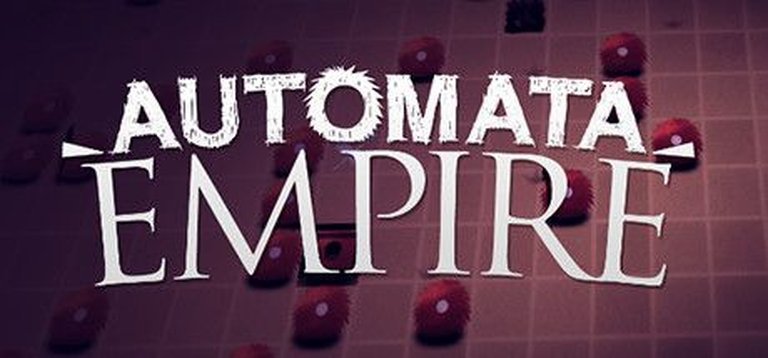
Automata Empire is a real-time strategy game developed by Nonadecimal Creative, released in 2016. The game is set in a world where players seize power and build an empire using fuzzy cellular automata monsters. Players herd hundreds of mindless subjects to smash rivals’ castles and steal their territory, inspired by Conway’s Game of Life. The gameplay involves balancing the creation and control of automata with strategic sacrifices to gain long-term advantages through taverns, roads, and catapults.
Where to Buy Automata Empire
PC
Automata Empire Cracks & Fixes
Automata Empire Patches & Updates
Automata Empire Guides & Walkthroughs
Automata Empire Reviews & Reception
metacritic.com (60/100): It is cute, but way too passive and the repetitiveness makes things even more boring.
opencritic.com (45/100): the lack of anything beyond the feedback loop core gameplay has led to an overall uninteresting, flat experience.
opencritic.com : Automata Empire is as chaotic as it is hypnotic. The strategy focus and the simple mechanics make it easy to learn but difficult to master.
store.steampowered.com : Automata Empire is wonderful stuff: a game that’s all about creating feedback loops as you try to turn a handful of automata into a gaggle, a gang, an overwhelming force.
Automata Empire: A Fractal of Strategy in the Chaos of Life
Introduction
In the vast archipelago of indie strategy games, Automata Empire (2016) stands as a peculiar gem—a title that dares to blend the cold logic of cellular automata with the frenetic energy of real-time strategy. Developed by the micro-studio Nonadecimal Creative, this unassuming game tasks players with herding mindless, fuzzy organisms into an empire-building frenzy, all while wrestling with emergent feedback loops and self-defeating chaos. While it lacks the polish of AAA titans, its ambition to turn mathematical abstraction into compelling gameplay cements its legacy as a cult oddity—a thesis proven by its enduring niche appeal and experimental design.
Development History & Context
Born from a 2015 game jam prompt themed around “growth,” Automata Empire began as creator 10011’s attempt to resolve a childhood frustration with Conway’s Game of Life—a classic zero-player game with no objectives. “I wanted to give Life a purpose,” they explained in interviews, reimagining its binary cells as additive numerical values that could be weaponized. Developed in Unity by a three-person team (with art by James Hostetler and music by Justin Aftab), the game emerged during an indie boom where digital storefronts like Steam welcomed experimental projects.
Nonadecimal Creative faced constraints typical of micro-studios: minimalist visuals, a reliance on procedural systems, and no budget for voice acting or cinematics. Yet this limitation birthed innovation. The team focused on refining the core loop—sacrificing units to build structures that manipulate their behavior—while sidestepping RTS conventions like direct unit control. Released in April 2016 for Windows, macOS, and Linux, Automata Empire arrived as a curiosity amid flashier titles, its quiet launch echoed only by whispers from strategy diehards and math enthusiasts.
Narrative & Thematic Deep Dive
Automata Empire foregoes traditional storytelling, but its themes roar through its mechanics. The game is a meditation on control vs. chaos, sustainable growth, and the unintended consequences of systems. Players embody a nameless ruler commanding “automata”—amorphous, numbers-driven creatures that multiply by colliding (e.g., two “3-value” units merge into a “6,” then split into three “2s”). These automata lack sentience; they are merely vectors of arithmetic, crashing mindlessly into foes or structures.
The five gameplay modes—Siegecraft, Migration, Capture the Banner, King of the Plateau, and WAAAAAR!!—each frame these themes differently. In Siegecraft, turtling behind walls risks stagnation, while reckless expansion in Migration collapses under undead hordes. The absence of a human (or even anthropomorphic) cast sharpens the focus: this is a game about systems, not souls. Even the tongue-in-cheek monarch titles (“Disgruntled Viceroy,” “Badland Pyromancer”) mock the futility of rulership in a world governed by raw computation.
Gameplay Mechanics & Systems
At its core, Automata Empire is a game of indirect control. Players sacrifice automata to build:
– Taverns: Magnetic hubs that cluster units for reproduction.
– Roads: Force deterministic movement paths.
– Catapults: Launch units across the map.
– Armories: Equip units with shields/weapons.
The brilliance lies in feedback loops. A well-placed tavern creates a vortex of merging/splitting units, swelling your ranks exponentially—until overcrowding triggers mass collapses. Matches pivot on balancing short-term aggression against long-term stability, a dance mirrored in modes like Capture the Banner, where retrieving a flag risks depopulating your base.
Yet flaws emerge. The tutorial is sparse, leaving players to decode opaque systems through failure. Late-game scenarios often devolve into watching automata swirl aimlessly, underscoring the lack of mid-match objectives. Still, the 15-minute match length (or 8 minutes in Lightning Mode) ensures sessions rarely overstay their welcome.
World-Building, Art & Sound
Visually, Automata Empire embraces minimalism. The top-down perspective renders automata as colorful, pulsing blobs, while castles and terrain are sketched in clean, cartoonish lines. This simplicity clarifies the chaos—critical when hundreds of units flood the screen.
Sound design is utilitarian: squelchy pops accompany unit collisions, and taverns hum with magnetic urgency. Justin Aftab’s soundtrack leans into electronic ambience, evoking the sterile beauty of a Petri dish. While not acoustically memorable, it complements the game’s clinical tone.
The true artistry lies in the procedural stories. Watching a tavern-led population boom suddenly implode—or an enemy’s road network backfire—feels like observing live Darwinian experiments.
Reception & Legacy
Automata Empire garnered mixed reviews (66% positive on Steam, 4.5/10 from Goomba Stomp), praised for its novelty but criticized for repetitiveness and a steep learning curve. Eurogamer called it “wonderful stuff… about creating feedback loops,” while detractors like Destructoid dismissed it as “way too passive.”
Yet its legacy persists. Academics have cited it as a teaching tool for feedback loops in systems thinking, and its DNA echoes in later titles like Oxygen Not Included (2019). Though dwarfed by genre titans, Automata Empire remains a cult favorite—a testament to the allure of games that dare to be different.
Conclusion
Automata Empire is not for everyone. Its opaque systems, lack of narrative, and reliance on emergent chaos will frustrate players craving hand-holding. But for those willing to engage, it offers a rare glimpse into the soul of strategy: the delicate balance between order and entropy. Nonadecimal Creative’s experiment may not have reshaped the genre, but it carved a singular niche—a fractal of ambition in the endless game of indie development. In the annals of video game history, Automata Empire is a footnote, but a fascinating one.
Final Verdict: A flawed yet visionary oddity—7/10. Worth exploring for strategy purists, math enthusiasts, and anyone who’s ever yearned to rule a kingdom of programmable slime.