
- Release Year: 2019
- Platforms: Blacknut, Nintendo Switch, PlayStation 4, Stadia, Windows, Xbox One
- Publisher: H2 Interactive Co., Ltd., Hello There AB, Wired Productions, Ltd.
- Developer: Hello There AB
- Genre: Action
- Perspective: Behind view
- Game Mode: Co-op, Single-player
- Gameplay: Music, rhythm
- Average Score: 80/100
Description
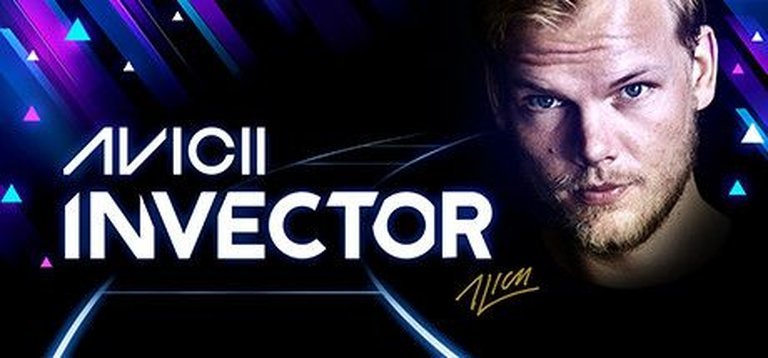
Avicii Invector is an updated re-release of the 2017 rhythm action game Invector, named after the late Swedish electronic musician Avicii and featuring his tracks alongside enhancements like a new UI, additional songs, and a fresh game world. Players experience behind-view music/rhythm gameplay, soaring down a rotating spaceship corridor while hitting notes in perfect sync with the pulsating electronic beats.
Gameplay Videos
Where to Buy Avicii Invector
Avicii Invector Cracks & Fixes
Avicii Invector Reviews & Reception
opencritic.com (81/100): A sumptuous fusion of sound, colour and love that everyone should try.
metacritic.com (80/100): A brilliant rhythm action experience and a fitting tribute to the late Tim Bergling.
en.wikipedia.org (80/100): generally favorable reviews
waytoomany.games : one of the best rhythm games to have been released in a long time.
Avicii Invector: Review
Introduction
Imagine hurtling through a neon-drenched cosmos, your spaceship pulsing to the euphoric drops of “Wake Me Up” or the anthemic build of “Levels,” every perfectly timed button press syncing your virtual flight with the beats of a fallen icon. Avicii Invector isn’t just a rhythm game—it’s a luminous requiem for Tim Bergling, the Swedish EDM maestro known as Avicii, whose untimely death in 2018 at age 28 left the music world reeling. Originally launched as the stripped-down Invector on PS4 in 2017, this 2019 re-release (with a 2020 Encore Edition expanding to 35 tracks) transforms a collaborative passion project into a poignant tribute, donating royalties to the Tim Bergling Foundation for mental health awareness. As a game historian, I see it as a rare artifact: a single-artist rhythm title that captures the late-2010s resurgence of music games amid a post-Guitar Hero landscape craving innovation. My thesis? Avicii Invector excels as an audiovisual symphony and emotional homage, blending addictive rhythm action with breathtaking aesthetics, but its brevity, mechanical quirks, and lack of depth temper its transcendence, securing it as a niche gem rather than a genre-defining masterpiece.
Development History & Context
Hello There Games, a small Swedish indie studio founded in Gothenburg, birthed Avicii Invector from a serendipitous 2015 collaboration with Tim Bergling himself. Avicii, fresh off hits like “Wake Me Up” from his 2013 album True, envisioned a game where fans could “explore his music while enjoying serene visualscapes”—a far cry from the plastic-instrument era of Rock Band or Guitar Hero. Development kicked off under the working title Vector, with Avicii deeply involved: he scrutinized mechanics, visuals inspired by his music videos and live shows, and track integrations during marathon sessions that devolved into Taekwondo stretches and song swaps. Powered by Unity engine for cross-platform agility, the PS4-exclusive Invector launched December 6, 2017, with 22 tracks—but Avicii’s suicide on April 20, 2018, halted momentum.
The gaming landscape of 2017-2019 was ripe for revival: rhythm games had waned post-2010 plastic fatigue, but titles like Beat Saber (2018 VR sensation) and Crypt of the NecroDancer (2015) proved fresh mechanics could reignite interest. Hello There paused, numbed by grief, until partnering with Wired Productions and the Tim Bergling Foundation. Revived as AVICII Invector, the 2019 release (December 10 on Windows, PS4, Xbox One) added a new UI, songs, worlds, and free upgrades for original owners. Technological constraints were minimal—Unity handled 4K visuals and 60fps—but era-specific hurdles included no online multiplayer (a rarity in local-party-focused 2019) and platform parity issues like Xbox calibration woes. The 2020 Switch Encore Edition bundled 10 DLC tracks (e.g., “SOS,” “Freak”) and a Magma world; Stadia (2021) and Meta Quest 2 VR (2022) ports expanded reach. Credits spotlight 45 talents, including game designers Arshak Ardeshir and Magdalena Erliksson, artists like Eric Thelander, and voice actor Maya Aoki Tuttle, embodying a labor of love amid EDM’s commercial peak and mental health reckonings.
Narrative & Thematic Deep Dive
Avicii Invector‘s “story” is whimsically minimalist—a deliberate choice to foreground music over melodrama. Players embody Stella, a plucky spaceship pilot traversing six (or seven in Encore) fantastical worlds in a galactic odyssey. Hand-drawn cinematics depict her landing on planets, battling vessel glitches, and pondering existential homesickness, framed as a quest for… a chocolate bat stuffed with nuts? (A tongue-in-cheek placeholder in some docs, underscoring the non-serious tone.) Dialogue is sparse: quippy logs like Stella’s hissy fits about not wanting to return home, skippable for rhythm purists. No branching paths or character arcs; progression unlocks via song completion, gating Hard mode behind Normal clears—a frustrating veteran hurdle.
Thematically, it’s a meditation on Avicii’s duality: euphoric highs masking inner turmoil. Worlds mirror his discography’s evolution—Valley‘s earthy vibes echo True‘s folk-EDM fusion; Oblivion‘s melancholic voids nod to posthumous introspection. Tracks like “For a Better Day” (anti-child-soldier plea) or “Lonely Together” (feat. Rita Ora) layer uplifting beats over lyrics of isolation, amplified by gameplay’s “one more song” compulsion. As tribute, it humanizes Avicii: proceeds fund suicide prevention, evoking his Avicii: True Stories doc’s mental health struggles. Yet, the narrative’s thinness—cringe cutscenes per reviews—feels like style over substance, prioritizing immersion in Bergling’s “silent plight” over deep lore. In rhythm game history, it echoes The Beatles: Rock Band‘s band journey but distills to emotional resonance, a fitting elegy for an artist who blended joy and pain.
Gameplay Mechanics & Systems
At its core, Avicii Invector is a behind-view rhythm-action loop: pilot a low-poly spaceship down predetermined triangular highways, smashing cubes in three lanes (mapped to face buttons: e.g., X/Square for left, A/X for center, B/Circle for right) while rotating via D-pad/arrows. Hold notes for sustains, swipe “fade” gestures (tilt stick while holding), and boost via combos for speed bursts. Free-fly interludes demand ring navigation, echoing Thumper‘s intensity minus rails. Three difficulties—Easy (3 buttons, forgiving timing), Normal, Hard (4 buttons, denser notes, faster tempo)—build challenge, with 75% accuracy passing songs. UI shines: real-time percentage meter (not vague stars), calibration tools (though Xbox finicky), leaderboards for global rivalry. Multiplayer splitscreen supports four local pilots on one track, racing scores competitively—no online, a glaring 2019 omission.
Innovations dazzle: dynamic worlds react to beats (particle explosions on perfects), ship rotations add spatial flair beyond lane-switches. Progression ties to campaign: clear worlds (4-5 songs each) for unlocks, Free Play for setlists, Challenges for feats. Flaws abound—Hard gating irks pros; short ~2-4 hour campaign lacks Extreme mode; latency tweaks via trial-and-error; repetitive loops in extended sessions. No VR motion until Quest port (punch notes 360°). Compared to DJ Hero‘s scratches or Amplitude‘s lanes, it’s chaotic bliss: addictive “just one more” via hypnotic flow, but longevity hinges on Avicii fandom over mechanical depth.
World-Building, Art & Sound
Six base worlds (plus Magma in Encore) form a psychedelic universe: Valley‘s lush valleys (Can’t Catch Me), Space‘s cosmic voids (Waiting for Love), Ice‘s frozen tundras (Wake Me Up!), City‘s neon grids (Levels), Forest‘s bioluminescent wilds (Lay Me Down), Oblivion‘s abstract abysses (Heaven). Visuals mesmerize—minimalist ships contrast hyper-detailed, low-poly environments pulsing with particles, lasers, and beat-synced geometry. 4K/60fps renders eye-watering spectacles: forests bloom on drops, skies shatter on misses. Atmosphere evokes Avicii concerts: stroboscopic frenzy, best in dark rooms.
Sound design elevates: 25 base tracks (35 Encore) span career—early bangers (Fade Into Darkness), peaks (Hey Brother), rarities (Sunset Jesus)—remixed subtly for rhythm. Lyrics shine in focus (SOS‘s vulnerability), with SFX (whooshes, crashes) enhancing immersion. No weak links; even 8-bit Wake Me Up! (Switch exclusive) charms. Collectively, they forge euphoria, turning play into “virtual concert,” per reviews—visuals/audio synergy rivals Rez‘s synesthesia, cementing tribute’s power.
Reception & Legacy
Critically, Avicii Invector soared: MobyGames 7.7/10 (#5,025/26K), Metacritic 80/100 (“generally favorable”), OpenCritic 81 (89% recommend). Accolades include WayTooManyGames’ 8.5/10 (“best since Rock Band 4“), eShopperReviews 91/100 (Switch), 4Players.de 81/100 (multiplatform). Praises: “heartfelt tribute” (Digitally Downloaded), “eye-popping visuals” (ThisGenGaming 9.5/10), “addictive loop” (Video Chums 80%). Critiques: short (~2 hours, per Noisy Pixel 70%), unchallenging Hard (Flickering Myth 7.5/10), no online/local gating (Indie Game Website 70%), repetitive (Jeuxvideo.com 75%).
Commercially modest—Steam 50K-100K owners, 93% positive reviews—but culturally resonant: free original-owner upgrades, VR/Stadia ports sustained buzz. Legacy evolves as Avicii homage amid mental health discourse; influenced single-artist rhythm like Beat Legend: Avicii (mobile). In industry, it bridged indie-EDM, prefiguring Rhythm Galaxy (2023 sequel). Post-Guitar Hero slump, it proved licensed music games viable via charity/innovation, though no seismic shift—niche enduring like Elite Beat Agents.
Conclusion
Avicii Invector distills Tim Bergling’s luminous chaos into rhythmic rapture: stunning worlds, masterful track curation, and tribute-heart make it soar, flaws notwithstanding. Short, solo-artist focus, and mechanical gates limit replay, but as emotional portal to Avicii’s world—bolstered by foundation ties—it’s irreplaceable. In video game history, it claims a poignant niche: not Rock Band‘s revolution, but a stellar memorial amid 2010s rhythm revival. Verdict: 8.5/10—essential for EDM fans, worthy for all seeking audiovisual transcendence. Fly on, Tim.