
- Release Year: 2011
- Platforms: iPad, iPhone, Macintosh, Windows
- Publisher: Big Fish Games, Inc, Focus Multimedia Ltd.
- Developer: Boomzap Pte. Ltd.
- Genre: Adventure
- Perspective: First-person
- Game Mode: Single-player
- Gameplay: Hidden object, Puzzle elements
- Setting: Fantasy
- Average Score: 92/100
Description
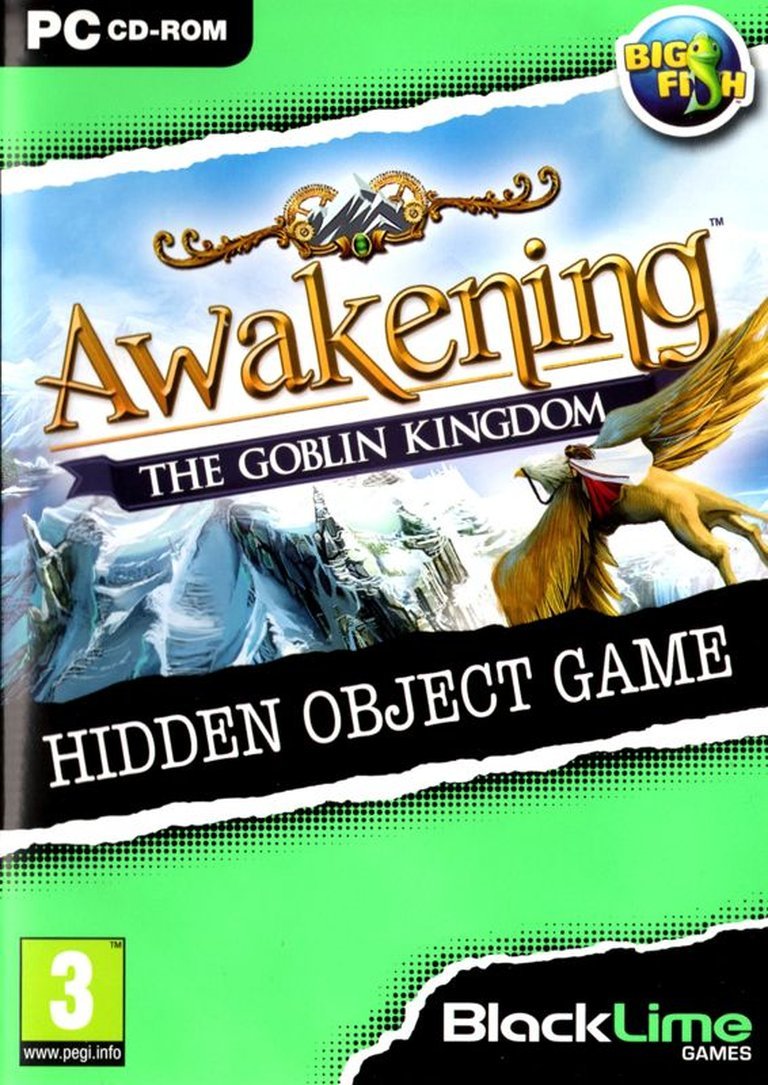
Awakening: The Goblin Kingdom is the third game in the Awakening series, where Princess Sophia journeys to the rugged, snow-covered mountains of the goblin-ruled kingdom to seek answers from the Goblin King about her people’s disappearance. As the first human in a century, she navigates hidden object challenges and intricate puzzles amid dark portents and lurking threats in this fantasy adventure.
Gameplay Videos
Where to Buy Awakening: The Goblin Kingdom
PC
Awakening: The Goblin Kingdom Guides & Walkthroughs
Awakening: The Goblin Kingdom Reviews & Reception
jayisgames.com (92/100): An adventure of epic proportions. Perfect for young readers.
Awakening: The Goblin Kingdom: The Pinnacle of a Casual Gaming Dynasty
Introduction: A Kingdom Forged in Crystal and Code
In the crowded landscape of early-2010s casual gaming, few series achieved the sustained critical and commercial success of Boomzap Entertainment’s Awakening. Following a solid debut with The Dreamless Castle and a worthy follow-up in Moonfell Wood, the series required a third act that could solidify its legacy and push the hidden object puzzle adventure (HOPA) formula forward. With Awakening: The Goblin Kingdom, released in 2011, Boomzap and publisher Big Fish Games delivered precisely that. This is not merely a continuation but a confident leap—a game that refines its predecessors’ charms while introducing such a rich tapestry of puzzles and a world so inviting that it feels like a destination rather than a series of backdrops. My thesis is this: The Goblin Kingdom represents the zenith of the classic Awakening formula, a masterclass in world-building within technical constraints and a benchmark for narrative cohesion in a genre often critiqued for its frivolity. It stands as a monument to thoughtful design in the casual space, balancing accessibility with surprising depth.
Development History & Context: Boomzap’s Ascent
Awakening: The Goblin Kingdom was developed by Boomzap Pte. Ltd., a Singapore-based studio that had rapidly become a cornerstone of Big Fish Games’ exclusive catalogue. Under Creative Director Christopher Natsuume and Technical Director Allan Simonsen—veterans with extensive credits in casual gaming—Boomzap had honed a specific craft. The studio’s vision for The Goblin Kingdom was to double down on the series’ core strengths: a fairy-tale narrative with genuine emotional stakes, stunningly detailed art for its genre, and a puzzle ecosystem that felt integrated rather than bolted-on.
Technologically, the game was built for the dominant casual platforms of the era: Windows and Macintosh (released simultaneously, a first for the series), with iOS ports following. The constraints were significant: the game needed to run on a vast array of consumer PCs, support the era’s standard screen resolutions, and maintain a download size palatable for dial-up and early broadband users. Yet, within these bounds, Boomzap achieved remarkable visual fidelity. The fixed/flip-screen perspective, a staple of the genre, was used not as a limitation but as a compositional tool, allowing artists like Ben Wong, Bless Tambololo, and Maria Francesca Roca (“Cheese”) to craft scenes with theatrical framing and lush, layered art.
The gaming landscape of 2011 was one where the HOPA genre was saturated but still hungry for quality. Big Fish Games’ model of episodic, story-driven content found its perfect expression in the Awakening series. The Goblin Kingdom arrived as the third entry, a point where a series must evolve or stagnate. Boomzap chose evolution, expanding the puzzle palette and deepening the world, ensuring the game not only met but exceeded expectations.
Narrative & Thematic Deep Dive: Beyond the Rescue Quest
The plot of The Goblin Kingdom is deceptively simple: Princess Sophia, having escaped the Dreamless Castle and traversed Moonfell Wood, follows the Fairy Queen’s guidance to the eponymous Goblin Kingdom to petition its king for information about her missing human subjects. However, the narrative genius lies in its execution and thematic undercurrents.
-
Plot & Pacing: The story is delivered through a combination of journal entries (managed beautifully in the UI), character dialogues, and environmental storytelling. The walkthrough reveals Sophia’s journey is structured into four distinct chapters: the Mountain Outpost, the Dark Tower, the Fungal Forest, and the final Return to Gobholme. Each chapter feels like a self-contained adventure with its own mini-arc—solving the outpost’s mechanical failures, uncovering the inventor Leodici’s plight in the tower, healing the Gnomish shrines, and finally infiltrating the goblin palace. This structure prevents narrative fatigue. The true antagonist, the dark sorcerer Dreadmyre, is a looming presence, his influence felt in the corrupted shrines and the final confrontation with the magician Grimble, setting the stage for the series’ later climax.
-
Characters & Dialogue: Sophia is a notable departure from the passive princess trope. She is proactive, resourceful, and compassionate. Her interactions with goblins—from the gruff engineer to the peddler to the child-like gnomes—are nuanced. The writing (by Anali Drilon and Si Yuan Wong, aka “Ran”) avoids caricature. The goblins are not inherently evil; they are a civilization under stress, governed by peculiar customs and threatened by a greater evil. Ran the Owl, her companion, provides hints but also character, often commenting on the situation with dry wit. The Goblin King, when finally met, is portrayed not as a monster but a weary ruler facing a crisis, reinforcing the theme of misunderstood “others.”
-
Themes: The game explores prejudice and perspective. Sophia, the only human in a century, is initially viewed with suspicion. Her success depends on learning goblin customs (the rail schedule, the coin system, the ceremonial puzzles). Conversely, she helps them—repairing their infrastructure, healing their sacred sites, recovering their stolen artifacts. It’s a narrative of mutual aid. Another strong theme is restoration vs. corruption. A significant portion of gameplay involves restoring the Aspects of Courage, Wisdom, and Faith at the Oracle’s shrines, physically and symbolically healing the land blighted by Dreadmyre’s influence. The puzzle of untangling the crests’ threads is a literal and metaphorical act of mending a fractured world.
Gameplay Mechanics & Systems: A Symphony of Puzzles
The Goblin Kingdom is where the Awakening formula achieves its most balanced and inventive expression. The core loop—navigate a scene, perform hidden object hunts (HOS), solve inventory/item-based puzzles—remains, but the execution is peerless.
-
Hidden Object Scenes: As noted by Adventurespiele‘s 96/100 review, the HOS are “more than abwechslungsreich” (varied). They are not just static lists. Items are frequently hidden within interactive layers (opening drawers, moving carpets, manipulating clocks). The list items are cleverly integrated into the environment’s story—you’re not just finding “a key,” but “a goblin wrench” needed for a specific task. The randomization mentioned in the walkthrough keeps scenes fresh on repeat plays.
-
Puzzle Variety & Innovation: This is the game’s crowning achievement. The walkthrough details a staggering array of mini-games, each contextually appropriate:
- Tangram/Polyomino Puzzles: Used for blueprints (the flying machine, the train station code, the throne room panel). They feel like practical reconstruction tasks.
- Logic & Code-breaking: The storeroom safe in the mines, the capsule dispenser, the typewriter sequence, and the Aspect shrines’ encryption plates require observation, journal cross-referencing, and logical deduction.
- Mechanical & Assembly: The engine repair using the collected Goblin Tools (screwdriver, wrench, sealant, hammer) is a highlight—a satisfying, tactile process where each tool has a specific, color-coded function. The gear assembly puzzles and pipe-connection challenges are equally elegant.
- Pattern Matching & Sequencing: The moon-phase engine puzzle, the treasure hunt with the peddler’s watches, the tournament of differences in the armoire, the rat cage lever sequence—all test different cognitive skills.
- Environmental Integration: Puzzles like using the pocket dragon to melt ice or light torches, or the specific sequence needed to operate the singing shrooms, make the inventory items feel vital to exploration.
-
Progression & UI: The journal is a masterclass in UI design. It doesn’t just list goals; it stores vital clues—the goblin crest, the tower heights, the train schedule—turning it into an indispensable reference. The hint system (Ran the Owl) recharges, discouraging spam but offering genuine help. The “Gumshoe” achievement system (finding supplementary story items) encourages thorough exploration and rewards lore enthusiasts.
-
Flaws? The game’s length and density can be daunting. Some puzzles, like the storeroom code or the fish-rearranging trophy wall, may frustrate players preferring linearity. The “casual” difficulty is still quite demanding by modern standards. However, these are arguably features, not bugs, for its target audience.
World-Building, Art & Sound: The Goblin Kingdom comes alive
The setting is the game’s secret weapon. The transition from the forest of Moonfell Wood to the rugged, snow-dusted mountains of the Goblin Kingdom is a deliberatevisual and tonal shift. The world feels cold yet vibrant, industrial yet magical.
-
Visual Direction: The art team created a cohesive aesthetic. The goblin architecture is a fusion of rustic stone, intricate clockwork (the train system, elevators), and bioluminescent fungi (the glowspores). The color palette uses cool blues and greys for the mountains, warm yellows and browns for the interiors, and vibrant greens and purples for the Fungal Forest. The character designs are expressive, especially the numerous goblin NPCs, each with a distinct silhouette and personality. The fixed camera angles are used to frame shots like a storybook, revealing narrative details in the background.
-
Sound Design: Jellene Khoh and Shazrin Saleh’s work is integral. The soundtrack is melodic and thematic, with adventurous motifs for exploration, mysterious tones for puzzles, and triumphant cues for revelations. Sound effects are crisp and satisfying—the clank of a tool, the whoosh of the pocket dragon’s fire, the click of a solved puzzle. The ambient sounds of wind, dripping water, and goblin chatter populate the world, making the static screens feel alive.
-
Atmosphere & Contribution: Together, these elements create a sense of place. You aren’t just “in a level”; you’re in a functioning goblin outpost, a cluttered inventor’s tower, a sacred (and desecrated) gnome grove. The art and sound sell the fantasy that this is a living kingdom with history, culture, and problems, making Sophia’s quest to understand and help it feel meaningful.
Reception & Legacy: A Series Peak and Genre Benchmark
Awakening: The Goblin Kingdom was met with universal praise from critics and players, a high point for the series.
* Critical Reception: The single critic score on MobyGames is 96% (from Adventurespiele), praising its “warmth,” “great graphics,” “beautiful sound,” and especially its “big step forward in gameplay” with varied HOS and fresh puzzles. Gamezebo (4/5) called it “an overall better package” due to puzzle variety, and Jay Is Games hailed it as “a magical enchanted ride.” It was awarded Best Hidden Object Game of 2011 by Casual Gameplay.
* Commercial Success: It peaked at #1 on Big Fish Games’ Top 10 PC Games chart and stayed in the top 10 for 42 days—the longest chart-topper for Boomzap at that time. It also reached #1 on the Mac chart. The series’ cumulative downloads would surpass 17 million by 2014.
* Legacy & Influence: It is widely regarded as the best entry in the eight-game main series and a high-water mark for the HOPA genre. Its influence is seen in how subsequent Awakening titles (and competitors) doubled down on puzzle diversity and narrative integration. The success of The Goblin Kingdom validated Boomzap’s design approach, leading to the ambitious Awakening Kingdoms (a free-to-play city-builder spin-off) and the acclaimed series finale, Redleaf Forest. As Wikipedia and Alchetron note, the Awakening series is considered “one of the oldest and most successful hidden object adventure franchises,” with The Goblin Kingdom being its pivotal, most celebrated chapter. It proved that casual games could have substantial, coherent stories and challenging, inventive puzzles without sacrificing accessibility.
Conclusion: An Undisputed Classic
Awakening: The Goblin Kingdom is more than the sum of its clever puzzles and beautiful scenes. It is a testament to the power of iterative design. Boomzap took a winning formula and refined every element: the story gained weight, the puzzles gained variety and integration, the world gained depth and history. It respects the player’s intelligence, providing a dense, satisfying experience that feels earned. While later entries like The Redleaf Forest would refine the formula further, and The Golden Age would revisit its world as a prequel, none captured the pure, unadulterated magic of this third adventure.
In the pantheon of casual games, The Goblin Kingdom is a foundational text. It demonstrates how a hidden object game can be a legitimate adventure, how a puzzle can tell a story, and how a goblin kingdom can feel more real and welcoming than many high-fantasy RPG cities. Its reputation, rightly, has only grown. For anyone seeking to understand the peak of the HOPA genre’s ambition and charm, the journey through the snow-capped mountains to Gobholme remains an essential pilgrimage. This is not just the best Awakening game; it is one of the finest casual adventures ever crafted.