
- Release Year: 2024
- Platforms: Windows
- Publisher: Dragonfly GF Co., Ltd.
- Developer: Dragonfly GF Co., Ltd.
- Genre: Action
- Perspective: Behind view
- Gameplay: Shooter
- Setting: Fantasy
- Average Score: 40/100
Description
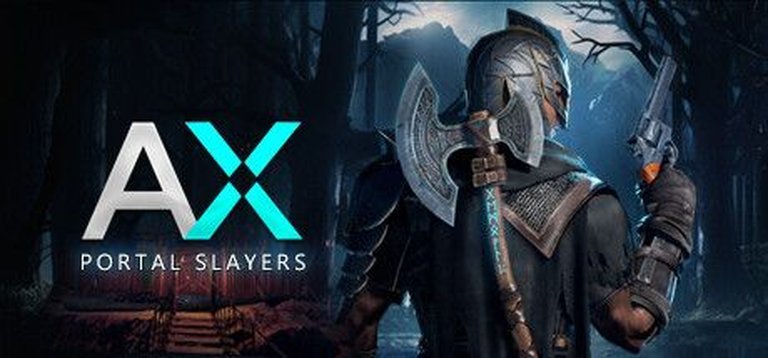
AX: Portal Slayers is a free-to-play action PvP third-person shooter set in a realm where reality and fantasy intersect, featuring behind-view gameplay where players defeat monsters to enhance their abilities and utilize tactical items to secure victory in intense multiplayer battles.
Where to Buy AX: Portal Slayers
PC
AX: Portal Slayers Reviews & Reception
store.steampowered.com (40/100): Mixed – 40% of the 15 user reviews for this game are positive.
games-popularity.com (40/100): 40.00% positive (6/15)
AX: Portal Slayers: Review
Introduction
In the overcrowded arena of free-to-play multiplayer shooters, AX: Portal Slayers bursts onto the scene like a goblin horde crashing a portal convention—chaotic, promising, and ultimately overwhelmed by its own ambitions. Released into Steam Early Access on March 28, 2024, by the South Korean studio Dragonfly GF Co., Ltd., this third-person FPS hybrid blends fantasy monster-slaying with tactical PvP combat in a realm “where reality and fantasy intersect.” Drawing superficial nods to iconic titles through its evocative name, it delivers a battle royale-esque experience where players hunt mythical beasts for power-ups before clashing in a central colosseum. Yet, beneath the gore-soaked surface lies a game strangled by technical woes, sparse content, and a player drought. My thesis: AX: Portal Slayers is a bold but broken experiment in genre fusion, a cautionary tale of Early Access pitfalls that squanders its innovative monster-hunting loop amid abandonment and neglect.
Development History & Context
Dragonfly GF Co., Ltd., a modest Korean developer and self-publisher, entered the fray with AX: Portal Slayers as their Steam debut, leveraging the ubiquitous Unity engine to craft a free-to-play title amid the 2024 glut of arena shooters and battle royales. Launched during a period dominated by polished giants like Fortnite, Valorant, and Apex Legends, the game positioned itself as a niche hybrid: third-person PvP shooter meets fantasy loot grind, echoing Monster Hunter‘s co-op beast-battling but twisted into competitive frenzy.
The studio’s vision, outlined in Steam’s Early Access FAQ, emphasized iterative polish through player feedback. They targeted 12-18 months in Early Access to refine graphics, controls, and expand content—new maps teeming with environment-specific monsters, additional firearms, melee weapons, skills, and character customization. At launch, the focus was a single 10-player map supporting solo, duo, and squad modes (up to 5v5), with 16 firearms (pistols to shotguns) and 27 tactical items (mines, turrets, radars). Free-to-play with optional in-app purchases, it promised fair progression: all items acquirable via gameplay.
Technological constraints were modest—minimum specs akin to mid-2010s hardware (GTX 780)—fitting Unity’s efficiency for PvP. The 2024 landscape was unforgiving: post-pandemic Steam saturation favored viral sensations, while Korean devs grappled with global matchmaking hurdles. Community involvement was pledged, but sparse Steam discussions reveal early red flags: matchmaking failures, broken cameras, and pleas for PvE solo modes amid ghost-town lobbies. Critically, the last developer update predates 20 months ago (as of late 2025 data), signaling stalled development and a pivot away from promised expansions, mirroring countless Early Access casualties like Monster Slayers (a related MobyGames title).
Narrative & Thematic Deep Dive
AX: Portal Slayers forgoes a traditional single-player campaign for pure multiplayer mayhem, rendering plot analysis a study in absence. No voiced protagonists, no lore dumps—just a terse ad blurb framing the action in a liminal “realm where reality and fantasy intersect.” Players embody silent slayers, portaled (thematically, not mechanically) into arenas overrun by imps, goblins, orcs, and elves. This setup evokes a meta-narrative: faceless combatants thrust into gladiatorial purgatory, their stories emergent from kill feeds and loot drops.
Thematically, it grapples with convergence and predation. Reality’s tactical firearms clash with fantasy’s primal beasts, symbolizing modern warfare invading mythic domains—a portal-punk riff on Doom‘s hellish incursions or Borderlands‘ loot-driven chaos. Monster-hunting upgrades represent Darwinian evolution: slay to empower, mirroring battle royale shrinking circles where survival demands adaptation. The map’s inward spiral to the “central colosseum” for final PvP evokes Roman spectacles, theming humanity’s bloodlust as eternal. Yet, dialogue is nil; themes emerge via environmental storytelling—gore-splattered arenas, radar pings amid goblin shrieks— but falter without depth. No characters evolve; elves and orcs are fodder, not foils. In a genre starved for lore (e.g., Overwatch‘s heroes), this void underscores its arcade roots, prioritizing visceral thrills over epic tapestry. Subtle nods to “portal slayers” hint at unfulfilled potential: a backstory of rift-sealing warriors lost to dev cuts?
Gameplay Mechanics & Systems
At its core, AX: Portal Slayers loops through hunt-upgrade-clash, a PvP twist on extraction shooters. Drop into a shared map (10 players max), prioritize monster extermination (imps for quick scraps, orcs for beefy drops) to boost abilities, scavenge 16 firearms and 27 items, then converge for colosseum showdowns. Modes flex: solo for lone-wolf grinding, duo/squads for co-op PvE-to-PvP transitions, scaling to 5v5 brawls. Behind-view third-person controls demand direct aiming, blending FPS precision with TPS mobility—dodge goblin swarms while lining sniper shots.
Combat shines in tactical asymmetry: firearms range from pistols (mobile starters) to shotguns (close-quarters gorefests), augmented by deployables like mines (ambush traps), turrets (auto-defense), and radars (foe reveals). Progression is loot-based: defeats yield upgrades, enabling snowball strategies. Innovative flaws emerge here—the single map breeds repetition, matchmaking ghosts matches (per forums: “Can’t queue,” low pop), and camera bugs invert controls mid-fight. UI is barebones: minimal HUD clutters less but hides match status, frustrating newcomers. No deep progression persists post-match; it’s session-locked, punishing disconnects.
Flaws compound: unbalanced modes (solo bots added late, per forums), gore/violence tags unfulfilled without visual polish, and absent melee/skills hamstring variety. Early Access state—polished enough for 40-minute bouts—promised fixes, but stagnation amplifies grind fatigue. Verdict: addictive loops for duo trolls, but solo play crumbles under tech debt.
World-Building, Art & Sound
The singular map, a fog-shrouded fantasy arena funneling to a colosseum crux, builds a claustrophobic limbo realm. Crumbling ruins bleed reality (barren tech husks) into fantasy (orc lairs, elf groves), fostering tense ambushes amid goblin packs. Atmosphere thrives on predation: distant gunfire echoes, radar blips herald rivals, culminating in blood-drenched finals. Yet, Unity’s stock assets betray ambition—flat textures, pop-in monsters erode immersion.
Visuals skew realistic 3D with gore accents: elf viscera sprays, orc limbs sever. Behind-view camera (buggy, per complaints) aids spatial awareness but clips during leaps. Sound design pulses: firearm cracks pierce fantasy snarls (imp squeals, orc roars), tactical beeps heighten paranoia. No score elevates; it’s functional arena noise, evoking Quake‘s metal but muddied by unoptimized mixes. Collectively, elements forge frantic vibes—hunt’s eerie quiet shatters into colosseum cacophony—but low-fidelity caps potential, screaming “work-in-progress.”
Reception & Legacy
Launch reception was muted: Steam’s “Mixed” (40% positive from 15 reviews), skewing negative on bugs, dead lobbies (“So new Noone playing?”), and unmet PvE pleas. MobyGames lacks scores/reviews; RAWG/Metacritic echo voids. Forums lament matchmaking, camera glitches, urging PvE buffers—devs added solo bots, but radio silence followed.
Commercially, free-to-play obscurity doomed it: peak players evaporated, in-apps irrelevant sans audience. Reputation soured to “abandoned Early Access,” last update 20+ months stale, flouting 12-18 month roadmap. Influence? Negligible—no citations in successors, unlike Slayers (1994 RPGs) or Monster Slayers (roguelikes). In 2024’s PvP surge, it prefigured niche fantasy-FPS (e.g., Realm Royale echoes) but fades as footnote: a Unity underdog crushed by inaction, warning indies on sustaining hype.
Conclusion
AX: Portal Slayers tantalizes with its PvE-PvP fusion—monster hunts fueling colosseum carnage in a reality-fantasy rift—yet crumbles under technical rot, content drought, and developer ghosting. Dragonfly GF’s vision, earnest in feedback pledges, succumbed to Early Access entropy, birthing a ghost town brawler. Not a slayer of portals, but slain by circumstance: intriguing prototype sans polish or players. In gaming history, it slots as 2024’s overlooked casualty—a 4/10 relic urging caution for F2P dreamers. Play for free if lobbies revive; otherwise, let it portal into obscurity.